




It’s easy to admit that 2025 has been a bit of a confusing year for movie fans. Was it the year the superhero film finally stumbled (“Superman” was fun, but hardly the sea change we were looking for, “Fantastic Four” failed to reinvent the Marvel Cinematic Universe in ways audiences responded to despite its slick ’60s sheen)? Is it the year original films with bold, exciting premises broke the box office (“Sinners”)? Or, with the news of Netflix buying out Warner Bros., is this the end of the theatrical experience altogether?
As tempting as it is to make bold proclamations one way or the other, it’s probably smart to just keep our heads down, focus on what’s in front of us, and evaluate the crop of films we did get in 2025. And to its credit, it was a stellar year: Legendary auteurs either kept up long-running prolific streaks or made bold returns to the screen. Films attempted to reckon with the bold, confusing political moment we’re in, often with mixed results. And animation got a big boost this year, from several anime TV adaptations (“Chainsaw Man,” “Demon Slayer“) making box-office waves to “KPop Demon Hunters” planting its foot firmly in the cultural consciousness in ways that probably make Sony regret passing it off to Netflix.
But as the editors and critics of RogerEbert.com assembled to build their list, we settled on a crop of pictures both gargantuan in scope and intimate in tone. Here, filmmakers pay homage to the making of their favorite films, or reckon with their own personal tortures and traumas, or chart the rising tide of fascism and how the ordinary person can possibly stand in its way. Veteran auteurs stand alongside bold new voices, and visceral genre-tinged action collides against tales of love, grief, and the joy of playing a simple game of baseball. There are many best-of lists coming out this month, but this one is ours, and we’re damn proud of it. —Clint Worthington, Assistant Editor
Runner-ups: “28 Years Later,” “April,” “Black Bag,” “Blue Moon,” “Frankenstein,” “Highest 2 Lowest,” “Marty Supreme,” “My Undesirable Friends, Part 1 – Last Air in Moscow,” “No Other Choice,” and “Sentimental Value“
10. “Nouvelle Vague“
“A love letter to movies” might be a fairly overused phrase, but how else would you describe Richard Linklater’s elegantly adoring ode to the French New Wave, which defined a cinematic era of freedom, and even invigorated a generation of New Hollywood filmmakers? Through “Nouvelle Vague,” Linklater whisks us away to the Paris of 1959, when a young, ambitious and slightly overconfident Jean-Luc Godard would make “Breathless,” one of the crown jewels of the movement he was among the architects of, alongside other Cahiers du Cinéma staples like François Truffaut and Claude Chabrol. And he would make it in a way that defied all the known conventions of film production.
With “Nouvelle Vague,” Linklater makes the best kind of period picture—not one that looks to be decorated with the usual bells and whistles of a period movie, but one that feels like it was actually made within the period that it depicts, complete with a stunningly romantic black-and-white cinematography and textured sound design. Though perhaps the most miraculous thing about Linklater’s delightful foray into the past is his precise casting with the likes of Zoey Deutch (simply born to play Jean Seberg), Aubry Dullin (in the role of Jean-Paul Belmondo) and especially newcomer Guillaume Marbeck, who uncannily looks like Godard. And in the end, “Nouvelle Vague” is still a Linklater hangout movie through and through, one that will both please hardcore cinephiles, and invite new, hungry ones into the riches of film history. I wouldn’t be surprised if the spirit of this film already encouraged a young, aspiring filmmaker to pick up a camera, and find their own style and story. – Tomris Laffly
Available on Netflix.
9. “Train Dreams“
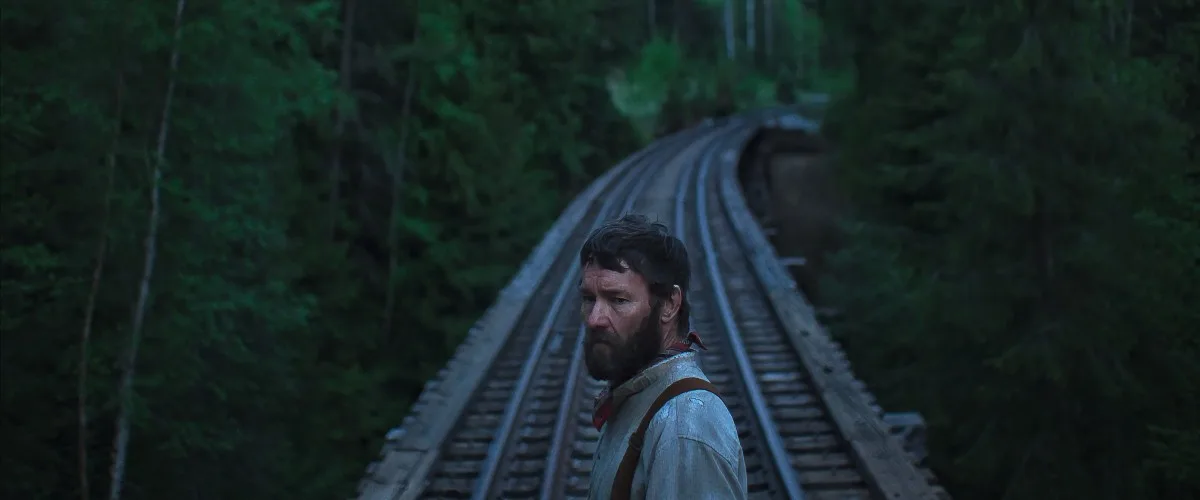
Perhaps it’s inevitable for humans to seek proof that our transient time here mattered. But in “Train Dreams,” Clint Bentley’s miraculous reinterpretation of Denis Johnson’s novella about a logger at the onset of the 20th century, that burning urge to be remembered, to make it count, vanishes into a more meaningful pursuit: to feel. To feel for those who accompany us for a moment or for a while, to grieve for them and with them, to laugh and cherish the tender days when the sun’s warmth soothes, and the wind caresses.
It’s that grounding sentiment captured both in cinematographer Adolpho Veloso’s striking frames of a rustic life lived amid nature and on Joel Edgerton’s longing expression as Robert Grainier, the man to whom it’s happening, that makes the film so stirring. For men like Robert, the salt of the earth without aspirations or opportunities for grander acts, boots nailed to a tree serve as a marker of their existence, a symbol that they were seen.
But even those memorials will decay, so if there’s any meaning to the tribulations of being alive, it’s in the present; in the whispered words of a loved one, a child’s laughter, a song under the stars, a chance to see the world from the point of view of a flying bird. The epic simplicity of “Train Dreams” is a reminder that, like a flower that blooms and soon wilts, the only thing life asks is that we treasure its impermanence. —Carlos Aguilar
Available on Netflix.
8. “Eephus“

There’s a line in Ken Burns’ “Baseball” that I often think about: “Those whose deeds would live only in the memories of those who saw them play.” While Burns used that observation to summarize the fleeting existence of the Negro Leagues, you could easily apply it to writer/director Carson Lund’s elegiac, slice-of-life debut “Eephus.”
An idiosyncratic baseball movie, the film takes place on the final day at a local Massachusetts ballfield slated for replacement by a new middle school. For the eclectic men on Adler’s Paint and the Riverdogs, teams composed of a mix of could’ve-beens, has-beens, and never wases, it’s the end of a place and a moment in their lives.
“Eephus” is a detailed film. Radio ads and local sponsorships immerse us in its regionally specific 1990s setting, while the accuracy of the gameplay—which includes the proper positioning of the fielders—provides further grounding. The film also includes a rich cast of characters: Everyone on the field is extremely knowledgeable about the game yet far too physically limited to execute the right play, while those off the field—a dedicated scorekeeper, an elderly man watching from the bleachers, stoner teens, and more—stand as the few witnesses who will remember the diving play, the big homers, and the twilight fumblings that happened here.
Lund embraces the game’s rhythms and angles. He’s either positioned the camera from a fielder’s perspective or allowed the film to luxuriate in the moments where nothing yet everything seems to happen. With that in mind, “Eephus” features one of the best, most elaborate sound mixes of the year, too. So much so that when its solemn conclusion arrives, the quietness gives life to one of the many baseball quotes sprinkled throughout the film: “It’s getting late early.” Indeed, for these men, as for the viewer, time will never feel the same again. —Robert Daniels
Available on VOD and MUBI.
7. “The Secret Agent“
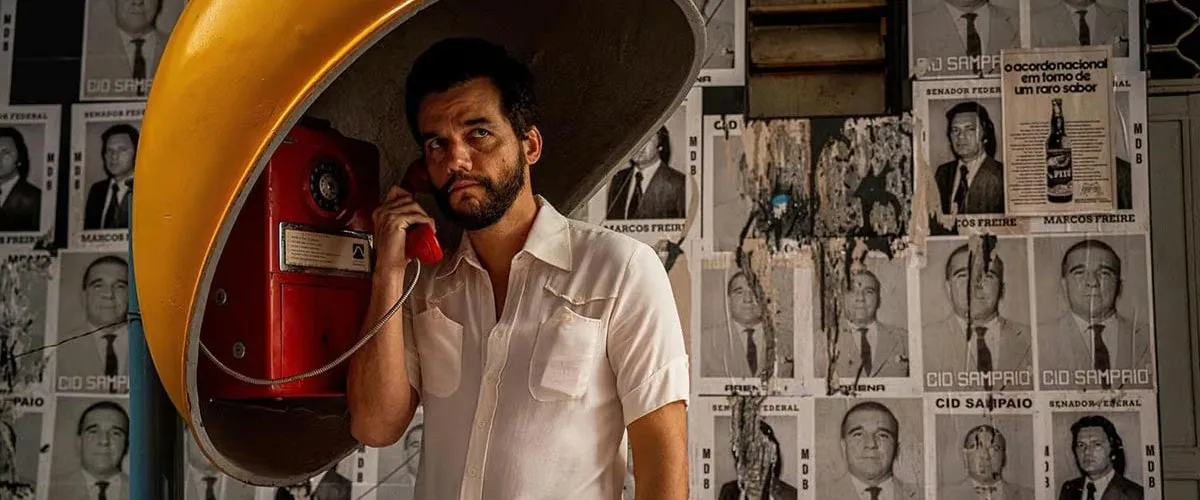
A historical thriller that is as much about crafted narratives as it is recorded history, Kleber Mendonça Filho’s “The Secret Agent” is a mesmerizing experiment. This movie swirls genres around one of 2025’s best performances from Wagner Moura, who grounds every unexpected twist of this masterful film with vulnerable truth. Moura plays Armando, a teacher who arrives in Recife in 1977, a time of great violence under the dictatorship that ruled Brazil.
Mendonça opens with two phenomenal tone-setting scenes that somehow feel both accurate and like something out of a horror movie. In the prologue, Armando arrives at a gas station at which a dead body lies in the lot, the owner unsure of what to do with it. When officers appear more for a bribe than the likely crime, it becomes clear that priorities are out of whack, and Mendonça even punctuates the scene with the film’s dark sense of humor as a car of screaming children pulls in and out of the gas station. In the next scene, a tiger shark is cut open, revealing a human leg. Bad things are happening on both land and sea.
While there’s truth in the production design and storytelling, “The Secret Agent” is a film that regularly reminds you it’s a film, right down to a tangent involving a murderous sentient leg, but that’s part of why it works. It doesn’t so much take place in the ‘70s as in the movies of the ‘70s, using the language of that era’s filmmaking over and over again to transport viewers. It’s a strangely captivating film, one that lingers in memory as it plays like both history and a surreal dream at once. In the end, it is a significant step forward for the accomplished director of “Bacurau” and “Aquarius,” now clearly one of our best living filmmakers. —Brian Tallerico
In limited theatrical release.
6. “If I Had Legs I’d Kick You”
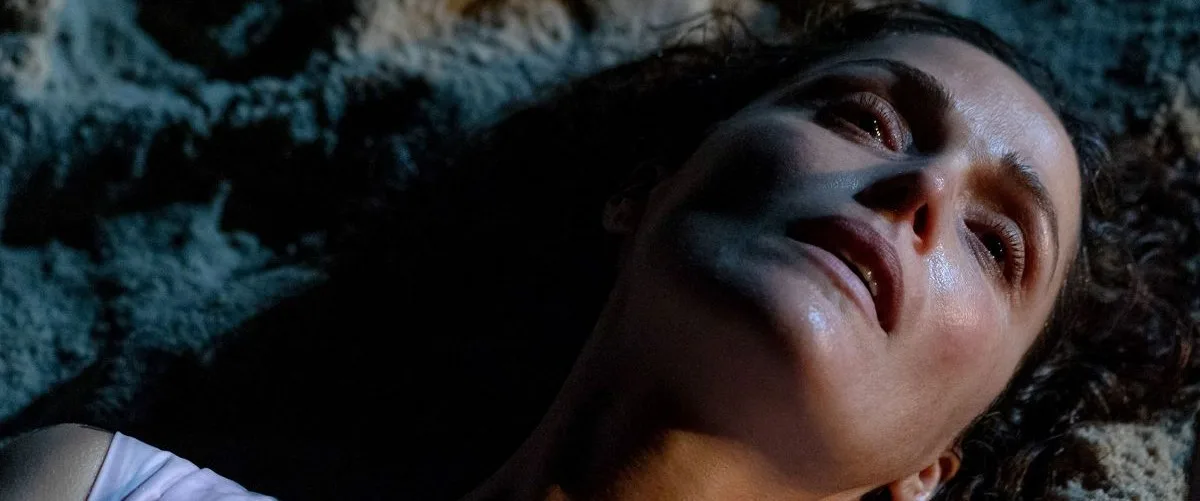
Mary Bronstein’s visceral examination of motherhood, “If I Had Legs I’d Kick You,” takes an uncompromising view of the isolation and outsized expectations placed on many moms balancing kids, careers, finances, and marriage. You are at once a superhero and Santa Claus, nurse, chef, and chauffeur—all without commensurate pay, vacation time, or often even a thank-you.
Written and directed by Bronstein, “If I Had Legs I’d Kick You” follows Linda (Rose Byrne), a woman on the edge of a breakdown, as the roof literally caves in on her home while she juggling the medical needs of her sick child and patients at her therapy practice. No amount of late-night wine or therapy sessions can cure the growing, gaping hole in her psyche that’s increasingly overwhelming her thoughts. There are so many demands on her attention and energy throughout the day that it seems like she’s crawling to the end of every day. What’s worse—as Bronstein reminds us in the case of one of Linda’s patients, a struggling new mom—is how shockingly common it is for mothers to feel isolated and overwhelmed with no reprieve in sight, and how rare it is to see it portrayed in such an unapologetic manner.
Thanks to Bronstein’s acerbically funny yet emotional script, Byrne gives a show-stopping, no-holds-barred performance that has earned well-deserved raves ever since the film’s Sundance debut. Complete with a robust supporting cast and Christopher Messina’s eye-catching cinematography, “If I Had Legs I’d Kick You” is an unforgettable walk in someone else’s shoes and an appreciation of the messy, imperfect nature of parenting. —Monica Castillo
Available on PVOD.
5. “The Shrouds“
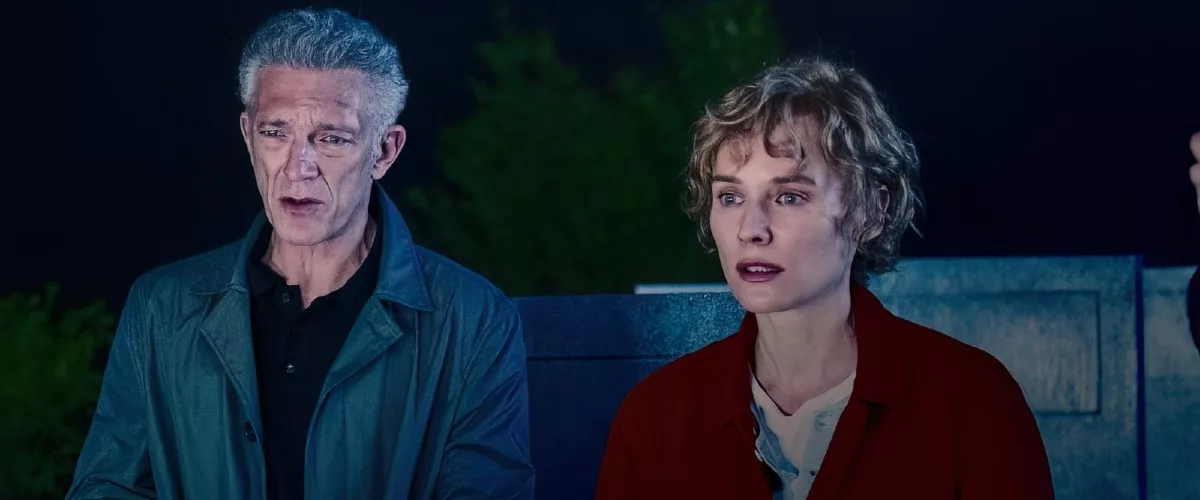
“Perverse” nicely sums up David Cronenberg’s semi-sci-fi drama “The Shrouds,” and it’s a term that fittingly comes up right before sex. Four years have passed since the death of Becca (Diane Kruger), and the perverse couple in question are still united in their mutual obsession with her. Becca’s widow, the arrogant tech mogul Karsh (Vincent Cassel), and his sardonic sister-in-law Terry (Kruger), get off on the gnarled chain of associations that they assemble, link by link, following the mysterious desecration of Becca’s grave. Hers is one of nine plots that unknown intruders desecrated, and the list of suspects includes Becca’s oncologist, her schlubby brother-in-law (Guy Pearce), Icelandic eco-terrorists, and the Chinese, too. Everybody’s still poring over Becca’s body, vying for possession with their increasingly convoluted theories.
As Karsh, Cassel plays Cronenberg’s grieving stand-in as a confident and calculating futurist who’s only really excited when he’s looking beyond reality’s many disappointing banalities. Even Karsh’s sex life is overruled by probing questions and confessional explanations about the body and its irreconcilable mysteries. “A classic detection puzzle” has a certain appeal to him, so the plot mostly conforms to that narrative. But as with most Cronenberg movies, this one thrives on the absurd constant of how quickly and repeatedly our stand-in’s grip on reality slips, from dreams that seem like memories to relationships that very matter-of-factly exclude finer feelings. Everybody has an angle, and the most perverse way to make a new bedfellow is to infect your new partner with your take. —Simon Abrams
Available on PVOD and The Criterion Channel.
4. “Sorry, Baby“

The beauty of “Sorry, Baby” is that it’s confrontational in an understated way. With just their first feature, writer, director, and star Eva Victor has achieved the kind of complex mastery of tone you’d expect from a veteran: They’ve crafted a comedy about trauma.
Victor forces you to think about serious, uncomfortable subjects, but they approach them with a sense of humor that’s dry, quick, and self-deprecating. In front of the camera, they have a pleasingly sardonic presence as Agnes, a creative writing professor at a New England liberal arts college. It’s clear that Agnes is a star on the rise, but she seems uneasy within the aura of awe and envy she’s cultivated. As time goes on, we’ll find out why.
As the film’s writer, Victor tells Agnes’ story out of order in five chapters. It’s a device we’ve seen a lot of in the last few decades, but one that they use to poignant and suspenseful effect. The way Agnes’ friendship unfolds with Naomi Ackie’s Lydie adds a warm, grounded quality to this cutthroat academic world and provides crucial context. We come to understand Agnes through her interactions with this most important person in her life (as well as a pet cat whose origins will break your heart). Lucas Hedges and John Carroll Lynch also provide key support in just a few brief moments.
But it’s the way Victor trusts their viewers as a director that makes “Sorry, Baby” so singular. They know when to hold back and when to hold a shot. They have faith that we’re paying attention to the little details in the background to indicate the passage of time. And they get their point across quietly in a way that speaks volumes. —Christy Lemire
Available on HBO Max and VOD.
3. “Sinners“
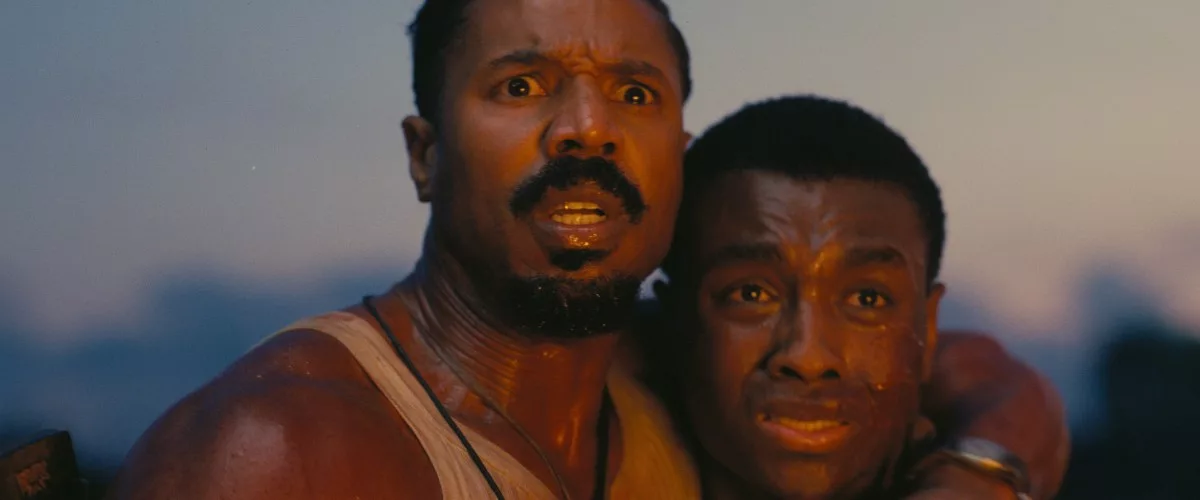
Ryan Coogler’s rousing, audacious, lurid, and genre-melding horror-musical “Sinners” is set in the Mississippi Delta town of Clarksdale in 1932. Still, the story of the twin brothers Smoke and Stack begins in Al Capone’s Chicago—and ends in Michael Jordan’s Chicago. Bursting with unforgettable music set pieces that tell of the passions, sorrows, and dreams of its characters, popping with fiery bursts of stunning violence, “Sinners” unabashedly borrows from films such as “Salem’s Lot,” “The Thing,” and “From Dusk till Dawn” as well as works from the Coen brothers and Jordan Peele. In the end, though, writer/director/producer Coogler has created an original American pulp-opera slice of commentary about dancing with the devil that’s also just damn good bloody fun.
Michael B. Jordan does career-best work as Smoke (taciturn, intense) and Stack (slick, charming), who have returned home after some dicey business in Chicago to open a juke joint featuring the blazing talents of young Sammie, played by the incredibly talented newcomer Miles Canton. Amidst the violence and vampiric madness, the twins rekindle complicated romances. Wunmi Mosaku (as Smoke’s love, Annie) and Hailee Steinfeld (as Stack’s borderline-obsessive ex, Mary) carve out complex and sexy characters on their own. The “vampire choir” rendition of the traditional folk song “Wild Mountain Thyme” is memorably haunting. Still, the showstopper is Sammie’s performance of “I Lied to You,” where Coogler blends eras and music genres—pure genius, making for the best scene of the year from one of the best movies of the year. —Richard Roeper
Available on VOD and HBO Max.

Far from feeling accidental, Jafar Panahi‘s Palme d’Or-winning “It Was Just An Accident” feels like a deliberate exploration of the anxieties and traumas he’s faced as an artistic enemy of the state in his home country of Iran; its loping, darkly comic story, of a group of political prisoners who scramble over what to do when they capture a man (Ebrahim Azizi) they think was their tormentor. Is it the real guy? If so, does he deserve to die? And what will killing them do to what remains of their souls?
These are questions that are posed with remarkable grace and precision over its patient runtime, Panahi methodically introducing each element of his morality tale: The patient family man who may be a monster, the desperate mechanic who seizes his chance, the loving couple who interrupt their own wedding plans to contemplate revenge, the list goes on. All of their trials and tribulations, the moral calculus about not just this man they have captured but the fate of his family, play out in raw-nerve immediacy thanks to DP Amin Jafari’s expansive pans. It’s a political thriller of sorts, but it’s also a kind of interpersonal dramedy akin to “Little Miss Sunshine,” not just because much of its plotting unfolds inside a ramshackle van. Panahi wants to ask his audience—and, presumably, himself, even as the Iranian government has sentenced him in absentia to a year in prison—whether exacting vengeance will give them the release they’re looking for. – Clint Worthington
In limited theatrical release.
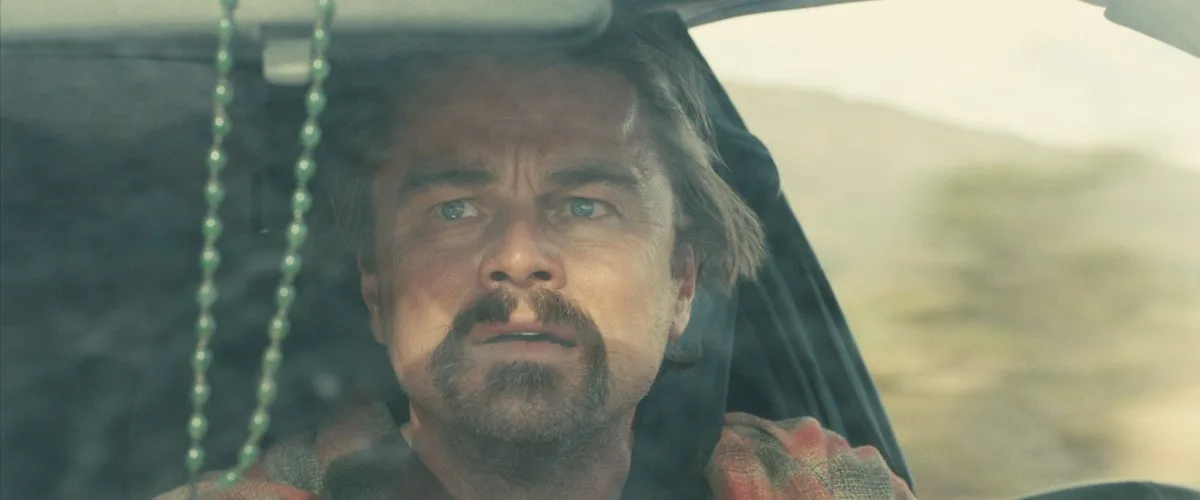
Paul Thomas Anderson’s action-odyssey “One Battle After Another” is a near-trademark period piece of his filmography, but distinguishes itself from the rest on account of its hawk-eyed vision of our current moment. This film is not Anderson’s first foray into politics, but while films like “The Master” and “There Will Be Blood” tackle post-war ennui and capitalist critique, respectively, they do so in the periphery. Not since the utterly delightful and convoluted “Inherent Vice” (also sourced from a novel by Thomas Pynchon), has Anderson so expertly navigated a laundry list of fully realized, plot-driven characters (none of them frivolous) as they bound and fumble through a hyper-political landscape buoyed by covert establishments, oppression, and prejudice.
Ghetto Pat turned Bob Ferguson (Leonardo DiCaprio), a former explosives expert with a revolutionary group known as the French 75. After a botched job, they were forced to go underground to escape imprisonment (or death) by the hands of racist military hardball Colonel Steven J. Lockjaw (Sean Penn) and his cronies. When Bob’s partner, Perfidia Beverly Hills (Teyana Taylor)—herself intertwined with Lockjaw—flees from custody (federal and parental), Bob is left to raise their daughter, Willa (Chase Infiniti), in a sanctuary city, laid outside the gaze of Homeland Security—until now. Other major players include Sensei (Benicio Del Toro), Willa’s karate instructor, who operates “a little Latino Harriet Tubman situation,” and Virgil (Tony Goldwyn), an executive of an exclusive, seemingly oligarchal white supremacist group known as the “Christmas Adventurers Club.”
This is not a small film, not in scale nor in impact. With indomitable gusto, “One Battle After Another” surveys the cogs of revolution with pride and Anderson’s signature dry humor. Whether Bob is toking on a spliff whilst rewatching “The Battle of Algiers,” or traipsing in the heat with young activists jumping rooftops to freedom, Anderson asserts that revolution is a persistent process steeped in education, action, and retraced paths. Community is essential, perhaps the biggest weapon. And in no small part, there is no American history (past or in the making) without the brains, brawn, and blood of Black people. The film’s trio of Black women in particular, Perfidia, Willa, and Deandra (Regina Hall, in a small but profound contribution) are the bones of the film.
And as the group ducks and weaves the grasp of Lockjaw’s enforcements, “One Battle After Another” is a raucous ride that reminds the viewer that these battles are long-fought but worth it, to be taken as the title dictates, one at a time. And in 2025, a year in which political exasperation is only matched by the seemingly never-ending attempts to undermine the rights of most, Anderson’s film is both timely and prescient, encouraging us to keep the fervor and the faith. —Peyton Robinson
Available on PVOD.