




NEWYou can now listen to Fox News articles!
It is hard to fathom how much the media environment – especially the social media environment – has altered the coverage and public understanding of big legal cases over the past 30 years. The case of Charlie Kirk’s alleged murderer, Tyler Robinson, is a powerful illustration.
In 1993, I ran the terrorism prosecution against Omar Abdel Rahman (“the Blind Sheikh”) and members of his jihadist cell. They had bombed the World Trade Center then, in the aftermath, plotted what they anticipated would be simultaneous bombings of New York City landmarks – the UN complex, the Lincoln and Holland tunnels, and the FBI’s lower Manhattan headquarters. Abdel Rahman himself was particularly interested in strikes against U.S. military installations.
Tyler Robinson, accused of the murder of Charlie Kirk, appears during a hearing in Fourth District Court in Provo, Utah, Thursday, December, 11, 2025. (Rick Egan/The Salt Lake Tribune via Pool)
Naturally, some conspiracy theories were peddled about our case. Maybe it was an inside job by the FBI – a pretext to harass Muslims. Or maybe Saddam Hussein’s regime had orchestrated it. Maybe the Egyptian intelligence services had a hand in it. Or – because no conspiracy theory would be complete without this – maybe it was the Mossad!
The difference between then and now? There was no social media.
Fox News, with its emphasis on reporting rather than proselytizing, was a fledgling challenger to the leftward bent of establishment media. But that media environment still fit the tradition that had grown up over decades: a handful of television network news divisions and the big print press – The New York Times, the Washington Post, and The Wall Street Journal.
The result? Conspiracy theories had a tough time getting traction. There wasn’t a 24/7 instant flow of ground-up communications from millions of people, most of whom had no reliable sources. There weren’t siloed internet communities to which people with particular, eccentric interests were drawn – cauldrons of conspiracy theory. There was no texting – and even the email services were still developing. No X/Twitter, no Facebook, no TikTok or Blue Sky. It was a different society.
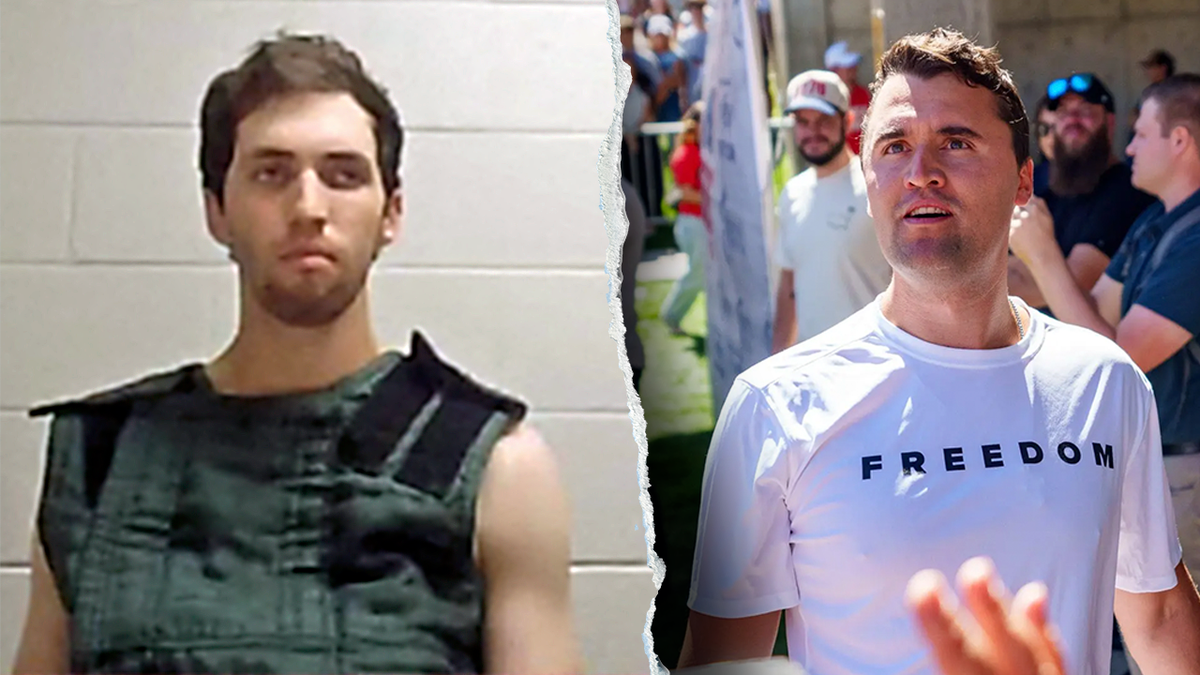
Tyler Robinson, left, is the suspect in the fatal shooting of Turning Point USA founder Charlie Kirk. Kirk is pictured during an event at Utah Valley University, where he was shot and killed on Sept. 10, 2025. Robinson appeared on video at his initial hearing on Sept. 16, and hasn’t been seen since. (Utah State Courts/Handout, Trent Nelson/The Salt Lake Tribune via Reuters.)
As a practical matter, that meant our Manhattan federal courthouse was the center of gravity. If you wanted to know what developments there had been in a criminal investigation – if you wanted to know who the suspects were, what the proof against them was, what the contested legal issues were likely to be – you had to rely on the public filings in the case and in-court pretrial proceedings.
ACCUSED CHARLIE KIRK ASSASSIN WANTS TO DITCH JAIL CLOTHES FOR UPCOMING COURT APPEARANCES
That’s been turned on its head today.
Kirk was killed by gunfire on Sept. 10 at Utah Valley University. A few days later Robinson was placed under arrest after turning himself in. As is often the case, the arrest resulted in an outpouring of official information about the investigation and the subject.
Indeed, there was more information released than is often the case, likely for two reasons. First, so much misinformation had been peddled in the shooting’s aftermath that the authorities perceived the need to be expansive, to give the public confidence that the case was strong. Second, the Kirk murder is a state prosecution. The Utah County district attorney’s office is not as familiar with the national spotlight as federal authorities; they went the extra mile to show that the case was in good hands.
Still, after that initial burst of evidentiary detail, the official sources went dark. Naturally, this has irritated press outlets – thanks to the new media environment, there are many more of them today than there were in the Nineties. Nevertheless, it’s not that surprising.
This is a capital murder case. American judges, at the state and federal level, tend to be graduates of elite U.S. law schools of a progressive bent. They are often hostile to the death penalty (it is one of the big disconnects in our country between elite and popular opinion). The DAs and police are well aware that capital cases are scrutinized more carefully than ordinary criminal prosecutions. If officials are suspected of leaking information or doing anything to prejudice Robinson’s fair trial rights, the death penalty and perhaps even the case as a whole could be jeopardized.
While the press pushes the court for more disclosure, we are witnessing a troubling phenomenon of the Information Age.
Like anything else, information hates a vacuum. In high-profile cases, if our curiosity is not satisfied by a steady stream of solid information from law enforcement, defense attorneys, and the court, then the void will inevitably be filled by social media speculation, conspiracy theories, and hateful political rhetoric.
I’m sure that’s why Kirk’s widow, Erika, was driven to refute the crazy talk in a moving interview conducted by Fox News’s Harris Faulkner. The conspiracy theorizing about her husband’s death would have seemed outright bizarre in September, after prosecutors described the mountain of evidence that supported the charges against Robinson. But while nothing seemed to be happening in the formal legal proceedings, crazy and frequently offensive commentary has been given three months to fester. Understandably, Mrs. Kirk felt compelled to respond.
CLICK HERE FOR MORE FOX NEWS OPINION
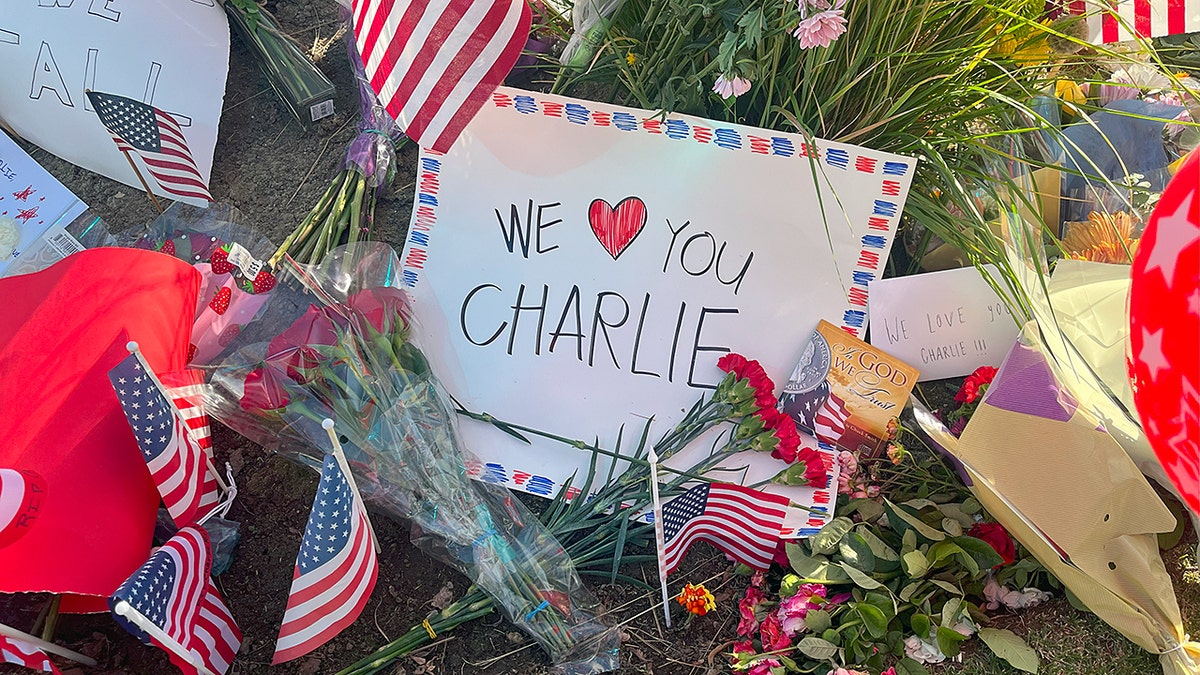
A memorial honoring Kirk at the Timpanogos Regional Hospital is flooded with “We love you, Charlie” posters, flowers and American flags. More signs and flowers have been placed for Kirk on Utah Valley University’s campus. (Fox News Digital/Deirdre Heavey)
Hopefully, the pernicious chatter has a short shelf life. There was a standard pretrial hearing in court on Thursday, at which the issue of media access was to be discussed.
CLICK HERE TO DOWNLOAD THE FOX NEWS APP
More consequentially, what we call a “preliminary hearing” is scheduled in mid-January. In many states, and in federal law based on U.S. constitutional mandates, the prosecutors must obtain an indictment from a grand jury; this requires a showing of probable cause for the charges, sufficient for the matter to be bound over for trial. In Utah, however, the state generally proceeds by preliminary hearing: the probable cause showing must be made before the court rather than the grand jury.
As a result, as we move into 2026, we are likely to see and hear much more information – authoritative information, worthy of courtroom proof – about the Kirk murder. Back in the Nineties, that was pretty much all we had. Today, when it must compete with social media noise, authoritative information is what we need to make sense of a very significant prosecution.