




Filmmaker Rebecca Zlotowski has spent the last fifteen years crafting a singular career in French cinema. While all her films explore the invisible depths of human connection and experience, she does so through different modes of expression and film genres, often eliciting unexpected and raw performances from her stars. Her films have premiered at prestigious film festivals like Cannes and Venice, and have starred some of the best actresses of the era, including Léa Seydoux, Natalie Portman, Virginie Efira, and, most recently, Jodie Foster, who makes her French-speaking debut in Zlotowski’s most recent film, “A Private Life.”
Zlotowski, who is of Polish-Moroccan descent, studied modern French literature at Ecole Normale Supérieure before attending the French film school La Fémis, where she graduated from the scriptwriting department. Her graduation project, the coming-of-age drama “Belle Épine,” premiered as part of Critics’ Week at Cannes. For her performance in the film, its star Léa Seydoux earned a César Award nomination for Most Promising Actress. Zlotowski and Seydoux teamed up again for her second feature, the disquieting romance “Grand Central,” which premiered in the Un Certain Regard section of Cannes and earned Seydoux the Best Actress Award at the Lumière Awards.
Her third feature, the 1930s-set drama “Planetarium,” starring Natalie Portman and Lily-Rose Depp, premiered out of competition at the Venice Film Festival and received largely negative reviews. Her follow-up film, the thought-provoking drama “An Easy Girl,” premiered at the Directors’ Fortnight section at Cannes, where it won the SACD Award for Best French-language Film. Her fifth film, “Other People’s Children,” premiered at Venice and earned star Virginie Efira the Best Actress Award at the Lumière Awards.
Zlotowski’s latest film, “A Private Life,” had its world premiere out of competition at the 2025 Cannes Film Festival last May. Part black comedy, part mystery-thriller, part marriage-remarriage romance, the film stars Foster, who speaks fluent French throughout, as a psychiatrist named Lilian Steiner whose life is thrown for a loop after the mysterious death of one of her patients, Paula (Virginie Efira).
After a meeting with Paula’s daughter Valérie (Luana Bajrami), Lilian becomes convinced her apparent suicide is actually murder, and begins investigating Paula’s widower Simon (Mathieu Amalric) with the help of her ex Gabriel (Daniel Auteuil). The result is a queer little romp that explores psychoanalysis and hypnosis, dreams and ghosts, past lives and current ones, and everything in between. For her performance in the film, Foster became the first American to receive Best Actress nominations at both the César Awards and the Lumière Awards.
For this month’s Female Filmmakers in Focus column, RogerEbert.com spoke to Zlotowski over Zoom about working with Jodie Foster, the deep connection between psychoanalysis, hypnosis, and cinema, and the film community in France.
This interview has been edited for clarity and length.
For most Americans watching this film, the first thing they want to know is how you worked with Jodie Foster. I always knew she spoke French, and her persona fits in so nicely with the kind of stories that you tell that are often about women on interior journeys, and that’s very much what’s happening here.
It’s an interior journey, but with the storyline, because I think that I have never espoused the total European, like atmospheric, interior stuff. What was really dear to me is that Jodie is so picky with the parts she chooses, so everyone has been asking me what she looks like when you direct her, and those kinds of questions. The question is not, why was I attracted to her? Because everyone is attracted to her. The real question would be: why did she say yes?
And this is an interesting thing, because she is the kind of actress and movie maker, in a way, that just creates a whole filmography, and she creates a sentence globally, with what she does. At the end of the day, every film would be one word in this sentence. I’m lucky enough to be one word in her entire filmography. It may be interesting to understand what it is, what it means for her, and what it means in an American filmography, that at this point in her career, this amazingly legendary actress decides to take advantage of her power to speak French fluently. Because she’s not only speaking French, she’s speaking French like a French person, which is, in a way, a mystery at the beginning of the thriller itself.
So, for all those reasons, I wanted to work with her. I could talk for hours about how she built the cinéaste that I am, the cinephile that I am, and somehow, the woman that I am as well. But it would be more interesting to understand why she decided to play this part at this moment in her life.
I loved how queer the film was, and she has been very guarded about her queerness. I think because, even today, it’s hard to be out and open and be a massive star and be queer in Hollywood. I love that she embraced that a little bit in this film, like the sequence where she’s in the tuxedo. The styling of that is so erotic. It also flashes back to Marlene Dietrich and the whole history of women in tuxes. Was that always in the script?
[Laughs] Actually, it was not. I feel like, not to avoid your question, Jodie Foster has said so many times, that if you want to know her, you’ll have to watch her movies. So there are definitely clues and keys, again, the language of the film, which is so childishly psychoanalytic. You have stairs, you have keys, you have doors that open to her personality. This tuxedo moment, where she is supposed to be a man in a past life and says she impregnated someone, is definitely playful in the film. It’s not to be taken seriously, but we take seriously the spiral she is on, where she is plunging and delving in a way.
I love one of her pictures. I don’t know who the photographer is, but it’s in black and white. She has a very sleek look, and I think she’s wearing a suit. She often wears suits because she’s not into…I believe that she has an elegance that is not connected to the fashion industry right now. She’s even rejecting that in a way, and the fact that we could play on different genres and different personalities, and it was easier to play the opposite. So, of course, she would be in a tuxedo in the 1940s. It became an outfit and the silhouette that I really wanted to play with at this moment in the film. But it doesn’t mean that much. It’s not a coming out in the movie, I would say.
You’ve mentioned in past interviews that Jodie’s character, Lilian, and her ex-husband, played by Daniel Auteuil, have an Old Hollywood, marriage-remarriage, almost screwball comedy sense to it. I wondered if there were films that you were inspired by for that thread, or how you built it out? The film is being marketed as a thriller, but that big thread of them coming back together as a couple is also very prominent.
Love stories always, in a way, overwhelm the other storylines in a film, as we know. As soon as you see someone kissing, you’re like, when are they going to do that again? Where are they going to have sex at this moment? Sometimes you roll the dice because you don’t know whether the couple’s chemistry will work. If it doesn’t, you need to be armed to have something else, have something else in the film. But in our case, it was very rare to witness the chemistry between them. I was so happy with that that I decided to shoot other scenes, and my editor was like, okay, just shoot more. They just improvised a bit.
There are so many films that we have in our ears and in our brains when it comes to the remarriage comedies that Stanley Cavell wrote about. For this film, there were films like “The Thin Man” with William Powell and Myrna Loy, or the 80s TV series “Hart to Hart,” where a couple is investigating, not just a couple getting remarried in the film, like in “The Philadelphia Story.” Stanley Donen’s “Charade” was definitely a key film because it was set in Paris and starred two legendary American actors, Cary Grant and Audrey Hepburn. The fake murder-mystery investigation we know is just a bubble in the film; it’s just a pretext for it.
So, musically and narratively, and even with the Parian postcards, I was most inspired by the Stanley Donen film. But I am fond of those films. I’m fond of those films because usually those are the ones that played the best with the genre, and the fact that the women in them were not just sluts, but could be empowered in the couple. As a cinephile and as a woman, I found them super sexy and modern.
This film also reminded me, in fits and starts, of “Planetarium,” in that both explore esoteric, inner realms that aren’t necessarily respected. “Planetarium” has 1930s seances (that are taken seriously), and in this one, it’s hypnosis (that Lillian does not take seriously).
In both films, you leave it up to the audience to decide how to feel about them. Regardless, they’re all about going into who we are on the inside, or who we are as a connected energy. When did you start being interested in these esoteric ways of trying to understand humanity?
In this film, I judged both psychoanalysis and hypnosis, and sometimes I mistreat them. But, you know, we have to understand that those two languages—psychoanalysis and cinema, and even the third one, hypnosis—were born in the very same age. Their origins are in the same decade, mainly in the early 19th century. There is a dialogue between the science of ghosts, dreams, fantasies, denials, compulsions, and all the cool stuff that makes films a lovely country to stay in and live in. So, let’s use all those tools.
As a person, I’m not that connected to the esoteric, but my scriptwriter was. It was pretty stimulating, because we would talk, and I would be like, “Okay, so this is bullshit.” And she would be like, “Absolutely not.” And I was like, “What? Okay, so you’re crazy. Let’s have another glass of wine.” I thought that since day one, she was making fun of it, and she was totally nuts. I like that, because I think the fact that we’re not judging, eventually, at the end, the possibility of curing with those techniques. The point is about how you create an image, how you can reinvent imagination, and what kind of world you want to delve into with your film.
I feel that as we are talking of a crisis, of a woman who’s in her 60s, there’s something that was super joyful and precious to use those languages, because they were born at the same time. I love to see them communicate, and I’m fond of the possibilities for movies to dig into the invisible.
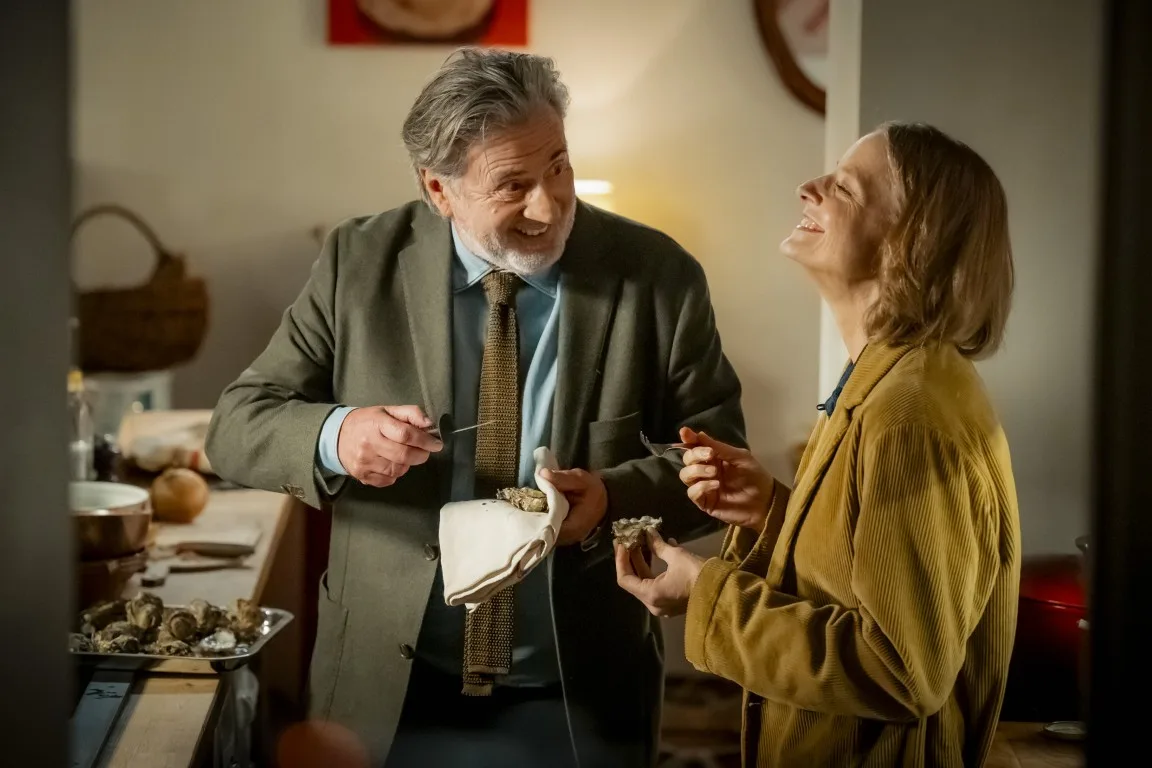
You mentioned ghosts, and so obviously, I need to bring up the dybbuk of it all. You had a great answer at the New York Film Festival about how, in a way, the film’s about Lillian being possessed, or being haunted by Virginie’s character. When did the dybbuk come into the script?
It came from Jodie. This is part of the very deep connections that we had in prep. Because, honestly, Jodie could have said, “Okay, I like the script, but let’s rewrite it together,” and I would have said yes, but she did not. One day, she sent me a passage from a text she was reading by a French Rabbi who is pretty famous here, Delphine Horvilleur. The text was about Romain Gary (whose pen name was Émile Ajar), and the idea of the dybbuk. She thought it would be interesting for us. And it turned out to be the key to the entire movie.
Of course, Paula is the dybbuk of Lilian Steiner. The dybbuk is, for Jewish people, what happens when you have not finished your life, or when you died brutally, and it’s not finished, it’s not over. You possess and haunt, maybe nicely, or maybe not nicely, someone else to live through them. To be honest, because you mentioned “Planetarium,” I feel that, in a way, I’ve been haunted by the ghost of “Planetarium” in this film. And as you know, “Planetarium” was really not a big hit.
I was hurt, but I was not surprised by its reception, because somehow I knew it was a kind of nightmare I wanted to share, and I feel that “A Private Life” may be the dream I wanted to share. The audience is so aware of everything you craft that they know that even if Natalie Portman and Lily-Rose Depp were wonderful and intensely perfect at those parties in Paris in the 1930s, it was still a nightmare. It was something very painful. It was full of anxiety. I feel that the audience knew and understood it was going to be that, and they didn’t want it. But “A Private Life” is the sunny, daytime version of what was nocturnal and full of anxiety in “Planetarium.”
You worked with Virginie Efira on your previous film, “Other People’s Children,” and, clearly, for Paula, you needed someone who would haunt the whole movie without even saying anything. Did she develop the character around her?
I developed the character a bit around her because I really wanted her to be in the film. When it comes to casting, it has to be meaningful. You can’t just cast legendary names and outstanding actors and actresses to make a hit at the box office. It doesn’t work. It never works. The actors and actresses understand that, and they don’t want it. The only good reason to cast someone is, does it add to the character in the film? And I felt that, of course, like what you mentioned, the fact that she would be so haunting because she has this amazing screen persona.
There is also the place she has in the industry, the fact that she’s a massive star. If you have a character who appears in one or two sequences and has to haunt the entire film, you’d better have someone everyone knows and will never forget, because it creates the tension we love. And then Virginie has this specifically non-melancholic personality, so that was perfect for the part. Because if someone is very dark and melancholic and then they die by suicide, it’s a bit more expected. But if you have someone like Virginie, who’s so sexually evolved and sunny, and she dies by suicide, you’re going to investigate that.
Then you can add another layer: this was my sixth feature, and now I like to cast people I want to have drinks and dinner with, people who are part of the family I want to create. I do that more and more. I work with the same people because I love them, and they inspire me as well.
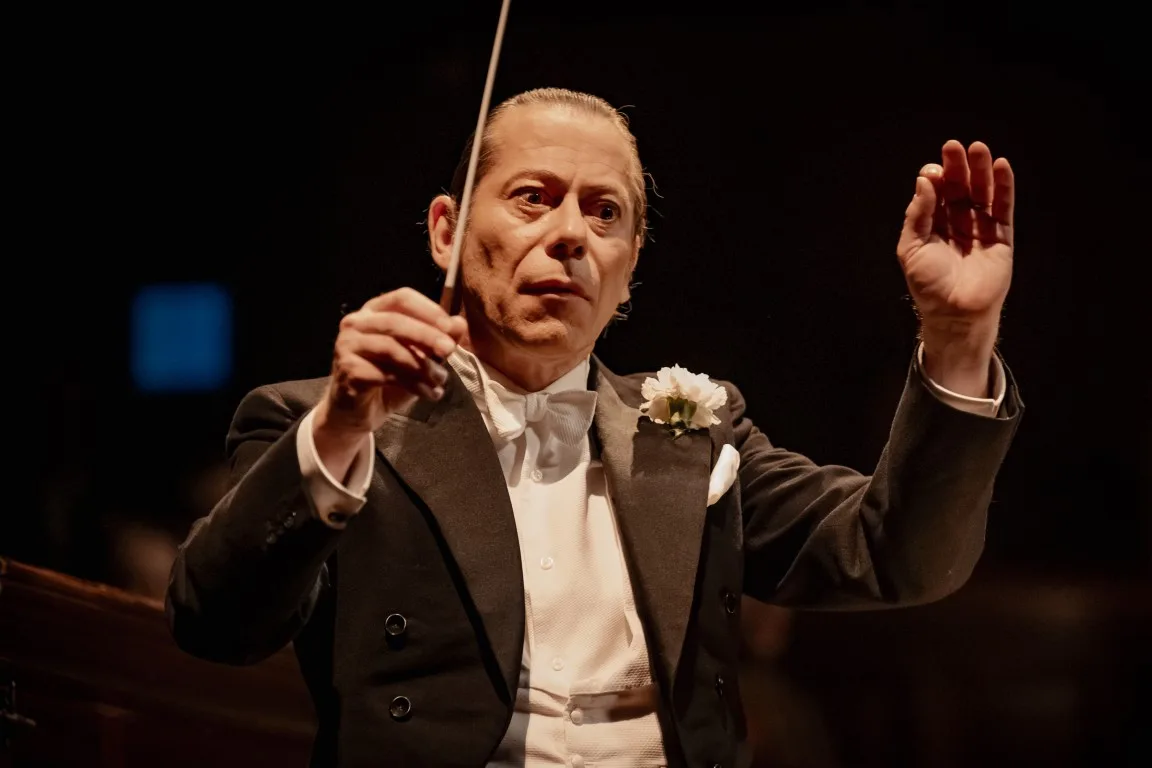
Let’s talk about Mathieu Amalric, who constantly defies what you think he’s going to be as an actor. Like in this, at first he is a grieving husband, so you think he’s going to be sad and lovely, and then he becomes such a piece of shit.
You know, my distributor said, you cast Mathieu Amalric, so now we know he did it, because the guy is definitely super dark in the film. Something worth discussing, which was weird, is that the cast is not only actors, but they’re also directors. Mathieu is a director. Jodie Foster directed movies. Daniel [Auteuil] directed movies. Even Luana [Bajrami], Virginie’s daughter in the film, and she’s only twenty-three or twenty-four, has already directed four films.
And, of course, Frederick Wiseman. I had so much pressure on me. Like, with Mathieu. He’s very picky. I wanted to meet with him about “Planetarium,” but he wasn’t even doing meetings at the time because he wanted to direct. And now I know why he’s so picky with the parts. He likes it when he gets to play. Like, there’s this small sequence where he pretends to be a robber in the film. One minute, we imagine that he may have robbed Lillian in the night. I remember shooting that moment, and he was so childish and happy to do that. I understood. It’s because he wants to direct. After all, he wants to keep time to direct, and if he’s acting, he will do it all the time. I think he got along with Jodie as well. He made Jodie laugh a lot. He was very joyful on the set.
When you say he’s a piece of shit, there’s definitely an aspect of the film that I don’t completely develop, because it’s pretty hidden in the film. But Virginie Efira is called Paula because the movie’s storyline resembles George Cukor’s “Gaslight.” So in our film, we have Paula, her aunt, and the fact that her husband has been gaslighting her for a while and leading a double life. I feel like he is so Cukor-ish in a way, very much like Charles Boyer in “Gaslight.”
Are there any women who either inspired you to become a filmmaker or whose films you think people readers haven’t heard of or that they should seek out?
Yes, so many. I would say Jodie Foster, of course. There’s definitely something that happened with the emergence of Kathryn Bigelow and Sofia Coppola for us, because they offered new representations, not only in their storylines but also in the way they looked and the people they were. They changed the idea we, as young cinephiles, had of what female directors could be. Kelly Reichardt is dear to me, and Andrea Arnold is, too.
In France, I have so many, and they’re like, I’m lucky enough to be friends with many of them, like Céline Sciamma and Alice Diop. I also love Justine Triet. I feel that there’s a strong dialogue between Justine and me. We exchange actresses sometimes, like Virginie Efira, who was in two of Justine’s films and two of mine. “Sibyl,” from Justine, is really close to “A Private Life,” in a way. Somehow, it’s like conversations that we have.
I would say there’s a wave of female directors in France that I totally feel solidarity with. And it’s not only because we’re women who make films that I feel strongly close to them. It’s because I think that they’re really, really good directors. Also, another person I would say is super essential to me is Susan Sontag. Thinking of Susan Sontag is always very, very inspiring for me.
It’s amazing that there is a generation of women coming out of France making films people want to see. There is a community there, too, supporting each other. Cinema coming out of a community is so important.
We’re a small country, so there’s a sociological aspect to it as well. We all live in the same city, mostly. We live in Paris. It’s really centralized. But there’s also a reason there are so many female directors in France. It feels good to be a director in France, whether you are a man or a woman. It feels good because you’re entrusted with one film, not ten. Of course, it’s not the same when you’re a woman, when you see the numbers, and it’s always not the same.
There are two temperatures: the one that you feel and the one that is real. The one that is real is that the fight is not fucking over. It’s absolutely not done. But there is definitely a political statement in France that the cinema should not only be an industry but also an art. So we’re entrusted to make movies. But the difficulty now is to stay there and the posterities of the films. So all the festivals have to be in line with that political statement, and we’re just fighting. We’re just here.