Sarah RainsfordEurope correspondent , Kyiv
 Getty Images
Negotiators from Russia, Ukraine and the US are due to meet in Abu Dhabi for their first trilateral talks since Russia’s full-scale invasion of Ukraine in 2022.
Senior officials from all three nations are involved, but it is unclear whether they will be in the same room together at any point. And whilst the talks take a new format, the core differences remain the same.
The stakes are high, but expectations are limited.
Donald Trump is pushing hard for a peace deal in Ukraine – the one he promised but hasn’t yet delivered – and he said this week that the two sides would be “stupid” if they couldn’t agree.
But despite some intense shuttle diplomacy by his own envoys, they are hosting the first trilateral talks between Ukrainian and Russian negotiators with some major issues still unresolved.
Ukraine is engaging with the process because it wants peace more than anyone, but also because it needs to keep the US onside. It learned that lesson the hard way last year, when Donald Trump briefly suspended intelligence sharing and military aid.
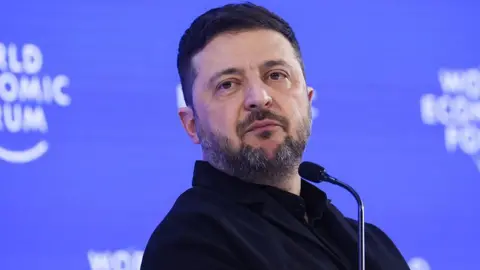
Now, Ukraine’s President Volodymyr Zelensky says his talks with Trump in Davos were “really positive” and he hopes for more air defence support against Russia’s relentless attacks as a result.
Often grim-faced after his encounters with the US leader, this time Zelensky seemed unusually upbeat.
But he remains cautious on the outcome of talks in the United Arab Emirates.
He’s described the meetings, which may last two days, as “a step”, but shied away from calling it a positive one.
“We have to wish it will push us a bit closer to peace,” is how he put it.
For a while, Zelensky has talked about being 90% of the way to producing a framework deal for peace, but the final 10% was always going to be the hardest – and Russia could still reject the whole thing.
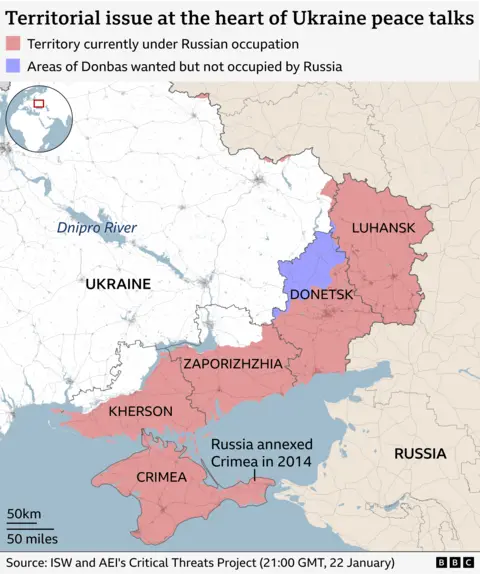
“It’s all about the eastern part of our country. It’s all about the land. This is the issue that’s not resolved yet,” he explained, spelling out the biggest obstacle that he says still remains.
Russia insists that Ukraine should hand over the big slice of the eastern Donbas region, which it has failed to win on the battlefield. Ukraine refuses.
Politicians often talk about their red lines, but for this country the line in the Donbas is drawn with the blood of the soldiers who died defending it.
Zelensky can’t cross it.
As I write this, the music from another soldier’s funeral is drifting up from a church in the street.
On my way back into Ukraine this time, we drove passed so many military graves in roadside cemeteries, all marked with flags.
The other big issue up for discussion in the UAE is what the US would do, militarily, if Russia were to invade Ukraine again someday. That’s what Ukraine calls its “security guarantees”, and says are essential.
Zelensky says the deal between the US and Ukraine is done, but we have no real details.
Russia’s response also remains a wide-open question.


 Getty Images
There’s also the giant new doubt about how good a guarantee from Donald Trump really is: the US president’s fixation on “acquiring” Greenland has severely undermined Nato.
He’s also undermined the very principle of protecting a nation’s sovereignty, the whole basis for Western support for Ukraine.
So can Kyiv trust him to come to the rescue in the next crisis? For now, it doesn’t have much choice.
As for trusting Vladimir Putin, no one here is under any illusions that his aims have changed.
“He really doesn’t want it,” is what Zelensky said in Davos about Putin and peace.
The Kremlin has said that if it doesn’t get what it wants at the talking table, it will “achieve its aims on the battlefield” – though it’s failed so far, despite sacrificing huge number of soldiers.
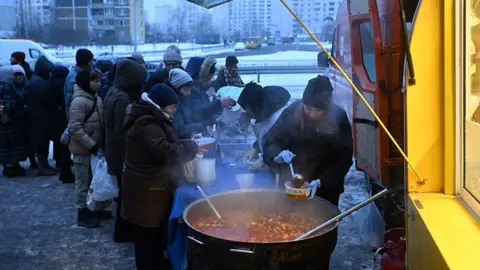
So once again, it’s targeting civilian infrastructure across the country – but in a more deliberate, sustained, and devastating way than ever before.
In the depths of a bitter winter, that’s left people freezing in their homes.
Today, the mayor of Kyiv again called on city residents to leave if they have somewhere to go.
“The enemy will most likely continue to attack the critical infrastructure of the city and the country,” Vitali Klitschko warned.
After repeat attacks, the system is very fragile.
“I address the residents and say honestly: the situation is extremely difficult and this may not be the most difficult moment yet.”