




Ash Wednesday is a Christian tradition observed by many denominations, including Catholics, Anglicans, Lutherans, and some Pentecostal churches.
This day is often marked by prayer, fasting, deep reflection, and, of course, ceremonial marking of foreheads with ash.
If you’d like to learn more about what happens during Ash Wednesday, keep reading.
These facts will give you all the details about its history, meaning, and how it has changed over the years.
Ash Wednesday marks the start of Lent.
In Christian tradition, it marks the beginning of the Lenten season, a time of preparation for Easter and the celebration of Jesus Christ’s resurrection.
Lent lasts 40 days of fasting and reflection, with Sundays not counted, although the period from Ash Wednesday to Easter Day spans 46 days in total.
During this season, many Christians focus on prayer, fasting, and giving to charity.
The tradition began in the Middle Ages.

In Western Christianity, the practice of receiving ashes on the forehead developed from older religious ideas about dust and ashes as signs of grief or repentance, as described in the Bible.
Over time, ashes were also used in public acts of repentance, particularly during Lent, when people did penance.
As those older forms of public penance became less common, the ash rite spread to the wider congregation and became part of the standard way Lent begins.
By 1091, Pope Urban II recommended adopting the use of ashes more widely, helping to make Ash Wednesday a familiar practice across the Western Church.
It’s also called the Day of Ashes.

Ash Wednesday is the name most people know, but it is really the popular nickname.
In official Catholic texts, it is traditionally referred to as the Day of Ashes, or in Latin, Dies cinerum.
Because the day always falls on a Wednesday and the central ritual involves receiving ashes, “Ash Wednesday” became the everyday name and, over time, the one that stuck in common use.
Many churches switch to purple or violet for Lent.

In some churches, such as Catholic, Lutheran, and Anglican, the color of the priest’s clothes and on the altar reflects the season.
Starting on Ash Wednesday, these churches move from green, the color of ordinary time, to purple, the color of Lent.
Purple and violet have a special meaning in Christianity. It’s linked with royalty, pointing to Jesus as a king, and it’s also associated with sorrow and hardship.
That’s why churches often use purple on Ash Wednesday and during Lent, as a reminder of Jesus’s suffering and the reflective mood of the season.
Ash Wednesday has never fallen on a leap year day.
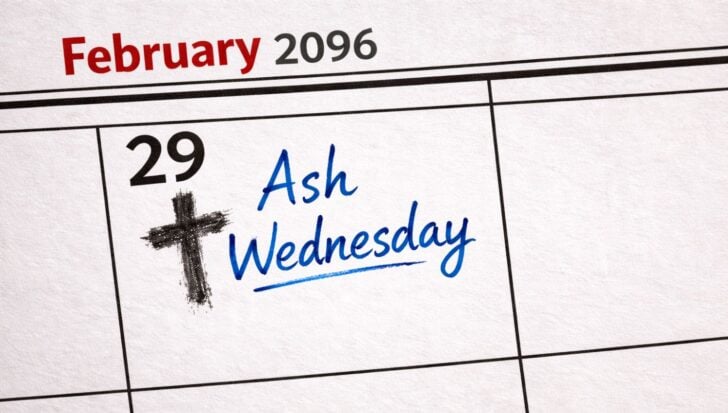
Traditionally, the date for Ash Wednesday is determined by counting 46 days backward from Easter. Easter itself isn’t a fixed holiday; it falls on the first Sunday after the first full moon after the spring equinox.
Going by this system, Ash Wednesday usually falls in February or March. However, ever since the Gregorian calendar was adopted in 1582, Ash Wednesday has never fallen on February 29.
In fact, the first time Ash Wednesday is projected to fall on February 29 is 2096.
Ashes are usually made from last year’s Palm Sunday branches.

In a way, Ash Wednesday is surprisingly eco-friendly. The ashes used are obtained from burning palm branches used on Palm Sunday the previous year.
Typically, for a few weeks leading up to Ash Wednesday, churches will remind members to return the old, dried palm leaves from the previous year.
The priest then burns them to ashes and mixes them with holy water or oil to make a paste.
Anyone can receive ashes.
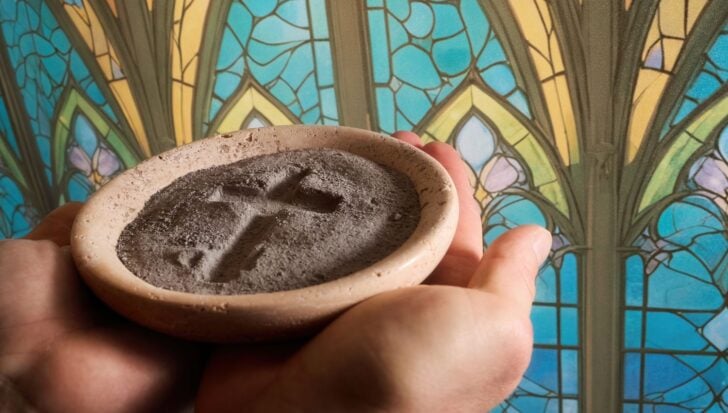
Unlike other Christian sacraments, such as baptism or holy communion, which have strict restrictions and require some preparation, Ash Wednesday is open to all.
You don’t need to be baptized or a regular churchgoer to receive ashes.
Sometimes the ash is taken out into schools, hospitals, streets, and other public spaces. Some churches will even give you ashes to take with you, which you can give to family members who couldn’t make it to church.
As the priest traces a cross on the person’s forehead with ashes, he may say, “Repent and believe in the Gospel,” or, “Remember that you are dust, and to dust you shall return.”
For Christians, the ashes are a reminder that life is short and that how we live matters.
Catholics traditionally avoid meat on Ash Wednesday.

It’s common for Christian’s, especially Catholics, to abstain from meat on Ash Wednesday.
Many also skip meat every Friday during Lent, including Good Friday. Eating fish, however, is totally fine.
This practice is part of the sacrifices expected during the Lenten season.
By giving up something they enjoy, Christians are encouraged to turn that attention to prayer and to spiritual growth. This rule generally applies to children over the age of 14 and adults.
Pancakes are a traditional treat on the day before Ash Wednesday.

Shrove Tuesday, also known as Pancake Day, falls on the day before Ash Wednesday.
The custom likely began as a practical way to use up richer ingredients like eggs, milk, and butter ahead of the fasting season, and it remains a popular pre-Lent tradition.
Shrove Tuesday also has a spiritual meaning. The word “shrove” comes from an old term linked to confession and forgiveness, and the day was traditionally a time to reflect, make amends, and prepare for Lent.
How it’s celebrated varies by region. For example, in the United Kingdom and Ireland, Pancake Day is especially well known.
In the United States, the same date is more closely associated with Mardi Gras and other Carnival celebrations, particularly in places like New Orleans.
Ash Wednesday fasting used to be far stricter.

In earlier centuries, many Christians observed what later writers called the “black fast” during Lent, including on Ash Wednesday.
It meant not eating any food during the day, and in its strictest form, no liquids either, until evening. The fast was then broken after sunset, typically with water and a single simple meal that avoided meat and, in many places, also avoided dairy and eggs.
Over time, the Church gradually relaxed the strictest Lenten fasting practices.
In the Latin Catholic Church today, fasting is required on Ash Wednesday and Good Friday for adults aged 18 to 59, unless health or other circumstances excuse them.
Fasting allows one full meal, plus two smaller meals that together do not equal a full meal.
Even so, some Christians still choose to keep a stricter fast. For example, in parts of India, more traditional Lenten fasting customs are still observed.
For many Christians, Ash Wednesday isn’t just another ritual in the church. It’s a deeply meaningful rite that welcomes them into one of the most sober seasons of the Christian year, Lent.
This sacred tradition, which dates back to the Middle Ages, continues to unite Christians. It also reminds them of the sacrifice of Jesus and the reality that people don’t live forever, so they should always try to do good.