




The world’s oceans cover most of Earth’s surface and shape life both in the water and on land.
They feed billions of people, move ships and storms across the globe, and help keep our planet in balance.
The Pacific, Atlantic, Indian, Southern, and Arctic Oceans each have their own strange surprises, from extreme depths to hidden life.
Dive into the deep end with us as we explore facts about just how special the world’s five oceans truly are!
The Pacific Ocean is the largest and deepest ocean on Earth.
Among the five oceans, the Pacific Ocean is the largest, covering approximately a third of Earth’s surface.
It extends from east to west, connecting the continents of Asia and Oceania to North and South America.
In fact, it’s so big that it’s split into two parts at the equator to become the North Pacific and the South Pacific Oceans.
The deepest point in the Pacific Ocean, the Mariana Trench, reaches a depth of about 36,089.24 feet (11 kilometers).
For perspective, Mount Everest could fit inside it, and its summit would still be below the ocean’s surface.
The longest mountain range on Earth is in the Atlantic Ocean.
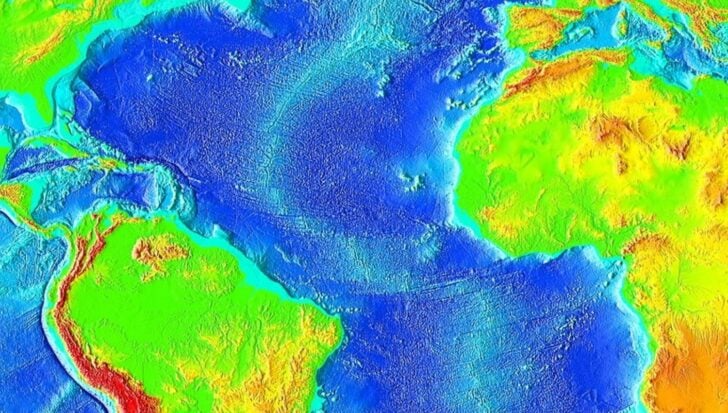
The Atlantic Ocean is home to the Mid-Atlantic Ridge, an underwater mountain range formed from volcanic activity.
The ridge was discovered in the 1950s and separates the North American Plate from the Eurasian Plate.
This incredible range stretches from the Arctic all the way to Antarctica, covering over 9,941 miles (16,000 kilometers).
Whilst the majority of the mountain range is underwater, there are points where it extends above the surface to form islands in the Atlantic Ocean.
Some of these well-known islands are Iceland and the Azores.
The Indian Ocean is home to 30% of the world’s coral reefs.
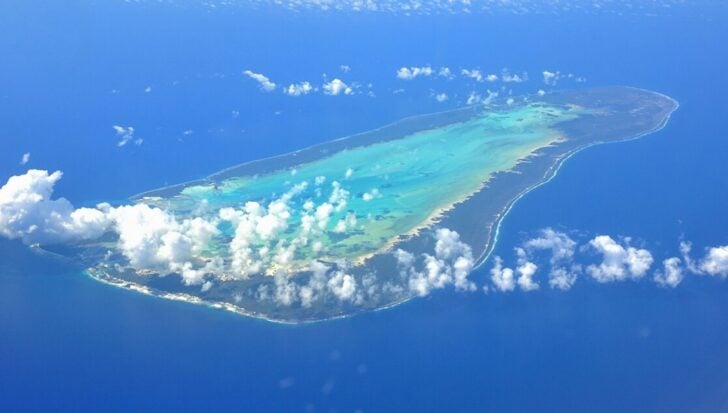
Perhaps the most colourful and certainly the warmest, the Indian Ocean is home to thousands of fish and coral species.
The most varieties of coral are found around the Maldives, where there are over 2,000 different species.
One of these coral species is the Blister coral, which is endemic to the Indian Ocean and thrives on sandy reefs in shallow waters.
The Indian Ocean is also home to Aldabra Atoll, a UNESCO World Heritage site in Seychelles, which is known for its untouched coral reefs and vibrant colours.
The only ocean to flow around the world is the Southern Ocean.
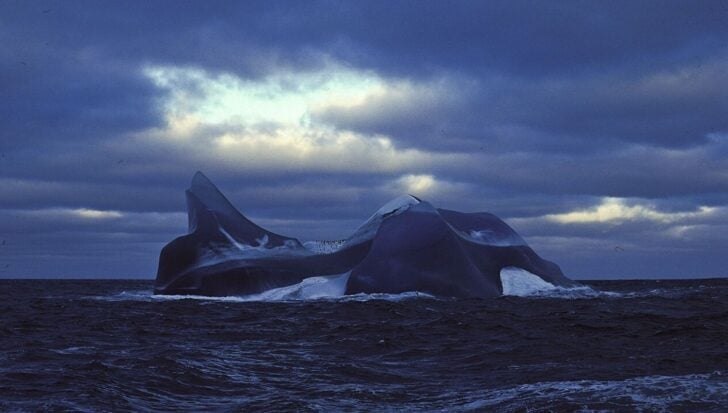
Formed over 34 million years ago, the Southern Ocean is the youngest ocean basin in the world and has some very unique qualities.
This newcomer formed when Antarctica drifted away from South America, creating the Drake Passage and isolating Antarctica as a continent surrounded by ocean.
Unlike other oceans, the Southern Ocean’s currents are not blocked by land, allowing it to circulate continuously around the globe.
During winter, up to 75% of the Arctic Ocean’s surface is covered with ice.
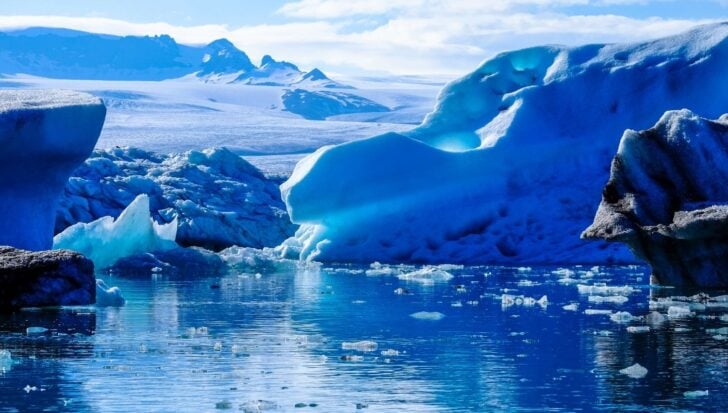
The Arctic Ocean is the coldest and smallest ocean, which makes ice formation common.
Ice coverage changes with the seasons, dropping to about 25% during the summer months before expanding again in winter.
The ice also changes in thickness, with older multi-year ice generally being thicker and more resilient than newly formed seasonal ice.
These percentages, however, are shifting as climate change accelerates ice loss.
As the ice shrinks, darker ocean water absorbs more heat, which can speed up warming and make it harder for ice to recover.
The world’s oceans make up more of the Earth’s surface than land, and there is still much more to learn about them.
Every ocean is different, but they are all interconnected and integral to the planet.
So the next time you are by the sea, take a moment to think about the mysteries that lurk below the depths of Earth’s least discovered place.