




Have you noticed that some texts and even everyday conversations can feel oddly “AI-ish” lately? These facts show why that’s happening, and why it doesn’t always mean a chatbot wrote the words.
AI tools learn from human language, but the relationship is starting to work both ways. As more people use chatbots for work, school, and quick answers, it’s possible we’re picking up some of their habits too.
So, how exactly could AI be influencing the way humans speak and write?
Why does language change over time?
Language isn’t static; it changes as new words appear and older ones fade out. A well-known example is Shakespeare; you can still follow it, but the vocabulary and sentence structure can feel archaic because it’s from over 400 years ago.
Go back about 1,000 years to Old English; it’s very different from today’s English, and most modern readers won’t understand it without help.
That kind of shift happens for lots of reasons, including cultures mixing and borrowing words from each other, creating loanwords.
Words also change when they take on new meanings over time. For example, “nice” once meant something closer to “foolish” or “ignorant,” and “silly” used to carry meanings closer to “blessed” or “innocent” before drifting toward its modern sense.
Technology plays a big role, too; for example, the word “selfie” was first recorded in 2002, and by 2013 it was Oxford Dictionaries’ Word of the Year.
How is AI changing the way we speak and write?
Some researchers have noticed that certain words heavily used by chatbots appear more often in human speech, including “delve.”
That doesn’t mean everything is AI-generated, but it does suggest that patterns from AI tools may be seeping into everyday language.
Think about how close friends sometimes start using the same phrases after spending lots of time together. A similar effect can happen with AI tools; the more we interact with them, the easier it may be to absorb their wording, structure, and tone without realizing it.
This matters because LLM-based chatbots became widely popular in the early 2020s, and millions of people now use them routinely.
A national survey by Elon University’s Imagining the Digital Future Center found 52% of U.S. adults had used LLMs such as ChatGPT, Gemini, Claude, or Copilot, based on a survey conducted in January 2025.
Therefore, as so many people communicate with AI chatbots every day as if they were close pals, they might unknowingly mirror its speech patterns, using similar words and even accents.
What’s the implication of AI’s influence on human language?
The most obvious consequence is that it could eventually result in everyone sounding the same.
The way we talk is shaped by culture, upbringing, and experience, and even people who speak the same language tend to have local sayings, catchphrases, and small quirks that reveal personality.
If more people copy the same polished “AI voice,” some of that variety could fade over time. It’s a bit like language losing its flavor, where fewer expressions feel tied to a place, a community, or a specific person.
It doesn’t just end there, though… The way we speak can influence how we think, so if AI tools shape how we structure explanations and arguments, they could affect broader communication habits over the long term.
Is there anything you can do to avoid sounding like an AI chatbot?
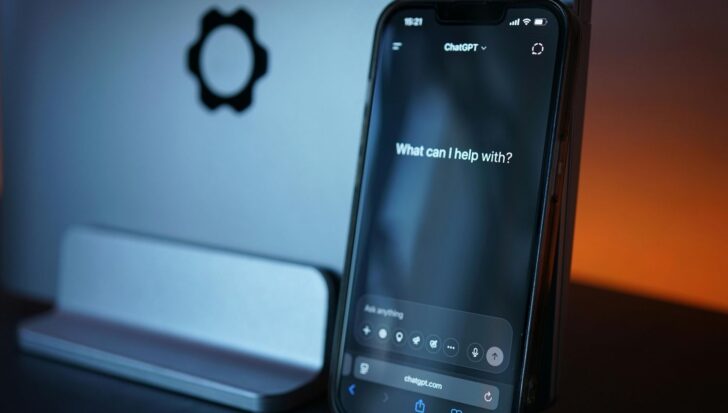
If you want to preserve your own voice, start by being mindful of what you hand over to AI.
Instead of running every birthday text or casual message through a chatbot, try writing some of them yourself. Not everything needs to sound perfectly polished, and a little messiness is often what makes writing feel human.
Another option is to customize the chatbot’s style. For example, you can ask it to avoid big words and keep replies clear and simple, then watch out for phrases you start repeating in your own conversations.
If you notice yourself leaning on certain “AI-ish” words, you can always swap them for something that feels more natural to you.
Artificial intelligence models aren’t just learning from humans; we’re now learning from AI too.
Experts agree that these AI chatbots may be subtly changing how we speak and write, showing how much we depend on them.
The downside is that a more standardized “AI style” could dull some of the creativity, regional flavor, and personality that make language fun.
The good news is we can slow that effect by using AI intentionally and making space for our own imperfect, human way of speaking and writing.