




Critic’s Rating: 4.2 / 5.0
4.2
Family, grief, self-discovery, love — It’s Not Like That is a series that covers it all.
Family dramas used to be staples, nestled into at least two or three nights of the week.
The very heart of these shows lay in reflecting a myriad of families just like ours, or even ones we aspired to have — the ones we felt we could join, just by simply watching.

It’s Not Like That quietly resurrects an abandoned genre. It’s the return of the family drama with a show as charming as it is authentically, endearingly messy.
Because life is complicated and messy, and, contrary to what we loved to believe growing up, no one really knows what they’re doing.
It’s Not Like That captures that duality in a refreshingly honest way.
In fact, it leans into what makes family dramas so great at their core — exploring multigenerational dynamics, the hurdles they face at different stages in their lives, and how we collectively get through them with family, friends, love, and sometimes even faith.
Yes, It’s Not Like That is technically considered a faith-based series, but it doesn’t alienate demographics because it strikes the right balance with universal themes. That’s where it truly succeeds.
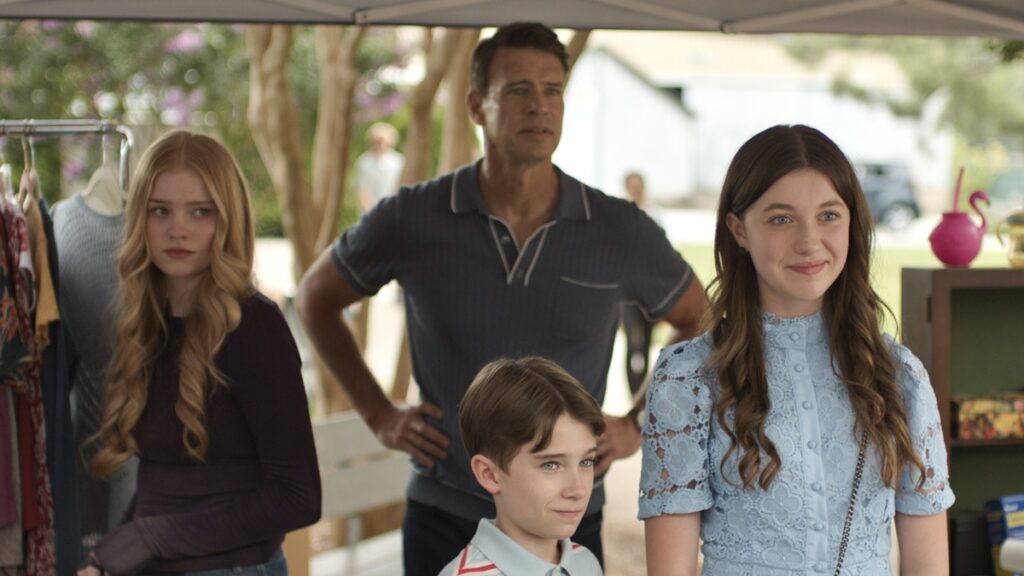
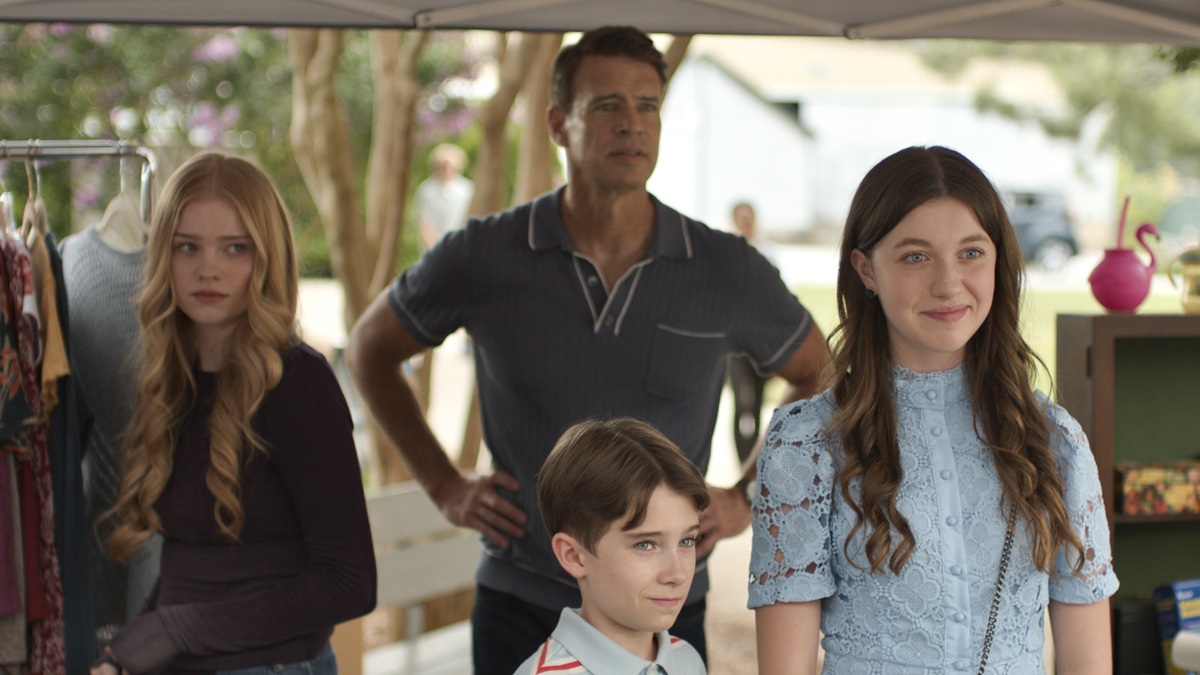
It shares a similar charm, wholesomeness, and grounded storytelling as Netflix’s Sweet Magnolias, right down to a strong balance of storylines among parents Malcolm, Lori, and David, and their respective teens and middle-schoolers.
Our review covers the first two installments, which is more than enough to determine whether this series will be your speed. These two episodes put in the work of establishing the characters, dynamics, and the series’ premise.
They catapult us right into the thick of things, following Scott Foley’s Pastor Malcolm Jeffries, a recent widow who is simply trying to keep his head above water while raising his three children alone.
He’s grounded and soothing, and despite the loss of his wife, Jenny, he somehow manages to keep a smile on his face. His positivity in the face of grief is inspiring, but what simmers beneath is a man who truly is lost, trying to navigate life without the woman he loves.
That tension surfaces frequently within the two installments.

Malcolm is the rock, the person who is steady and keeps everything together; he’s the person everyone turns to in their time of need. But, as his young son Justin inquires at some point, where does he go?
Sure, he’s steadfast in his faith, but there’s an unspoken layer to Malcolm that gives the impression that it’s infinitely easier to help guide others through their troubles than it is for him to sit with his own.
However, he’s not entirely alone.
There’s also Erinn Hayes’s Lori Soto. His late wife’s best friend has ultimately become his. A notable joke Lori’s ex-husband David (Manifest‘s J.R. Ramirez) even makes is that Lori got Malcolm in the divorce.
Their dynamic is instantly charming and feels lived-in.
It takes no time at all to completely immerse yourself in these characters’ lives, especially this friendship, which feels like a lifeline for the two as they work through their grief and navigate their worlds without Jenny.

Foley and Hayes have strong chemistry, and, given that their dynamic is at the very center of the series, it unsurprisingly emerges as the show’s strongest point.
There’s this merging of these two families that feels so modern, organic, and endearing.
It makes sense that, in the aftermath of Jenny’s death and Lori and David’s divorce, Lori and Malcolm would find themselves in a co-parenting situation that redefines what a traditional family looks like.
Sometimes your close friends are the only family you have.
The drive to cling to some bits of normalcy and tradition grounds the familial elements.
The series establishes that Sunday dinners were a staple for both families, and Malcolm and Lori maintain this, even as life has shifted the dynamics among many of their family members.
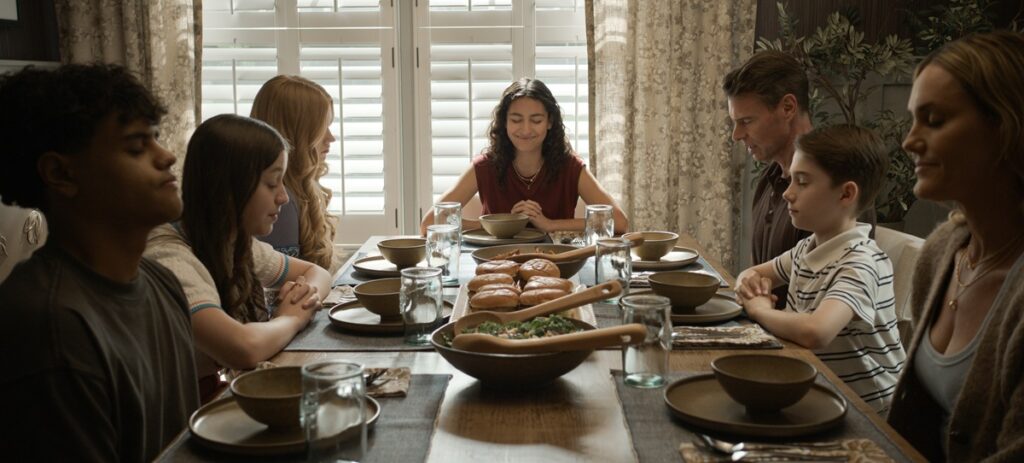

The fact that Malcolm and Lori are literal neighbors only reinforces how entwined their lives have become.
It’s the complexities of Malcolm and Lori’s relationship that serve as a strong foundation for the show to build upon in so many ways.
Have they become codependent in their shared grief? Is their friendship about each other or how much they miss Jenny? Are they this strong display of transference or something else entirely?
These are questions that you ponder as you watch these two lean on one another during some of life’s most challenging transitions. And the show doesn’t seem afraid to dig into them and explore the layers and ambiguity.
It also isn’t afraid to go at warp speed. It’s Not Like That doesn’t take its time; it hurls you right into the deep end of these characters, their lives, and these dynamics.

In some ways, it works well enough, especially as we get the exposition out of the way. But in other areas, it could benefit from a slower pace, and it certainly knows how to maintain the “drama” in family drama at nearly every conceivable turn.
Timeline-wise, we’re led to believe it’s been a few months since Jenny’s death and Lori’s divorce, and the people in both Malcolm’s and Lori’s lives who are pushing them to “get back out there” are mildly irksome.
It’s also ripe for drama and conflict.
The weight of Jenny’s death lingers, and we especially see that with Malcolm’s children. Eldest, Flora, is the most compelling of all. She’s taking on a bit more in her mother’s absence.
She exudes eldest-daughter energy, often mediating between Malcolm and the others, maintaining a quietly assertive presence with her siblings, and even holding her own against Malcolm.

Flora has her own battles, which add an intriguing layer to her. Her grief feels quieter, more subdued, what you expect from the kid trying to keep it together, and of the kids, I found her the most intriguing.
She also seems to be the child who struggles the most under the weight of being a PK (Pastor’s kid), and it results in her pulling away from faith, which proves to be a very realistic but non-problematic point of contention for her and her father.
Whereas the youngest, Justin, seems to be at the opposite end of the spectrum and very much possesses the earnestness and steadiness of his father. He also seems to hide his struggles just as much behind his radical positivity and light.
Pen has the most traditional trajectory for a tween girl — navigating grief during formative years, resulting in behavior that’s frustrating but still evokes empathy.
But even with the frustrations caused by her actions, It’s Not Like That never loses sight of her loss and internal battles.

It’s the complexity the series effortlessly gives its characters, adults and kids alike, that adds to the show’s charm and ability to hit its mark — resonating with people of all walks of life by simply and authentically showing us life.
Lori is quirky, refreshingly honest, and vulnerable. There are no false airs, and viewers can connect to that.
Merritt is a young man trying to figure out who he is and what he wants out of life without the pressures and expectations of his parents. And he feels the weight of their divorce the hardest.
His anger and frustration are heavy but not his defining qualities, thus subverting the usual archetypes.
And Casey, his sister, is a delightfully real depiction of what it’s like to be a self-assured teen girl who knows who she is at a time when her peers do not.
Her confidence and self-awareness are intimidating — people mock what they fear and don’t understand.

And the extra layer to it all is that, while she hasn’t lost her mother, it’s clear that Lori’s devotion to upholding what she and Jenny built for their families ironically still breeds some resentment and frustration — particularly when Lori can read as prioritizing Malcolm and his family above her own.
It’s Not Like That gives us flawed, messy, compelling characters and stories that feel real and familiar.
It recognizes that sometimes the best way to get through life is to see, reflected onscreen, that you’re not alone in it, with all its highs and lows.
And that’s precisely what makes family dramas like this work.
It’s Not Like That premieres with two episodes on Sunday, January 25.
All Prime Video subscribers can stream the series premiere for free; subsequent episodes are released weekly with the Wonder Project‘s subscription on Prime Video.
We don’t have a PR machine or a million-dollar budget — we have you.
If you’re reading, say hello in the comments or send this to a friend. Every little action helps.

The Pendragon Cycle: Rise of the Merlin offered a bold backstory, and forbidden romance for Merlin’s parents. Check out our review!
We spend a lot of time in the past getting a few more details about Barb on Fallout Season 2 Episode 6. It’s also time for Betty to lose.
The team almost loses Morgan for good on High Potential Season 2 Episode 10, as Wagner takes questionable risks and found family prevails!
A teenager’s injury could cause Port Wenn to lose a pivotal baseball game, which they blame Martin for. Our review!
George R.R. Martin is unhappy with House of the Dragon, but will that tension hurt or actually protect A Knight of the Seven Kingdoms?



TV Fanatic is searching for passionate contributors to share their voices across various article types. Think you have what it takes to be a TV Fanatic? Click here for more information and next steps.