




Novelizations are older than “talkies” and TV. One of the first novelizations was What Happened to Mary by Bob Brown. It narrated the 1912 silent film serial of the same name. Novelizations peaked in popularity in the 1960s and 1970s, when hundreds of novelizations were published each year.
Starting in the 1970s, VHS tapes and players became available, followed by DVDs in the 1990s. Home media may have gradually reduced the demand for new novelizations. When I was in elementary school in the 1990s, the kids’ sections in school and local libraries were full of novelizations like Jumanji by Todd Strasser (originally published under a pseudonym). As Kelly Jensen points out, the Jumanji novelization was an adaptation of an adaptation: the original Jumanji was a Caldecott Medal-winning picture book by Chris Van Allsburg.
If you were a PBS kid in the 1990s, like I was, maybe you watched an adorable Jack Russell terrier imagine himself in classic literature on Wishbone. Many Wishbone books were novelizations of episodes, such as The Prince and the Pooch by Caroline Leavitt, based on The Prince and the Pauper by Mark Twain.
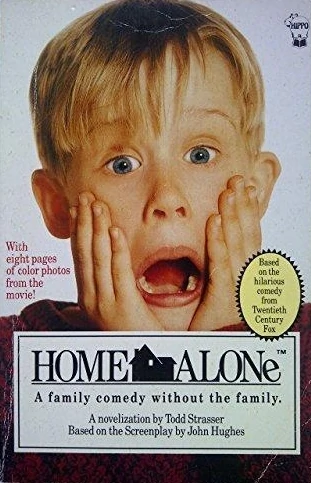
Many novelizations add character insights, clarifying details, and scenes that might not fit within a film or episode’s time constraints. The novelization of Home Alone by Todd Strasser mentions that Kevin’s mom is a fashion designer, which explains all the mannequins in the basement.
In the 21st century, most new novelizations are of popular SFF franchises, such as Star Wars, Star Trek, Doctor Who, Marvel, DC, and animated Disney films. Each of these major franchises has had dozens of novelizations since the 2000s, with more to come.
In the mid-20th century, as in other aspects of publishing in English, most novelizations were by white authors. In the 21st century, that has slowly started to change. The novelization of the movie Bend It Like Beckham by Narinder Dhami was published in 2002. More recently, acclaimed authors like Eve Ewing, Ta-Nehisi Coates, and Nnedi Okorafor have written movie tie-in comics for Marvel. Novelizations by authors of color are still rare, but I hope that’s changing.

The Church on Ruby Road by Esmie Jikiemi-Pearson is a YA novelization of the 2023 Doctor Who Christmas special, in which Ruby Sunday first meets the Fifteenth Doctor. Miles Morales: Spider-Man by Jason Reynolds is a YA novel based on Spider-Man: Into the Spider-Verse. It focuses more on the protagonist’s everyday life than the events of the movie, so it’s not exactly a novelization. In 2021, Disney published Encanto: The Junior Novelization by Angela Cervantes. Disney published junior novelizations of their recent movie Zootopia 2 and the upcoming Disney/Pixar movie Hoppers.
So, yes, people still publish and read film and TV novelizations. Novelizations offer writers and readers a chance to revisit their favorite characters and stories—even years or decades later. They can follow the film or TV version exactly, add to it, or contradict it. Good novelizations are more than just nostalgic tie-in merchandise. They give readers deeper insight into world-building, settings, and characters.