




Ever calculated how much time and money you’ve wasted on social content that went absolutely nowhere? That’s the hidden cost of the “post and pray” method—and it’s probably higher than you think.
A social media content strategy is a documented plan that defines what you’ll post, where you’ll post it, when you’ll publish, and how you’ll measure success. It connects every piece of content to your business goals, ensuring nothing goes out without purpose. It’s the foundation of any effective marketing strategy for brands serious about social media.
Here’s why this matters: 71% of marketers say social media delivers measurable ROI, up from 63% just two years ago. The difference between brands seeing returns and those burning budget? A documented strategy.
Having written the definitive books on social media marketing strategy, Maximize Your Social, and modern digital marketing strategy, Digital Threads, I have seen how clients have driven real business results through following the various advice I will present for you here.
In this guide, I’ll walk you through my 4-phase, 18-step framework for building a social media content strategy that actually moves the needle. We’ll cover everything from defining goals and understanding your audience to creating social content that converts and measuring what matters. Whether you’re a corporate marketer, entrepreneur, or content creator, you’ll leave with a practical roadmap you can implement immediately.
Key Takeaways
✅ A documented social media content strategy connects every post to business goals—71% of marketers now report measurable ROI from strategic social media.
✅ The 4-phase framework covers foundation (goals, audience, audit), blueprint (platforms, voice, content pillars), execution (creation, optimization, engagement), and measurement (KPIs, analysis, iteration).
✅ Apply the 70/20/10 content mix rule: 70% value-driven content, 20% curated/shared content, 10% promotional.
✅ Use the 50/30/20 resource allocation rule to prioritize your highest-impact social channels while still experimenting.
✅ Track KPIs aligned to specific goals—vanity metrics without context tell you nothing useful.
✅ Review and adapt monthly; social media rewards agility over rigid adherence to outdated plans.
Why a Social Media Content Strategy Isn’t Optional Anymore
Think of your social media content strategy as the blueprint for building a skyscraper. Without it, you might get a few walls up, maybe even a roof, but it’ll lack stability, direction, and ultimately crumble under pressure. In today’s hyper-connected world, simply showing up on social channels isn’t enough.
Beyond the “Post and Pray” Method
The days of haphazardly tossing social content onto your feeds and hoping for engagement are long gone. That’s the “post and pray” method, and it’s a surefire way to waste time, money, and valuable resources.
Your audience is savvier, platforms are more saturated, and the competition is fiercer than ever. According to Sprout Social’s Content Benchmarks Report, brands published an average of 9.5 posts per day across networks. That’s a lot of noise to cut through.
Here’s what makes it worse: social media algorithms actively reward strategic consistency. Adobe’s research confirms that algorithms favor accounts that post consistently over those that publish sporadically. Random posting doesn’t just fail to gain traction—it actively works against you.
The Business ROI of Strategic Social Media
Let’s be frank: businesses exist to generate returns. And social media, when executed strategically, is a powerful engine for that.
The numbers tell the story:
We’re talking about tangible returns that go beyond vanity metrics. A well-crafted marketing strategy for social media leads to increased brand awareness, stronger customer loyalty, higher website traffic, improved lead generation, and ultimately, more sales. Measuring social media ROI is absolutely possible when you approach it strategically.
What Separates High-Performing Brands
Take a look at the brands dominating social media. They aren’t just lucky; they’re strategic. According to The Sprout Social Index, almost half (46%) of consumers say their favorite brands stand out on social because they post original content.
What separates them:
Overwhelmed by Digital Marketing?
Just released: my new book to help small businesses, entrepreneurs, and marketers master digital marketing in today’s digital-first world.
Drawing on my Fractional CMO experience, Digital Threads simplifies complex strategies into clear, actionable steps for success.
Transform your business today—grab your copy! Click the cover or button below to buy on Amazon.

- Data-driven approach: Every decision backed by analytics, not gut feelings
- Platform-specific optimization: Social content tailored to each platform’s unique strengths
- Consistent measurement and iteration: Regular reviews and adjustments based on performance
They have a north star guiding their content, ensuring every post contributes to a larger goal. That’s the level of intentionality we’re aiming for.
PHASE 1: Laying the Foundation — Understanding Your Digital Ecosystem
Before you create a single piece of social content, you need to understand where you’re starting and where you’re going. This phase establishes the groundwork everything else builds upon.
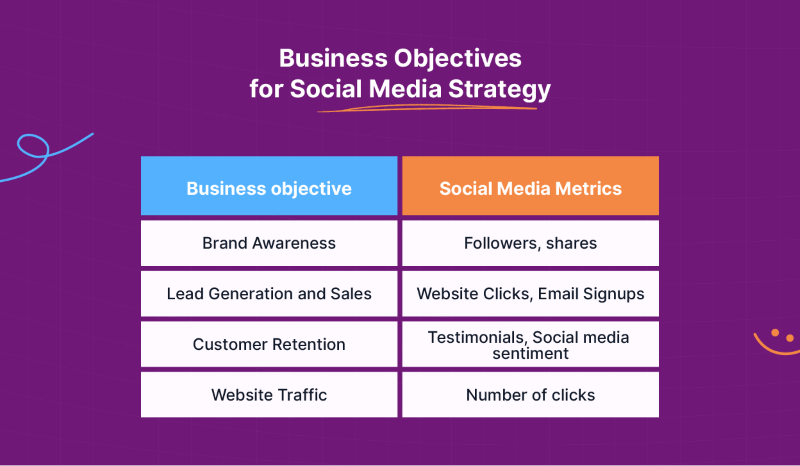
What are social media goals? Social media goals are specific, measurable outcomes you want to achieve through your social media activities. They connect your daily posting efforts to tangible business results like revenue, leads, or brand awareness, transforming random content into purposeful marketing strategy.
Before you even think about what to post, you need to know why you’re posting. What do you want to achieve? This is the bedrock of your entire strategy.
How Do You Set SMART Goals That Drive Results?
Forget vague aspirations like “get more followers.” We need SMART goals: Specific, Measurable, Achievable, Relevant, and Time-bound.
| SMART Element | Question to Ask | Example |
|---|---|---|
| Specific | What exactly do you want to achieve? | Increase Instagram engagement rate |
| Measurable | How will you track progress? | From 2.1% to 3.5% engagement rate |
| Achievable | Is this realistic given your resources? | Yes, with consistent posting and interactive content |
| Relevant | Does it align with business objectives? | Higher engagement drives more website traffic |
| Time-bound | When will you achieve this? | Within the next six months |
Instead of “increase engagement,” a SMART goal looks like: “Increase Instagram engagement rate by 15% within the next six months by posting interactive stories and running weekly Q&A sessions.”
Common Social Media Goal Examples
Your goals should map directly to KPIs you can actually track:
| Goal | Key Metrics | What to Track |
|---|---|---|
| Brand Awareness | Reach, Impressions, Follower Growth | How many new people see your content |
| Website Traffic | CTR, Referral Visits | Clicks from social to your site |
| Lead Generation | Conversion Rate, Form Submissions | Contacts captured through social |
| Community Building | Engagement Rate, Comments, Shares | Depth of audience interaction |
| Sales | Attributed Revenue, ROAS | Direct revenue from social efforts |
Pick one or two primary goals to focus on first. Trying to achieve everything at once often leads to achieving nothing at all. I recommend starting with a clear social media strategy template to keep yourself organized.
Step 2 — Know Your Audience (Inside and Out)
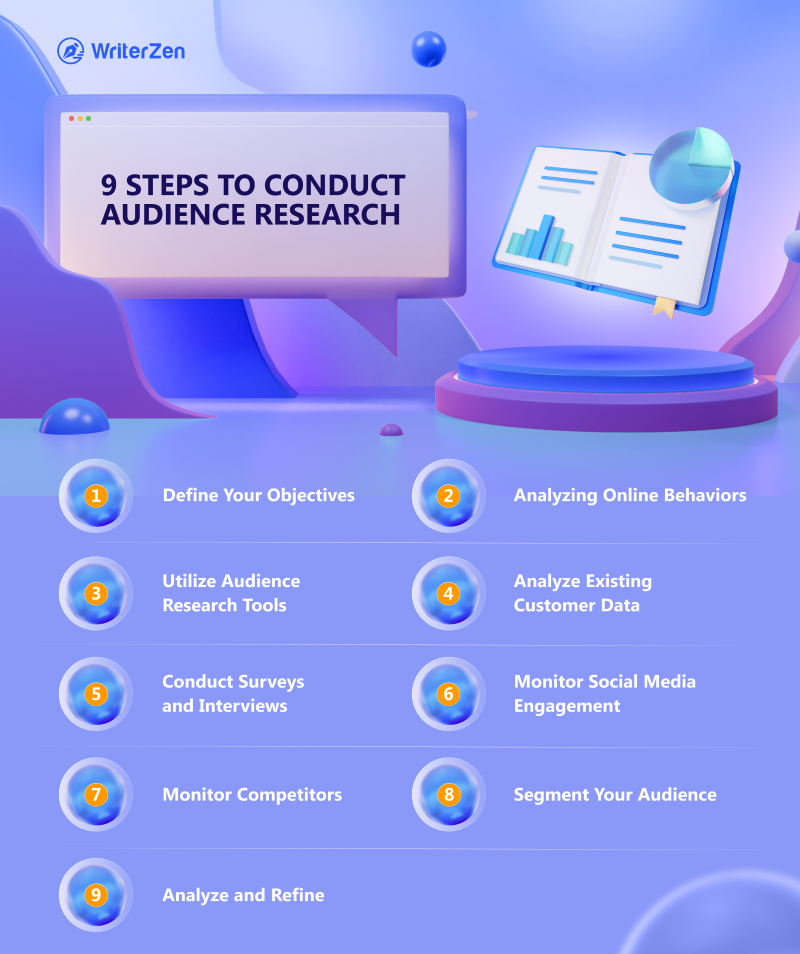
What is audience research in social media? Audience research is the process of gathering demographic, psychographic, and behavioral data about the people you want to reach on social media. It reveals who your ideal customers are, what they care about, which social channels they use, and how they prefer to consume content.
Imagine trying to sell snow shovels in Hawaii. You’d be met with blank stares because you don’t understand your audience’s needs. The same applies to social media. You must understand who you’re talking to.
Gather Demographic and Psychographic Data
Demographics are the basics: age, gender, location, income, education. Psychographics dig deeper: their interests, values, pain points, aspirations, lifestyle, and preferred communication style.
Use these sources to build a comprehensive picture:
- Platform analytics (Instagram Insights, LinkedIn Analytics, etc.)
- Customer surveys and feedback
- Market research and industry reports
- Social listening tools
- Your existing customer data
Analyze Platform Behavior and Preferences
Where does your audience hang out online? What kind of social content do they consume there? According to Pew Research, YouTube and Facebook remain the most widely used platforms in the United States, but platform preferences vary dramatically by age.
Questions to answer:
- Which social channels do they use most frequently?
- When are they most active?
- What content formats do they engage with most—video, infographics, podcasts, or text posts?
- Do they prefer short-form video, long-form articles, or visual posts?
Understanding their habits on each platform is crucial for tailoring your content effectively. I’ve covered platform-specific strategies for Instagram that demonstrate how much behavior varies across channels.
Build Actionable Audience Personas
Create detailed fictional representations of your ideal customers. Give them names, jobs, hobbies, and even frustrations.
Example Persona:
- Name: Marketing Molly
- Age: 32
- Role: Marketing Manager at mid-size B2B company
- Pain Points: Short on time, needs quick wins, overwhelmed by algorithm changes
- Platform Preference: LinkedIn for professional content, Instagram for inspiration
- Content Preference: Actionable tips, templates, infographics, case studies
These personas will guide every content decision you make. When you’re about to post something, ask yourself: “Would Marketing Molly find this valuable?” If not, reconsider.
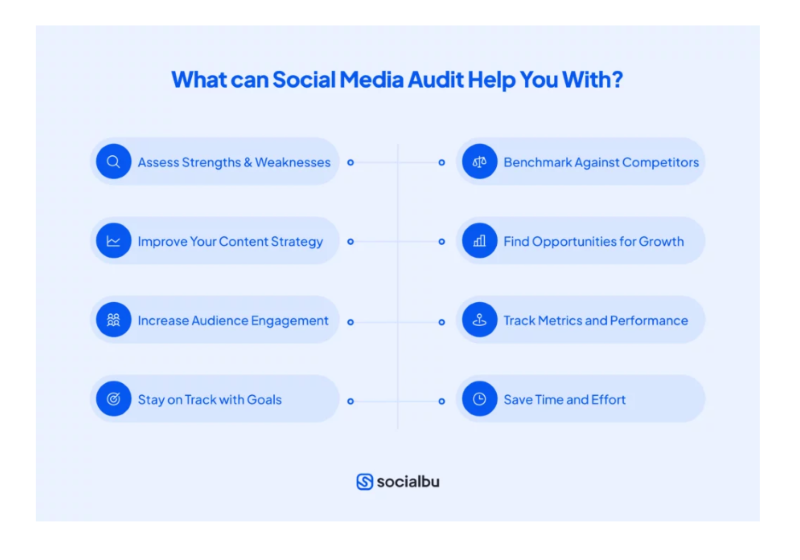
What is a social media audit? A social media audit is a comprehensive review of your current social media presence, including profile optimization, content performance, audience growth, and competitive positioning across all your social channels. It establishes your baseline and reveals immediate opportunities for improvement.
Before charting your new course, you need to know where you currently stand. A thorough audit is like taking inventory of your existing social assets.
Assess Your Current Content Performance
Look at your analytics from the past 6-12 months:
- Which posts performed best in terms of engagement, reach, and conversions?
- Which fell flat?
- What content formats resonated—videos, infographics, carousels, or text posts?
- What topics generated the most discussion?
Don’t just look at the numbers—try to understand why certain social content succeeded or failed. Patterns will emerge that inform your strategy moving forward.
Evaluate Profile and Brand Consistency
Are your profiles optimized and consistent across all social channels? Check:
- Profile pictures and cover photos: Current, high-quality, branded
- Bios: Clear value proposition, relevant keywords, updated links
- Contact information: Accurate and easy to find
- Visual identity: Consistent colors, fonts, and image style
Inconsistencies confuse your audience and dilute your brand. Your profiles should feel like they belong to the same company, even if the tone adapts slightly per platform.
Identify Quick Wins and Gaps
An audit often reveals low-hanging fruit:
- Outdated links in your bio
- Social channels you haven’t touched in months
- High-performing content that could be repurposed
- Missing calls-to-action
- Inconsistent posting schedules
Identify immediate fixes that can improve your presence. Also, pinpoint any significant gaps in your content types or platform presence. Maybe you’ve never tried video or infographics, or you’re ignoring a platform where your audience is active.
Step 4 — Analyze Your Competitors
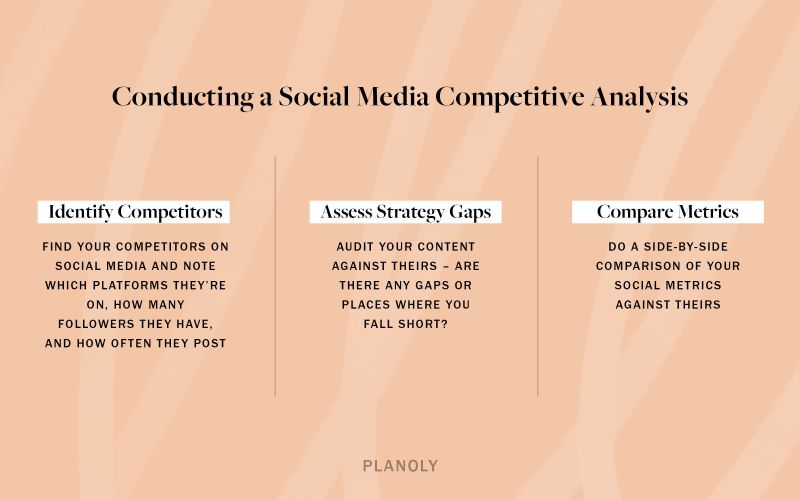
What is competitive analysis in social media? Competitive analysis examines how your competitors use social media, including their content strategies, posting frequency, engagement patterns, and audience response across various social channels. It reveals best practices to adopt, mistakes to avoid, and opportunities to differentiate your brand.
You’re not operating in a vacuum. Your competitors are vying for the same audience’s attention. Learning from them isn’t about copying; it’s about understanding the landscape and finding opportunities to differentiate yourself.
Identify Your Top 3-5 Competitors
Who should you analyze?
- Direct competitors: Companies offering similar products/services to the same audience
- Indirect competitors: Businesses solving the same problem differently
- Aspirational competitors: Brands doing social media exceptionally well (even outside your industry)
Don’t just look at the obvious players. Consider thought leaders and content creators your audience follows—they’re competing for the same attention.
Reverse-Engineer Their Strategy
Examine their social profiles systematically:
| Analysis Area | What to Look For |
|---|---|
| Platforms | Which social channels are they active on? Which do they prioritize? |
| Content Types | Videos, images, infographics, articles, stories? What formats dominate? |
| Posting Frequency | How often do they post on each platform? |
| Engagement | What’s their engagement rate? What posts get most interaction? |
| Voice & Tone | How do they communicate? Formal? Casual? Humorous? |
| Paid Strategy | Are they running social media advertising? What campaigns? |
| Gaps | What are they NOT doing that you could do better? |
Look for patterns and identify areas where they excel—and more importantly, where they fall short. This reveals opportunities for you to stand out. I use social listening tools to track competitor activity systematically.
Competitive Analysis Tools
Tools that can help:
- Socialinsider: Deep competitive benchmarking and analytics
- Sprout Social: Comprehensive competitor reports
- SEMrush: Social media tracker and competitive intelligence
- BuzzSumo: Content analysis and trending topics
PHASE 2: Building Your Blueprint — Crafting the Strategy
With your foundation in place, it’s time to build the strategic framework that will guide your content creation and distribution.
Step 5 — Choose Your Core Platforms Wisely
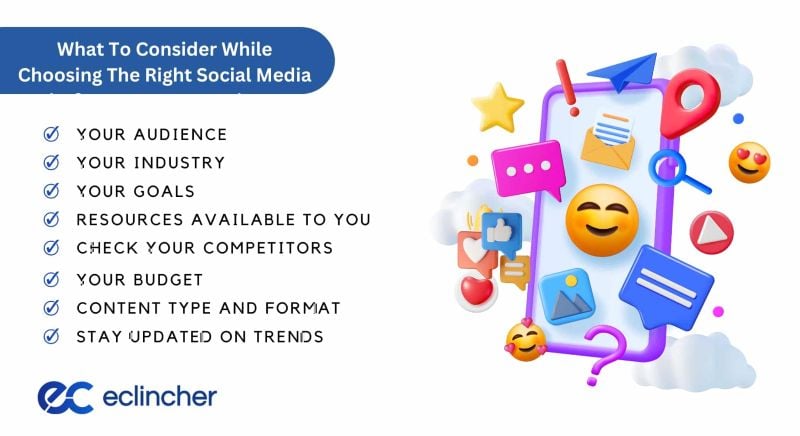
How do you choose the right social media platforms? Select social channels based on three factors: where your target audience is most active, which platforms align with your goals, and where your content format strengths match platform preferences. Focus on 2-3 platforms rather than spreading resources thin across many.
You don’t need to be everywhere. It’s far better to excel on a few platforms where your audience is active than to spread yourself thin across many social channels.
Match Platforms to Audience and Goals
Remember your audience personas? Where do they spend their time? If your target is Gen Z, TikTok and Instagram are likely strong contenders. If it’s B2B professionals, LinkedIn is essential.
Align your platform choice with your primary goals:
- Visual brand awareness: Instagram, Pinterest, TikTok
- B2B lead generation: LinkedIn
- Community building: Facebook Groups, Discord
- Customer service: X (Twitter), Facebook
- SEO and long-form education: YouTube, podcasts
Platform-by-Platform Breakdown
| Platform | Best For | Primary Format | Key Demographics |
|---|---|---|---|
| Visual storytelling, brand awareness | Reels, Stories, Carousels | 18-34 | |
| B2B, thought leadership | Articles, Documents, Native Video | Professionals 25-54 | |
| TikTok | Reach, virality, authenticity | Short-form video | Gen Z, Millennials |
| Community, older demographics | Video, Groups, Events | 25-54 | |
| X (Twitter) | Real-time engagement, news | Text, Threads | News seekers, B2B |
| YouTube | Long-form education, SEO | Video (all lengths) | All ages |
| Visual discovery, purchase intent | Pins, Idea Pins, Infographics | 25-44, skews female |
I’ve compared TikTok vs Instagram in detail if you’re deciding between these platforms for your video content strategy.
Apply the 50/30/20 Resource Allocation Rule
Here’s a framework I recommend for allocating your social media resources (time, budget, content creation):
- 50% → Your primary, highest-impact social channels
- 30% → Secondary platforms that support your goals
- 20% → Experimenting with new platforms or content formats
This ensures you prioritize where you can make the biggest impact while still allowing for growth and innovation. Don’t be a jack of all platforms and master of none.
Step 6 — Develop Your Brand Voice and Messaging
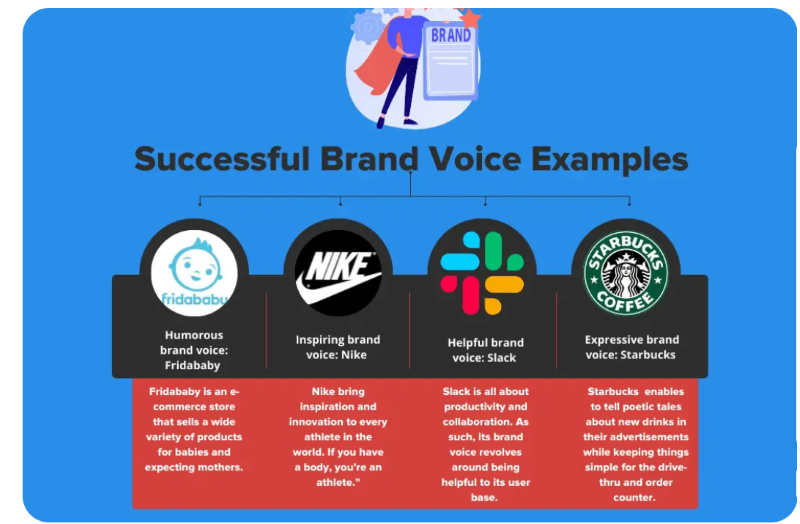
What is brand voice on social media? Brand voice is your brand’s consistent personality and communication style across all social media interactions. It encompasses your tone (formal vs. casual), language choices, and the emotions you evoke—making your brand recognizable even without seeing your logo.
Your brand voice is your personality online. It dictates how you communicate, the words you choose, and the overall tone of your interactions across all social channels.
Define Your Brand Voice Guidelines
Ask yourself: Is your brand voice…
- Formal or casual?
- Witty or serious?
- Empathetic or authoritative?
- Playful or professional?
- Educational or entertaining?
Create a document outlining these characteristics with clear examples:
| Voice Attribute | Do | Don’t |
|---|---|---|
| Conversational | “Here’s what I’ve learned…” | “It has been determined that…” |
| Direct | “Try this approach.” | “You might consider perhaps exploring…” |
| Confident | “This strategy works.” | “This might possibly help somewhat.” |
Include example posts demonstrating your voice in action. This ensures consistency, no matter who crafts the social content.
Create Visual Brand Standards
Beyond words, your visuals speak volumes. Define:
- Color palette: Primary and secondary brand colors
- Typography: Fonts for headlines and body text
- Logo usage: Clear space, minimum sizes, variations
- Image style: Bright and airy? Dark and moody? Candid or polished?
- Infographic templates: Consistent style for data visualization
- Video aesthetics: Editing style, intro/outro, lower thirds
A brand style guide is indispensable for maintaining a cohesive look across all platforms. For guidance on creating consistent visual content, check out my post on social media content creation.
Adapt Voice to Platform While Staying Consistent
While your core brand voice remains consistent, adapt its expression for each platform. A LinkedIn post can be more formal than a TikTok video, but both should unmistakably sound and look like your brand.
It’s like wearing different outfits for different occasions while still maintaining your core personality. You’re still you—just dressed appropriately for the context.
Step 7 — Brainstorm Content Pillars and Themes
What are content pillars? Content pillars are 3-5 core themes or topics that your social media content consistently revolves around. They’re based on your brand expertise, audience interests, and business objectives—providing structure that prevents random posting while ensuring variety within focused categories.
This is where the magic of content creation begins. Content pillars ensure your social content remains relevant to your audience and aligned with your goals.
What Are Content Pillars?
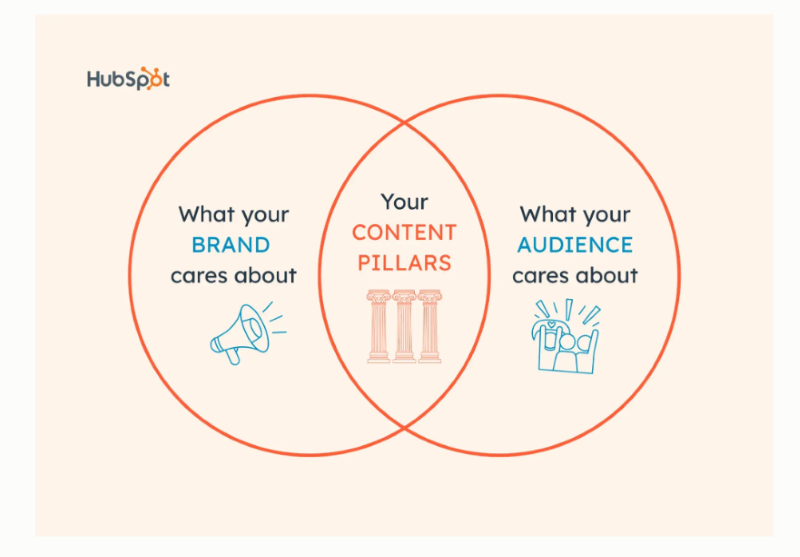
Think of them as the main beams supporting your content house. They’re overarching themes that directly relate to your brand, your audience’s interests, and your business objectives. They provide structure and focus, preventing random posting.
How to Define Your 3-5 Content Pillars
To find your pillars, ask yourself:
- What core problems do we solve for our audience?
- What expertise do we want to be known for?
- What are our audience’s biggest interests related to our industry?
- What values do we want to convey?
Example: A Sustainable Fashion Brand’s Pillars:
- Sustainable Living Tips: How to live greener beyond fashion
- Behind the Seams: Transparency in ethical production
- Style & Inspiration: Showcasing outfits and trends
- Community Spotlights: Featuring customers and partners
- Industry Education: Fashion’s environmental impact
For more inspiration, I’ve written about how to never run out of social media content ideas.
The 5/5/5 Rule for Content Diversification
This framework helps ensure your social content within each pillar is varied and engaging:
5 Content Pillars × 5 Content Formats × 5 Content Types = 125 content combinations
5 Formats:
- Short-form video
- Static images/infographics
- Carousels
- Text/stories
- Live/interactive (or podcasts for audio-first audiences)
5 Types (purposes):
- Educate: Teach something new
- Entertain: Make them smile or feel inspired
- Engage: Prompt interaction
- Empathize: Show you understand their challenges
- Evangelize: Share your brand story and values
This matrix gives you endless content possibilities while staying within your strategic framework.
Step 8 — Determine Your Content Mix
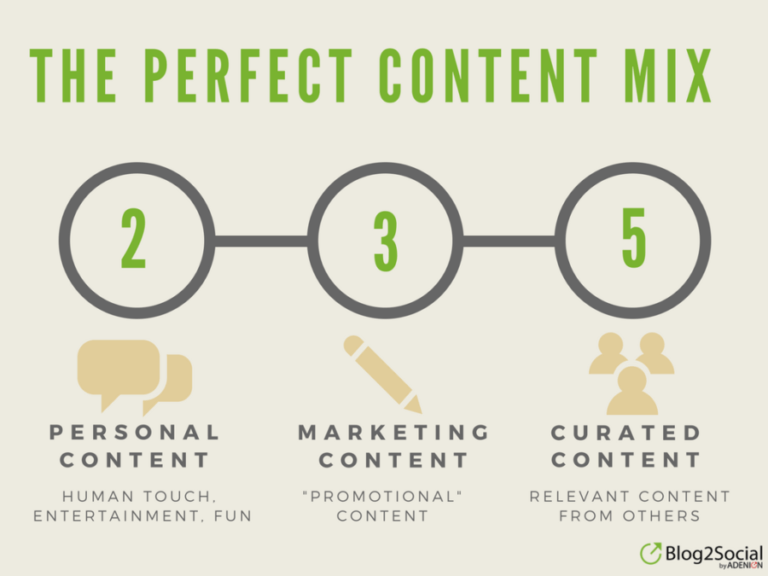
What is a content mix in social media? A content mix is the strategic balance between different types of social content you publish—typically value-driven content, curated/shared content, and promotional content. The right mix builds audience trust before asking for the sale.
Now that you have your pillars, how do you balance different types of content?
The 70/20/10 Content Mix Rule
This proven framework keeps your feed valuable rather than salesy:
| Percentage | Content Type | Purpose |
|---|---|---|
| 70% | Value-driven | Educational, informative, entertaining—builds trust |
| 20% | Curated/shared | User-generated content, industry news, partner content |
| 10% | Promotional | Direct selling, product launches, social media advertising |
This ensures you’re primarily building relationships and providing value, earning the right to promote occasionally. Nobody wants to follow an account that only sells at them.
Balance Evergreen and Trending Content
Evergreen content is timeless and relevant for months or even years:
- How-to guides
- Ultimate lists
- Foundational concepts
- Templates, frameworks, and infographics
Trending content capitalizes on current events, memes, or challenges:
- Timely takes on industry news
- Cultural moments relevant to your brand
- Platform-specific trends (sounds, formats)
A healthy mix ensures you have a consistent base of valuable social content while staying fresh and current. I aim for roughly 70% evergreen and 30% trending in my own content marketing efforts.
Step 9 — Design Your Content Calendar
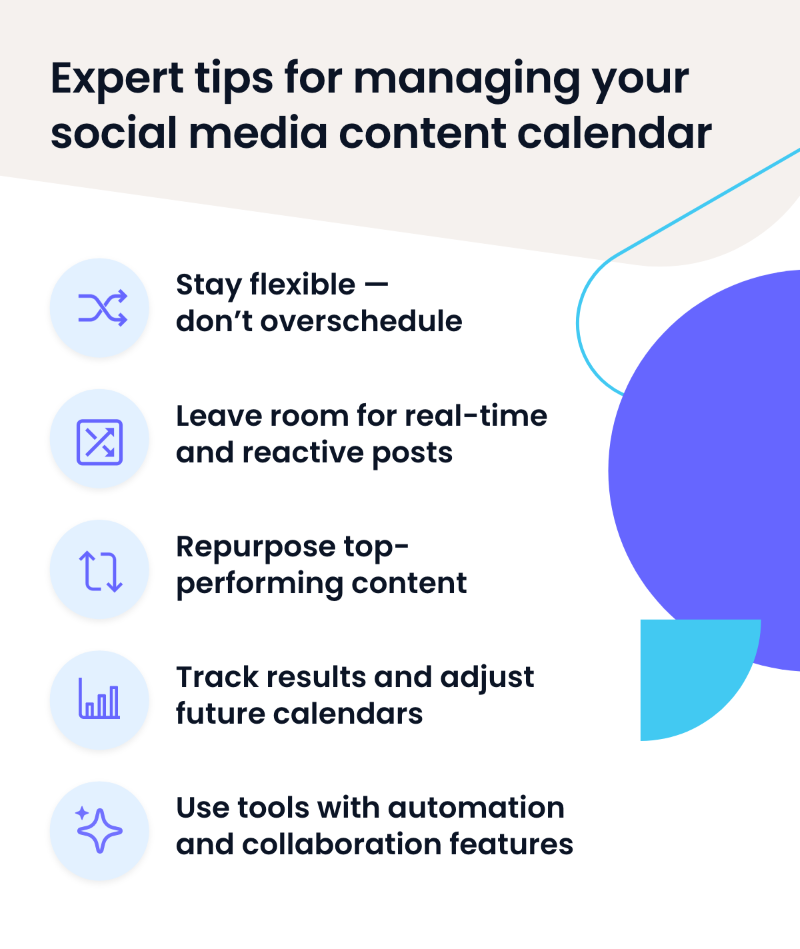
What is a social media content calendar? A content calendar is a planning document that organizes what social content you’ll publish, when, where, and in what format. It transforms your marketing strategy into actionable daily tasks, ensures consistent posting, and enables batch creation for efficiency.
A content calendar is your master plan, turning your strategy into actionable daily tasks. It brings order to the chaos of consistent publishing.
Essential Content Calendar Elements
Each entry in your calendar should include:
| Element | Description |
|---|---|
| Date & Time | When will it be posted? |
| Platform | Which social channels will it go to? |
| Content Pillar | Which pillar does it align with? |
| Format | Image, video, carousel, infographic, story, text? |
| Copy/Caption | The actual text |
| Visual Assets | Links to images/videos |
| CTA | What action do you want people to take? |
| Campaign/Goal | Which specific goal does it support? |
| Status | Draft, pending approval, scheduled, posted |
Set Your Posting Frequency by Platform
Different social channels thrive on different frequencies. Buffer’s research suggests these starting points:
| Platform | Suggested Frequency | Notes |
|---|---|---|
| Instagram Feed | 3-5 posts/week | Quality over quantity |
| Instagram Stories | Daily | Keeps you top-of-mind |
| 3-5 posts/week | Weekday mornings perform best | |
| TikTok | 1-3 posts/day | Algorithm rewards frequency |
| 1-2 posts/day | Avoid over-posting | |
| X (Twitter) | 3-5 tweets/day | Real-time platform |
It’s better to post less frequently but consistently with high quality than to post daily with poor content.
Content Calendar Tools
Free options:
- Google Sheets/Excel
- Notion
- Trello
Paid options:
I’ve compiled a comprehensive list of the best social media scheduling tools if you need help choosing.
Efficiency Hacks: Batch Create and Repurpose
Don’t create social content one post at a time.
Batch Creation: Dedicate specific blocks of time to create multiple pieces of content. Shoot all your videos for the month in one session. Write a week’s worth of captions in one focused hour.
Repurposing: Transform one piece of content into many:
- Blog post → LinkedIn article → Twitter thread → Instagram carousel → YouTube video → Infographic → Multiple quote graphics
- Podcast episode → Audiogram clips → Blog post → Social quotes → Newsletter content
I’ve written an entire guide on how to create a content calendar with repurposing strategies built in.
Step 10 — Allocate Resources and Responsibilities
What resources are needed for social media management? Social media management requires a combination of people (content creators, community managers, analysts), tools (scheduling, analytics, design), time allocation, and budget for social media advertising. The specific mix depends on your goals and scale.
A strategy without resources is just a wish. You need to assign who does what.
Define Roles and Ownership
Clear roles prevent bottlenecks and ensure accountability:
| Role | Responsibilities |
|---|---|
| Content Creator | Writing copy, designing graphics and infographics, shooting video |
| Scheduler/Publisher | Loading content into calendar, scheduling posts across social channels |
| Community Manager | Responding to comments and DMs, fostering engagement |
| Analyst | Tracking metrics, reporting performance, recommending optimizations |
| Approver | Final sign-off on content before publishing |
Even if you’re a solopreneur wearing all these hats, consciously allocating time for each role helps maintain structure. Learn more about what social media management really entails.
Establish Workflows and Approval Processes
How does social content move from idea to publication?
Sample Workflow:
- Ideation: Content ideas generated and added to backlog
- Creation: Copy written, visuals and infographics created
- Review: Quality check, brand voice alignment
- Approval: Manager/legal sign-off (if required)
- Scheduling: Content loaded into publishing tool
- Publishing: Content goes live across social channels
- Engagement: Team monitors and responds
- Analysis: Performance tracked and reported
Document your process so anyone can follow it.
Scale Your Team as You Grow
As your social media efforts expand:
When to hire:
- You’re consistently missing publishing deadlines
- Engagement quality is suffering because no one has time to respond
- Analytics go unreviewed for weeks
- You need specialized skills (video editing, social media advertising, podcast production)
Key skills for social media hires:
- Strong writing and communication
- Visual design sense
- Data literacy
- Platform-specific expertise
- Community management experience
When to outsource:
- Need specialized content (professional video, custom infographics)
- Require temporary capacity for campaigns
- Want expertise you can’t afford full-time
PHASE 3: Bringing It to Life — Content Creation and Distribution
With your foundation and blueprint complete, it’s time to actually create and publish social content that converts.
Step 11 — Create Engaging Content That Converts
What makes social media content engaging? Engaging social content stops the scroll by delivering immediate value—whether educational, entertaining, or emotionally resonant. It’s platform-native, visually compelling, and includes clear calls-to-action. The best content feels like it was made specifically for the audience consuming it.
This is where your marketing strategy comes to life. Your content needs to grab attention, deliver value, and drive action.
High-Performing Content Formats
Short-form Video leads across platforms. According to HubSpot’s State of Marketing Report, short-form video delivers the highest ROI of any content format.
Top-performing formats include:
- Reels, TikToks, Shorts: Highly engaging, algorithm-favored
- Carousels: Educational content that encourages saves and shares
- Infographics: Data visualization that’s highly shareable
- Interactive content: Polls, Q&As, quizzes
- Behind-the-scenes: Authentic, humanizing content
- User-generated content: Social proof that builds trust
- Podcasts and audiograms: Audio content repurposed for social channels
I’ve covered YouTube Shorts in detail if you’re looking to expand into that format.
Leverage User-Generated Content (UGC)
UGC builds trust like nothing else can. When real customers share their experiences, it’s more credible than anything you could create yourself.
Why UGC works:
- 92% of consumers trust peer recommendations over brand advertising
- It provides authentic social proof
- It generates content at scale without creating it yourself
How to encourage UGC:
- Create a branded hashtag
- Run contests or challenges
- Feature customers prominently
- Make sharing easy with clear CTAs
Integrate Influencer and Creator Partnerships
Collaborating with relevant influencers extends your reach to trusted audiences.
| Influencer Type | Follower Count | Best For |
|---|---|---|
| Nano | 1K-10K | Hyper-local, authentic engagement |
| Micro | 10K-100K | Niche expertise, strong trust |
| Macro | 100K-1M | Broader reach, professional content |
| Mega | 1M+ | Mass awareness, celebrity status |
Micro-influencers often deliver better ROI because their audiences are more engaged and trusting. I wrote an entire book about this—The Age of Influence—if you want to go deeper.
Step 12 — Optimize Content for Each Platform
Why does platform-specific optimization matter? Each social channel has unique algorithms, audience expectations, and content formats. Social content optimized for one platform often fails when copy-pasted to another. Platform-native content consistently outperforms cross-posted content.
One size rarely fits all in social media.
Platform-Specific Best Practices
Instagram:
- Use 3-5 relevant hashtags (Instagram has deprioritized hashtag discovery)
- Hook viewers in the first second of Reels
- Use carousels for educational content (higher save rates)
- Post Reels during evening hours (7-9 PM)
LinkedIn:
- Native documents and infographics get 3x more clicks than external links
- First line must hook readers before the “see more” cut-off
- Thought leadership outperforms promotional content
- Best times: Tuesday-Thursday, 7-8 AM
TikTok:
- Hook within the first second—or lose the viewer
- Use trending sounds for discoverability
- Raw, authentic content outperforms polished
- Post consistently (algorithm rewards frequency)
Facebook:
- Groups drive higher engagement than pages
- Video content gets priority in the feed
- Community features build loyalty
- Best for reaching 25-54 demographic
Tailor Formats, Not Just Copy
It’s not enough to tweak the caption. A message about a new product might be:
- Instagram: 30-second Reel showing the product in action
- LinkedIn: Article or infographic explaining the problem it solves
- TikTok: Behind-the-scenes of how it was made
- X: Thread breaking down the key features
- Podcast: Deep-dive discussion on the product development journey
Each format is chosen to best suit the platform’s native experience. Copy-paste across social channels is a recipe for mediocrity.
Step 13 — Implement a Consistent Posting Schedule
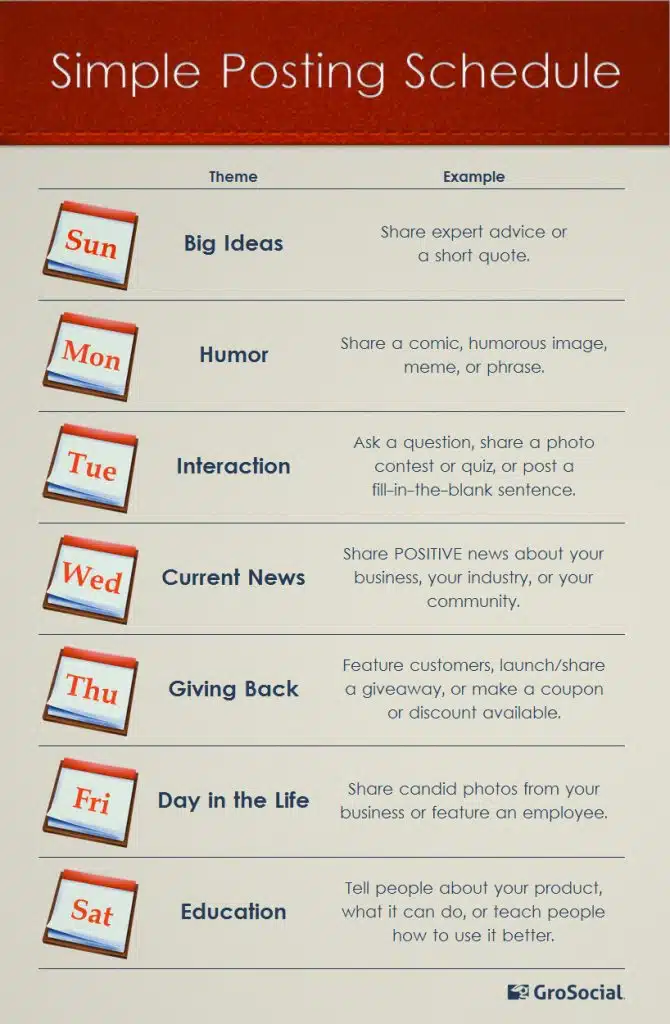
When is the best time to post on social media? Sprout Social’s research shows the overall best times are Tuesdays through Thursdays between 10 a.m. and 5 p.m. However, optimal times vary by platform and your specific audience—your own analytics should guide your schedule.
Consistency is key to algorithm favorability and audience expectation.
Optimal Posting Times by Platform
| Platform | Best Days | Best Times | Worst Times |
|---|---|---|---|
| Monday-Thursday | 10 AM – 3 PM | Late night weekends | |
| Tuesday-Thursday | 7-8 AM, 12 PM | Weekends | |
| TikTok | Tuesday-Thursday | 2-6 PM | Early morning |
| Tuesday-Friday | 9 AM – 1 PM | Late night | |
| X (Twitter) | Tuesday-Thursday | 9-11 AM | Weekends |
Use your platform analytics to identify when your specific audience is most active. General benchmarks are starting points, not gospel.
Use Scheduling Tools for Efficiency
Scheduling tools let you plan and queue social content in advance, ensuring consistency without being online 24/7.
Best practices:
- Schedule your core content in advance
- Leave room for real-time engagement and timely posts
- Don’t set it and forget it—monitor and engage when posts go live
- Use analytics to refine your posting schedule over time
Step 14 — Engage With Your Audience
Why is engagement important on social media? Engagement transforms followers into community members and customers. According to The Sprout Social Index, nearly three-quarters of consumers expect a response on social within 24 hours. Brands that engage build trust; those that broadcast get ignored.
Social media is a two-way street. Don’t just broadcast; converse.
Respond Promptly to Comments and DMs
Acknowledge every comment, question, and direct message. This shows you value your audience and builds community.
Response time targets:
- DMs: Within 1-2 hours during business hours
- Comments: Within 4-6 hours
- Mentions: Same day
Create templates for frequently asked questions to speed up responses without sacrificing personalization.
Foster Two-Way Conversations
Engagement tactics:
- Ask questions in your captions
- Run polls in Stories
- Host Q&A sessions
- Go live and interact in real-time
- Highlight and respond to community members
- Create social content based on audience feedback
You’re not talking at your audience—you’re talking with them.
Establish Social Media Guidelines and Procedures
Define how your team should interact:
| Area | Guidelines |
|---|---|
| Response Tone | Match brand voice, be helpful and friendly |
| Escalation | When to escalate to manager or legal |
| Disclosures | FTC compliance for sponsored content and social media advertising |
| Copyright | Rules for sharing others’ content |
| Inclusivity | Language and imagery standards |
Having clear guidelines ensures consistent and appropriate engagement across all team members.
Step 15 — Handle Negative Feedback and Crisis Management
How should brands handle negative feedback on social media? Address negative feedback promptly with empathy, acknowledge the issue, apologize if appropriate, and offer a solution. Move heated conversations to private channels. Never delete legitimate criticism—only spam, hate speech, or personal attacks warrant removal.
No brand is immune to criticism or crisis. How you handle it defines your brand’s resilience.
Develop Standard Operating Procedures (SOPs) for addressing negative comments:
Response Framework:
- Acknowledge: Thank them for the feedback
- Empathize: Show you understand their frustration
- Apologize: If warranted, apologize sincerely
- Act: Offer a solution or next step
- Move offline: Take complex issues to DM, email, or phone
When to respond publicly vs. privately:
- Simple questions or mild complaints: Public
- Complex issues requiring personal info: Private
- Ongoing back-and-forth: Move to private
When to hide or delete:
- Spam or bot comments
- Hate speech or harassment
- Personal attacks on employees or other customers
- Never: Legitimate criticism or constructive feedback
Crisis Communication Framework
Have a plan in place before you need it:
Warning signs to watch:
- Sudden spike in negative mentions
- Viral complaint or controversy
- Media inquiries about your brand
- Employee-related incidents
Crisis response steps:
- Assemble your crisis team immediately
- Assess the situation and severity
- Pause scheduled social content
- Issue pre-approved holding statement
- Monitor conversation closely
- Provide substantive response when facts are clear
- Document everything for post-crisis analysis
Post-crisis:
- Conduct thorough review
- Update your crisis plan
- Address root causes
- Rebuild trust through actions, not just words
PHASE 4: Refining and Growing — Measuring and Adapting
The best social media strategies are living documents. This final phase ensures continuous improvement.
Step 16 — Track Your Key Performance Indicators (KPIs)
What are social media KPIs? KPIs (Key Performance Indicators) are specific metrics you track to measure whether your social media efforts are achieving your goals. Effective KPIs are directly tied to business objectives—not vanity metrics that look impressive but don’t drive results.
Remember those SMART goals? Now it’s time to measure if you’re hitting them.
Essential KPIs by Goal
| Goal | Key Metrics | How to Track |
|---|---|---|
| Awareness | Reach, Impressions, Follower Growth, Mentions | Platform analytics, social listening |
| Engagement | Engagement Rate, Likes, Comments, Shares, Saves | Platform analytics |
| Traffic | Click-Through Rate, Website Visits from Social | UTM parameters, Google Analytics |
| Leads/Conversions | Form Submissions, Sign-ups, Purchases, Cost Per Lead | CRM, conversion tracking |
| Sentiment | Positive/Negative Mentions, Brand Sentiment Score | Social listening tools |
Set Up Tracking and Dashboards
Native analytics to use:
- Instagram Insights
- LinkedIn Analytics
- Facebook Insights
- TikTok Analytics
Third-party tools:
Reporting cadence:
- Weekly: Quick performance check, engagement review
- Monthly: Full metrics review, content performance analysis
- Quarterly: Goal progress assessment, marketing strategy adjustments
Step 17 — Analyze Your Performance Data
How do you analyze social media performance? Effective analysis goes beyond surface metrics to identify patterns, trends, and correlations. Look at what content types, topics, and formats drive the most meaningful engagement and conversions—then do more of what works and less of what doesn’t.
Collecting data is only half the battle; understanding what it means is where the real power lies.
What the Data Is Telling You
Look for patterns and correlations:
- Which content pillars perform best?
- Which social channels deliver the highest ROI?
- What posting times generate most engagement?
- Is your audience responding to specific CTAs?
- Do infographics outperform videos? Do podcasts drive more website traffic?
Questions to answer:
- What’s your best-performing content format?
- Which topics generate the most discussion?
- Are you reaching new audiences or just engaging existing followers?
- What’s the journey from social media to conversion?
Dig beyond vanity metrics. A high engagement rate on a smaller audience is often more valuable than low engagement on a huge audience.
Calculate Social Media ROI
This is where many marketers struggle—but it’s essential.
Basic ROI Formula:
ROI = (Value Generated – Cost of Investment) / Cost of Investment × 100
What to include in costs:
- Time spent (your hourly rate × hours)
- Tools and software subscriptions
- Social media advertising spend
- Content creation costs (graphics, infographics, video, podcast production, etc.)
What to include in value:
- Revenue directly attributed to social
- Value of leads generated
- Customer lifetime value of social-acquired customers
- Brand value (harder to quantify but real)
Attribution approaches:
- First-touch: Credit the first social touchpoint
- Last-touch: Credit the final touchpoint before conversion
- Multi-touch: Distribute credit across all touchpoints
Most businesses use multi-touch attribution for accuracy. Tools like Google Analytics and CRM systems help connect social touchpoints to conversions.
Step 18 — Adapt and Iterate
How often should you update your social media strategy? Review performance monthly and conduct comprehensive marketing strategy reviews quarterly. Make small optimizations continuously, and be prepared to pivot when platforms change, audience preferences shift, or your business goals evolve.
Social media is a constantly evolving landscape. Your strategy needs to be a living document, not a static one.
Monthly and Quarterly Reviews
Monthly review questions:
- What social content performed best this month?
- What underperformed and why?
- Are we hitting our KPI targets?
- What small adjustments can we make?
Quarterly review questions:
- Are we on track with our SMART goals?
- Do our content pillars still resonate?
- Should we re-evaluate our social channels focus?
- Is our resource allocation optimal?
- What major trends should we address?
A/B Test and Experiment
Always be testing:
- Headlines and hooks: Which opening lines drive more engagement?
- CTAs: What calls-to-action convert best?
- Posting times: When does your specific audience engage?
- Formats: Video vs. carousel vs. infographic vs. static image
- Content length: Short vs. long captions
Document your learnings so insights compound over time.
Stay Agile: When to Pivot
Signs your strategy needs a refresh:
- Consistent decline in engagement over 2-3 months
- Platform algorithm changes affecting your reach
- New social channels gaining traction with your audience
- Business goals have shifted
- Competitor movements require response
Don’t cling to a strategy that’s no longer serving your goals. Agility is your superpower in social media. Balance consistency (which algorithms reward) with flexibility (which markets demand).
While marketing strategy comes first, the right tools significantly enhance execution.
Content Creation Tools
| Tool | Best For | Price Range |
|---|---|---|
| Canva | Graphics, infographics, social posts, presentations | Free – $15/mo |
| Adobe Express | Quick professional graphics | Free – $10/mo |
| CapCut | Mobile-first video editing | Free |
| Descript | Video/audio and podcast editing with transcription | $15-24/mo |
Scheduling and Publishing Tools
| Tool | Best For | Price Range |
|---|---|---|
| Later | Visual planning, Instagram-focused | Free – $25/mo |
| Hootsuite | Enterprise management across social channels | $99+/mo |
| Sprout Social | Analytics + publishing | $249+/mo |
| Buffer | Simple scheduling | Free – $15/mo |
| Socialinsider | Benchmarking + publishing | $99+/mo |
I’ve reviewed the best social media scheduling tools in depth if you need help choosing.
Analytics and Reporting Tools
Social Listening and Competitor Tools
| Tool | Best For | Price Range |
|---|---|---|
| Brandwatch | Enterprise social listening | Custom pricing |
| Mention | Brand monitoring | $41+/mo |
| SEMrush | Competitor analysis | $130+/mo |
| BuzzSumo | Content research | $199+/mo |
Even with a solid marketing strategy, it’s easy to stumble. Watch out for these common traps.
Chasing Trends Blindly
Jumping on every viral trend without considering alignment with your brand voice can feel inauthentic and dilute your message.
According to Sprout Social’s research, a third of consumers think brands jumping on viral trends is embarrassing. Trends should serve your strategy—not replace it.
When to participate:
- Trend aligns with your brand voice
- Your audience cares about it
- You can add unique value
- Timing is right (not too late)
When to skip:
- Feels forced or off-brand
- You can’t add anything original
- Your audience won’t care
- The trend has peaked
Ignoring the Data
If your analytics show that certain social content isn’t working, listen to them. Don’t stubbornly stick to what you think should work.
Red flags you’re ignoring data:
- You haven’t looked at analytics in weeks
- You keep posting formats that consistently underperform
- You’re measuring vanity metrics instead of meaningful KPIs
- You make decisions based on gut feeling, not evidence
Being Inconsistent
Sporadic posting, fluctuating brand voice, or changing visual styles will confuse your audience and hinder growth.
The algorithm penalty: Platforms favor consistent creators. Disappearing for weeks then flooding with social content signals unreliability to algorithms.
How to maintain consistency:
- Batch create content in advance
- Use scheduling tools
- Build a content buffer (2-4 weeks ahead)
- Create templates and systems
Forgetting the “Social” in Social Media
It’s not just a broadcast channel. Neglecting engagement, ignoring comments, or failing to foster community defeats the purpose.
Signs you’re over-broadcasting:
- Your comments go unanswered for days
- You never ask questions or run polls
- All your content is promotional or focused on social media advertising
- You don’t feature your community
Social media is about conversation, not monologue.
Skipping the Strategy for Tactics
Falling in love with individual tactics (e.g., “we need to do Reels!” or “let’s start a podcast!”) without grounding them in a larger marketing strategy is the “post and pray” method in disguise.
Tactics without strategy leads to:
- Wasted time on social channels that don’t serve your goals
- Content that doesn’t connect to business outcomes
- Burnout from doing everything without knowing why
- Inability to measure what’s working
Strategy first. Tactics follow.
To distill everything into a memorable framework, keep these 7 C’s in mind:
| C | Meaning | Key Question |
|---|---|---|
| Content | Valuable, relevant material (videos, infographics, podcasts, etc.) | Does this provide real value? |
| Community | Building loyal followers | Am I fostering genuine connection? |
| Conversation | Two-way engagement | Am I talking with or at my audience? |
| Consistency | Regular posting and brand voice across social channels | Can my audience rely on me? |
| Collaboration | Partnerships and UGC | Who can amplify my message? |
| Conversion | Driving business results | Is this connected to business goals? |
| Curation | Sharing valuable third-party content | What else does my audience need? |
When your social media efforts check all seven boxes, you’re on the path to mastery.
Frequently Asked Questions
A social media content strategy is a documented plan that outlines what social content you’ll create, which social channels you’ll use, when you’ll publish, and how you’ll measure success. It connects every piece of content to specific business goals, ensuring nothing is posted without purpose. Unlike ad-hoc posting, a strategy provides direction and enables consistent measurement of results.
Optimal posting frequency varies by platform: Instagram Feed (3-5 posts/week), LinkedIn (3-5 posts/week), TikTok (1-3 posts/day), Facebook (1-2 posts/day), and X/Twitter (3-5 tweets/day). However, quality matters more than quantity. Consistent posting on a sustainable schedule outperforms sporadic high-volume posting. Start with a frequency you can maintain, then scale up as resources allow.
Calculate social media ROI by comparing the value generated (revenue, leads, brand value) against your investment (time, tools, social media advertising spend, content creation costs). Use UTM parameters and platform analytics to track conversions from social. The basic formula is: ROI = (Value Generated – Cost of Investment) / Cost of Investment × 100. Multi-touch attribution helps credit social touchpoints throughout the customer journey.
Content pillars are 3-5 core themes that your social content consistently revolves around. They should align with your brand expertise, audience interests, and business objectives. For example, a marketing agency might have pillars like “Strategy Tips,” “Case Studies,” “Industry News,” “Behind the Scenes,” and “Community Spotlights.” Having defined pillars prevents random posting while ensuring content variety.
Expect 3-6 months to see meaningful results from a new social media content strategy. The first month establishes consistency and baseline metrics. Months 2-3 show engagement patterns emerging. Months 4-6 reveal whether your marketing strategy is driving business outcomes. Social media is a long-term investment—brands that expect overnight success typically abandon strategies before they have time to work.
Building an effective social media content strategy isn’t a one-and-done task—it’s an ongoing journey of learning, adapting, and optimizing.
Here’s what we covered:
- Phase 1: Laying the foundation (goals, audience, audit, competitors)
- Phase 2: Building your blueprint (social channels, voice, pillars, content mix, calendar, resources)
- Phase 3: Bringing it to life (creation, optimization, scheduling, engagement, crisis management)
- Phase 4: Refining and growing (KPIs, analysis, iteration)
The difference between brands struggling on social media and those thriving isn’t luck—it’s a documented marketing strategy. You now have the framework to move beyond random acts of posting and build a powerful, purpose-driven social media presence.
Your next step: Start with Phase 1. Define your SMART goals. Build your audience personas. Audit your current presence.
Don’t try to implement everything at once. Pick one phase, master it, then move to the next. Social media mastery is a marathon, not a sprint—but every step forward compounds over time.
Start with Phase 1 today. Your future results will thank you. And if you need help, feel free to fill out my contact form and I’ll get back to you as soon as I can!
Actionable advice for your digital / content / influencer / social media marketing.
Join 13,000+ smart professionals who subscribe to my regular updates.