




While David Lynch is widely recognized for his films and the landmark series Twin Peaks, his work as a visual artist, particularly in comics and cartoons, has remained an largely underexplored aspect of his career. A panel at this past weekend’s WonderCon shone a spotlight on Lynch’s comics work, with a group of experts examining its impact and influence on his film work and the wider comics community.
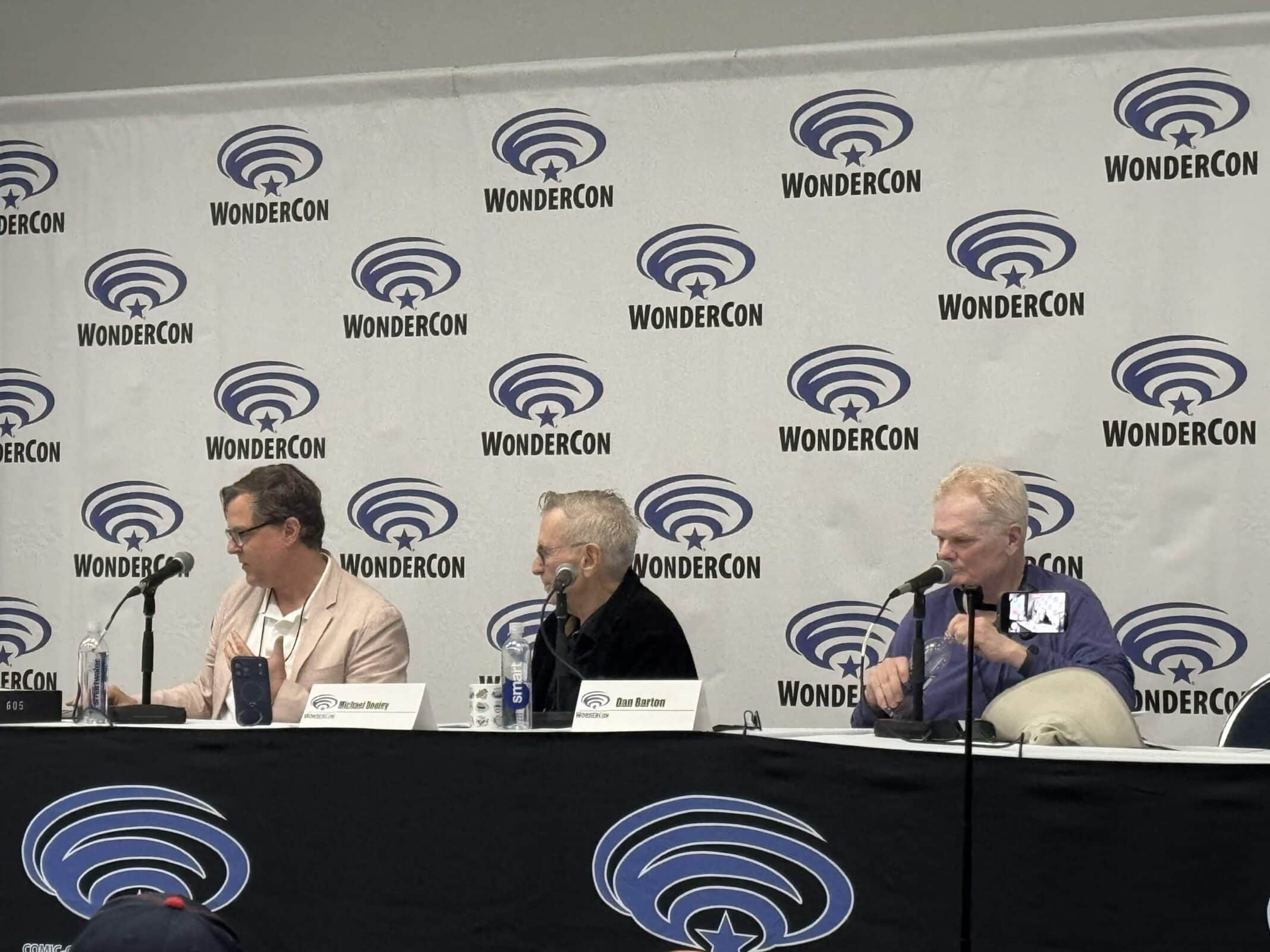
Originally set to include award-winning comics creator Jeff Lemire, the panel ultimately proceeded without him due to scheduling conflicts. Still, the discussion was carried by former Los Angeles Reader editor Dan Barton, author and professor Michael Dooley, and Jeff Trexler of the Comic Book Legal Defense Fund.
Together, they explored Lynch’s contributions to the comic arts, including works like The Angriest Dog in the World and the animated web series Dumbland. The discussion also traced the connections between Lynch’s cinematic language and comic storytelling, while examining his influence across comics, manga, anime, and fandom. Framed around themes of surrealism, narrative experimentation, and the pursuit of meaning within a creative multiverse, the panel unpacked what creators and audiences alike could take from Lynch’s singular, dreamlike vision.
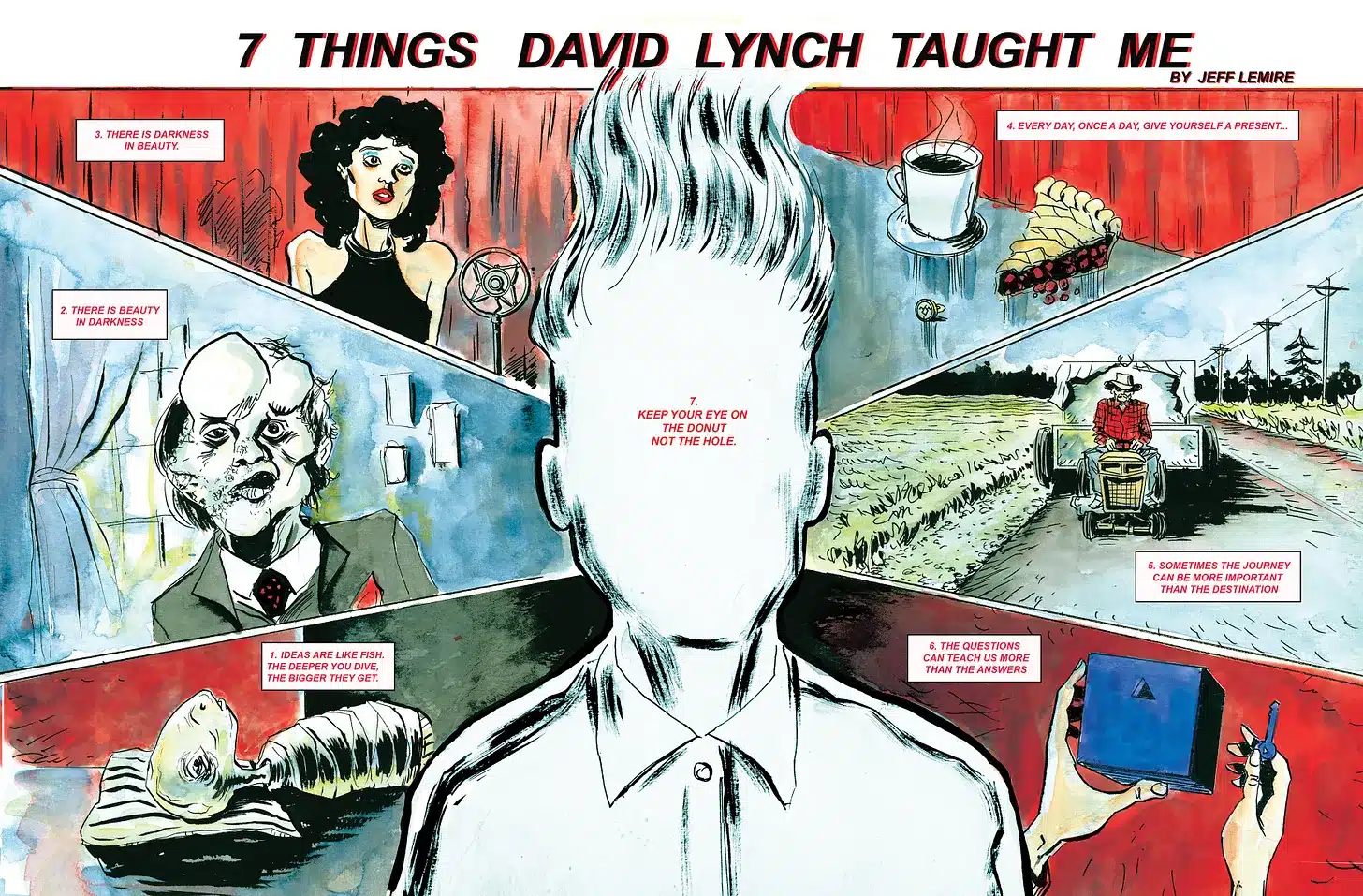
In many ways, the panel served as a tribute to Lynch’s lasting creative legacy.
“There’s something here,” Trexler said. “There are influences of David Lynch in Grant Morrison’s Batman, and in many other comic media. Morrison had said [they] wanted it to be Batman as portrayed by Adam West meets David Lynch.”
The conversation even touched on a Twin Peaks graphic novel that had been intended as an unfilmed third season of the series. The project had been planned for production but ultimately never became a reality, as Lynch stated around 2007 that he did not feel a third season should move forward at that time, leaving it as one of the more intriguing unrealized extensions of the series.
Michael Dooley also spoke about his deep appreciation for Eraserhead, describing the impact it had on him early on. “It was addictive at that point,” Dooley said. “In looking around for things to write about, I came across this article that was in The Beat talking about [Twin Peaks]’s return and a Grant Morrison graphic novel, The Invisibles. You read through it and you go, in some ways it’s a solid connection, and in some ways it’s a stretch. I took the humor of it, and I took the bulk of it, and because I was a fan of the Fusco Brothers, I decided that there was a connection there, and I went through so much stuff to prove there was a connection.”
Trexler added that Lynch was already engaging with alternative comics during the 1990s, reinforcing the idea that these overlaps were intentional rather than accidental. “So, I’m not sure these connections were coincidental,” Trexler said. He mentioned the green glove from Tales of the Unexpected #12 and the green glove Freddie Sykes wears in Twin Peaks: The Return, saying its hard not to see a resemblence.
The group then delved into The Angriest Dog in the World, Lynch’s iconic comic strip, noting how each installment captured the same scene every day: the dog bound by a chain, unable to move, eat, or sleep. Lynch had originally conceived the strip during a period of personal grief over a friend who was no longer in his life, and the panel discussed how that energy, tension, loss, and persistence permeates each panel.
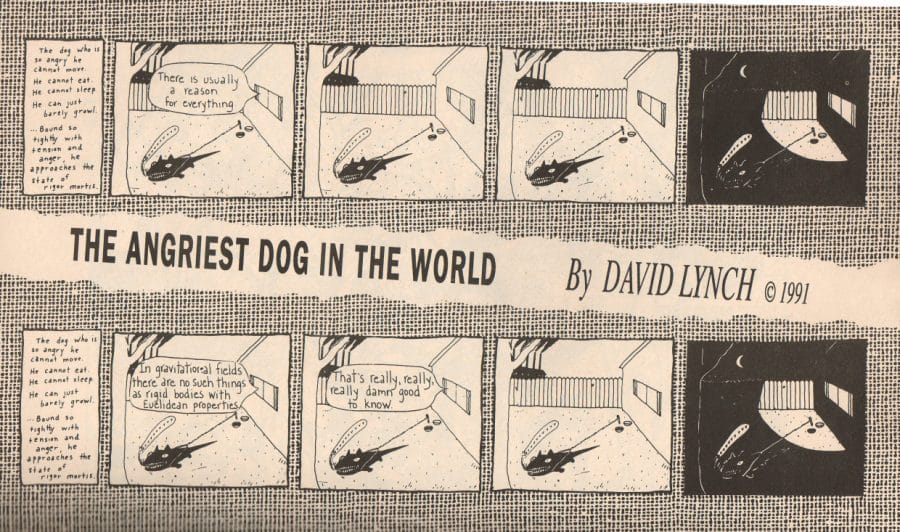
Former Los Angeles Reader editor Barton arrived late but jumped right in, reflecting on the era before the internet. “Before the internet, we had alternative weeklies,” Barton said. “David Lynch’s Angriest Dog in the World ran in the LA Reader, and I would talk to Lynch once a week. He’d go, ‘Hi Dan, I have another dog for ya!’”
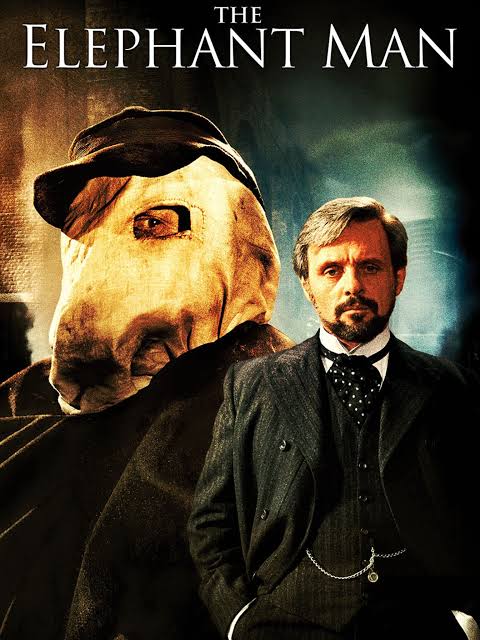
The humor didn’t stop there, as Barton had a lot to say about the late director, going into past experiences and interactions. He shared stories about Lynch’s approach to filmmaking, recalling his experience directing The Elephant Man. “He just worked in mysterious ways,” Barton said. “I mean, imagine having Anthony Hopkins mad at you, saying, ‘You don’t know what you’re doing,’ only to then see the final version of The Elephant Man and go, ‘Oh, I see what you’re doing now,’ and be happy about it.”
He also recounted Lynch’s obsessive attention to small details, even off-set. While filming in London, Lynch became frustrated at not being able to find a good hamburger for lunch every day. That continued until he finally discovered one that satisfied him.
And yet the next week, the same director would call him with the same irreverent charm. “I got another dog for ya!”
Barton would tell Lynch he had seen the movie and share what he thought was great, pointing out specific moments. The director would respond with an enthusiastic thank you after every comment.
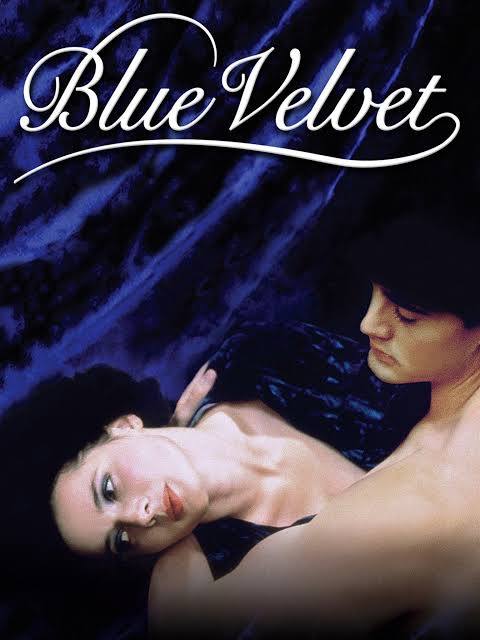
“I would ask him,” Barton said, “You know the part where Dennis Hopper breathes in that gas, and it makes him go, ‘Mommy, mommy’? What was that gas? and he goes, ‘I don’t know!’”
The room roared with laughter.
The panel ultimately offered more than a discussion of comics or film. It was a rare glimpse into the mind of a creator who followed his own logic, blending obsession, humor, and deep emotion in every project., from the repeated panels of The Angriest Dog in the World to the meticulous craft behind The Elephant Man and Blue Velvet, and even his animated series Dumbland. Barton, Dooley, and Trexler showed how Lynch’s comics are inseparable from his films, each informing the other and shaping a singular, dreamlike vision. By tracing these connections, the panel revealed how his fearless experimentation continues to inspire other creators to break rules, take risks, and make work that is deeply personal.
