




If being the good guy were easy, everyone would do it. Well, most people, anyway, I’d like to believe.
But, as we know, doing the right thing sometimes means bending the rules. Finding a happy ending might require digging into some dark corners. And fighting the good fight often means fighting dirty. And that leaves people who consider themselves “good” feeling conflicted.
Below, we’ve gathered some white hats with the best intentions who have made questionable choices, dealt low blows, and used problematic means to their righteous ends.
Margo Millet (Margo’s Got Money Troubles)

Margo Millet’s situation isn’t uncommon. Young, creative, positive-thinking student falls for her college professor, and an unplanned pregnancy results.
However, Margo’s novel mindset takes her down unexpected paths. To be fair, she does try the usual route of taking on everything herself. It just doesn’t go well.
Baby Bodhi’s crying eventually drives two of her roommates to find other lodgings, leaving her and her remaining roommate to shoulder the unexpected cost. Her waitressing job lets her go because her mother can’t handle childcare.
So, first, she tries extortion, demanding $3000 from Prof. Baby Daddy in her most threatening manner. That attracts the toxic attention of Baby Daddy’s mother, but it does secure a trust fund for Bodhi, which doesn’t exactly help their current situation.
Then on a whim, she pivots from creative writing to OnlyFans penis analysis à la Pokémon. Although she’s adamant that this is the way to provide for her child, she’s reluctant to share her endeavor with her family, knowing it won’t be met with approval.
She crosses the line again on Margo’s Got Money Troubles Episode 4, when she lures a successful OnlyFans creator, WangMangler99, to get help building her fanbase. It’s a questionable business strategy, but it may pay off in the end.
Andrew “Coop” Cooper (Your Friends and Neighbors)


The pressure to maintain appearances can test a person’s limits. When Andrew “Coop” Cooper loses his hedge fund manager job, he must find a way to keep covering his family’s expenses, and turns to burgling his wealthy neighbors.
What starts out as a desperate impulse becomes a lifestyle choice, and as more people are drawn into the enterprise, startling secrets become as valuable as designer watches.
Given the choice to return to his hedge fund career at the end of Your Friends and Neighbors Season 1, Coop turns his back on that, choosing the sneaky over the steady and criminal over credible, all in the name of (allegedly) doing right by his family.
Miles Dale (For All Mankind)


Miles had no idea what he was actually signing up for when he agreed to travel to Mars with Helios.
After scamming and pleading for a chance at a job lucrative enough to support his family and, hopefully, save his marriage, he has to resort to black-market trade to supplement his income. This draws him deeper into the base’s politics.
When things get desperate on For All Mankind Season 4, seeing no other options, he joins the Ghost Ops conspirators but ends up giving up intel on them under threat of torture and the government persecuting his family on Earth.
When his torture is made public, Miles becomes the de facto face of the Mars people. By For All Mankind Season 5, he holds a leadership role among the colonists. His family, having joined him on Mars by now, are integral members of the community.
However, Miles continues to step into the shadows regularly, giving law enforcement a heads-up on potential protest activity or popular unrest. He’s clearly conflicted, knowing his friends and family would be disappointed in his actions, but justifies it as a way to ensure the Pax Martian.
Jocelyn “Bruiser” Stone (The Rainmaker)

One of the most brilliant casting moves in the USA Network‘s adaptation of John Grisham’s novel, The Rainmaker, was turning his mentor lawyer, Bruiser Stone, from the criminal-adjacent Mickey Rourke of the 1997 film into Lana Parrilla‘s equally pragmatic, but far more ethically-minded, second-generation Stone.
Essentially, the writers broke Bruiser Senior into two characters: J. Lyman, the lawyer, currently serving a prison sentence, and Prince Thomas, the bar owner who hooks Rudy up with Bruiser the Younger.
As the daughter and close associate of men who made their names making sketchy choices, Bruiser does her best to keep her nose clean, knowing that the Feds are probably watching her.
HOWEVER. She is still ruthlessly efficient and favors means-to-an-end solutions, as long as they don’t endanger the business. So what if her “para-lawyer” is greasing some palms for intel, or she needs to palm some greasy characters? The job gets done.
River Cartwright (Slow Horses)

If River Cartwright, legacy MI6 agent, has one endearingly naive trait, it’s that he still believes that “good” guys do things by the book.
All his training, intentions, and earnestness have landed him in Slough House, MI6’s division of misfit toys, under the supervision of Jackson Lamb, the biggest misfit of them all, and still, River thinks that good work reaps just rewards.
The spy business operates in the shadows, and River’s gotten into enough shenanigans in the name of national security as part of the Slow Horses team to know that fair isn’t always right, and effective is rarely legal.
Still, even with Lamb hitting him over the head with the reality of situations regularly, River dreams of climbing the ladder out of the Slough House by fulfilling successful missions, refusing to face the fact that those who rise to the top are the ones willing to cut the legs out from under everyone else.
Maxine Dellacorte-Simmons (Palm Royale)
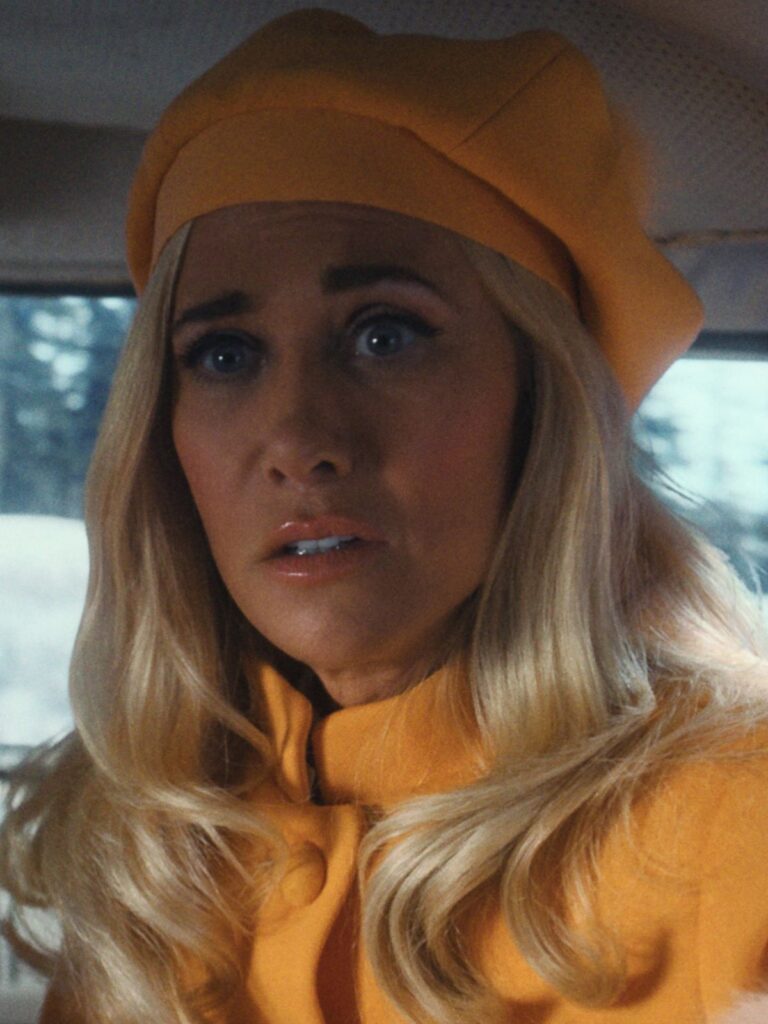

Maxine is the consummate optimist, determinedly sticking with her belief that everything will turn out all right.
But, sometimes, things need a nudge in the right direction, and Maxine’s there to provide it, justifying her deeds as they slip further and further into legally gray, if well-meant, territory.
When we first meet her, she’s trespassing by climbing the wall to get into the Palm Royale. Dressed in her comatose aunt-in-law Norma’s “borrowed” clothes, she passes herself off as wealthy and fashionable.
Meanwhile, she’s “borrowing” Norma’s jewels to pawn, fully intending to buy them back when her husband comes into his inheritance. Through blackmail and resourcefulness, she gets her foot in the door at the Palm Royale.
And in Maxine’s mind, she’s doing this all for Douglas, setting him up to reclaim his place in the Palm Beach high society he was born into. Of course, she plans to be right there at his side.
By the conclusion of Palm Royale, Maxine’s CV includes shooting a man, freezing the corpse, and then setting him up to be shot again. But, wouldn’t you know it? Everything turns out all right.
Jack Reacher (Reacher)

Reacher operates on pure instinct. The transient lifestyle that has him drifting into towns and, more importantly, into trouble means that every other day he’s facing a new moral or criminal dilemma.
Let’s just say Reacher‘s moral code is as flexible as it gets when it comes to the ends justifying the means.
He spends most of his time operating outside the law to maintain a sense of law and order.
That usually means making some wild, violent, bloody, and outright outrageous calls in the moment that will make schoolgirls blush, and bad guys grimace (usually in pain).
Colter Shaw (Tracker)


Anyone who has been following Tracker Season 3 has come to realize that when Colter Shaw is locked in on a case or in survival-and-protection mode, nothing will stop him.
And also, there isn’t a bullet he won’t use.
Seriously, one has to wonder what his body count is these days, as a series of bold, impulsive decisions has him blurring the lines between heroic treasure seeker and avenging vigilante.
For a civilian with dashing good looks and a gun, Colter’s choices have become murkier and murkier, and he very well might just be getting away with murder these days, like, literally. Semantics!
June Osborne (The Handmaid’s Tale)


June didn’t just survive Gilead. She adapted to it in ways that would haunt anyone with a conscience.
Throughout The Handmaid’s Tale, she’s made choices that protect the few at the expense of the many, and sometimes she doesn’t even pretend otherwise.
Killing Fred wasn’t justice. It was vengeance, and the show didn’t dress it up as anything cleaner than that.
You root for her, and then you sit there wondering what exactly you’re rooting for.
Kayce Dutton (Yellowstone/Marshals)
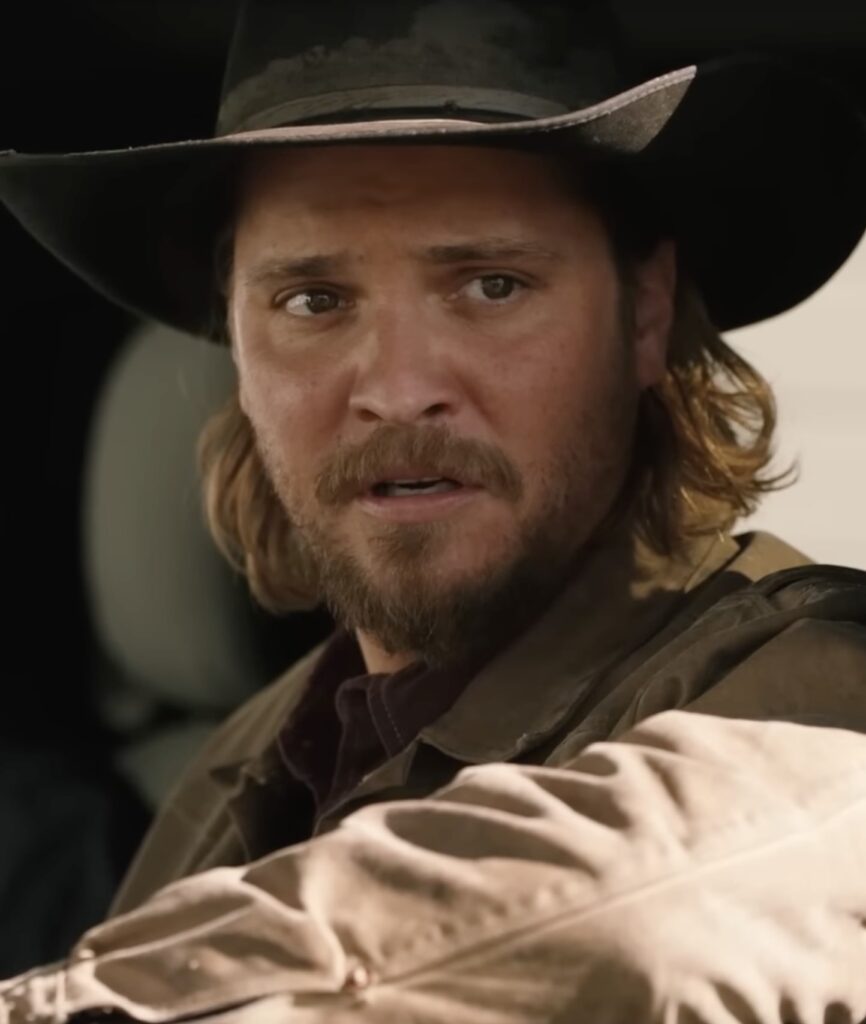

Kayce lives in that exhausting space between wanting peace and being born into chaos.
On Yellowstone, and now on Marshals, he’s tried to walk away from the Dutton way more than once, but when push comes to shove, he falls right back into making violent, morally murky calls for the sake of family.
Whether it’s killing to protect the ranch or choosing loyalty over legality, his decisions always come with a cost he can’t quite shake.
The tragedy is that he knows there might be a better way and still can’t seem to find it.
The brand, the train station… it will always haunt him.
Ben Edwards (The Terminal List: Dark Wolf)


Ben operates as if he’s already decided the rules don’t apply, which makes every choice feel like a calculated risk.
Loyalty, survival, and self-preservation all blur together on The Terminal List: Dark Wolf until you’re not entirely sure which one is driving him anymore.
He’ll protect his own, but not without crossing lines that can’t be uncrossed.
The unsettling part is how calm he is about it. Like this was always the version of himself he was heading toward.
Alden Parker (NCIS)


Parker doesn’t scream “rule-breaker,” which is exactly why it stands out when he bends them.
He leads the NCIS team with instinct and empathy, and sometimes that means letting things slide that shouldn’t.
Whether it’s protecting his team or steering a case in a direction that feels right instead of strictly correct, he makes judgment calls that live in the gray areas.
He’s not reckless about it, which somehow makes it more interesting.
Every choice feels measured and still not entirely clean. This was especially true while he struggled with his father’s death and learning about what happened to his mother all those years ago.
Elliot Stabler (SVU/Organized Crime)

Stabler doesn’t just cross lines. He sprints past them and dares anyone to keep up.
His decisions are driven by emotion first, badge second, which is great for intensity and terrible for procedure.
Going undercover, bending the law, pushing suspects past the edge… he justifies it all because the end result matters more to him than the path.
The problem is that the path leaves a trail, and he’s been stepping over it for years.
Matty Matlock (Matlock)


Matty is playing a long game built on deception, and she knows it.
She reinvents herself on Matlock to get access, answers, and justice, but none of it is exactly above board.
Every step forward requires another small lie, another manipulation, another choice that chips away at the clean version of justice she’s chasing.
You admire the hustle even as you side-eye the method. Because if the truth matters, the way she gets there should too, right?
Gabi Mosely (Found)

Gabi’s entire operation on Found is rooted in one massive, undeniable moral violation, and the show never lets you forget it.
She justifies it because it helps her find the forgotten, the ignored, the people no one else is looking for. And she’s not wrong about the results.
But every case forces her to reckon with the fact that she built something good on something deeply questionable.
You can support her mission and still feel uneasy about how it all started.
David Rossi (Criminal Minds: Evolution)


Rossi used to be the steady hand. On Criminal Minds: Evolution, he’s a man driven by grief and obsession, and it shows.
He pushes cases harder, takes things more personally, and edges closer to decisions that feel less like protocol and more like compulsion.
His push-me-pull-me with Voit were dangerously close to crossing the line.
You understand why he’s doing it, which is exactly what makes it uncomfortable. He’s not losing control, but he’s definitely not the same guy either.
Hank Voight (Chicago PD)

Voight is the definition of “the ends justify the means,” and he doesn’t apologize for it.
He’ll lie, threaten, and cross every legal boundary if it means getting justice as he defines it.
The show occasionally checks him, but it also lets him be effective, which is where the tension lives. You don’t have to agree with him to understand why he does it.
That’s what makes him so hard to look away from on Chicago PD. But it also means those in his command are more likely to follow in his footsteps, possibly without the same results.
Joseph M’Benga (Star Trek: Strange New Worlds)


Star Trek doctors are constantly facing ethical quandaries and making life-or-death-or-forever-in-stasis decisions. However, none (on record) have walked the wild side quite like Dr. Joseph M’Benga.
He has three ex-wives and had another marriage annulled. When his daughter, Rukiya, contracted a terminal disease, he hid her in the medical bay’s transporter buffer while he searched for a cure. Not illegal, but also not established procedure.
The most un-doctor-ly part of M’Benga’s history is his life as the covert operative known as The Ghost, racking up the most hand-to-hand combat kills in Starfleet history.
During the Battle of J’Gal, while serving as a medical officer, he tapped back into his skills as The Ghost and massacred three of the four high-ranking Klingon war leaders.
While M’Benga lived haunted by the killings, he still murdered the fourth leader several years later when General Dak’Rah visited the Enterprise, now serving as a Klingon ambassador, having taken credit and gained acclaim for the deaths of the other three.
On Star Trek: Strange New Worlds Season 2 Episode 8, M’Benga admits he murdered Dak’Rah, but is unrepentant, believing Dak’Rah deserved the death he got for ordering the slaughter of innocents at J’Gal.
Buffy Summers (Buffy the Vampire Slayer)

I feel it’s sometimes a little unfair to add Buffy Summers to this list, because she had to make a lot of grown-up decisions at a very young age. She was only 15 when she first learned that she was the Slayer, and her life was never the same.
However, there were some questionable choices along the way, and one of those came up in the third season.
After making a horrendous sacrifice by killing Angelus at the end of Buffy the Vampire Slayer Season 2, Buffy found out that he had somehow been brought back to her. Instead of trusting her friends and Giles, she decided to keep it from everyone, putting everyone at risk.
During Buffy the Vampire Slayer Season 7, she had to make tough choices about the Potentials. That led her to use them as cannon fodder at times, such as during the attack on the vineyard.
I don’t agree with her friends kicking her out of her own house in the aftermath of that, but Buffy couldn’t just go running back in with the same failed plan. And that’s what she wanted to do.
I’ll give Buffy the benefit of the doubt, as her formative years were as a soldier, destined to die young like so many other slayers. It was never going to be an easy life for her, but she made the most of it, and she saved the world a lot!
Sam and Dean Winchester — A Twofer Bonus Entry! (Supernatural)

When it comes to characters making difficult and often questionable choices, the Winchester brothers are always going to be up there.
The two have done everything they can to save each other, even if it means putting the world in harm’s way.
Dean refused to be the vessel for Michael so that the apocalypse couldn’t happen. Then he eventually offered himself up as a way to take down Lucifer once and for all — willfully trusting an angel who had proven to lie before.
As Sam went through the trials to close the Gates of Hell forever, Dean stopped him. Once he learned that Sam would die, Dean couldn’t live with it, despite the fact that it would put the whole world in jeopardy.
Then there’s Sam, who decided that trusting a demon and drinking demon blood to harness his powers was the right thing to do. Sure, it helped to somewhat save people as Sam was able to use his demon-given abilities, but to what end? He was used by a demon!

We can also look at his decision to keep the Book of the Damned. To Sam, it meant saving Dean, but in the end, it led to Charlie Bradbury’s death.
And yet, Supernatural fans stuck by the two protagonists from beginning to end. Eventually, questionable decisions were forgiven because, at the heart of it, we knew the brothers would never willingly give each other up.
Holding Our For Our Heroes
And there you have it, Fanatics. By no means an exhaustive list, but a respectable review of our favorite good guys who have had to do bad things for the right reasons.
Who did we miss? Whose crisis sticks in your psyche as truly heart-rending? When did the choices shock you? Disappoint you? Satisfy you?
Hit our comments with your A-star champions making C- decisions! We’d love to see who you come up with!

Sometimes being the hero means making hard choices. Here’s our list of good guys (and gals) who cross the line for … reasons.
Cassie’s Euphoria Season 3 arc sparks backlash over repetitive storytelling, humiliation, and Sam Levinson’s handling of female characters.
Our Characters of the Week come in heavy, with Marshals, Will Trent and more leaving a lasting impression in this week’s television.


TV Fanatic is searching for passionate contributors to share their voices across various article types. Think you have what it takes to be a TV Fanatic? Click here for more information and next steps.