




Scroll through Instagram or TikTok long enough and you will follow someone who does not exist. Not a filtered human, but a fully computer-generated persona with a name, a backstory, brand deals, and millions of real followers. These are AI influencers, and they have moved from novelty to a working part of how brands market.
I’m Neal Schaffer, author of The Age of Influence and an influencer marketing instructor at UCLA Extension. I flagged AI’s role in influencer marketing in the final chapter of that book before ChatGPT even launched, and the trend has only accelerated since. This guide explains what an AI influencer actually is, how they work, the real examples worth knowing, the ethical questions they raise, and how to create one if you decide it fits your brand.
Key Takeaways
✅ An AI influencer is a computer-generated persona built with AI and 3D modeling that posts and partners with brands on social media like a human influencer would.
✅ A human is always behind it. AI and operators generate the visuals and content, but people set the strategy, the storyline, and the brand deals.
✅ Control is the main draw. In Influencer Marketing Hub’s research, “control over messaging” was the top perceived advantage of AI influencers, since they never go off-script or cause a scandal.
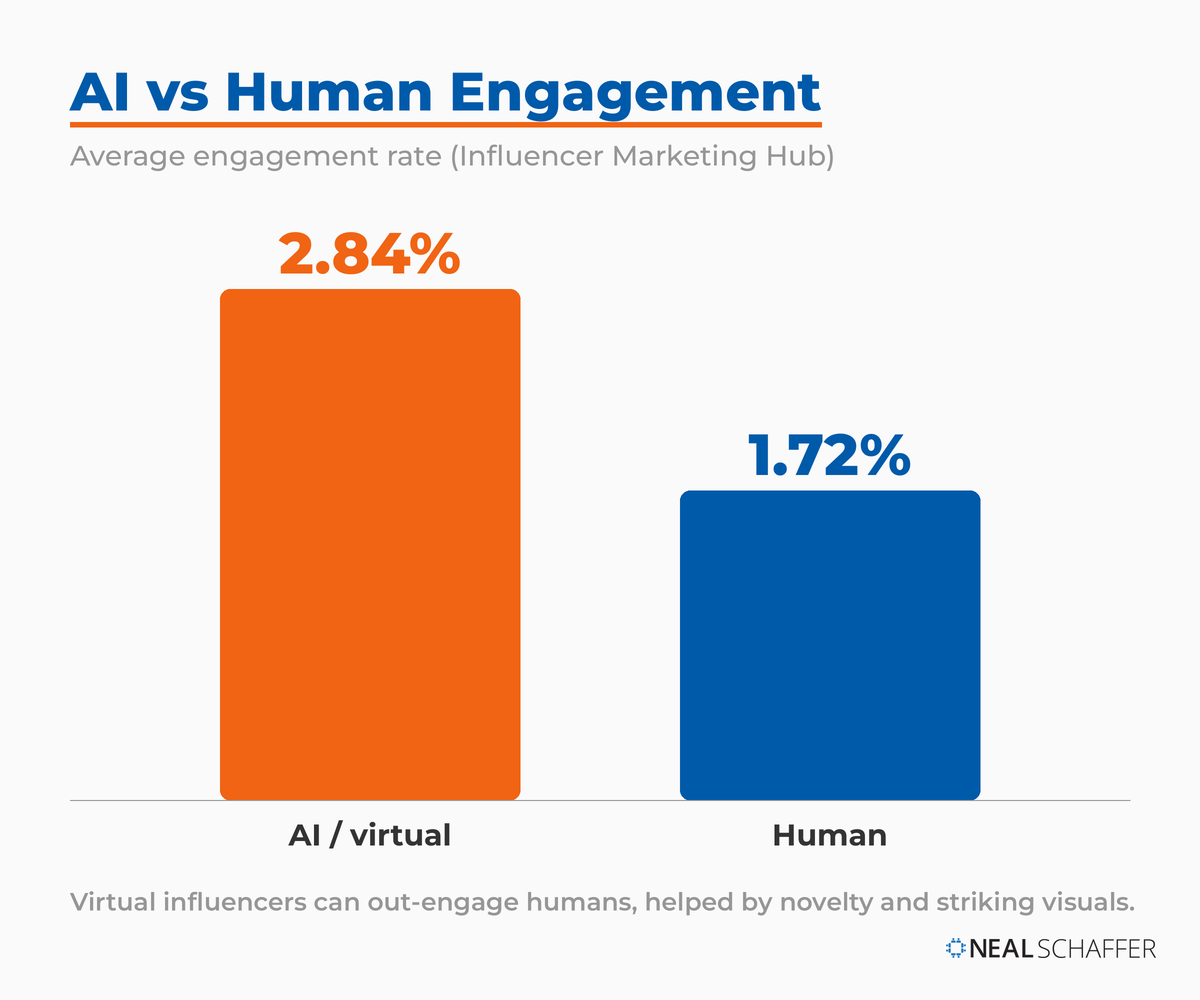
✅ Engagement can be strong. That same report found virtual influencers averaged a 2.84% engagement rate versus 1.72% for human creators.
✅ The ethics are real. Disclosure, authenticity, and audience trust are genuine concerns, and any brand using one still has to follow FTC rules.
✅ They fit some goals, not all. AI influencers work for controlled, always-on, visually-driven campaigns, but they trade away the lived authenticity that human creators bring.
What Is an AI Influencer?
An AI influencer is a computer-generated digital persona, created with artificial intelligence and 3D modeling, that builds an audience and partners with brands on social platforms like Instagram, TikTok, and YouTube, in place of a real human. They have names, faces, personalities, and backstories, and many have followings and brand deals that rival human creators.
You will hear a few terms used more or less interchangeably: AI influencer, virtual influencer, and digital human. The distinctions are subtle. “Virtual influencer” emphasizes that the character is computer-generated, while “AI influencer” emphasizes the technology generating and running it. In everyday marketing use they point to the same thing: a synthetic personality that operates like an influencer without being a person.
It helps to be clear about what they are not. An AI influencer is not autonomous. Unlike a human creator, it cannot independently decide what to post, pick which brands to like, or go off-message. As I explain below, there is always a human team setting the direction. That dependence is exactly what makes them appealing to some brands and unsettling to some audiences.
How Do AI Influencers Work?
AI influencers are built with a combination of 3D modeling, animation, and generative AI, then run by a human team that controls their storyline, content, and partnerships. The technology produces the look and the posts; people supply the strategy and keep the persona relevant.
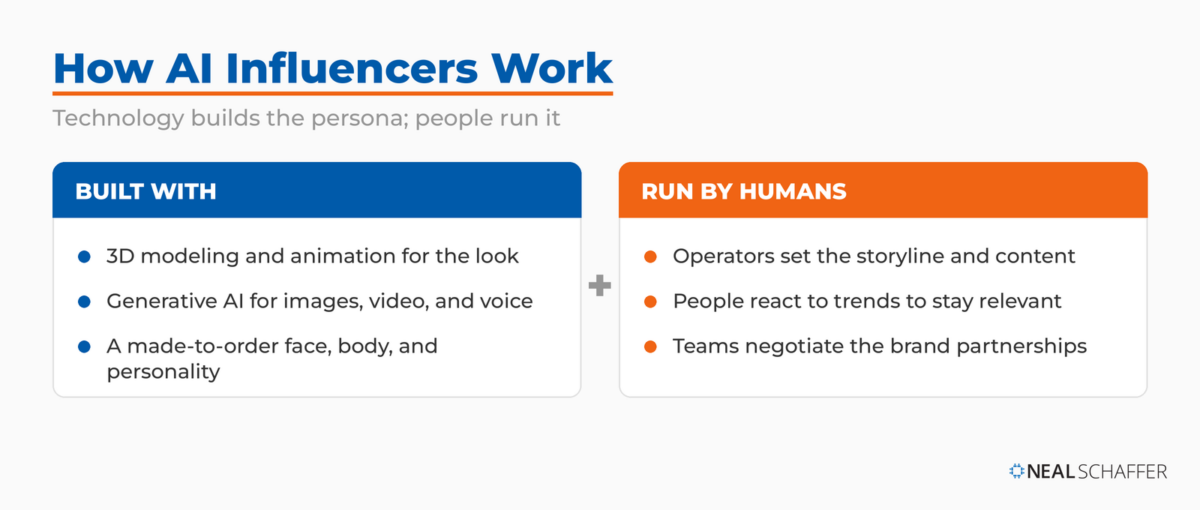
The visual side comes from advanced 3D modeling and animation that create realistic, expressive characters, increasingly supported by generative AI for images, video, and voice. The result is a persona that can appear in photos, videos, ads, and even augmented reality, tailored precisely to a target audience. Because the character is made to order, a brand can design it to match a specific demographic almost perfectly.
The human side matters just as much. Operators feed the persona context, react to trends, plan content arcs, and negotiate brand deals. In many ways an AI influencer is a logical progression from the chatbot: an earlier, simpler form of AI that brands already used to engage and sell. The difference is that a virtual influencer comes with a face, a personality, and an ongoing story that audiences can follow. Left unattended, even the most striking AI persona goes stale, so the “set it and forget it” idea is a myth.
Why Brands Use AI Influencers
Brands turn to AI influencers mainly for control, consistency, and the elimination of human risk. In Influencer Marketing Hub’s research on AI influencers, the single biggest perceived advantage was “control over messaging,” followed by round-the-clock availability. A virtual persona says exactly what you want, exactly when you want, every time.
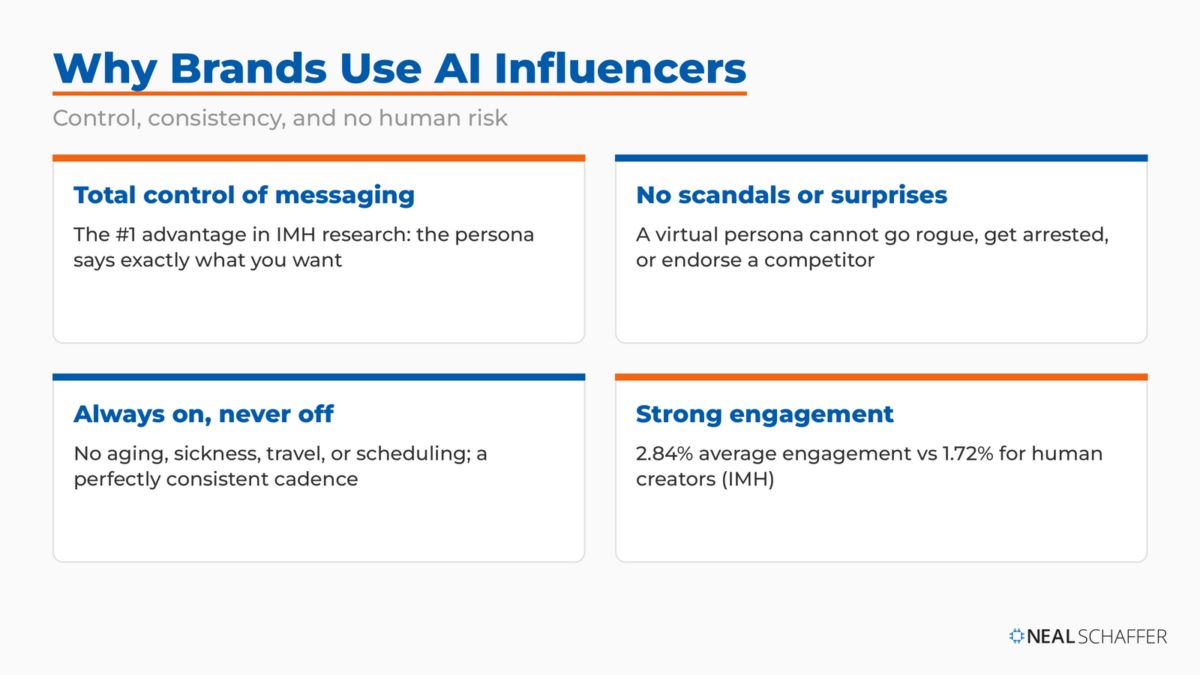
That control extends to reputation. A virtual influencer cannot go rogue, get into a public scandal, or endorse a competitor on a whim. Compare that to the risk human creators carry: when a brand partnership collides with controversy, as Bud Light learned in its partnership with Dylan Mulvaney, the fallout is real and largely outside the brand’s control. An AI persona removes that particular category of risk, though it introduces others I cover below.
There are practical advantages too. AI influencers do not age, get sick, travel, or need scheduling around. They can post on a perfectly consistent cadence, appear across any medium, and be adapted in hours rather than renegotiated over weeks. And the engagement can be surprisingly strong: the same Influencer Marketing Hub report found virtual influencers averaged a 2.84% engagement rate against 1.72% for human creators, partly because their novelty and striking visuals pull people in. People come for the spectacle and stay for the personality.
The Risks and Ethics of AI Influencers
The biggest issues with AI influencers are transparency, authenticity, and trust, and they are not minor. Influencer Marketing Hub’s research found that a large share of marketers, around 44%, expressed high concern about the ethics of using AI influencers. The core tension is simple: influence has always rested on trust, and a synthetic persona asks audiences to trust something that is not real.
Disclosure is the practical starting point. Audiences deserve to know when a “person” recommending a product is computer-generated, and any paid partnership, AI or human, still falls under the FTC’s influencer guidelines. Beyond the legal floor there are harder questions that ethicists have debated for decades: who is accountable for what a virtual influencer says, whether a fabricated persona can represent values authentically, and what it means when the “creator” your audience bonds with has no lived experience at all. Some virtual influencers have stumbled into real controversy over exactly these issues, including questions about who is portraying whom.
None of this means brands should avoid AI influencers. It means using them honestly. The brands that do best treat the virtual nature as part of the story rather than something to hide, and they hold AI personas to the same disclosure standards they would any paid partner.
Examples of AI Influencers
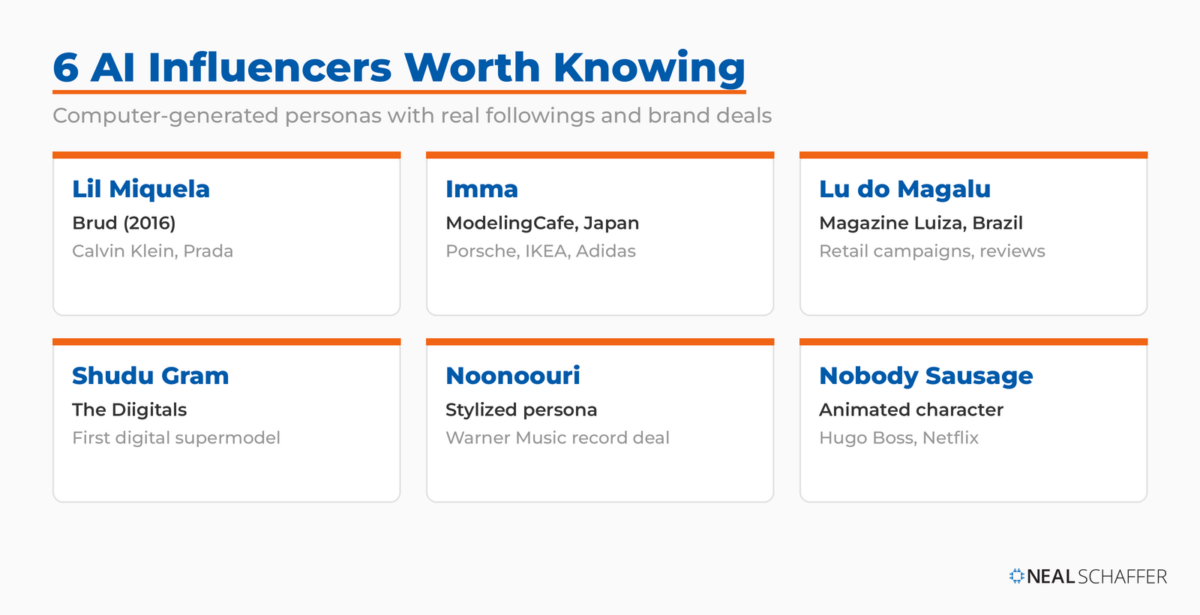
The category is more established than most people realize, and several of these personas have been active for years. Below are six of the most notable, each built and run by a real team behind the scenes.
Lil Miquela

Lil Miquela, or Miquela Sousa, is the most famous AI influencer of all, a persona of Brazilian-American descent who has been posting since 2016 and counts millions of Instagram followers. She was created by the studio Brud, a company later valued at more than $125 million, and she has worked with fashion houses including Calvin Klein and Prada. Her ongoing storyline, complete with a music career and outspoken social-justice posts, is a big part of why she broke through, and her success helped prove the commercial potential of the entire category.
Imma

Imma was the first major Japanese virtual model, created by the Tokyo CG studio ModelingCafe and first appearing in 2018. She is instantly recognizable for her petite build and signature pink bob, and beyond modeling she shows a genuine interest in Japanese and global art and music. Her brand partnerships read like a global roster, including Puma, Adidas, IKEA, Porsche, and Balmain.
Lu do Magalu

Lu do Magalu is one of the oldest and most-followed virtual personas in the world, created by Magazine Luiza, one of Brazil’s largest retailers. She posts in Portuguese and serves as the face of the company across campaigns, product reviews, and unboxing content. Over the years she has grown well beyond the brand, appearing on Brazilian television and in music videos, which shows how a virtual persona can become a cultural figure in its own right.
Shudu Gram

Shudu Gram, created by The Diigitals and artist Cameron James, is often called the world’s first digital supermodel. Active since 2017, she gained wide attention in 2018 when Fenty Beauty reposted one of her images, and she has since appeared in work tied to names like Balmain and publications including Vogue. One detail that sets her apart from other personas on this list: she does not speak in her posts.
Make Your Marketing Finally Work Together
My latest book helps small businesses, entrepreneurs, and marketers bring search, email, and social together into one digital marketing strategy that actually compounds.
Drawing on my work as a Fractional CMO, Digital Threads turns complicated tactics into a clear, practical plan you can follow, whatever your budget or team size.
Grab your copy on Amazon and start weaving your own digital threads. Click the cover or the button below to get started.

Noonoouri

Noonoouri is a stylized, almost doll-like persona introduced in 2018 by designer Joerg Zuber. With her oversized eyes and cartoonish look, she stands deliberately apart from the hyperrealistic virtual influencers, and she communicates with her audience in both German and English. She signed a record deal with Warner Music and is active in eco-conscious fashion, having worked alongside names such as Versace.
Nobody Sausage
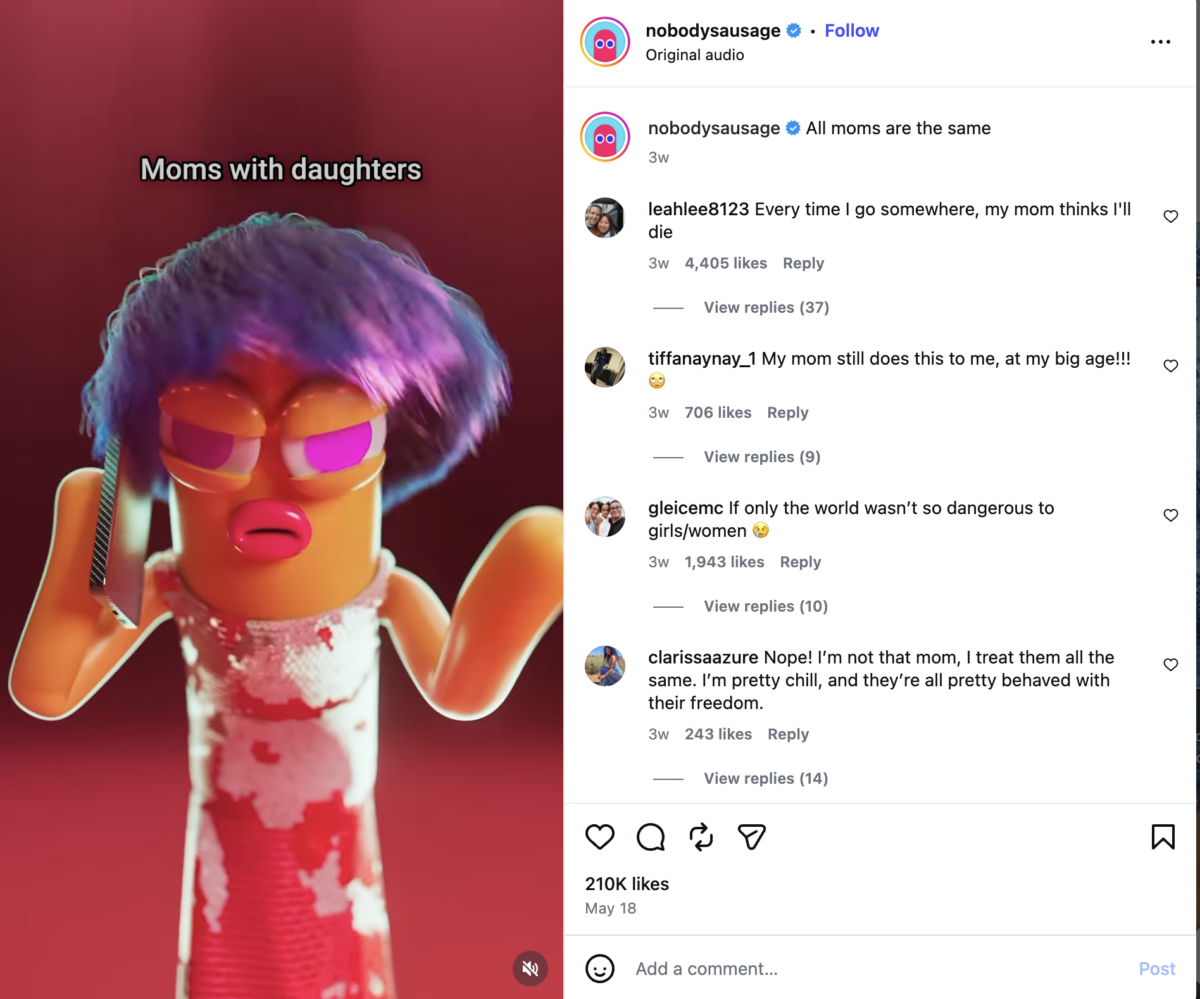
Nobody Sausage is proof that an AI influencer does not have to look human at all. The offbeat animated character has partnered with Hugo Boss for its campaigns and was invited to recreate the trailer for Netflix’s Red Notice. Influencer Marketing Hub found the animated version drove 62% more engagement and held viewers’ attention 1.53 times longer than the conventional trailer, a striking result for a character shaped like a dancing sausage.
What unites all six is a clear creator, a defined niche, and a consistent personality, the same fundamentals that make any influencer effective.
How to Create Your Own AI Influencer
Creating an AI influencer starts with strategy, not software: define the persona’s purpose, audience, and personality before you generate a single image. A fun, quirky character suits a young consumer audience, while a polished, professional one fits a business crowd. The clearer the goal, the easier every later decision becomes.
From there it moves to production. Building a quality persona draws on several tools, and generative AI has lowered the barrier considerably:
Then comes the ongoing work, which is where most efforts underestimate the commitment. An AI influencer needs a content calendar, evolving storylines, community interaction, and regular updates to stay relevant, plus clear disclosure that it is AI-generated. If building and running one in-house feels like too much, an agency experienced with AI-generated content can handle production and management. Done right, this is also one of several ways people are making money with AI today.
Should Your Brand Use an AI Influencer?
An AI influencer makes sense when you need total control over messaging, an always-on visual presence, or a persona that can scale across markets and media without the logistics of working with a person. It is a strong fit for visually-driven categories, futuristic or tech-forward positioning, and campaigns where consistency matters more than lived experience.
It is the wrong call when authenticity and genuine human trust are the point. For most brands, the highest-value influence still comes from real people, especially the high-affinity employees and customers I write about in my work on influencer marketing strategy, and from the human creators and UGC makers whose firsthand experience an AI persona cannot replicate. A common middle path is to pair the two: a human creator for credibility, an AI persona for a futuristic, scalable layer on top.
If you want the broader context on where this fits, my roundup of influencer marketing statistics shows just how mainstream the channel has become, and how AI is reshaping it. Whatever you decide, the fundamentals hold: influence is about earning attention and trust, and the tool you use to earn it, human or AI, has to respect the audience giving it.
Frequently Asked Questions
An AI influencer is a computer-generated persona, built with AI and 3D modeling, that posts content and partners with brands on social media in place of a real human. They have names, personalities, and followings, and many secure brand deals just like human influencers, but a human team controls everything they do.
No. The persona is entirely synthetic, generated with software rather than filmed. There is always a human team behind it setting strategy, creating content, and managing partnerships, but the character itself, its face, voice, and “life,” is fabricated.
Lil Miquela is the best known, launched in 2016 with millions of Instagram followers and partnerships with brands like Calvin Klein and Prada. Other prominent examples include Imma in Japan, Lu do Magalu in Brazil, and Shudu Gram, often called the first digital supermodel.
On raw engagement, sometimes. Influencer Marketing Hub’s research found virtual influencers averaged a 2.84% engagement rate compared to 1.72% for humans, helped by novelty and striking visuals. But human creators bring lived authenticity and trust that a synthetic persona cannot, so “better” depends entirely on the goal.
Yes. Audiences should know when a persona is computer-generated, and any paid partnership involving an AI influencer still falls under the FTC’s influencer disclosure rules. Transparency also protects the trust your campaign depends on, so honest labeling is both the legal and the smart choice.
The Bottom Line on AI Influencers
AI influencers are no longer a curiosity. They are computer-generated personas, run by human teams, that brands use for control, consistency, and an always-on presence, and the best of them post real engagement and land real partnerships. They also raise real questions about transparency and trust that a responsible brand has to answer head-on.
If you are weighing one, start with the goal rather than the technology, and be honest with your audience about what they are looking at. To go deeper on building influence into a complete strategy, you can download a free preview of The Age of Influence, where I lay out the framework in full. And if you would like help deciding where AI fits in your marketing, that is exactly what I do as a Fractional CMO.
Actionable advice for your digital / content / influencer / social media marketing.
Join 13,000+ smart professionals who subscribe to my regular updates.