




The Peacock comedy series “The Paper” was co-created by Greg Daniels, who shepherded the American version of “The Office,” and has a similar workplace setup. (We even have Oscar Nuñez reprising his role of Oscar Martinez.) Still, even after a promising rookie season that introduced us to the obligatory dysfunctional but (mostly) likable characters, the odds that “The Paper” would ever match the enduring brilliance and longevity of “The Office” were slim to none.
Season 2 confirms that. While the 10-episode arc has its moments of comedic inspiration, with some sharp writing and a solid cast that continues to grow into their roles, I can’t imagine ever going back for repeated viewings, as I’ve done with “The Office” over the years. “The Paper” is breezy but uneven, pleasant but rarely memorable, clever but sometimes contrived. It seems poised to settle into a four- or five-season run as a respectable middle-tier comedy.
We pick up the story in the immediate aftermath of the Season 1 finale. The Toledo Truth Teller is riding high after winning in three categories at the Ohio Journalism Awards, but still desperately needs funds and is staffed mostly with inexperienced (and, in many cases, untrained) journalists. They’ll be hard-pressed to duplicate all those upset victories at the OJAs (which I’ve decided to call them).
There’s also the matter of the nascent romance between Domhnall Gleeson’s editor-in-chief Ned Sampson and Chelsea Frei’s Mare Pritti, which is instantly complicated because Mare’s a reporter and Ned’s her boss. I won’t say where the relationship goes in Season 2, but Gleeson and Frei have a natural chemistry reminiscent of classic workplace couples like Sam and Diane on “Cheers,” and yes, Pam and Jim on “The Office.” Ned and Mare are flawed, authentic, and endearing characters; we root for them, and we root for them to figure out a way to be together. They deserve each other.
“The Paper” is at its best when it goes a little dark or politically incorrect, as when the staff pools their resources to put together an obituary for someone who turns out to be an absolutely terrible human being, or when Lisa in Human Resources (a hilarious Lisa Gilroy) asks wildly inappropriate questions to employees who dutifully report that they’re involved with a co-worker. I also enjoyed the tributes to old-school newspaper life, including a 125th anniversary celebration of the Toledo Truth Teller that doesn’t exactly go as planned, but still reminds us how cool it is when the latest edition of a newspaper comes rolling off the presses.
It’s also gratifying to see a number of supporting players carry their own storylines. Melvin Gregg’s Detrick Moore, Gbemisola Ikumelo’s Adelola Olofin and Tim Key’s Ken Davies are among the most memorable characters, with all three of these actors doing elevated work. When the ensemble on “The Paper” is cooking, especially when they’re pursuing a story in unconventional but sometimes effective ways, it’s really something.
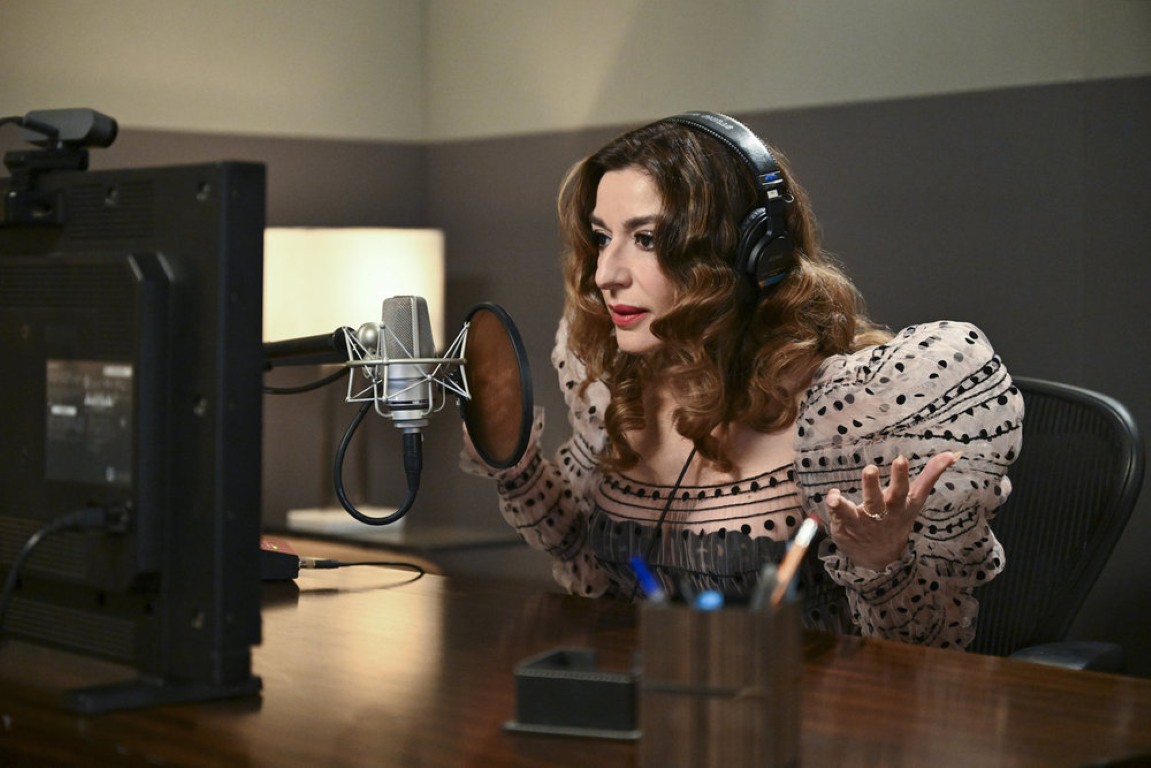
Unfortunately, the series sputters and gasps in other ways. Sabrina Impacciatore is a talented performer who was absolutely sensational as Valentina on Season Two of “The White Lotus,” but her cartoonishly over-the-top Esmeralda Grand is more grating and boorish than funny. It’s such a broad and ridiculously drawn persona that it makes Dwight Schrute look like a Neil Simon creation. It’s as if Impacciatore is playing a series of characters in a sketch comedy show, and not anything even sniffing reality.
Making matters more problematic, “The Paper” features a number of other characters whose behavior veers into the genuinely bizarre and sometimes borderline unhinged. Yes, it’s played for laughs, and I’m a fan of the anything goes school of comedy—but if you’re going to travel down darker corridors, it has to be seriously funny. That’s not the case here. Some of the behavior here is so weird and alarming that you start wondering if each episode should end with a therapy session—or a police officer being called to the scene.
We know some of the best sitcoms ever have featured people who behave in truly appalling fashion. “Seinfeld” and “Curb.” “Veep” and “Arrested Development.” We don’t see that level of bad behavior in “The Paper.” It’s more unsettling than terrible, but it doesn’t have the level of precision comedy we’ve seen on those shows. It feels like the series either needs to lean even more into the shadiness of some characters, or have them get their respective acts together. The Toledo Truth Teller is a good paper. It deserves to stay in circulation.
Full season screened for review. Premieres September 9th on Peacock.