




Excavations revealed dozens of copper and malachite objects, from raw materials to finished beads and other artifacts.
Turkish Ministry of Culture and TourismEvidence of a Neolithic mining workshop, complete with pieces of malachite and copper, was discovered in Turkey.
Archaeologists excavating Çayönü Tepesi, a Neolithic settlement in southeastern Turkey, just uncovered a prehistoric mining workshop that dates back to at least 6800 B.C.E. In addition to a paved work area, excavations revealed dozens of pieces of copper and malachite, from raw materials to finished artifacts.
Çayönü is already known as an archaeologically significant site in Turkey, and this find only adds to the region’s rich history. Researchers hope the discovery will ultimately lead to a deeper understanding of the Neolithic mining process.
The Discovery Of The Neolithic Production Site
The roughly 50-square-foot mining workshop was discovered during excavations at Çayönü earlier this year, led by Associate Professor Savaş Sarıaltun of Çanakkale Onsekiz Mart University.
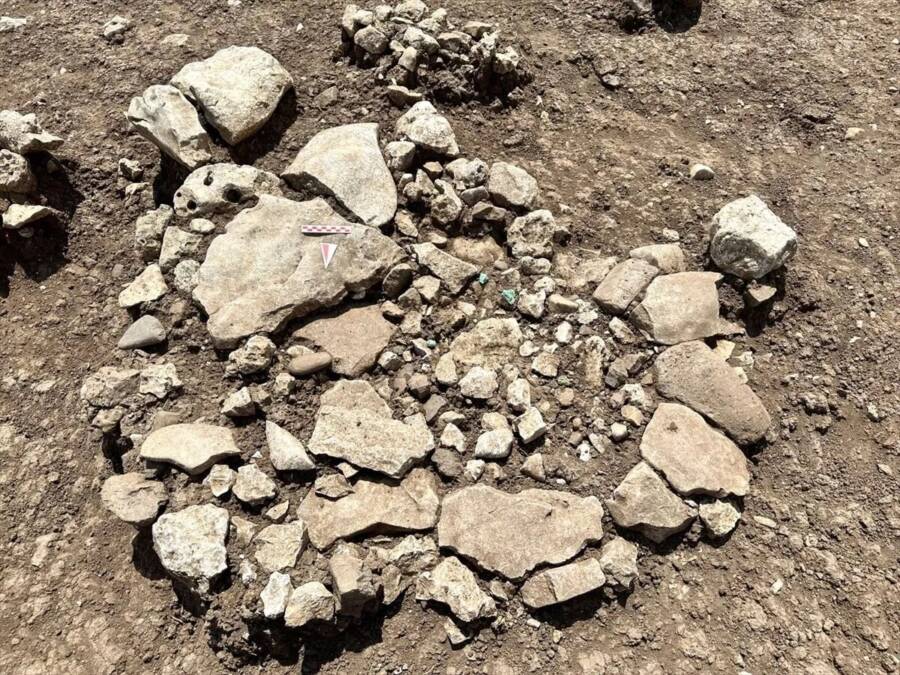
Turkish Ministry of Culture and TourismThe site had at least six postholes around a stone-paved center, indicating the former presence of a structure or canopy.
According to an announcement on social media from Turkey’s Ministry of Culture and Tourism, the workshop consisted of six postholes with a stone-paved working surface in the center.
These postholes are what differentiate the site as a center of production rather than a place where material was accidentally discarded 9,000 years ago. The arrangement of the holes indicates a potential structure or canopy covering the workspace.
In the center of the workshop, archaeologists found 18 pieces of malachite, a green copper carbonate hydroxide mineral. This malachite was both raw and partially processed. Researchers also uncovered dozens of other pieces of both malachite and copper around the site in various stages of production, from raw nuggets to finished copper beads and artifacts.
This discovery sheds light on an extensive history of mining in Turkey — one that began long before this workshop was established.
What This Find Reveals About The Ancient Turkish Settlement
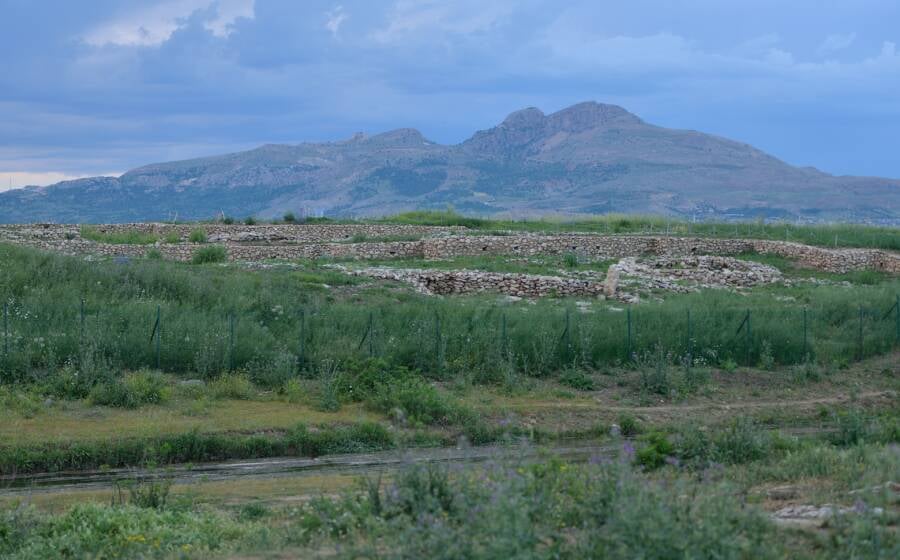
Dûrzan Cîrano/Wikimedia Commons Çayönü, a Neolithic settlement in southeastern Turkey, was already a prominent site for research into early copper technology.
Previous excavations have revealed evidence of copper and malachite mining at Çayönü as far back as 9100 B.C.E.
“The new discovery reveals that the mining tradition here continued for approximately 2,000 years and that specialized production activities were carried out in designated working areas,” Minister of Culture and Tourism Mehmet Nuri Ersoy stated in his announcement.
Çayönü, located in the foothills of the Taurus Mountains, is an important archaeological site for the Neolithic period, particularly when it comes to understanding how societies began transitioning from hunting and gathering to agriculture and other forms of production.
During the 2026 excavation season, archaeologists also discovered high-quality pottery in the western part of the settlement, associated with the Proto-Hassuna culture. While analysis is still ongoing, it was seemingly made around the time the mining workshop was active.
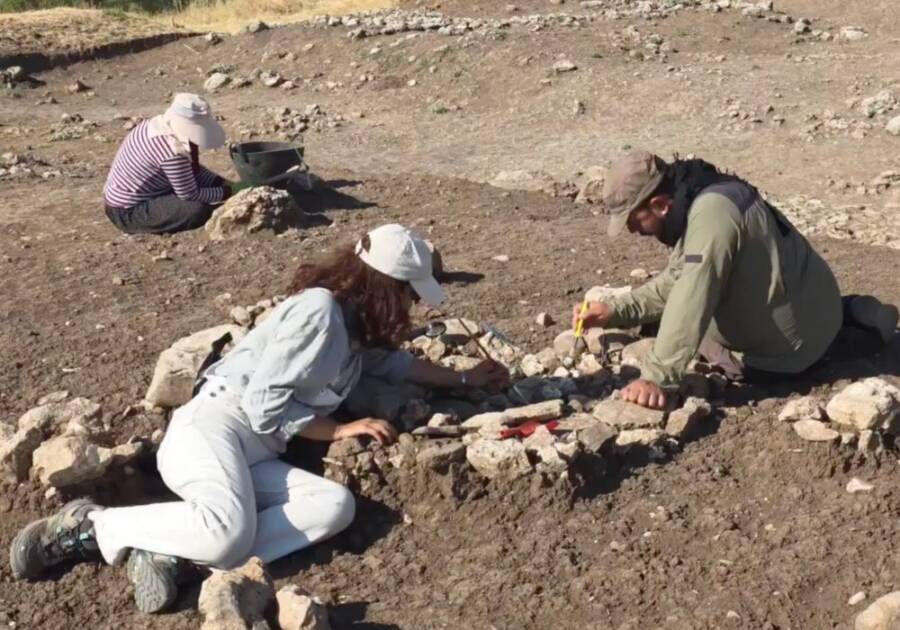
Turkish Ministry of Culture and TourismArchaeologists excavating the mining workshop at Çayönü.
Thousands of years before copper became a common material, Neolithic societies in Anatolia and northern Mesopotamia were already working with the substance. The early copper technology employed by these cultures generally entailed cold and hot hammering of the metal to shape it into tools and other objects.
For instance, in 2024, archaeologists excavating the Neolithic site of Boncuklu Tarla in Turkey found 11,000-year-old body ornaments made from limestone, obsidian, flint, copper, and river pebbles.
The fact that the recent find at Çayönü includes finished copper objects provides more evidence of this prehistoric production process. The discovery of raw material, partially processed material, and complete metal objects outlines the entire manufacturing system: the working location, how the metal was processed, and how the work was organized in designated areas of the settlement.
The discovery of the mining workshop also contributes important knowledge toward Çayönü’s already prominent archaeological record, bringing the researchers one step closer to understanding how these Neolithic societies lived.
After reading about the Neolithic mining workshop found in Turkey, learn about the ancient tomb in Turkey that was identified as the resting place of King Midas’ father, Gordias. Then, go inside the mat-making workshop uncovered in Pompeii.