




This month, ChatGPT sent more traffic to this blog than LinkedIn did.
That should not have happened. I have more than 300,000 followers across my social networks, and LinkedIn, together with Pinterest and X, have provided me lots of social referral traffic for over a decade. ChatGPT passed it anyway. Not because I published anything on ChatGPT, because you cannot. It happened because fifteen years of blog posts sit in a search index, and the machines answering people’s questions now read that index.
I have been blogging here since 2008, and search is a large part of the work I do as a Fractional CMO. I also wrote a book about building a connected marketing system, Digital Threads, which argues that owned assets compound in ways rented ones never do.
I still believe that. But the reasons have changed enough in two years that the old case needs rebuilding. This is my attempt at an honest one, including what happened when Google’s own classifiers turned on this blog.
Key Takeaways
✅ Organic SEO earns search visibility through content and technical quality rather than ad spend, so the cost per visit falls over time instead of staying fixed
✅ Paid search averages $5.42 per click in 2026 and that meter never stops running, while organic assets keep working after the invoice does
✅ Being indexed in organic search is the entry requirement for AI Overviews and AI Mode, per Google’s own documentation, so there is no separate AI channel to buy into
✅ 68% of Google searches now end without a click, so ranking and traffic have come apart and your measurement has to change with them
✅ When one search engine drops you while another holds steady on identical content, the problem is that engine’s classifiers rather than your writing, which is exactly what happened to this blog
What Is Organic SEO?
Organic SEO is the practice of earning search visibility through content quality, technical health, and site authority rather than paying for placement. Search engines rank organic results on merit signals they compute themselves. You cannot bid on those positions or accelerate them with budget, which is exactly what makes them durable once earned.
The word “organic” does real work here. It marks the difference between a result you earned and a result you rented. Paid search puts you at the top for as long as your card keeps clearing. Organic search puts you there because the engine decided you belong there.
That distinction used to be mostly about cost. Now it is also about access. Ad products exist for Google Search, and increasingly for AI surfaces too. But there is still no ad slot inside an AI Overview citation and no sponsored tier in a ChatGPT answer. Those placements are earned or they are nothing.
Getting there is the same work it has always been. You need SEO keywords that match real demand and on-page SEO that makes the page legible to a crawler. You need technical SEO that keeps it fast and indexable. And you need link building that signals other people find you credible. None of that is new. What is new is what the work now buys you.
Why Does Organic SEO Cost Less Than Paid Search?
Organic SEO and paid search have different cost structures, not just different price tags. Paid search is a variable cost. You pay per click, forever, at whatever the auction charges. Organic is a fixed cost you pay once per asset, and every visit after that pushes your effective cost per visit closer to zero.
The auction number is worth knowing. WordStream analyzed more than 13,000 search campaigns running between April 2025 and March 2026. It put the average cost per click across all industries at $5.42 and average cost per lead at $66.69. Ten years ago the same report measured CPC at $2.32. Costs roughly doubled while the product stayed the same.
Now compare what happens when you stop. Turn off a paid campaign and traffic goes to zero the same afternoon. Stop publishing on a blog with a decade of indexed content and traffic keeps arriving for years. That asymmetry is the whole argument. It is why I tell clients tempted by the speed of advertising to at least run both.
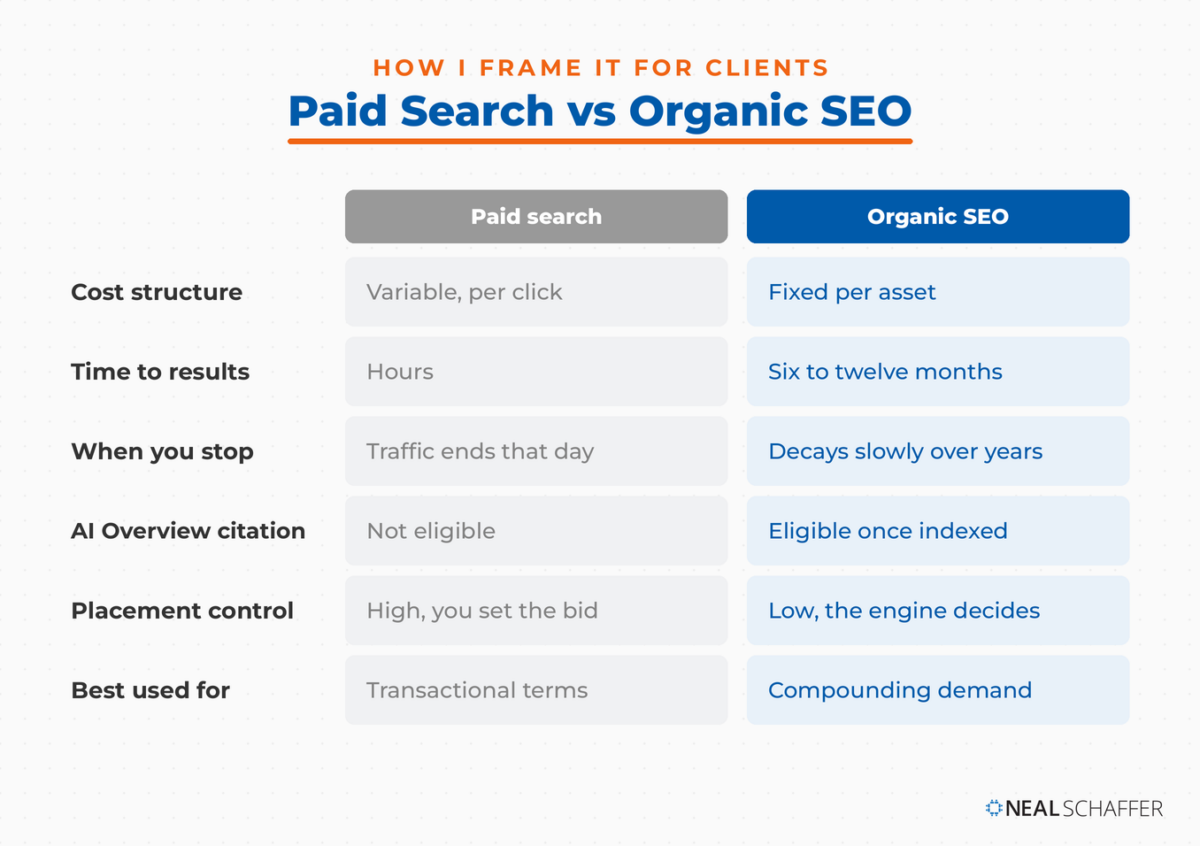
| Paid search | Organic SEO | |
|---|---|---|
| Cost structure | Variable, per click, ongoing | Fixed per asset, amortizes over time |
| Time to first results | Hours | Six to twelve months, realistically |
| What happens when you stop | Traffic ends immediately | Traffic decays slowly over years |
| Eligible for AI Overview citation | No | Yes |
| Control over placement | High, you set the bid | Low, the engine decides |
| Best for | Testing offers, seasonal pushes, transactional terms | Compounding demand, authority, AI visibility |
I want to be careful here, because “organic is free” is the lazy version of this argument and it is wrong. Organic costs time, writing, editing, technical work, and patience. What it does not cost is a per-click toll that never stops. Those are different things, and conflating them is how people end up disappointed.
How Do You Know If a Traffic Drop Is Google or Your Content?
Compare your traffic across search engines over the same period. If your content genuinely got worse, every engine drops you together. If one engine falls while another holds steady or grows on identical pages, the problem sits in that engine’s classifiers rather than in your writing. That one comparison saves months of guessing.
I learned this on this blog. My Google traffic fell off a cliff starting in 2024 and has kept falling since. The same posts on Bing went the opposite direction over that period, growing until Bing became the majority of my organic search traffic. Identical content, identical site, two engines, opposite outcomes.
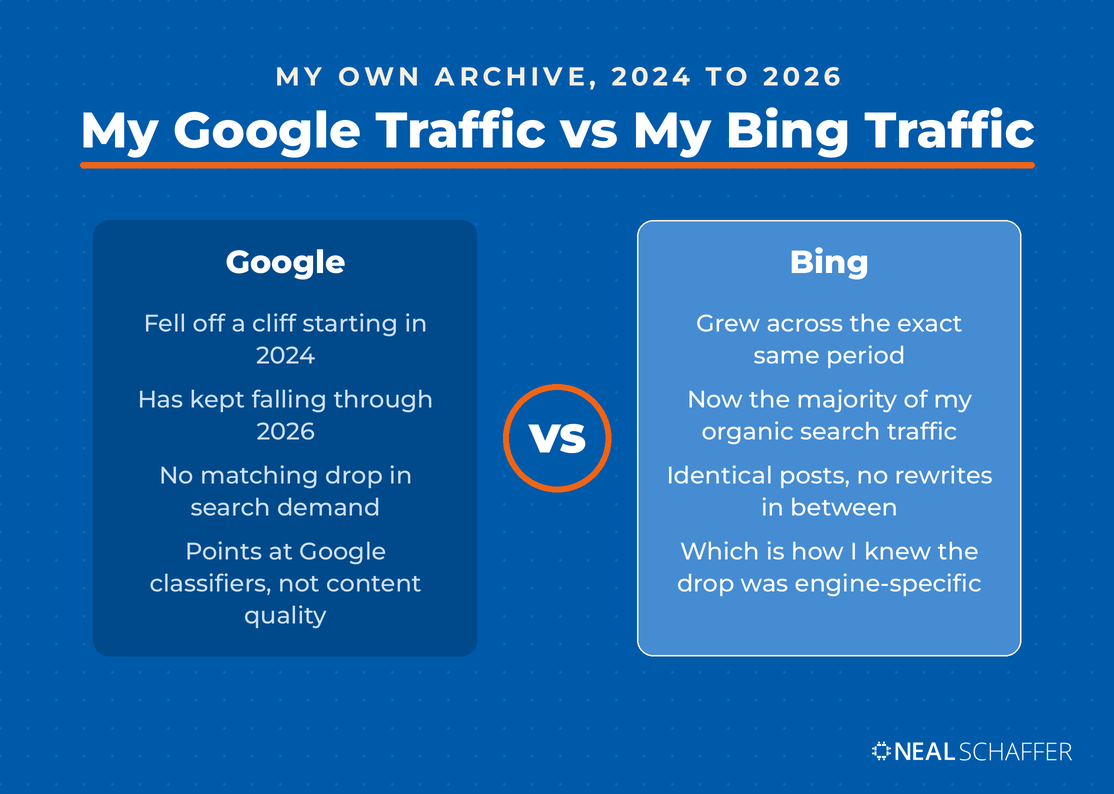
Think about what the alternative explanations would predict. If my writing had genuinely gone bad, both engines drop me together. If demand for my topics had collapsed, same thing. Instead one pulled back hard while the other leaned in. That pattern points at something specific to Google, and more usefully, it told me where to spend the repair budget.
Two things were happening at once and separating them mattered. Part of my decline is the industry-wide shift every publisher is living through, which the next section covers. Part was Google-specific and needed its own fix: a systematic rebuild of a 700-post archive, category by category, thin pages merged or removed, survivors rewritten to reflect firsthand experience. That work is ongoing and I will not pretend recovery is guaranteed.
Here is why this belongs in a post about choosing between earned and paid search. This is the worst case for organic, the exact scenario a skeptic raises to talk you out of it. The asset still held. Traffic kept arriving from another engine while I worked, the archive stayed mine to repair, and the posts that survived are what make me visible in AI answers today. A paid campaign that lost its performance would have simply ended. There would have been nothing left to rebuild.
Does Organic SEO Still Work If Nobody Clicks?
Organic SEO still works, but it no longer works mainly by sending clicks. Rand Fishkin’s June 2026 analysis found that 68.01% of Google searches ended without a click in the first four months of the year, up from roughly 45% a decade earlier. Ranking and traffic have come apart.
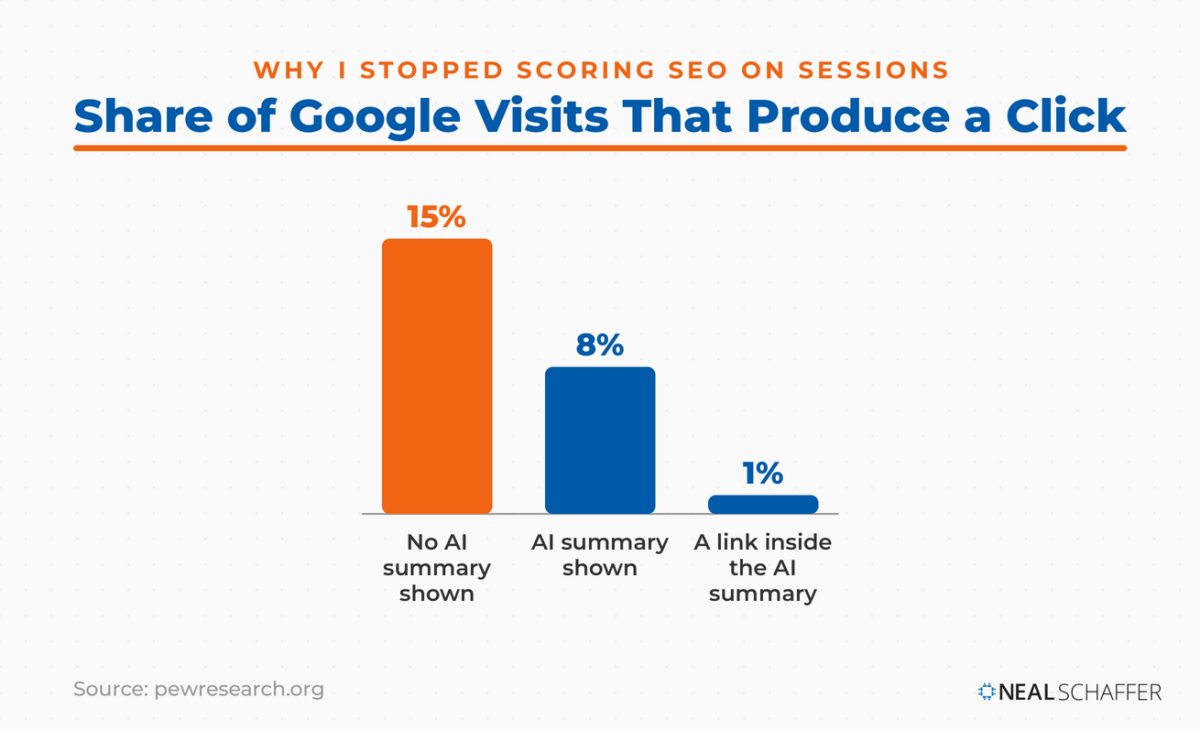
The mechanism is well documented. Pew Research tracked 68,879 Google searches from 900 US adults. Users clicked a traditional result in 8% of visits when an AI summary appeared, versus 15% when it did not. Clicks on links inside the summary happened just 1% of the time.
You can rank first and still lose. Similarweb’s zero-click analysis highlights AllAboutBerlin. That site lost 70% of its traffic to AI Overviews after seven years of growth, while still ranking first for many of its target queries. The ranking held. The click never came.
Fishkin’s own read is the line I keep returning to. He writes that “your SEO still matters as much or more than ever before.” It just stops paying you in the currency you were counting.
So the honest answer is that organic SEO in 2026 is worth doing for different reasons than in 2019. Visibility inside answers shapes what people believe about your category. And the traffic that does arrive is measurably better. Similarweb measured ChatGPT-referred visitors spending 15 minutes on site versus 8 for Google. They viewed 12 pages versus 9 and converted at 7% versus 5% on transactional sites. Fewer visits, better visits.
How Does Organic SEO Drive AI Visibility?
Organic SEO is the entry requirement for AI visibility, not a separate discipline from it. Google’s developer documentation states that to appear as a supporting link in AI Overviews or AI Mode, a page must be indexed and eligible to be shown in Google Search with a snippet. There are no additional technical requirements and no special markup to add.
That last part deserves emphasis, because a small industry has grown up selling the opposite. Google explicitly says you do not need new machine-readable files, AI text files, or special schema to appear in these features. The foundational work is the work. Anyone charging you for an AI-specific file format is selling something Google says it does not read.
But ranking is no longer sufficient on its own, and this is where I part ways with the simpler version of the argument. Ahrefs analyzed 863,000 keyword SERPs and 4 million AI Overview URLs. It found that only 38% of pages cited in AI Overviews also rank in the top 10 for the same query. Seven months earlier that figure was roughly 76%. The rest split almost evenly between positions 11 to 100 and pages ranking nowhere at all.
What moved into that gap is brand presence rather than page optimization. In a separate study of 75,000 brands, Ahrefs found that YouTube mentions correlated most strongly with AI visibility at around 0.737, with branded web mentions between 0.66 and 0.71. The number of pages on a site showed almost no relationship, around 0.194.
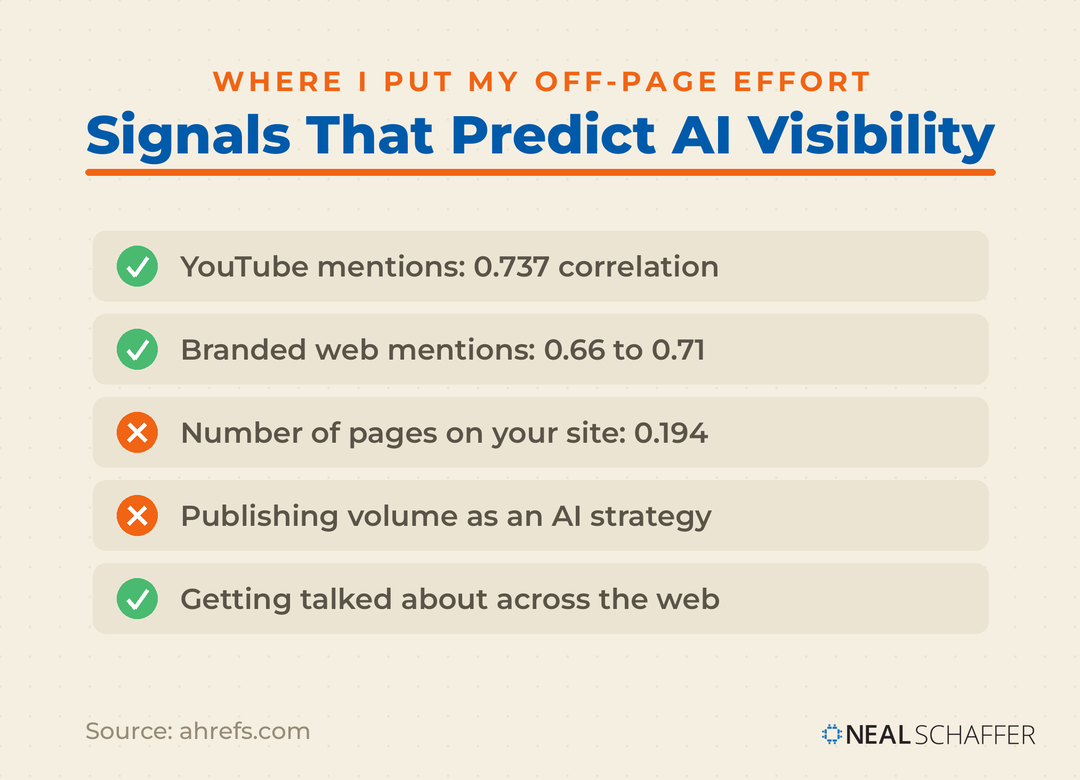
Read that last number twice if you were planning to solve this by publishing more. Volume is not the lever. Getting talked about across the web is, and that is a public relations problem wearing an SEO costume. It is also why I would rather run one post through a real rebuild than ship four thin ones. SEO content decisions now sit closer to brand strategy than to keyword density.
How Do You Measure Organic SEO Now?
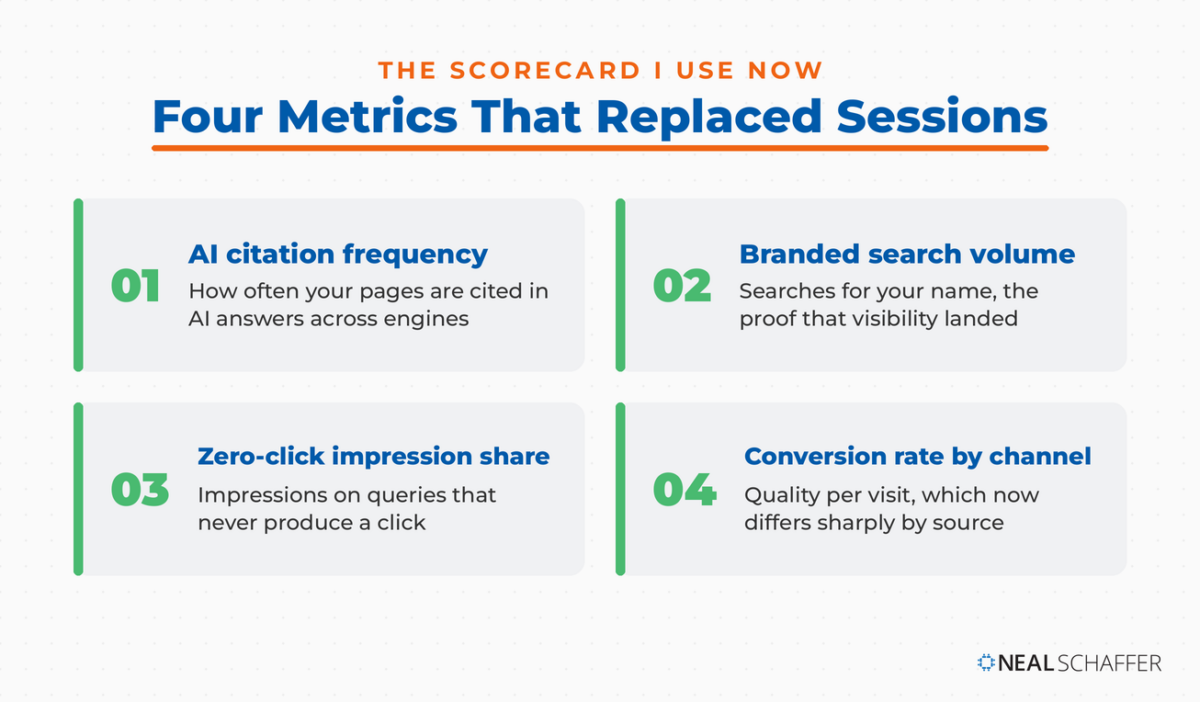
Traffic is no longer the scorecard for organic SEO, though it is still worth watching. The metrics that matter measure presence inside answers and downstream demand: citation frequency in AI responses, branded search volume, impression share on queries that never produce clicks, and share of voice against competitors in AI answers.
One practical development helps. On May 13, 2026, Google Analytics added a dedicated AI Assistant channel to Default Channel Group reports, automatically classifying traffic from chatbots including ChatGPT, Gemini, and Claude. Before that, all of it sat undifferentiated in Referral.
Which brings me back to my opening, with a caveat I owe you. That channel only counts forward from launch. So when I say ChatGPT passed LinkedIn this month, I am working from roughly two months of clean data, not two years. Perplexity still lands in Referral, and AI Overview traffic counts as Organic Search. My real AI visibility is almost certainly higher than what I can see, which is a strange position to argue from and an honest one.
| Old metric | What it misses now | Better metric |
|---|---|---|
| Organic sessions | Impressions that never produce a click | AI citation frequency |
| Keyword position | AI Overview and snippet placement | Zero-click impression share |
| Click-through rate | Brand exposure at zero CTR | Brand mention rate across AI engines |
| Total traffic volume | Quality difference by source | Conversion rate by channel |
If you are rebuilding your reporting, start by segmenting keywords by whether they realistically produce clicks at all. Definitional and informational queries mostly do not anymore. Transactional ones still do. That split should drive where you spend, and it pairs naturally with SEO competitor analysis that looks at citation share rather than only at rankings.
When Is Organic SEO the Wrong Investment?
Organic SEO is the wrong first investment when you need revenue inside ninety days, when you have not validated that anyone searches for what you sell, or when your business cannot survive the six to twelve months it takes for content to mature. In those situations paid search is the correct answer, and I tell clients so.
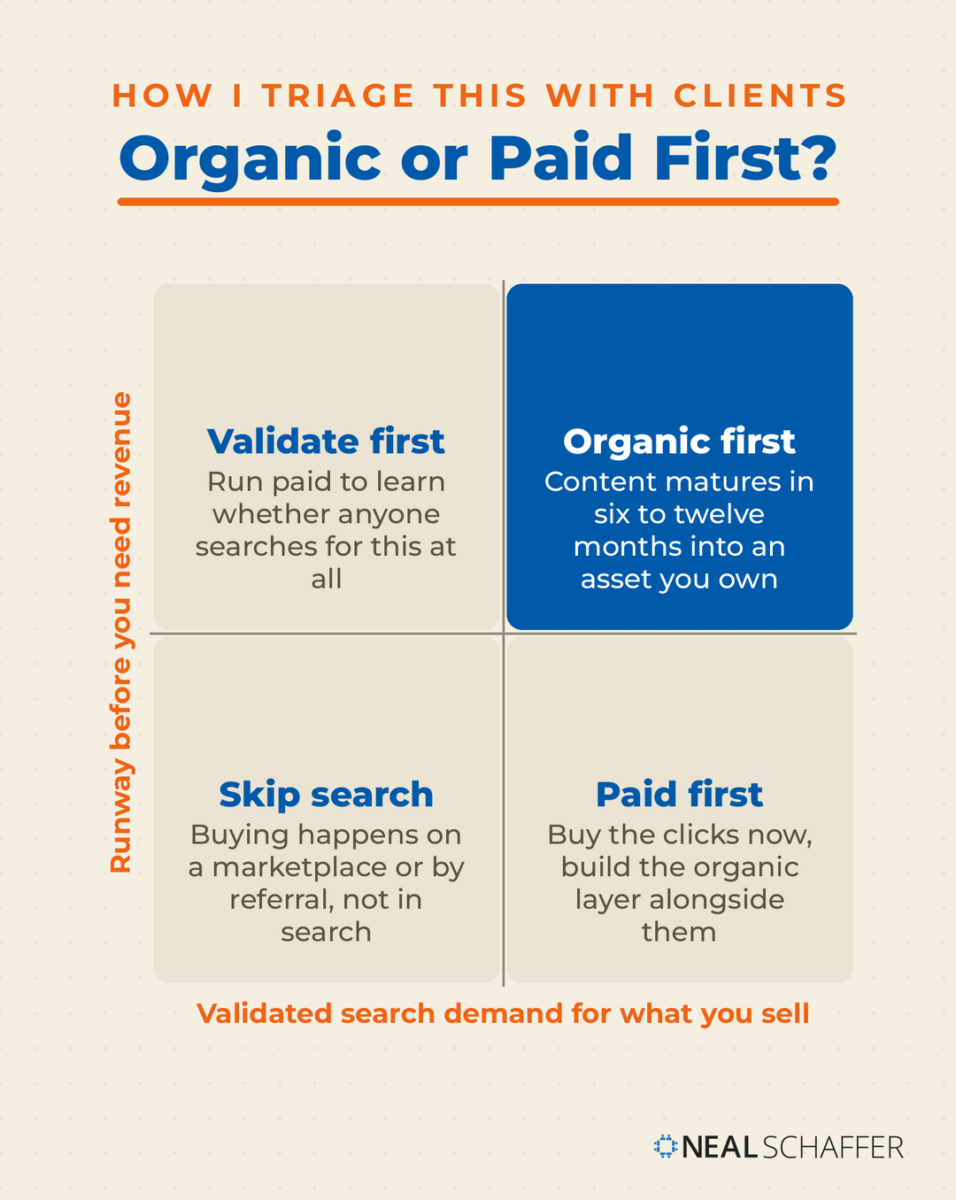
A few specific cases where I steer people away from leading with organic:
- You are testing an unproven offer and need conversion data this quarter, not next year
- Your total addressable search volume is tiny, which happens more often in niche B2B than people expect
- Your buying decision happens on a marketplace or through referral, and search is not part of the journey
- Nobody on the team can write, and you have no budget to hire someone who can
That last one matters more than it used to. When I started blogging, mediocre content could rank on technical merit and consistency alone. That window is closed. If the choice is between publishing filler and publishing nothing, publish nothing and spend the money on ads until you can do it properly.
There is a middle path most businesses should take, which is running both and letting each do what it is good at. Paid handles transactional terms where clicks still happen and margins justify $5 or $8 per visit. Organic handles the informational layer where you build the belief that gets you shortlisted months later. Treating them as a binary choice is the mistake, and I see it constantly in SEO strategy conversations.
Where Should You Actually Start?
Start with the foundations, in order, because advanced work does not compensate for a broken base. Confirm your site is crawlable and fast, fix the pages that should rank and do not, then build a publishing rhythm you can hold for a year. Skipping to tactics before the foundation is solid is the most common way organic programs fail.
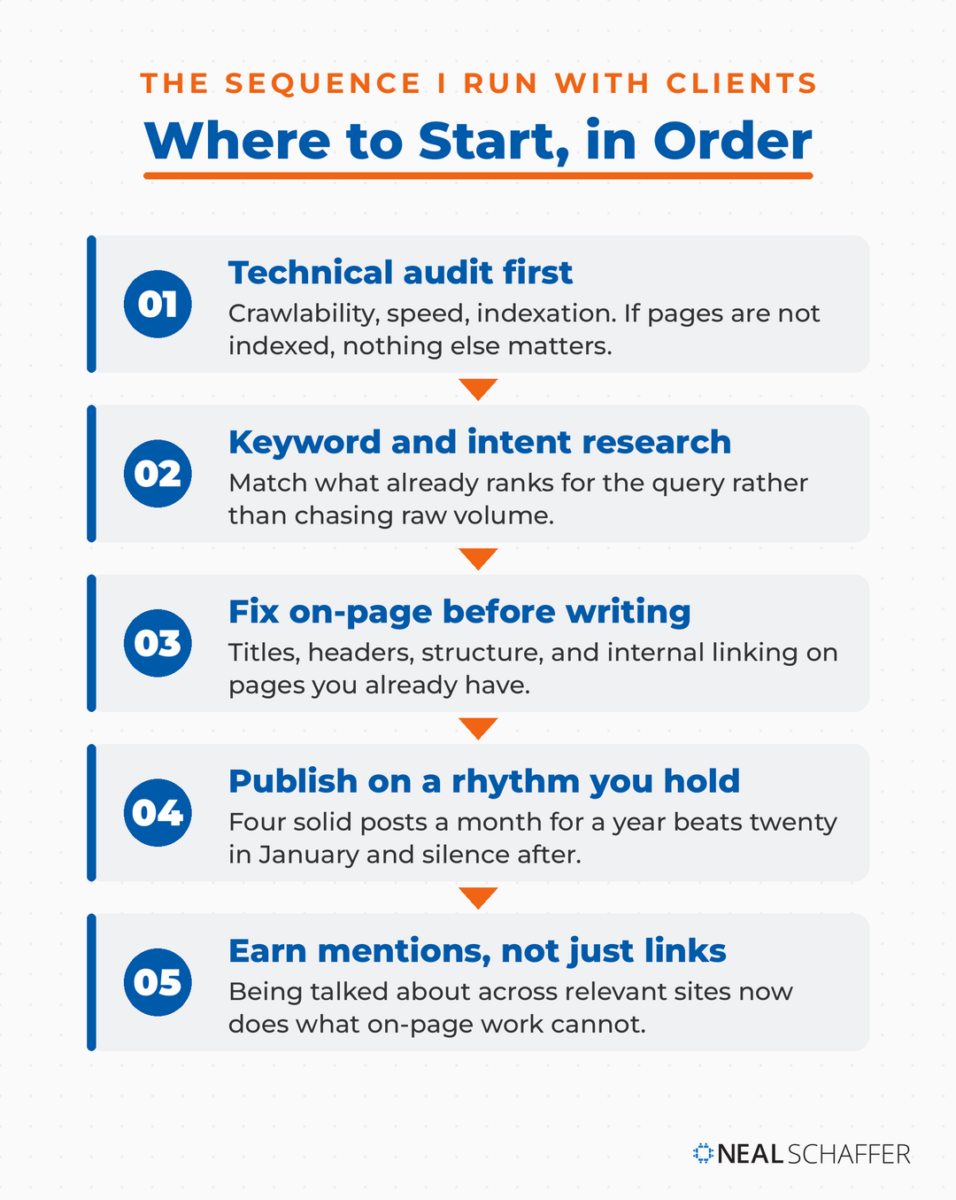
The sequence I use with clients has not changed much, even as everything downstream of it has:
- Technical audit first. Crawlability, speed, indexation. Screaming Frog for the crawl, Google Search Console for what Google actually sees. If pages are not indexed, nothing else matters.
- Keyword and intent research. Google Keyword Planner is free inside Google Ads and adequate to start. Ahrefs and Semrush go deeper on competitor data. The critical part is not volume, it is matching what already ranks for the query.
- Fix on-page before writing new pages. Titles, headers, structure, internal linking. Moz and Yoast both help here and both have free tiers.
- Then publish, on a schedule you can hold. Consistency beats intensity. Four solid posts a month for a year outperforms twenty in January and silence after.
- Earn mentions, not just links. Given what the citation data shows, being talked about across relevant sites now does work that on-page optimization cannot.
Running WordPress puts most of the technical layer into configuration rather than code, which I get into on WordPress SEO. Serving a geographic market means local SEO follows different rules and deserves its own pass. And if your content lives mostly on a blog, blog SEO is the narrower version of everything above.
Frequently Asked Questions About Organic SEO
Six to twelve months for meaningful movement on competitive terms, sometimes faster on long-tail queries with little competition. Anyone promising ninety days on a competitive keyword is either working in an unusually empty niche or telling you what you want to hear.
Yes, but for different reasons than five years ago. Google’s documentation confirms that organic indexation is the requirement for AI Overview citation, so organic is the only path into those answers. You are buying visibility and influence rather than raw sessions.
Both, if you can. Paid for transactional terms where clicks still convert directly. Organic for the informational research layer that shapes decisions weeks earlier. If you can only afford one and you need revenue now, start with paid.
The data says no. Ahrefs found almost no correlation between a site’s page count and its visibility in AI answers. Brand mentions across the web correlate far more strongly, which means quality and distribution beat volume.
Less than the terminology suggests. Answer engine optimization and generative engine optimization describe optimizing for AI-generated answers, but the technical entry requirement is the same organic indexation. Treat them as extensions of organic work rather than separate budgets, and read up on how AI search engines actually retrieve sources.
Start Building the Asset You Get to Keep
The case for organic SEO in 2026 is not that it is cheap or fast, because it is neither. It is that you end up owning something. Every post you publish keeps working after the invoice clears, and in an answer-engine world it is the only asset that makes you eligible to be cited at all.
Paid search has no second life. Switch it off and nothing remains. If you want the numbers behind the arguments here, the latest SEO statistics are worth bookmarking. If you are earlier in the process and want the foundational sequence rather than the strategic case, start with how to do SEO. And if you would rather have someone build and run this alongside the rest of your marketing, that is what my Fractional CMO services are for.
Actionable advice for your digital / content / influencer / social media marketing.
Join 13,000+ smart professionals who subscribe to my regular updates.