




Willie Francis was sentenced to death for the 1944 murder of Andrew Thomas, but his first execution attempt failed, leading to a controversial Supreme Court case before he faced the electric chair a second time in 1947.
Public DomainWillie Francis in his cell four days after his first “execution.”
On May 3, 1946, 17-year-old Willie Francis was led to an electric chair known as “Gruesome Gertie.” When the switch was flipped, the current began traveling through the teen’s body — but he didn’t die.
A drunk prison guard had wired the device incorrectly, subjecting Francis to a non-lethal electrocution. Francis’ case was then picked up by attorney Bertrand DeBlanc, who argued in front of the U.S. Supreme Court that subjecting him to execution a second time would constitute cruel and unusual punishment.
The justices didn’t agree. Willie Francis faced the electric chair once more on May 9, 1947. This time, the device worked as intended.
However, the botched execution isn’t the only controversial part of Francis’ story: Some experts question whether he was even guilty of the murder he was sentenced to death for.
The Investigation Into The Murder Of Andrew Thomas
In December 1944, the body of a pharmacist named Andrew Thomas was found behind his home in St. Martinville, Louisiana. He had been shot four times.
The police initially had no leads on who had killed him, but in August 1945, officers detained 16-year-old Willie Francis while he was visiting his sister in Port Arthur, Texas. They suspected that Francis was dealing drugs — purportedly because he was carrying a briefcase — but when they searched his belongings, they allegedly found a wallet holding Thomas’ ID.
Francis was arrested for the murder of Andrew Thomas, and his trial began the following month. Prosecutors never presented Thomas’ wallet as evidence — but they didn’t have to. Francis had confessed to the crime.

Public DomainWillie Francis was 16 years old when he was arrested for the murder of Andrew Thomas.
Still, the circumstances surrounding Francis’ confession were questionable. He wrote it without an attorney present less than two days after his arrest, and some of his statements were perplexing. As recorded in an article written by Professor Deborah Denno at Fordham University School of Law, Francis’ first confession read, “I Willie Francis now 16 years old I stole the gun from Mr. Ogise at St. Martinville La. and kill Andrew Thomas November 9, 1944 or about the time at St. Martinville La it was a secret about me and him.”
It’s unclear what “secret” Francis was referring to. It may have simply been the murder itself, but author Gilbert King posited in his 2008 book The Execution of Willie Francis that the teen was referring to a secret he had with “Mr. Ogise.”
This Mr. Ogise was actually August Fuselier, a deputy sheriff who had supposedly reported his .38 caliber Smith & Wesson missing shortly before Thomas’ murder. There is no evidence of this report, and the weapon mysteriously vanished before Francis’ trial.
What’s more, Fuselier had once purportedly walked into Thomas’ drugstore and warned him to stay away from his wife, “or he wouldn’t live long.”

The Ernest J. Gaines Center at the University of Louisiana at LafayetteWillie Francis’ signed first confession for the murder of Andrew Thomas.
Still, Francis signed a second confession on August 6 that stated, “Yes Willie Francis confess that he kill Andrew Thomas on November 8, 1944 i went to his house about 11:30 PM i hide backing his garage about a half hour. When he came out the garage i shot him five times. That all i remember A short story.”
Despite the discrepancy in the date of the murder between Francis’ two official statements and the lack of any forensic evidence linking Francis to the scene of the crime, he was swiftly convicted. His trial lasted less than two days, and the jury deliberated for just 15 minutes.
Willie Francis was sentenced to death, and his execution date was set for May 3, 1946.
The First Execution Of Willie Francis
When 17-year-old Francis took a seat in “Gruesome Gertie” on May 3, he was prepared to die. The St. Paul Pioneer Press reported at the time that the teen was “thinking of going to Heaven” when the switch was flipped — but the current wasn’t strong enough to kill him.
Francis later said that the electric shock “tickled a little but didn’t hurt much. I couldn’t breathe very well with the straps over my face.” From the chair, he shouted, “I am not dying!” and “Take it off! Let me breathe!”
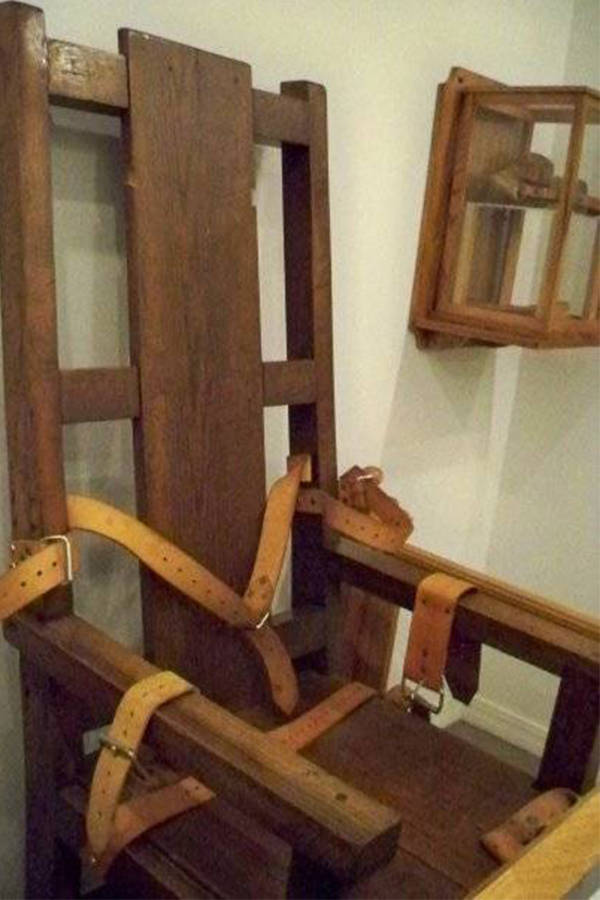
Public Domain“Gruesome Gertie,” the electric chair that led to Willie Francis’ botched execution.
Prison officials turned off the electricity after roughly 30 seconds, and Francis reportedly walked away without any severe burns. It was later revealed that an intoxicated prison guard had incorrectly wired the device. Francis would later say, “God fooled with the electric chair.”
Following the debacle, Louisiana Governor Jimmie Davis rescheduled Francis’ execution for May 9, 1946. Instead, the teen’s case was picked up by attorney Bertrand DeBlanc, who had been good friends with Andrew Thomas. He took Francis’ appeal to the Supreme Court in November, arguing that a second execution would constitute cruel and unusual punishment. DeBlanc also claimed that Francis’ sentence violated the Fifth Amendment double jeopardy clause.
According to a 2008 report in the Washington Post, the justices were deadlocked, and the final vote came down to Felix Frankfurter.
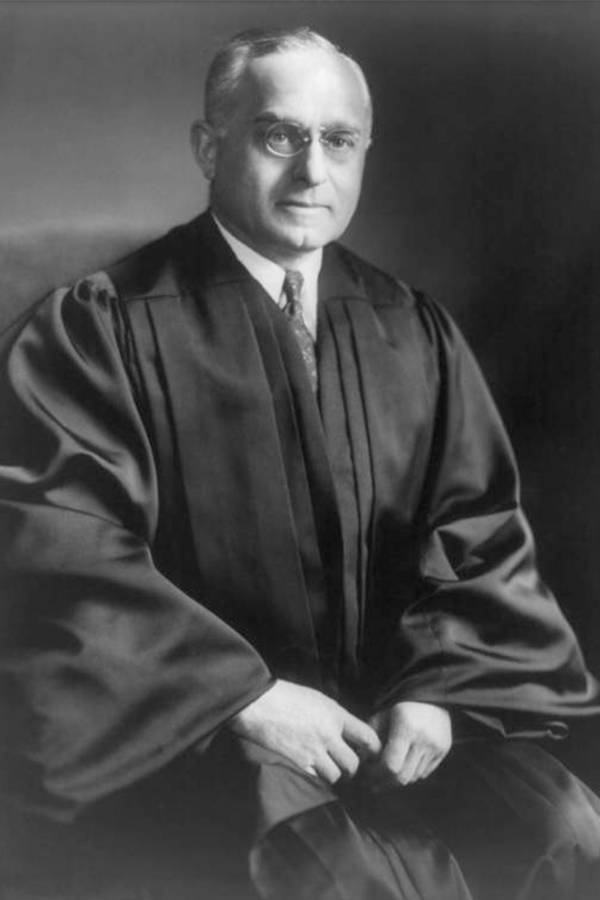
Library of CongressAssociate Justice Felix Frankfurter of the U.S. Supreme Court.
Frankfurter ultimately upheld Francis’ death sentence, but he regretted his decision almost immediately. In the months before Francis’ rescheduled execution date — May 9, 1947 — the justice tried to convince Governor Davis to commute Francis’ sentence to life in prison. “I have little doubt that if Louisiana allows Francis to go to his death,” Frankfurter said, “it will needlessly cast a cloud upon Louisiana for many years to come.”
Frankfurter’s pleas were ignored, and Willie Francis faced death yet again.
The Death And Legacy Of Willie Francis
While DeBlanc was determined to keep fighting for Francis, the teen was tired of being disappointed, and he told DeBlanc, “I’m ready to die.” According to a 1947 report by Time, Francis stated shortly before his execution, “I’m wearing my Sunday pants and my Sunday heart to the chair. Ain’t going to wear no beat-up pants to see the Lord.”
Willie Francis was executed as scheduled on May 9, 1947. He was 18 years old.
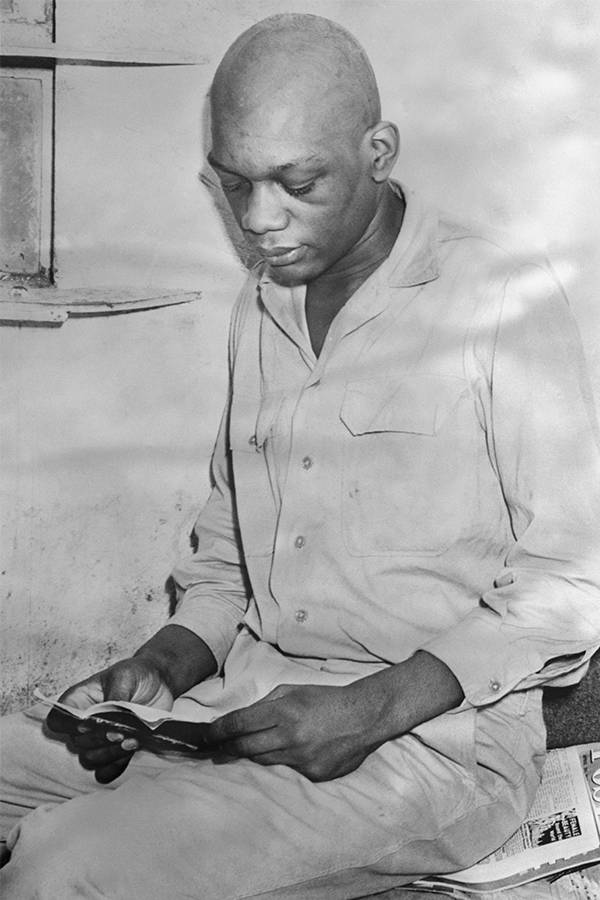
Bettmann/Getty ImagesWillie Francis reading in his prison cell in 1946.
The debate about his guilt continues to this day. While he did officially admit to killing Andrew Thomas, he also wrote bizarre messages on his cell wall that threw those confessions into question. One read, “Practically I killed Andrew by accident. It will happen once in a life time.” Another stated, “Of course I am not a killer.”
In the end, the truth about Thomas’ murder may never be known. Perhaps Francis did shoot him in cold blood. It was reported by some newspapers at the time that Francis had previously done odd jobs around Thomas’ store and was angry at the pharmacist for reprimanding him.
Maybe, as Gilbert King theorized, there had been some sort of agreement between Francis and August Fuselier, and Francis had taken the fall.
Or, perhaps, Willie Francis was an easy target for a small-town murder case that demanded justice.
After learning about Willie Francis, discover the stories of eight other botched executions throughout history. Then, read about William Kemmler, the first man to be killed in an electric chair.