




There’s a famous scene in “On the Waterfront” (1954) that shows Marlon Brando’s Terry Malloy flirting with Eva Marie Saint’s convent-trained Edie Doyle in his palooka-like way, and what people remember most is his improvisation and her reaction. When Saint drops her glove during the scene, Brando decided to pick it up and toy with it, and Saint uses that to make her nervous character even more nervous; she physicalizes it like the best Method actor, never overdoing it, always keeping it real and controlled. This could and often is shown in classrooms to acting students as the best example of “using” something that happens in a scene to enhance it, yet Saint is so good in this movie, which won her the 1954 Academy Award for Best Supporting Actress, because she never seems to be acting.
She grew up with Quaker parents in New Jersey, and her early career was spent in live television, where she projected a radiant sweetness opposite Lillian Gish in a production of Horton Foote’s “The Trip to Bountiful” (1953), a first hint that Saint was more than happy to support a star performance rather than give one herself. In Steve Vineberg’s insightful 1991 book Method Actors, he places her in a chapter titled “Method Sanity,” positing her as an example of an actor trained in the Method but not reliant on the neuroticism and flashy emotional tics of some of the other performers from the Actors Studio.
Elia Kazan auditioned her for “On the Waterfront,” and Saint recalled, “Brando came in and started teasing me. He put me off balance. And I remained off balance for the whole shoot.” Part of the quality of her performance in this famous movie is how she manages to play so many things—shyness, nerves, determination, fear, sexual awakening—in such a clean, straightforward way. Watching Saint as Edie is like watching a bird hatching from an egg, or a butterfly emerge from a chrysalis, trembling, fragile, but full of life. Saint never lets Brando throw her off balance; instead, she uses what he does to strengthen her own interpretation of the character.
“I may have the baby right here!” cried a heavily pregnant Saint as she accepted her Oscar for “On the Waterfront” from Frank Sinatra. Already married to television producer and director Jeffrey Hayden (they were wed from 1951 until his death in 2016, for 65 years), Saint had two children with him and focused on family life, only taking a few parts here and there, like the pregnant wife in “A Hatful of Rain” (1957).
Alfred Hitchcock cast Saint as what she fondly recalled as “a sexy spy lady” in his classic thriller “North by Northwest” (1959), opposite Cary Grant, and he bought her a full wardrobe at Bergdorf Goodman and drawled, “No more kitchen sinks for you, Eva Marie.” When Grant’s Roger Thornhill first encounters Saint’s Eve Kendall on a train, she looks and sounds like the dream of most men, a smart beauty getting down to brass tacks. Roger is on the lam, and she sits serenely in the dining car and watches him steadily, in that focused way that Saint had.
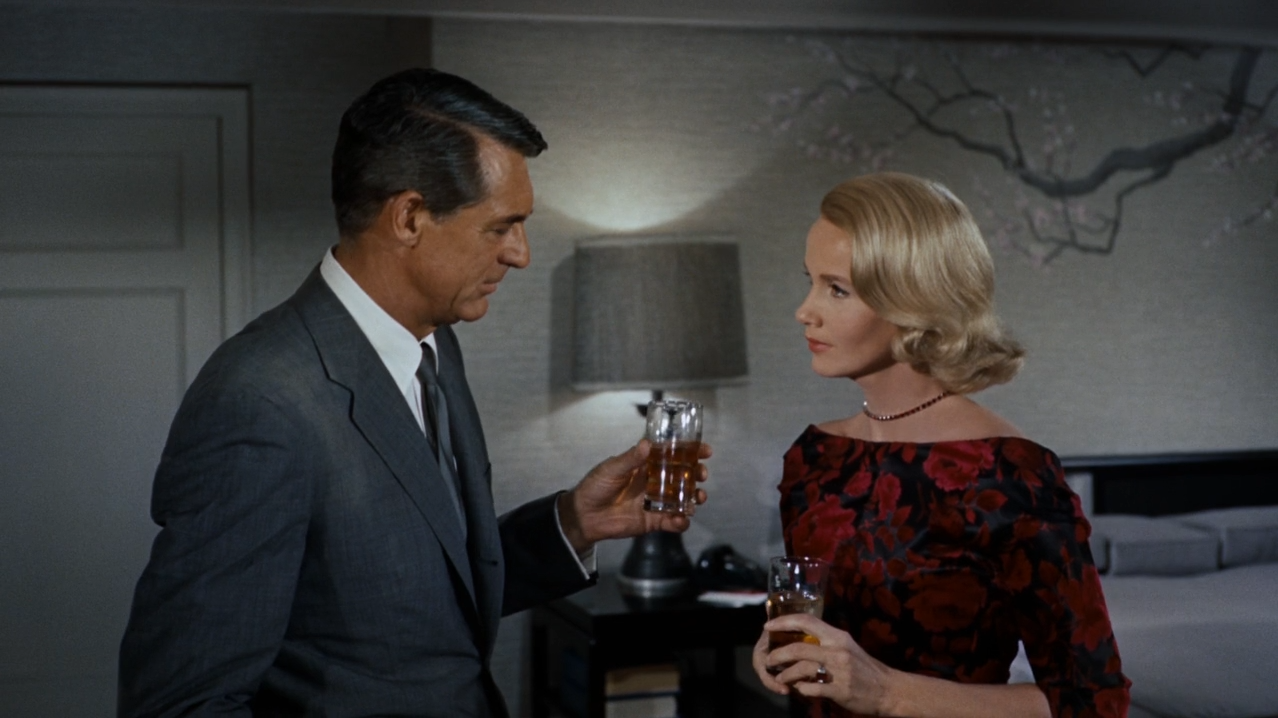
Hitchcock instructed Saint to lower her voice a bit for this role, which works wonders as a contrast to her still-girlish beauty. Censors made her re-dub a line of dialogue: “I never make love on an empty stomach” became “I never discuss love on an empty stomach,” but they couldn’t censor that look on her face as she stares at the ever-desirable Grant. There comes a point when Eve says, in her throaty voice, “It’s going to be a long night…I don’t particularly like the book I started…know what I mean?” Saint times this line perfectly, lingering over it, enjoying it, for this is truly one of the most sheerly enjoyable movies ever made, and she herself was tickled by it. Playing with Grant was just as challenging as playing with Brando, and Saint holds her own with both of these very different male performers.
MGM executives told Hitchcock to cut a long scene where Saint’s Eve explains her life situation to Grant and talks about her former ennui before becoming a double agent, but Hitchcock knew that this was a key scene for Saint and for his movie that deepened it and gave it some depth of emotion, so he stood firm and kept it in, even though the running time of “North by Northwest” was longer than his usual (136 minutes). Remember Saint’s face in the auction scene, when Eve is torn between her duties and her desires as she is fought over by Roger and Phillip Vandamm (James Mason), and remember the way her long, elegant fingers toy with Grant’s ear as they kiss each other on the train, that book which Eve doesn’t particularly like set aside for sex and adventure.
Saint did her best to hold together the very long takes in Otto Preminger’s “Exodus” (1960) but was let down by some of the most obvious post-dubbing of lines of all time. She was very touching as a woman destroyed by desire in “All Fall Down” (1962), ruined by Warren Beatty and maybe taking pleasure in it. But she gave her finest performance of this era in Irvin Kershner’s “Loving” (1970), a film that has been neglected and deserves re-appraisal.
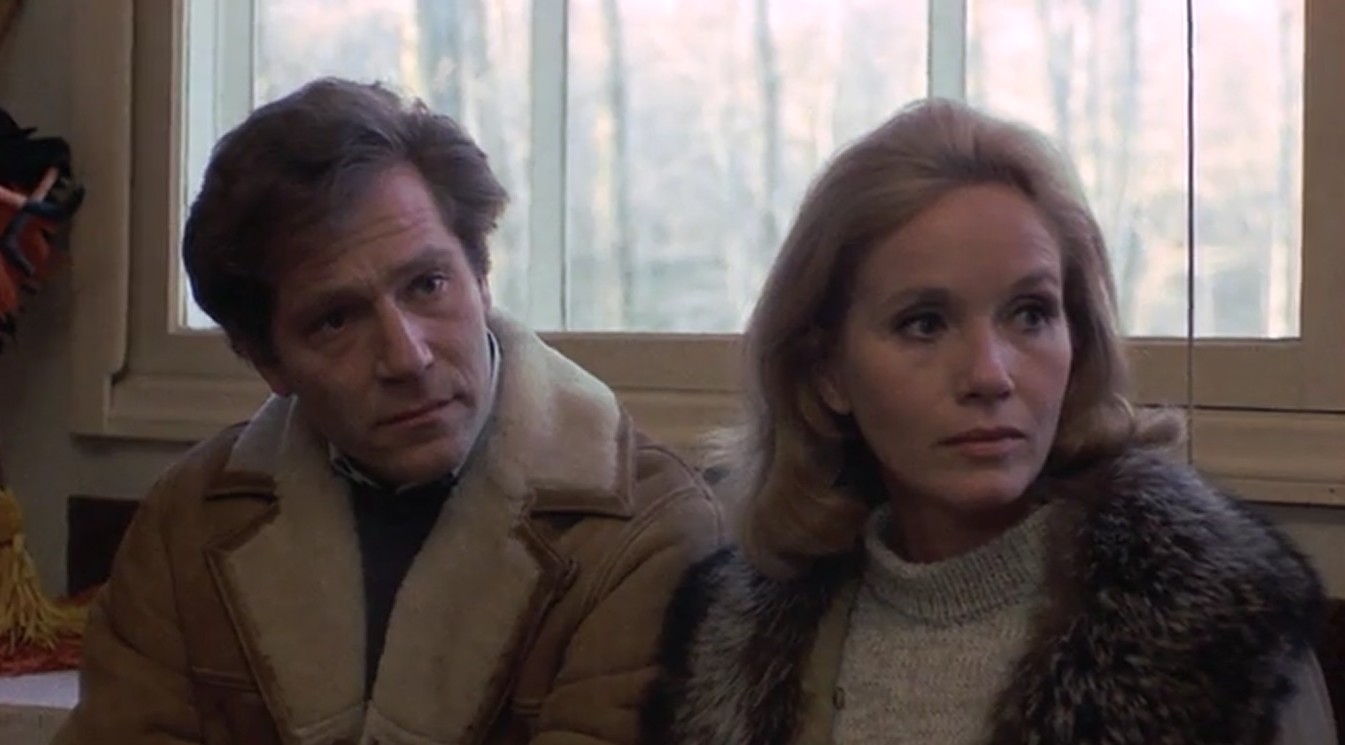
Saint plays Selma, a wife and mother deeply in love with her husband (George Segal), and helpless as he starts to drift away. A memorable scene shows Segal inadvertently revealed on camera with another woman to everyone at a party, and Saint plays this moment in her usual no-frills style: 100% real and very physical. Her pain when she confronts him is hard to forget, and it lingers because Saint was the sort of actor who wasn’t interested in personal glory or showing off. She wanted to capture what a real person might be like in a real situation, and she had the skill, intelligence, and sensitivity to do that.
Saint continued to work in television, and eventually became a popular guest at film festivals, showing her two classic movies, “On the Waterfront” and “North by Northwest.” After her husband died, she made a moving appearance at the Academy Awards in 2018 to present the award for costume design, savoring the memory of the black dress with red flowers she wore as Eve Kendall. She lived to the age of 102, surrounded by family and grandchildren, the classiest elderly lady imaginable, proud and amused to be the female lead in two of the best movies of all time, to which she brought the clarity of morning sunlight.