




Right now someone is posting about your brand. They did not tag you, they did not use your hashtag, and your notifications will never show it to you. Search your own brand name on X and you will find them.
That gap sits at the center of UGC marketing and almost nobody plans for it. Most guides open with why customer content converts and close with a list of tools. The harder problem comes earlier. The content already exists, and your notifications are not built to show it to you.
I have worked on this from the operator’s side for years. User-generated content is one of the core plays in Digital Threads. I hit the same gap with almost every Fractional CMO client, and I covered it at length on my podcast while drafting that chapter. What follows is how I actually source this stuff, including the asks I make and the rights language I use. If you want the short version of who I am, my background is here.
Key Takeaways
✅ UGC marketing is customer-created content put to work. Reviews, photos, videos, social posts, and case studies made by your customers, employees, and fans, republished with permission across your channels.
✅ Notifications only show you the mentions that tagged you. Untagged mentions are the normal case, which makes brand-name search and a listening tool the first step rather than the last.
✅ The trust number everyone quotes measures people you know, not strangers. Nielsen put recommendations from friends and family at roughly nine in ten across two studies nine years apart. Online reviews score much lower.
✅ Supplied photos are not UGC. Assets a host or client hands you carry permission at handover. Content a third party made about you without your involvement needs a rights conversation.
✅ The bottleneck is your ask, not your audience. Name the format, name the platform, name the hashtag, and ask where a relationship already exists.
✅ Match the format to where it will be read. A testimonial set inside the image works on Instagram because captions truncate. On a web page the same quote runs in full.
What Is UGC Marketing?
UGC marketing is the practice of sourcing content your customers, employees, and fans created about your brand, then republishing it with permission on your own channels. It covers reviews, photos, videos, social posts, testimonials, and case studies. The persuasive force comes from the fact that whoever made it has nothing riding on your sales figures.
That point is what separates it from everything else in your content calendar. Your marketing team is paid to say your product is good. A customer is not. Buyers know the difference and weight it accordingly.
The practical appeal is that you stop being the only source of supply. Every business I work with runs some version of the same hamster wheel of content, publishing constantly to keep a feed alive. UGC breaks that loop because the content arrives from outside.
How Is UGC Marketing Different from Influencer Marketing?
Influencer marketing is paid and contractual, and the creator publishes to their own audience. UGC is organic or lightly incentivized, and you do the publishing on your channels. Both put a third-party voice in front of buyers. Only one of them scales without a media budget.
I teach influencer marketing at UCLA Extension and wrote a book on it, so let me be careful here. The two disciplines overlap constantly in practice. A paid partnership often produces content you would happily call UGC, and a customer photo you repost can turn into a paid collaboration later.
What matters operationally is who owns the audience and who signs a contract. If you want the demand-side numbers on the paid version, the influencer marketing statistics are a different conversation from this one.
| Influencer marketing | UGC | UGC creators | |
|---|---|---|---|
| Who pays | Brand pays creator | Usually nobody | Brand pays creator |
| Who publishes | Creator | Brand, with permission | Brand |
| Whose audience | Creator’s | Yours | Yours |
| Contract | Yes | Rarely | Yes |
| What you are buying | Reach | Credibility | Production |
Where UGC Creators Fit
A UGC creator is someone paid to produce content in the style of a customer, which the brand then publishes on its own channels. They are not influencers, because you are not renting their audience. You are buying production skill and a look that reads as native rather than shot.
This category barely existed when I started tracking it. It exists now because brands wanted the aesthetic of customer content faster than customers were supplying it. Buying that is reasonable when you are new and nobody is posting about you yet.
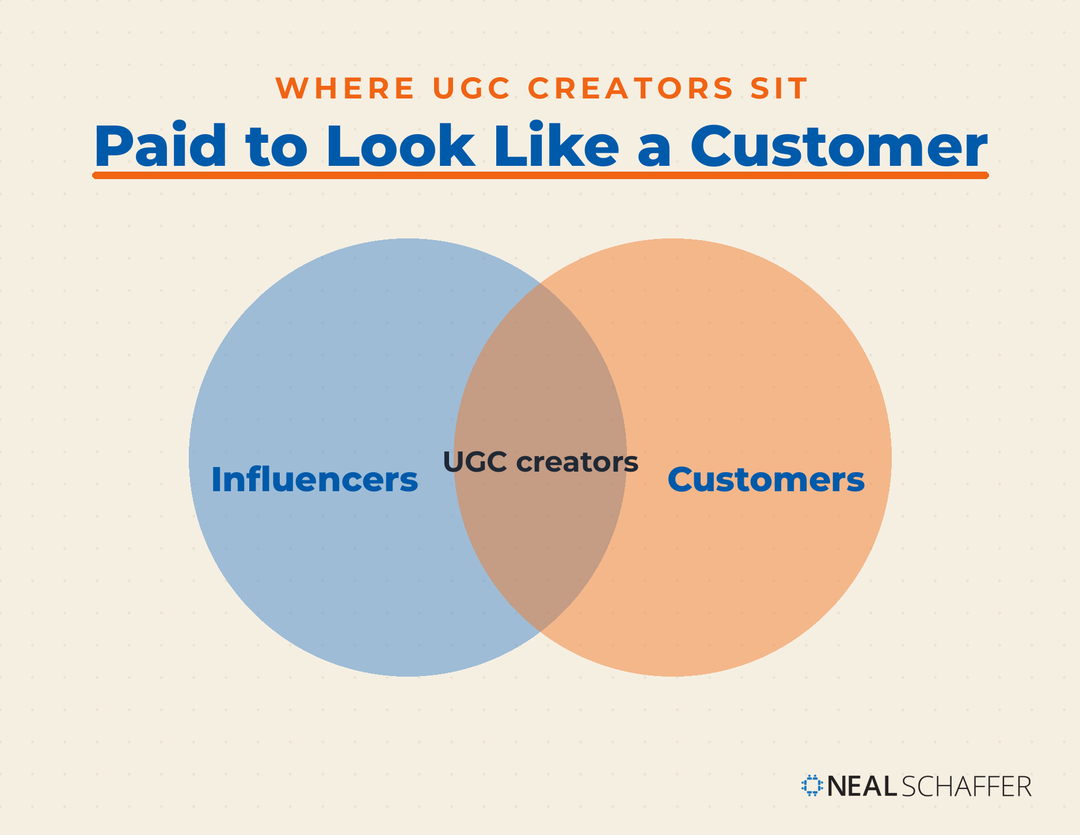
Be clear-eyed about what you get. A hired creator gives you the format of authenticity. It does not give you the underlying evidence, which is that a real customer cared enough to post. If the line between owned and sponsored is fuzzy for you, my take on branded content draws it more carefully.
Does UGC Marketing Work for B2B?
Yes, and B2B is where the biggest gap sits between what is possible and what most companies do. Case studies, video testimonials, customer success stories, and employee posts on LinkedIn are all user-generated content. They shorten the sales cycle because a buyer said it instead of a vendor.
Most of my Fractional CMO work is with B2B and professional services companies. The objection I hear is always the same. Nobody posts Instagram photos of our software. That is true, and it is beside the point, because the medium changes and the mechanism does not.
A screenshot of a G2 review counts. So does a quote from a client email, or a photo of your team with a customer at a conference. Each one is a third party vouching for you, each one is publishable, and in my experience almost none of them get used. Before you go collect any of it, though, be clear about how much weight it can carry, because the industry’s favorite trust number does not say what people think it says.
What the 92% Trust Number Actually Measures
The figure attached to almost every UGC article measures recommendations from friends and family, not content from strangers. Nielsen’s 2012 global study found that 92% of consumers trust earned media above every other form of advertising, across more than 28,000 respondents in 56 countries. Read the category again before you quote it.
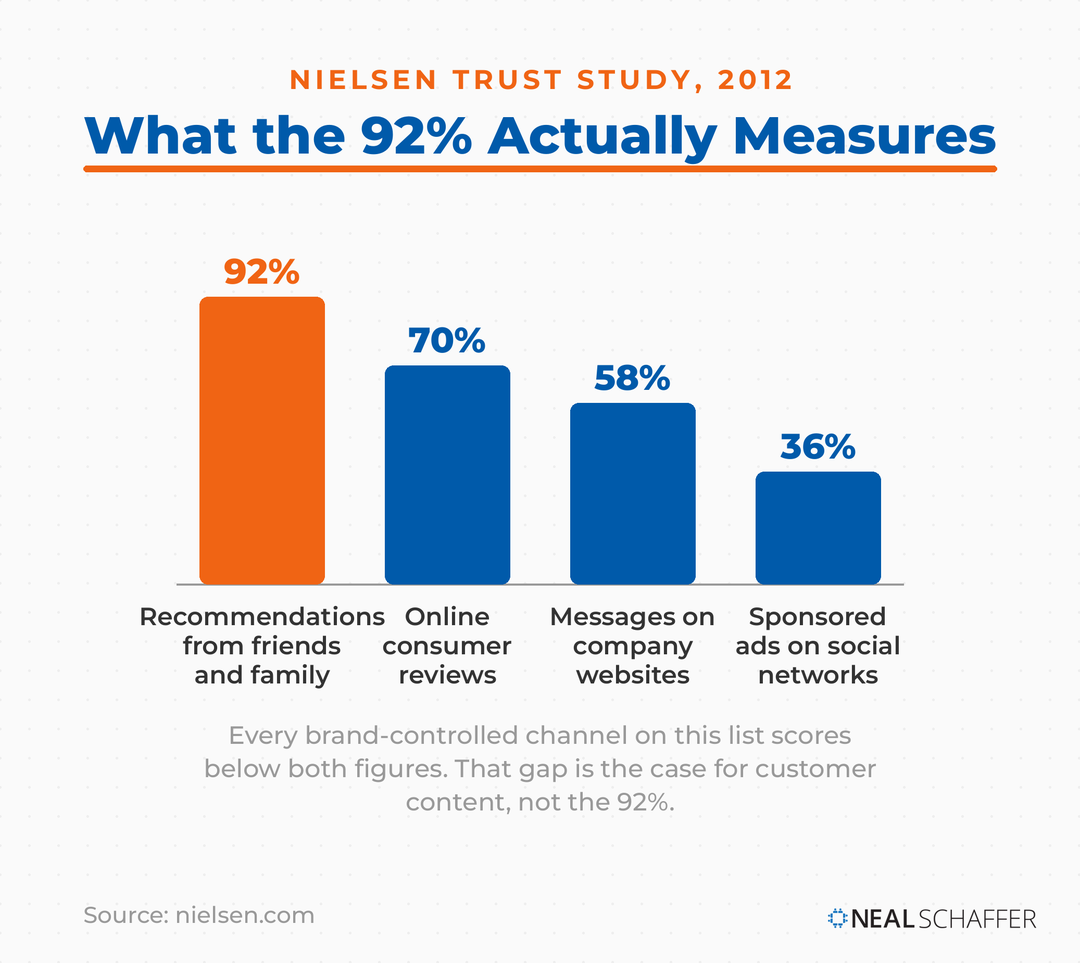
In that same study, online consumer reviews came second at 70%. Reviews are the closest thing on the list to user-generated content, and strangers scored twenty-two points below friends. The industry has spent fourteen years quoting a word-of-mouth number for content made by people the reader has never met.
That is a gap worth knowing about, and it should change which claim you make. Customer content is persuasive. It is not as persuasive as your buyer’s actual friend, and pretending otherwise sets a bar your reviews page will never clear.
The stability of the finding is the genuinely useful part. Nielsen’s 2021 study, fielded that September across more than 40,000 consumers, found 88% still trusted recommendations from people they know more than any other channel. Nine years, an entire platform cycle, and the number barely moved.
Make LinkedIn Your Best Source of Clients
My latest book helps professionals, entrepreneurs, and business owners turn LinkedIn from a static profile into a real source of clients and growth.
Maximizing LinkedIn for Business Growth gives you clear, practical steps to build a profile that gets noticed and a network that actually sends business your way.
Grab your copy on Amazon and put it to work this week. Click the cover or the button below to get started.

While I am flagging shaky numbers, one more. The 29% conversion lift quoted everywhere, including by me when I recorded a podcast episode on UGC, traces back to a single data point. I said as much on the recording at the time, and I have not been able to find the underlying study since, so I have stopped using it.
Knowing which trust signal you are buying is useful. Knowing which formats produce it is what you act on.
What Are the Main Types of UGC?
The formats worth planning around are reviews, testimonials, photos and videos, social posts, hashtag contests, and employee-generated content. Reviews and testimonials do the most work in B2B. Photos and video carry consumer brands. Employee content is the one almost every company already has and rarely asks for.
| Format | What it is | Where it does the most work |
|---|---|---|
| Reviews | Balanced accounts naming strengths and weaknesses | Google, Yelp, G2, your product pages |
| Testimonials | Purely positive quotes you requested | Sales pages, decks, conversion pages |
| Photos and video | Customers using the thing | Instagram, TikTok, product pages |
| Social posts | Casual mentions, tagged or not | Reposts, screenshots, embeds |
| Hashtag contests | Volume produced against a prize | Campaign windows, launches |
| Employee content | Your own team posting about the work | LinkedIn, employer branding |
Reviews
A review discusses strengths and weaknesses, which is exactly why it persuades. Google Business Profile, Yelp, G2, Capterra, and TrustRadius are where these live, and the reviewer usually never posts them anywhere else. Repurposing is the move most brands miss, and a public review is yours to screenshot and quote.
Testimonials
Testimonials run the other way. They are exclusively positive, which makes them weaker as evidence and stronger as a design element. Nobody offers one for a product they think is flawed, and readers know that. The mechanics of asking are their own subject, and I have written up how I collect and display customer testimonials.
Photos, Video, and Social Posts
Visual UGC lets a buyer picture themselves using the thing, and the amateur quality is a feature rather than a defect. A passing text mention counts too. In the brand searches I run, the typical post is casual, untagged, and one line long, which is precisely why it reads as sincere.
Hashtag Contests and Employee Content
A branded hashtag plus a prize is the fastest way to produce volume in a short window, and it stops producing the moment the prize does. Employee content has no such cliff. In my Fractional CMO work the fastest win is usually the team’s own LinkedIn posts, which land in networks the company page never reaches.
For how these slot into a wider plan, the types of content marketing page puts them alongside everything else you might publish. Knowing the formats does not help if you never see the content in the first place.
Most of Your UGC Is Invisible to You
Brands find customer content through notifications, and notifications only fire when someone tags you. From what I have seen, most posts about a brand carry no tag and no hashtag, so the default method misses most of the supply. Brand-name search and a listening tool are the fix.
On an episode of my podcast Your Digital Marketing Coach I put it this way: “An overwhelming majority of social media posts about brands are untagged, so unless you’re looking deeply at your notifications, you might miss them.”
That was my own observation from years of doing this rather than a measurement. I still think it is roughly right.
You can test it in about ninety seconds. Open X, type your brand name in the search field, and click the Latest tab. Do not use the Top tab, which sorts by engagement and hides exactly the small posts you are looking for.
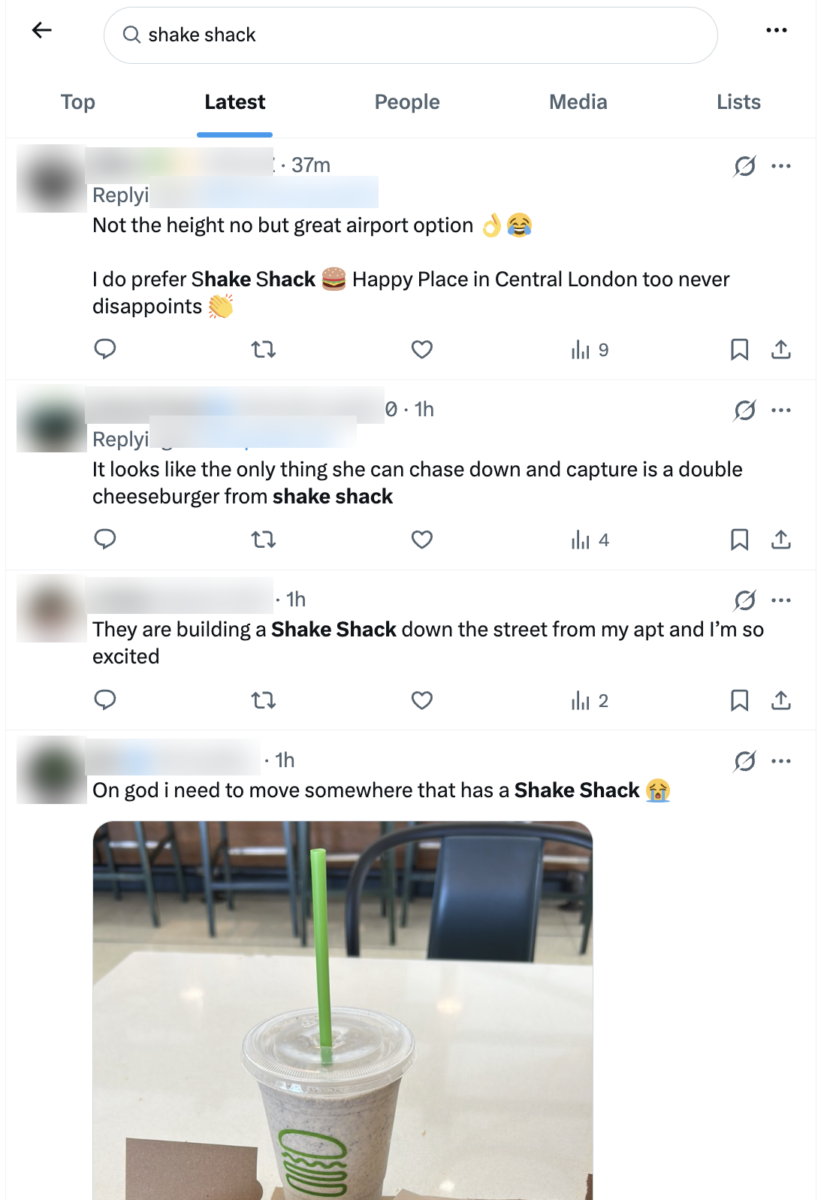
I ran that search on Shake Shack while writing this. Four posts came back inside an hour and none of them tagged the brand. One was a customer’s own photo of a shake with the cup logo in frame, which is publishable visual UGC that a brand watching its notifications would never have seen.
The same thing happens to me. A chamber of commerce built a custom graphic with my headshot and book title on it, promoted an event I was speaking at, and never tagged me.
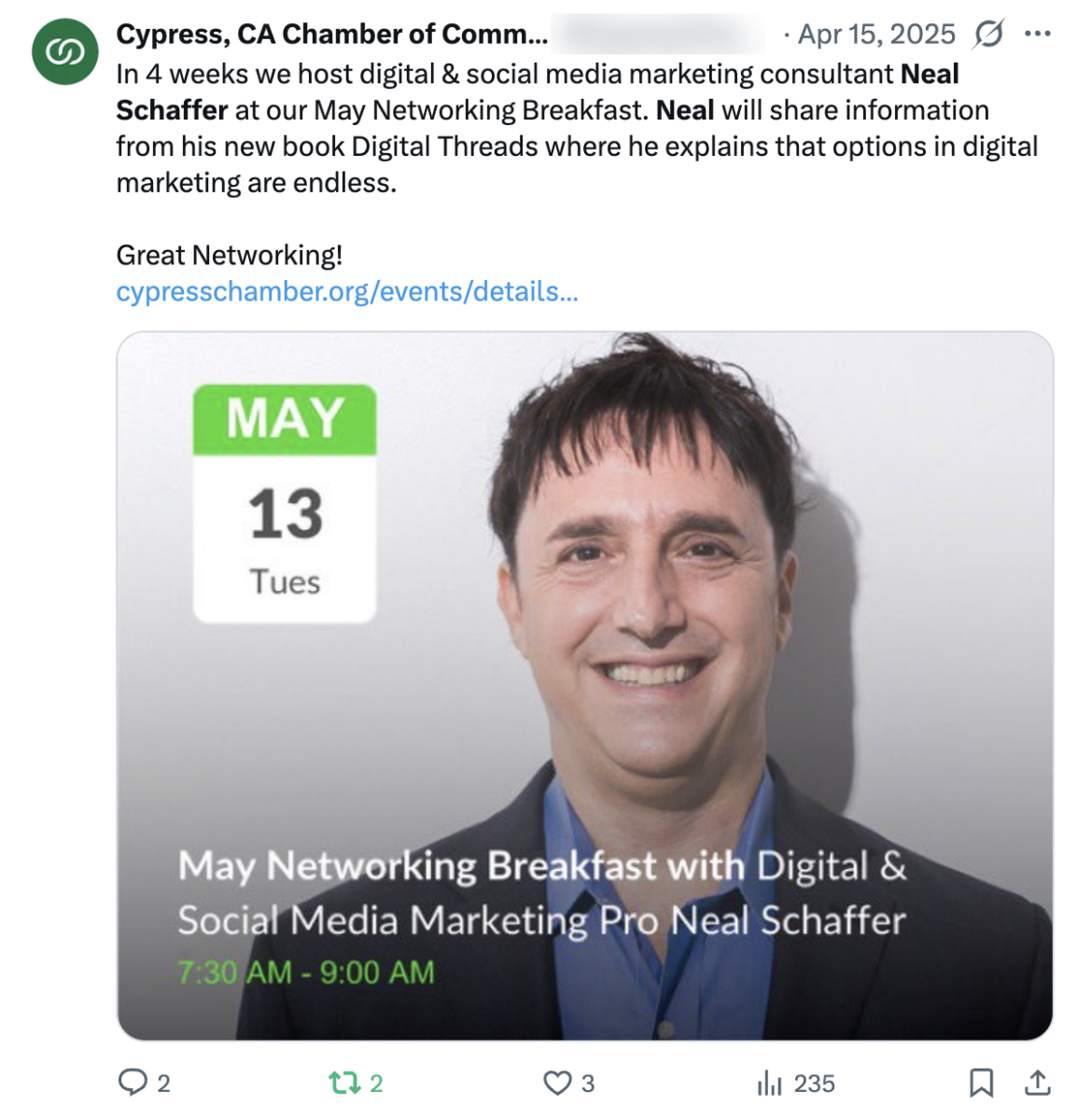
Two replies, two reposts, three likes. Engagement is probably the wrong metric for this content anyway. A post with three likes that I can embed on a speaking page has done its job, because the asset outlives the likes.
Once you start finding this material, the next question is which of it you are actually allowed to treat as UGC.
Supplied Photos Are Not UGC
Assets a host, client, or organizer hands you are supplied content, and permission travels with them at the point of handover. Content a third party creates about you without your involvement is genuine UGC, and it needs a rights conversation before you publish. Same event, same week, two different sourcing problems.
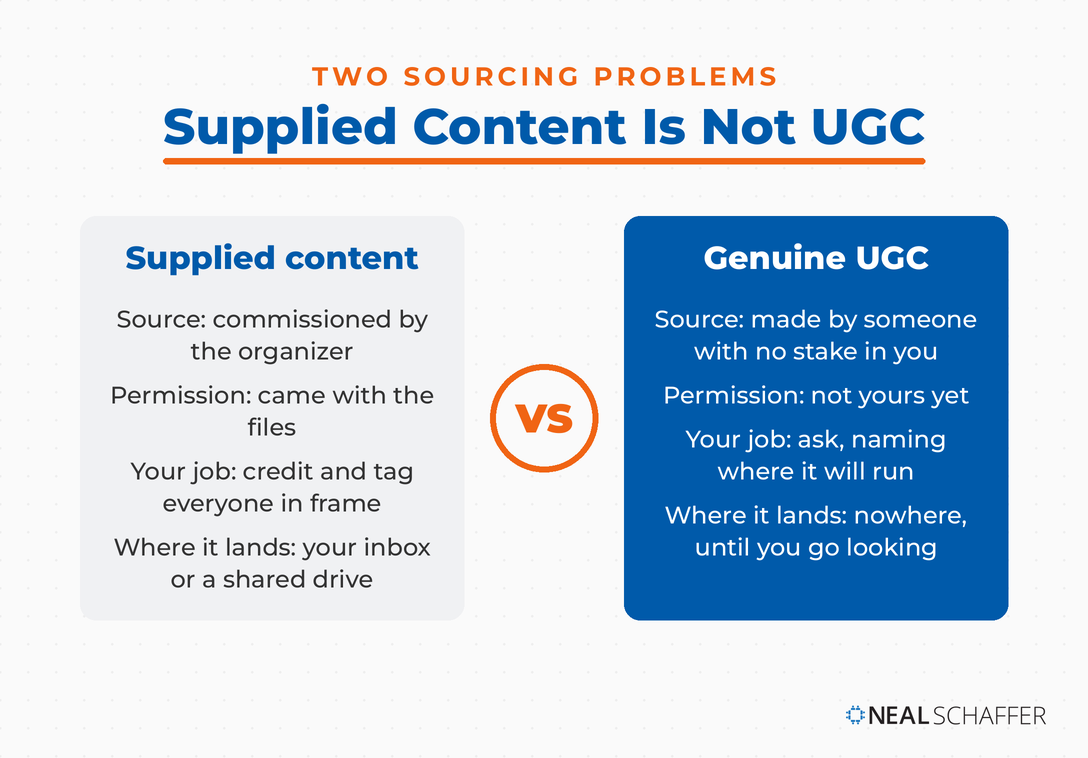
I have a clean example of both. After I spoke at Heidelberg University, the organizer sent me the event photos. I posted them to LinkedIn, credited the university, and tagged Professor Salil Khetani.
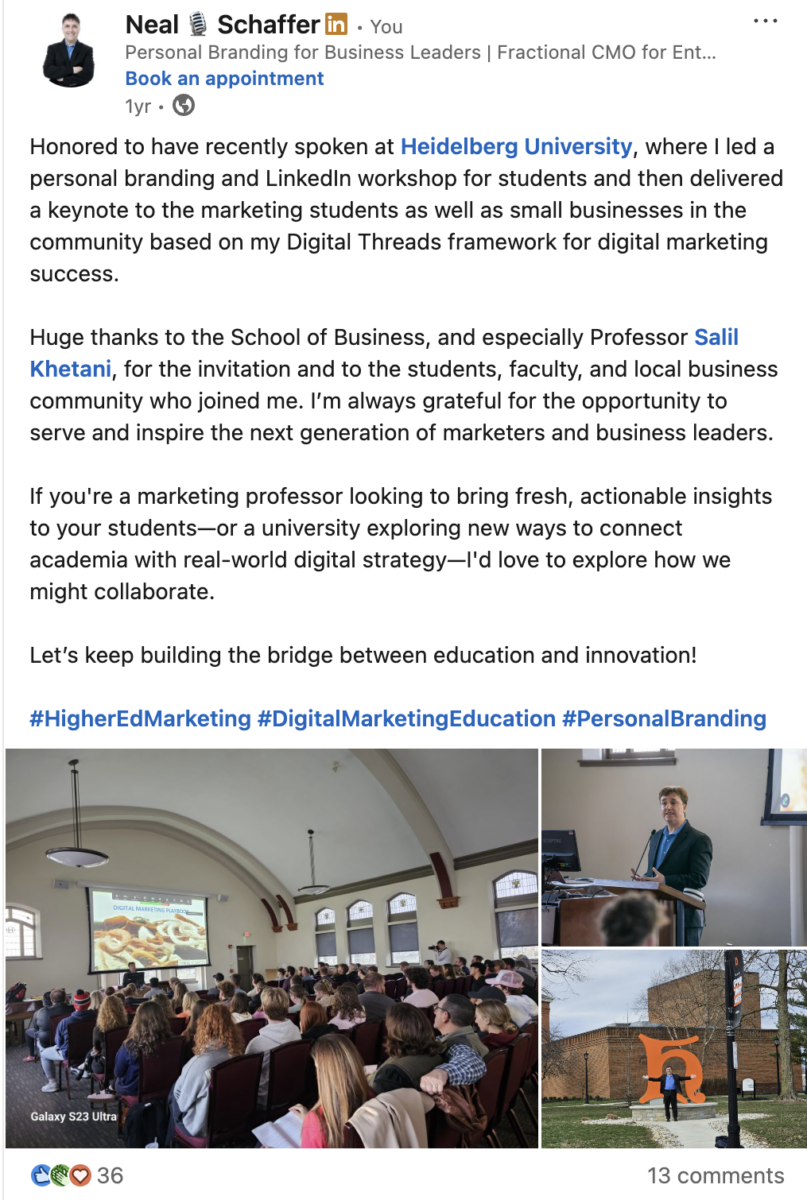
That post is not UGC. The photos were commissioned by the host and given to me, which makes it a handover rather than a discovery.
A week earlier, Heidelberg’s own account had posted about the talk on X. It named me three times in plain text and never tagged me once.
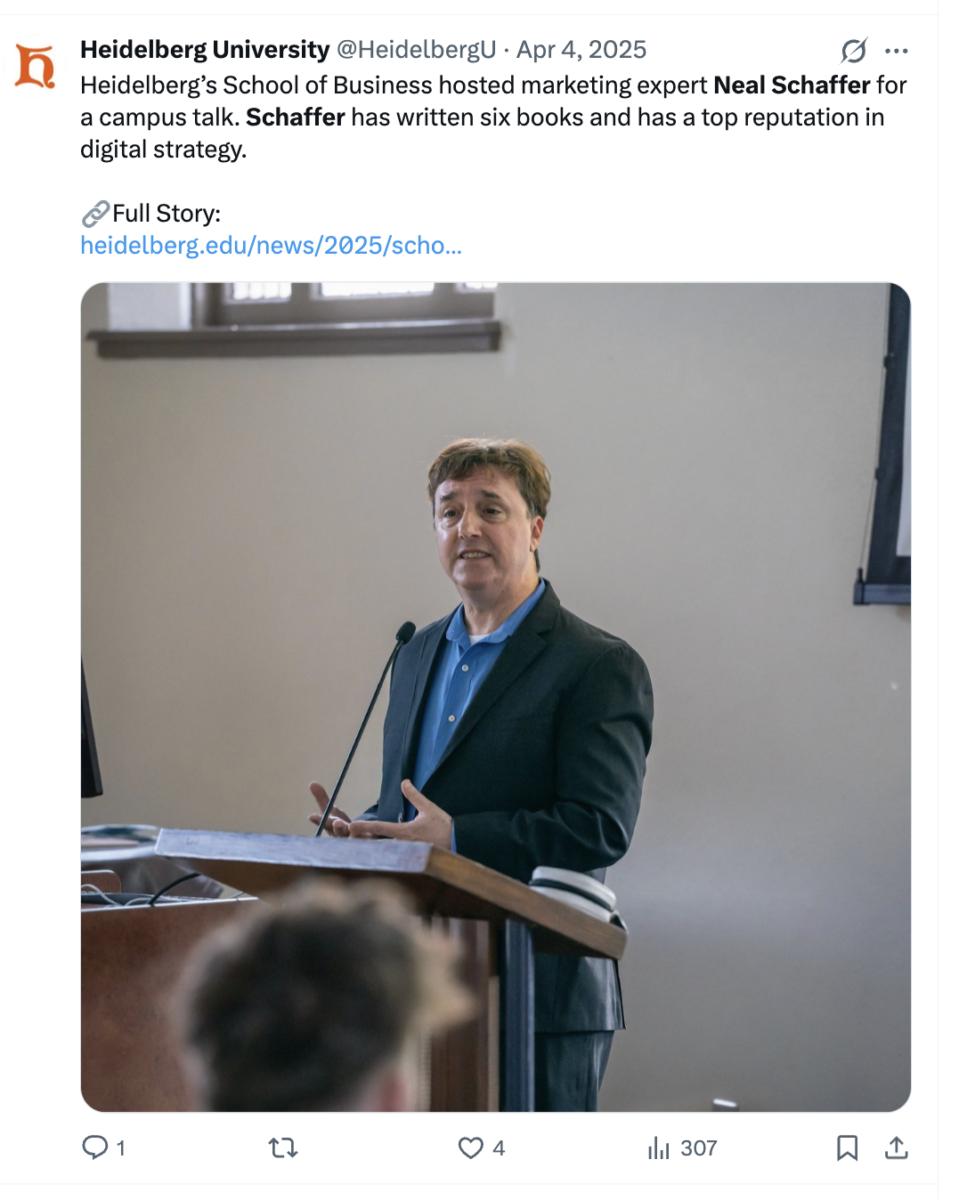
I found it nineteen months later, running a branded search while researching this very topic. That one is the UGC, and it is the half I nearly lost.
Conflating those two is probably the most common error people arrive with, and it matters because only one of them creates a rights question. Sorting your inbox is easy. Getting people to make the content in the first place is the part that takes work.
How Do You Get Customers to Create UGC?
Ask specifically, and ask where a relationship already exists. Most brands get thin participation because the request is vague, so name the format, the platform, and the hashtag. Then make it worth doing through recognition, a feature on your channels, a contest, or a discount code.
Ask Where a Yes Is Likely
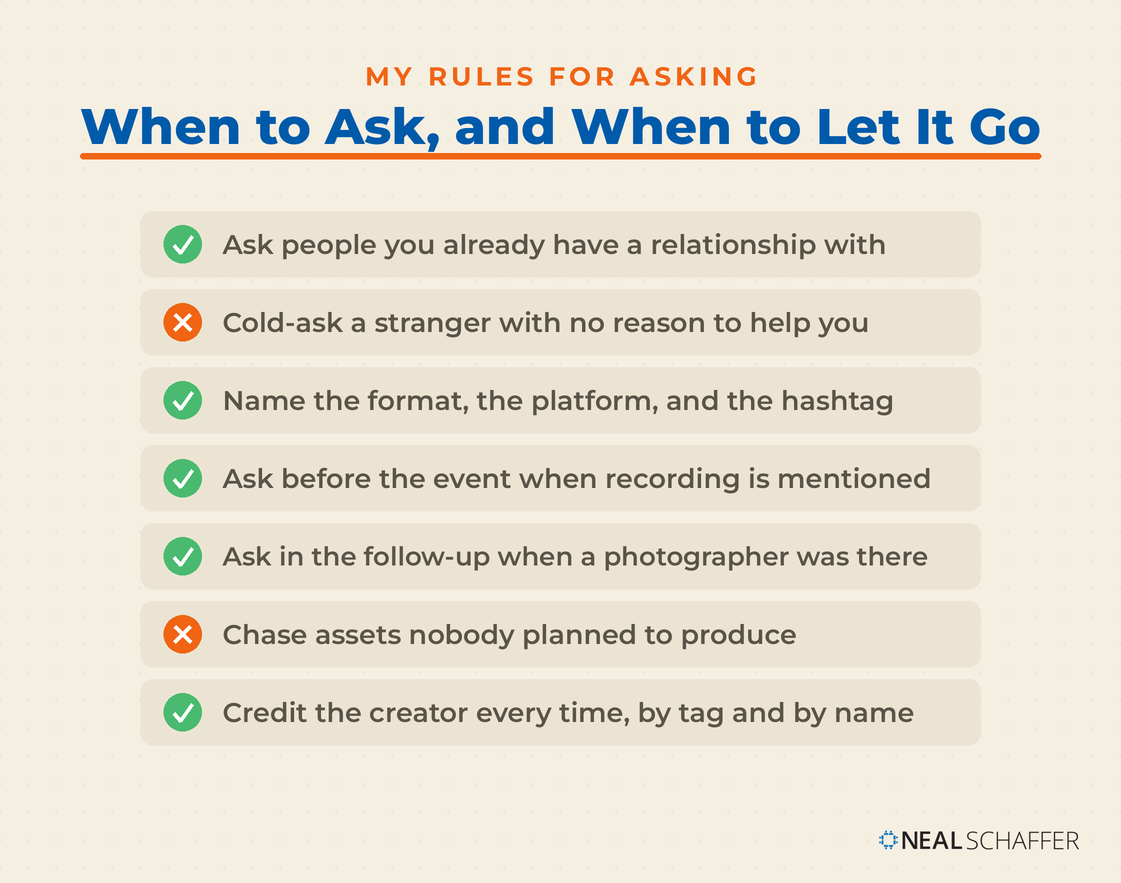
My own rule is narrow. I only ask for UGC where I already have a relationship with the person and I think the answer will be yes. That is not a tested response rate. It is an optimization for getting a yes, and it keeps the ask from feeling transactional.
The cost of a cold ask is not the no. It is that you have now made a request of someone with no reason to help you, which is a worse position than not asking at all.
Ask at Events, With Two Triggers
Events are where B2B UGC actually gets made, and I use two triggers. If recording comes up in the pre-event exchange, I ask for the video then, before anyone is busy. If I see a photographer or videographer working on the day, I ask in the post-event follow-up instead.
When neither signal appears, I let it go. Chasing assets nobody planned to produce is how you become the speaker who is difficult to work with.
Build the Ask Into the Sale
In Digital Threads I tell the story of leasing a car and having the dealer photograph me in the driver’s seat before I pulled away. A few minutes later I had an email with my own photo attached, plus links to review them on Google, Yelp, and Facebook.
That is the whole tactic. They asked at the moment I was happiest, and they made saying yes take one click.
Use a Branded Hashtag and Say What It Means
Create the hashtag, then publicize it everywhere a customer sees you: profiles, packaging, email signature, website. Stating on your profile that using the tag grants permission to republish will automate much of your sourcing, though your legal team should write that line rather than you.
Coca-Cola’s Share a Coke is the version everyone knows. The company relaunched it in 2025 across more than 120 countries with a Memory Maker experience that has fans build personalized videos from their own footage. The packaging is the prompt.
Incentivize, Then Formalize
A discount code or a bit of swag moves people who encouragement alone does not reach. Barney’s Beanery, a Southern California sports bar I have talked about since Social Media Marketing World, ran a points program for checking in at their locations. The check-in itself published to the customer’s feed.
Once money or free product enters the picture, disclosure does too. The FTC treats free or discounted product as a material connection the poster has to disclose, even when you never asked them to mention that specific item. It also wants the disclosure sitting beside the endorsement rather than buried in a pile of hashtags.
When you find customers who post consistently and well, formalize the relationship. Princess Polly runs a college ambassador program aimed squarely at its demographic and features contributors who use the tag pollyoncampus. My daughter’s high school taught me that one before any marketing publication did.
Getting the content is one problem. Getting a version of it worth publishing is another.
The Testimonial Ladder: Making a Testimonial Worth Publishing
A testimonial gets stronger as it moves from telling toward showing, and from the brand toward the customer. Each step adds a human and subtracts a stock element. The weakest version is a quote over a generic backdrop. The strongest is the customer, in frame, with the outcome visible.
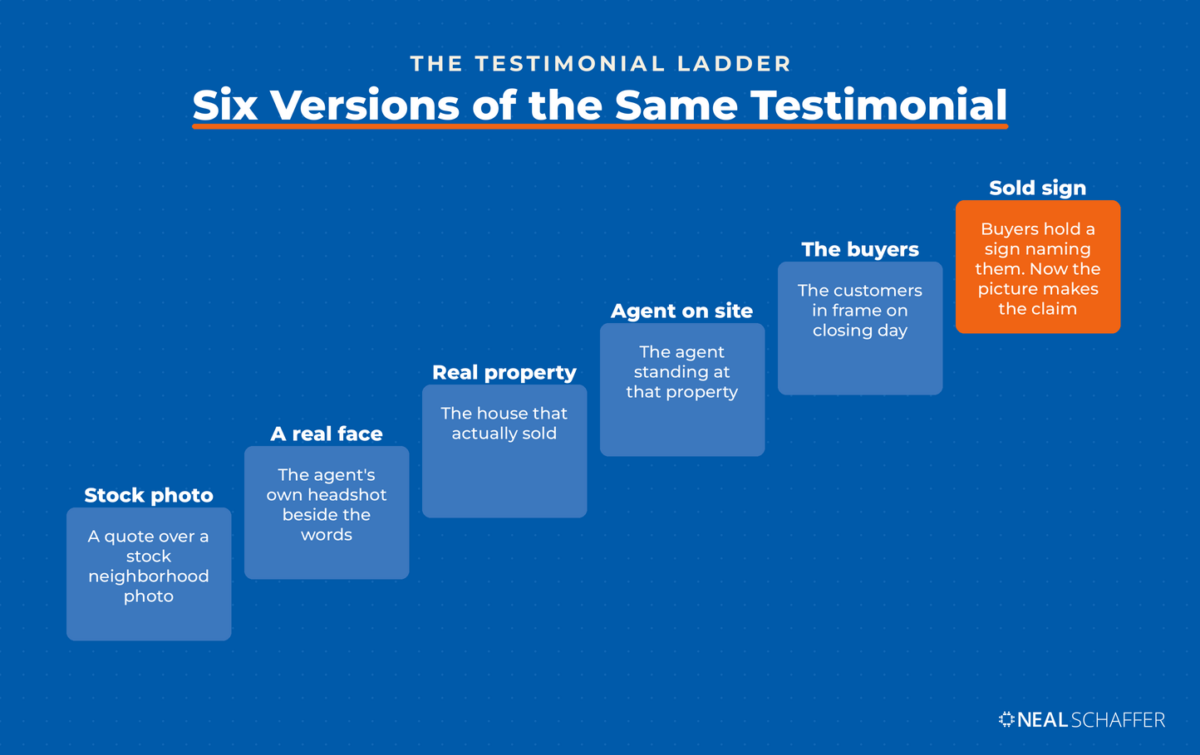
I built this ladder for a room full of real estate agents. The title of the talk was “make every sale a customer testimonial,” and it transfers to any business where you meet customers in person.
Working Up the Rungs
The bottom rung is a customer quote set over a stock image of the community. Add the agent’s photo and it improves, because a face makes a quote real. Swap the stock image for the actual property and it improves again, because now something specific happened.
From there the ladder keeps going. Put the agent in the frame with the property. Let the caption carry the story of who bought it and why. Then show the buyers themselves, smiling, on closing day.
The top rungs add the customer holding something that states the outcome, a sold sign or a branded prop with their name on it. At that point the picture makes the claim, and the caption becomes a bonus rather than the load-bearing element.
Match the Format to Where It Will Be Read
What I told that room was to go one step further and set the testimonial text inside the image rather than leaving it in the caption. On Instagram I would argue that is the right call, since captions cut off after a few lines and a testimonial nobody expands is a testimonial nobody reads.
It is not a universal rule. On my own membership page the testimonials render in full, so the text stays as text and a nine-line quote from Lee Constantine works exactly as written.
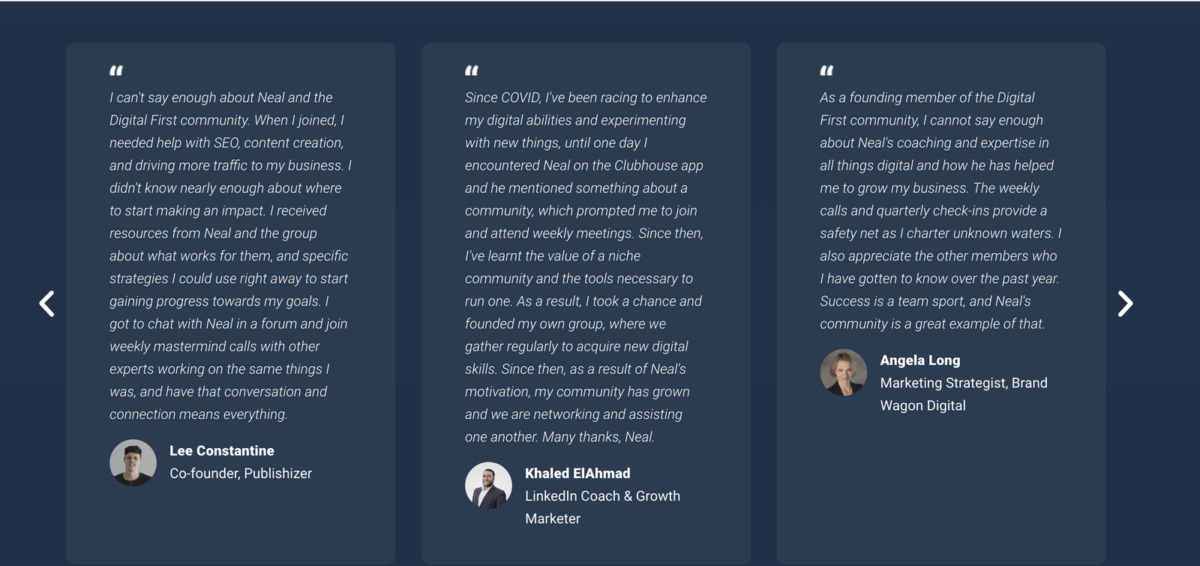
Two correct answers to the same question. Ask where the reader will meet the quote, then pick the format that survives that surface.
None of this matters if you publish something you did not have the right to use.
Do You Need Permission to Use UGC?
Yes. Ask before you republish, even when the content tags you or uses your branded hashtag. Posting publicly grants a licence to the platform, not to you, and being able to find something is not the same as being allowed to reuse it. A comment or a direct message is usually enough for organic reposting.
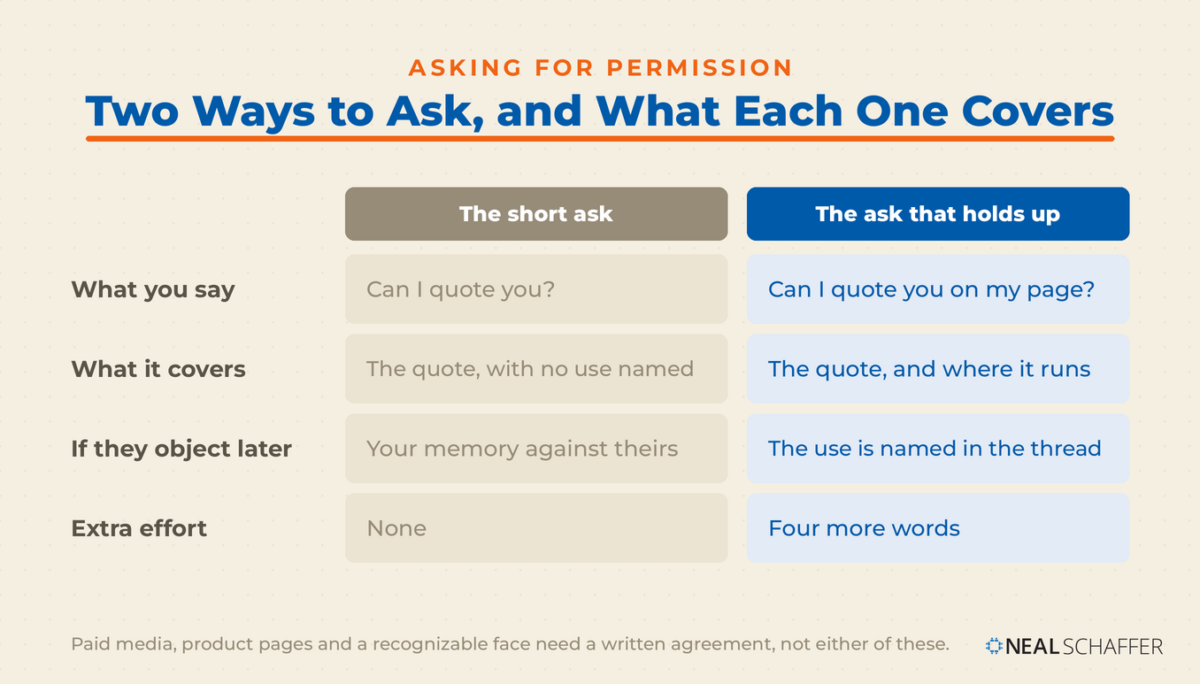
What the Ask Sounds Like
When I collected the testimonials on my membership page, I asked Lee Constantine, Khaled ElAhmad, and Angela Long directly. I told each of them the quote would be published on my website, which is consent plus stated use in a single message.
That second half is the part people skip. “Can I quote you” and “can I quote you on my membership page” are different questions, and only one of them protects you later.
Disney answered the same question with the plainest possible method. As I recount in Digital Threads, when the Disneyland team crowdsourced its Instagram feed from guest photos, it asked permission in the comments and reposted only after the guest confirmed, with attribution.
Credit Every Time
Tag the creator and name them in the caption. It is basic courtesy, it raises their profile, and from what I have seen it does more to produce the next piece of UGC than any incentive you could offer.
Where the Bar Gets Higher
Organic reposting on social is the low-risk end. Paid media, product pages, and anything with a recognizable face deserve a written agreement rather than a comment thread. Your legal counsel should set that threshold rather than a blog post.
I hit this myself building the graphics for this article. The real slides from that realtor deck reproduce actual Instagram posts, complete with handles, faces, one agent’s phone number, and a buyer named on closing day. Those people never opted into being a marketing example, so I rebuilt the ladder as an original graphic. Writing a permissions section while quietly ignoring permissions was not a trade I was willing to make.
Plenty of brands have solved this at scale, and their examples are worth studying.
Five Brand Examples of UGC Marketing Done Well
The brands that get the most out of UGC treat sourcing as a system rather than a campaign. They give people a reason to create, a place to put it, and a reasonable chance of being featured. Five worth your time, and none of them need a Disney-sized budget to copy.
GoPro
GoPro’s feeds are almost entirely customer footage, and the product itself is rarely in shot. The brand keeps supply flowing with structured incentives, including the GoPro Awards and a Million Dollar Challenge that pays a shared prize to creators whose clips make the year-end reel.
Lululemon
Lululemon asked customers to post themselves sweating in the product under the tag thesweatlife, then republished the results. As I cover in Digital Threads, the campaign pulled tens of thousands of entries and eventually became a community rather than a promotion.
Chipotle
Chipotle runs a separate Instagram account, People of Chipotle, aimed at its own crew rather than its customers. The company uses that account to reach employees directly, which is employee-generated content treated as a channel in its own right.
La Croix
La Croix fills its feeds with fan art and photos of customers posing with their favorite flavors. It maintains a consistent branded look across all of it despite the content coming from hundreds of creators, so curation is doing as much work here as sourcing.
Glossier
Glossier leans on customer-submitted imagery more heavily than on models, and its mask campaign pulled thousands of selfies under one hashtag. Founder Emily Weiss has described the goal as making every customer an influencer, which is a fair summary of what the brand’s feed looks like.
Where you publish this content changes what performs, so the platform layer is worth its own pass.
Platform-Specific UGC Tips
Each platform rewards a different format and a different sourcing method. Instagram runs on branded hashtags and Stories reposts. TikTok runs on challenges and duets. LinkedIn runs on employee posts and client stories. Your website is where UGC converts rather than circulates, and most brands underuse it.
| Platform | What to source | How to source it |
|---|---|---|
| Customer photos, Stories, Reels | Branded hashtag, tagged posts, Highlights archive | |
| TikTok | Short demos, reactions, duets | Challenges, audio trends, creator duets |
| Case studies, testimonials, employee posts | Direct asks, client stories, employee prompts | |
| YouTube | Tutorials, unboxings, review videos | Ask satisfied customers, build playlists |
| Your website | Reviews, photo galleries, quotes | Post-purchase email, review widgets, submission forms |
The website row is the one I push hardest with clients. Reviews and customer photos on a product page sit at the exact moment of decision, and they keep working long after a post has scrolled away. Pairing that with a documented content strategy keeps UGC from becoming a thing you do when someone happens to tag you.
Doing this at volume eventually needs software, so here is the stack.
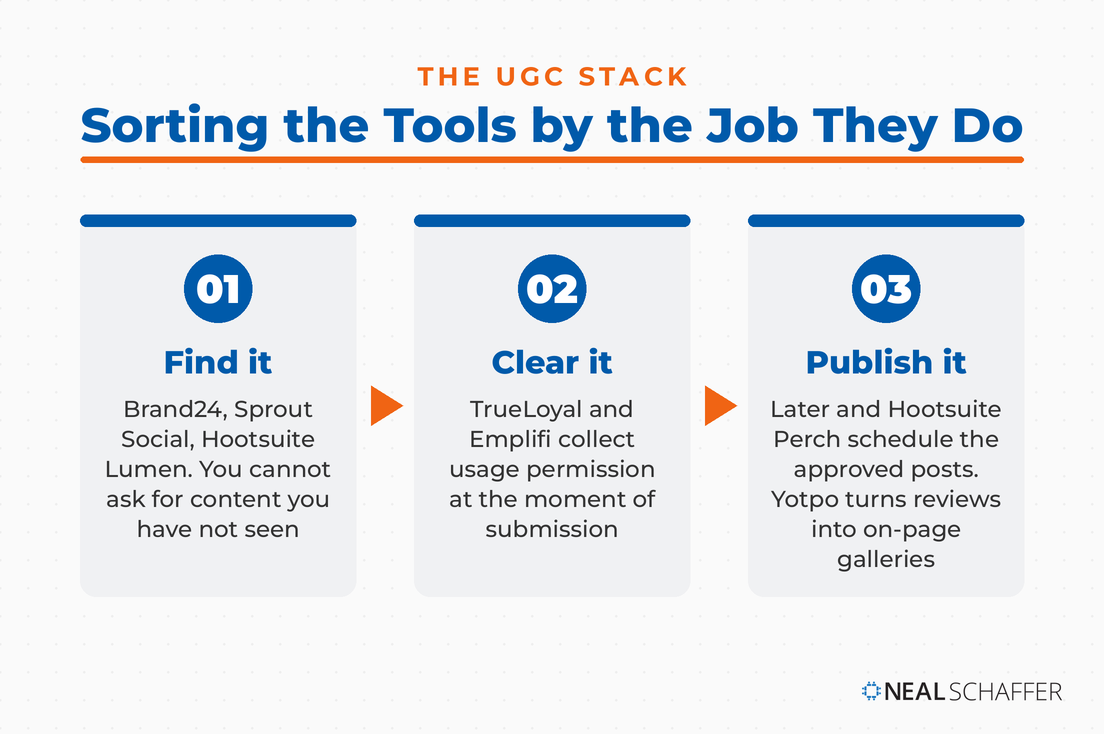
The minimum stack is a listening tool to find the content and a scheduler to publish it. A dedicated UGC platform adds rights management and shoppable galleries, which only matters once volume passes what one person can track by hand. Until then a shared folder will carry you.
Brand24
Brand24 is what I have used for this, and it is still the social listening tool I would recommend to get started with. It tracks mentions of your brand across social and the web, including the untagged ones. There is a free trial if you want to see what is already out there before committing.
Later
Later started as an Instagram scheduler and added UGC discovery, so you can find customer content by hashtag, mention, or tag and schedule the approved posts from the same place.
TrueLoyal, Formerly Tint
Most UGC guides have not caught up with this one. The tool they still list as Tint now operates as TrueLoyal, where UGC sits inside a broader loyalty and advocacy platform. Usage rights get collected as part of the submission workflow, which is the piece that matters if customer content will run in your ads.
Yotpo
Yotpo works the reviews side, collecting written and visual reviews and rendering them as on-site galleries and widgets. Their own walkthrough of using UGC in marketing covers the prompt-and-display mechanics in more detail than I will here.
Emplifi, Formerly Pixlee
Emplifi sends a pre-built permission request to the creator, then turns approved content into shoppable galleries on ecommerce pages. If your UGC needs to be buyable rather than merely visible, this is the category to look at.
Sprout Social and Hootsuite
Sprout Social handles mention tracking and sentiment across multiple profiles, which matters once you have community managers rather than a community manager. Hootsuite splits the job across two products, using Lumen to track mentions and hashtags and Perch to publish approved content with moderation steps in between.
Once content is flowing, the obvious next move is testing your best-performing organic piece as paid creative, which is the premise behind UGC ads.
Frequently Asked Questions About UGC Marketing
UGC marketing is the strategic use of content created by your customers, employees, or fans to market your brand, rather than content produced by your internal team or agency. It covers reviews, photos, videos, social posts, testimonials, and case studies, republished with permission across social, email, ads, and product pages.
Influencer marketing is paid and contractual, and the influencer publishes to their own following. UGC is typically organic or lightly incentivized, and the brand does the publishing. UGC creators sit between the two: paid to produce, but the content runs on your channels.
Yes. Ask before you repost, even when the content tags your brand or uses your branded hashtag. Posting publicly licenses the platform, not you. A comment or direct message is usually enough for organic reposting, while paid media deserves a written agreement.
It does. Case studies, video testimonials, customer success stories, and employee LinkedIn posts are all user-generated content, and they carry weight because a buyer said it instead of a vendor. In my Fractional CMO work, B2B UGC tends to shorten the sales cycle by answering objections a prospect never raises with a salesperson.
Search your brand name directly on each platform and sort by most recent rather than most popular. Then add a listening tool such as Brand24 so mentions reach you without a manual search. Notifications alone will only ever show you the tagged minority.
Yes, if they got something of value. The FTC counts free or discounted product as a material connection, as noted above, and the disclosure belongs beside the endorsement rather than inside a block of hashtags. That obligation sits with the poster and with you.
Start With a Search, Not a Campaign
Before you plan anything, spend ten minutes searching your brand name on the platforms your customers use, sorted by most recent. Whatever comes back is content you already have the opportunity to use, and it costs nothing but a permission request.
Then attach a specific ask to one moment you already have. The delivery email, the post-project call, the conference photo. Name the format and the platform, and ask the people most likely to say yes.
For more variety in what to look for, my collection of UGC examples shows what other brands are publishing. The content marketing statistics page has the wider demand picture, and my running list of content ideas will fill the gaps around the customer content.
If you would rather have help building this into a broader plan, that is what I do as a Fractional CMO. Entrepreneurs and small teams working through it alone are welcome in my Digital First Mastermind. You can also grab a free preview of Digital Threads to see how UGC connects to the rest of your marketing.
Actionable advice for your digital / content / influencer / social media marketing.
Join 13,000+ smart professionals who subscribe to my regular updates.