




Every year I’m reminded that Locarno is a festival whose cinema is earned. This is my third straight year covering the festival that’s nestled amid picturesque Swiss mountains, which requires a trans-Atlantic flight into Milan, an extended train ride over the Italian border, and a thick skin for the unforgiving heat that radiates from the luminous sun that bears down onto the pebbled pavement that grounds the Piazza Grande, which, when filled with 8,000 people, who are watching the newest work from a cinematic master, makes for a sight to behold. This time around, the festival, which ran August 5-15, was brimming with more experimental works, gorgeous restorations, and a new retrospective programme that sought to put HUAC and the Blacklist in its filmic context.
Per usual, I arrived in the second half of the festival. It’s a decision that’s sometimes presents an obstacle, at least on a personal level, because you’re arriving when most of your colleagues are venturing off to the next fest, usually Sarajevo Film Festival, rather than remaining (though, on an inside baseball note, you do end up forming very close bonds with those who do stay, if only because you have more time to hang out specifically with them). Nevertheless, an advantage to arriving “late” is that many others have done some of the leg work for you. They’ve seen several of the premieres and have already parsed what’s forgettable, notable, or good—making your job a two-fold venture: catching up with the good that you’ve missed while consuming what’s yet to premiere. I can’t adequately tell you how much time that saves, especially at a festival where some of the shiniest options are actually classic films playing at the mercifully air conditioned GranRex cinema.
And while I’m still watching films, another positive of Locarno for press is that the movies on the digital platform stay active through the end of August, I have already seen enough to look back fondly on this edition of Locarno as a real opportunity for discovery and proselytization.
As you can already tell, I split my time between new films and restorations or retrospective titles. For the former, I watched 16 films, and, for the latter, I saw 12. My new movie viewing, funnily enough, began with a movie I’ve already seen: James Gray’s “Paper Tiger,” which screened at Piazza Grande with Gray on hand to accept the festival’s Lifetime Achievement award. While I admired the film out Cannes, watching it a second time at Locarno, where I could focus on how the film’s rich visual and aural techniques bring to life the story of a working class father (Miles Teller) and a flashy uncle (Adam Driver) who strive for the mirage of the American dream with such abandonment that it imperils their family (a fantastic Scarlett Johansson, Gavin Goudey and Roman Engel), was an incredible luxury to open the festival with.
Further highlights followed in the coming days. In the main competition were several stirring works: Isabelle Stever’s queer wartime drama “I Rarely Wake Up Dreaming,” Hong Sang-soo’s latest melancholic treatise on art “Nowhere to Lay My Eyes” (which won Best Performance for Kim Min-hee and Best Director), Ann Oren’s horny and sensorial surgical fever dream “Objet A,” Lê Bảo’s ambitious dreamscape “Hearing,” and Florin Șerban’s Golden Leopard winning paternal drama “You Don’t Belong Here.”
Equally great wealth could also be discovered in the side bars. Umair Bilal’s culturally specific Pakistani experimental film “As Light As Air” in the Semaine de la Critique was a small gem, as was Mamadou Dia’s Pan-African dance documentary “Atcha Atcha,” which bowed in the Fuori Concorso section.
The most adventurous section, however, might’ve been Concorso Cineasti del Presente—which is often reserved for promising filmmakers on their first or second feature. Beatrice Gibson’s ruminative feminist conversation “At Night,” Ana Vaz’s experimental essayist narrative “Fire Flower” (“Hanabi”), and Uta Beria’s rebellious free speech rallying cry “Tear Gas” were all towering works that were on display.
Accompanying the festival premieres were several major stars and creatives who were also honored by Locarno and the fest’s Artistic Director Giona A. Nazzaro. Prior to my arrival, Olivia Wilde, who arrived to send off her latest directorial effort “The Invite” for its European Premiere (the film sold out the 8,000-seat Piazza Grande), Isabella Rosselini, Sigurjón Sighvatsson, and Virginie Efira were honored. During my stay, Gray, Zoe Saldaña, Rick Baker, Asia Argento, and Darren Aronofsky were also feted (during the festival, I was fortunate enough to dine with Baker and his wife Silvia, a noted film and television hairstylist in her own right, a personal highlight of mine).
And as always, the major thrill of Locarno arose from squirreling away time to catch the fest’s incredible retrospective series. “Red & Black – Hollywood Left and the Blacklist,” which was produced in conjunction with Cinémathèque suisse and with the support of UCLA Film & Television Archive, see curator Ehsan Khoshbakht once again utilizing his deep knowledge of classic cinema to tell a story about a specific and imperative period in moviemaking (in prior years he’s curated a celebration of Columbia Pictures’ 100th anniversary called “The Lady With the Torch” and a look back on British postwar cinema).
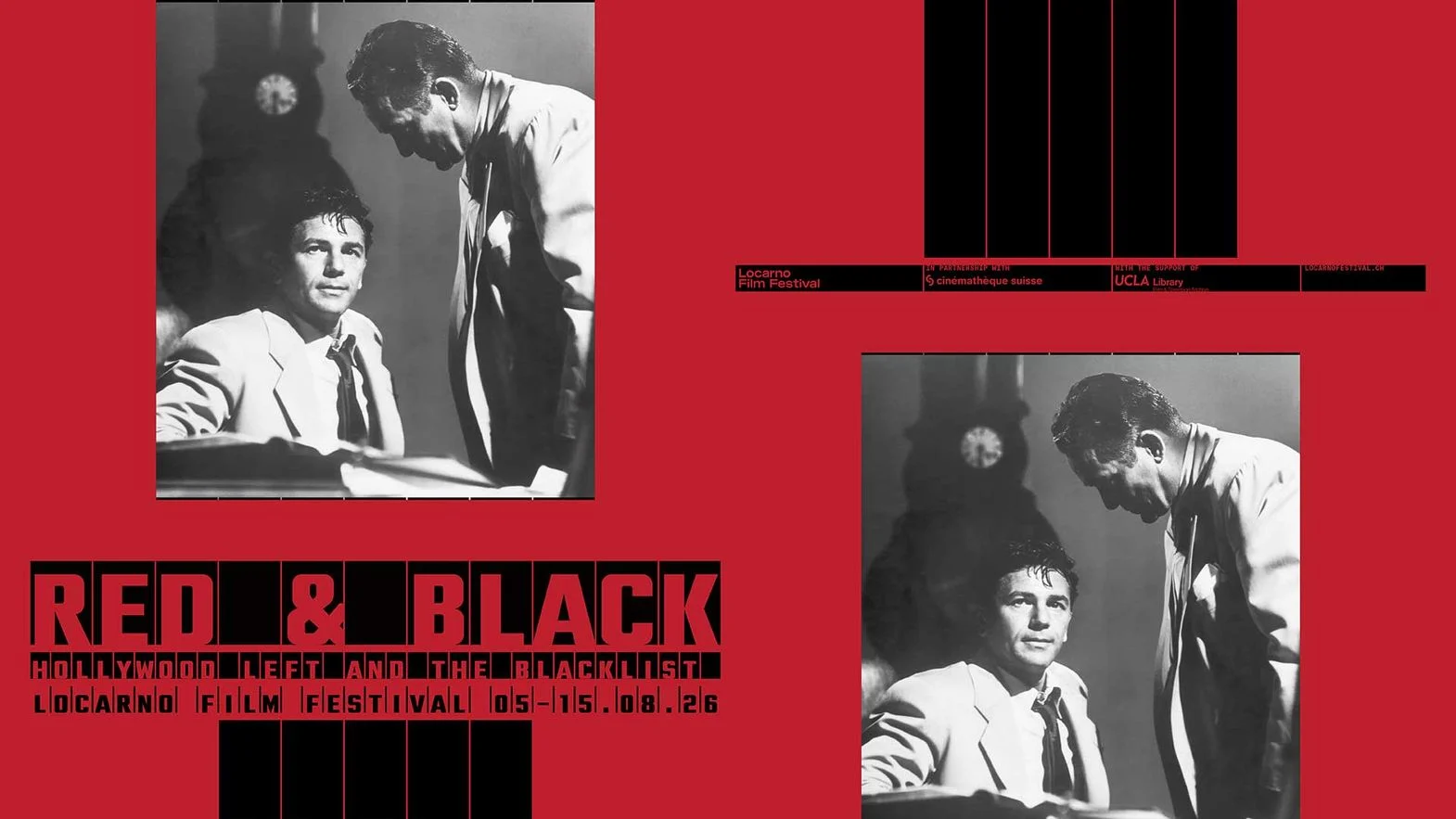
While I won’t take too much time to give my thoughts on the retrospective, as I don’t want to subtract from Marya E. Gates’ far more historically informed coverage for the site, I will say this, “Red & Black” makes a remarkable effort to fully contextualize a period of anti-art facism that destroyed many people’s lives and creatively set back Hollywood for so long that it still hasn’t totally dug its way out of the grave ramifications caused by the period. I was honored, in fact, to introduce Emile de Antonio’s revealing documentary “Point of Order,” a film composed wholly of footage from the Army-McCarthy hearings (you can get a version of what I spoke about via the festival’s Instagram page). Other speakers included Eddie Muller, Imogen Sara Smith, Phuong Le, Tanya Goldman, Christopher Small, Eva Markovits, Thierry Méranger, the 88-year-old son of Joseph Losey, Gaverick, and more.
Some of my personal favorites from the series were Luis Buñuel’s racial critique “The Young One,” Allan Dwan’s “High Noon” riff “Silver Lode,” Herbert J. Biberman’s pro-union melodrama “Salt of the Earth,” and Lewis Milestone’s wildly pro-Soviet war flick “The North Star.” If you’d like a further taste of the full series, I’d recommend checking out Marya’s piece, picking up the accompanying same-titled book edited by Khoshbakht (for now it’s sold out!!), or listening to the podcast series.
And as I file this edition of Locarno into my memory, I am once again filled with immense joy. Never let anyone tell you that it’s been a terrible year for movies. There are always innumerable movies to find at festivals big and small, hidden gems that deserve words and eyes, notable new voices awaiting uplift. I curse how few hours in the day I have to find many of them, fearing to immeasurable ends that I am right now, as I type away, missing a truly great film.
I hope that some of these works will make it to your theater, screens and eyes (a few that I highlighted are slated to appear at NYFF, TIFF, and many regional festivals, hopefully, near you). As I have written in the past, the future of film resides in discovery; it’s made fertile when one takes a leap in watching a film from a country they haven’t visited, from a people they don’t know, in a tongue that is different but no less melodic. In these five days, Locarno has once again revitalized my pursuit of those discoveries. I hope to be at the festival next year to experience it once again.