




Key Takeaways
- Shultz and Healy opened the first Museum of Death in San Diego in June 1995.
- The couple’s collection includes items from Heaven’s Gate and Dr. Jack Kevorkian.
- They hope museum visitors leave with a greater appreciation for life.
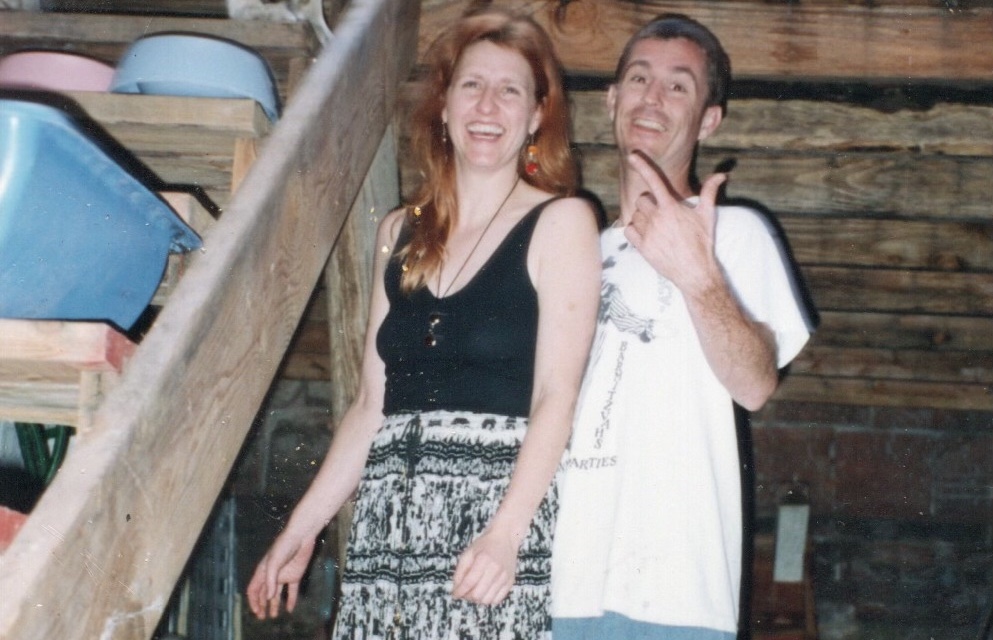
Forty-four years ago, Cathee Shultz and JD Healy met while working at a cafe in Arizona. She was the “cappuccino girl,” and he was the baker. Even though they had opposite shifts, the two artists caught each other’s eyes. They got married two weeks later.
Before long, Shultz and Healy channeled their creativity into the Rita Dean art gallery (a combination of their middle names), based in San Diego, California. The couple’s gallery featured “against the grain” work across death, sex, politics and more, some of which stemmed from a macabre hobby.
“ I started writing to serial killers and visiting them on death row,” Healy says. “I accumulated this large collection of serial killer artwork. And being an artist, I also like building things. So I used to build full-size guillotines, gallows. Anything that deals with execution devices.”
Shultz and Healy noticed a significant trend: Of all their themed shows, those having to do with death-related topics drew the biggest crowds.
“ People are fascinated by death,” Shultz says. “You want to look at it, but not do it.”
Opening the first Museum of Death in San Diego, CA
By 1995, Shultz and Healy were running their art gallery on the ground floor of a three-story building. Upstairs, they had a “freak farm” museum displaying rare animals (like two-headed and albino turtles). “Since they were alive, I had to keep them really clean, and it was a lot of work,” Shultz says. “So we decided that wasn’t going to be our avenue.”
Ultimately, the building’s basement housed the first iteration of the Museum of Death. The museum opened in June 1995, with admission priced at $3 per person. (These days, ticket prices are about $20 higher).
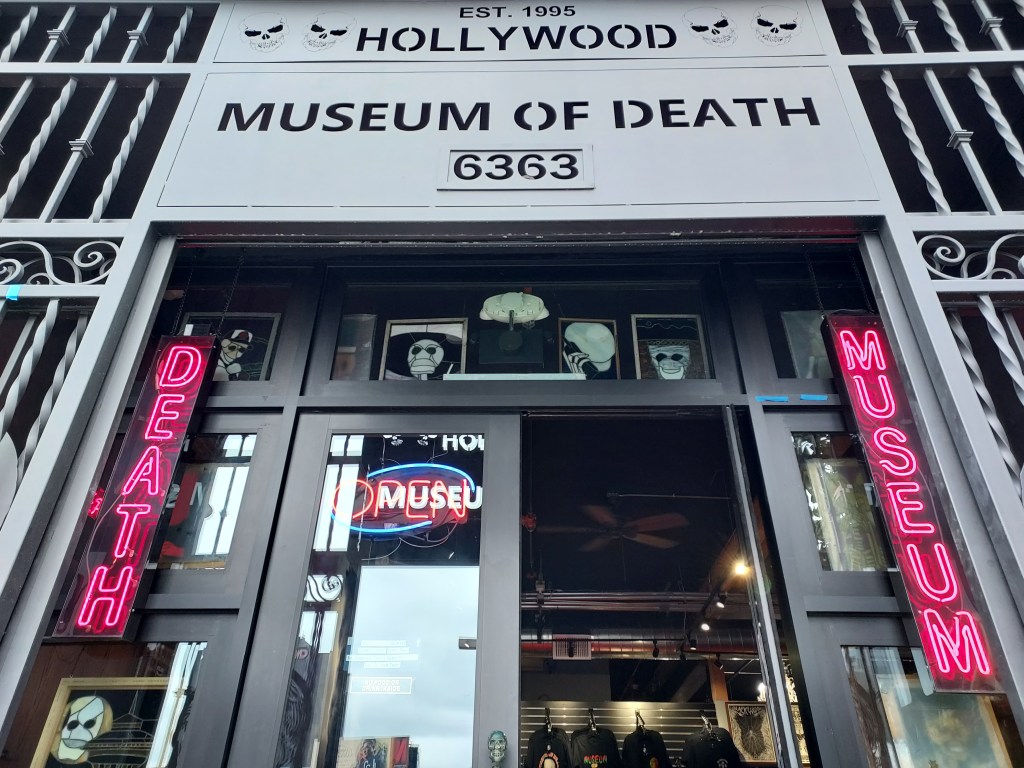
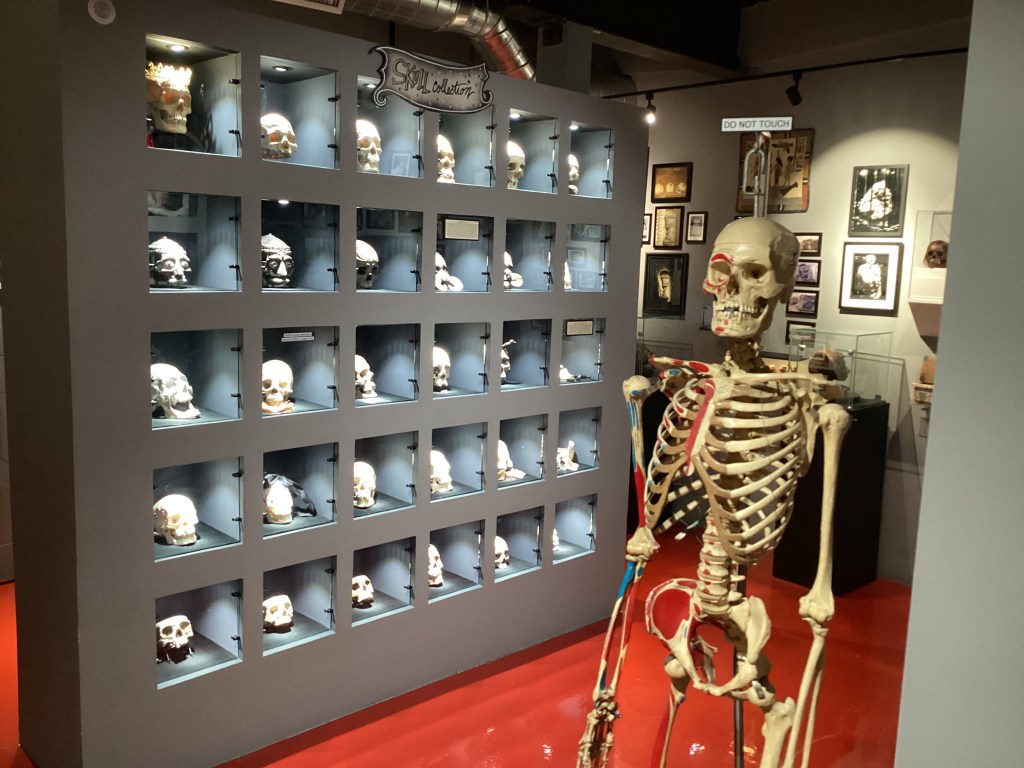
Today, the Museum of Death’s Hollywood and New Orleans locations feature serial killer artwork, antique funeral ephemera, mortician and coroners instruments, Manson Family memorabilia, pet death taxidermy, crime scene photographs and more. None of the items are replicas.
Moving to Hollywood, opening the second location
Several years after the first Museum of Death opened, Shultz and Healy began acquiring items related to the Heaven’s Gate mass suicide. On March 26, 1997, 39 members of the Heaven’s Gate cult were found dead in Rancho Sante Fe, California, an upscale suburb north of San Diego.
The Museum of Death’s growing collection of Heaven’s Gate items generated controversy and landlord issues, ultimately leading the business to move to a larger space in Hollywood in 2000. A year and half into its new lease, the museum ran into landlord problems again and shuttered operations for about seven years.
A generous loan from a friend allowed Shultz and Healy to reopen the Museum of Death’s doors in Hollywood. Business has been “skyrocketing” since, Healy says. The museum opened its second location in New Orleans, Louisiana, in 2015.
“ I wanted to prove to ourselves that it wasn’t a fluke,” Healy says of opening the New Orleans museum. “I said, ‘To make sure that this is going to be what we want to do for the rest of our lives, we have to prove it to ourselves.’ So we opened in New Orleans. Within a year, that place was just cranking too.”
Acquiring items from Heaven’s Gate and Dr. Jack Kevorkian
Needless to say, a lot has changed for Shultz and Healy since their early gallery days — including how they acquire items for their collections.
“Once we hung up the sign for the Museum of Death, it became a magnet,” Healy says. “Everything just started flowing in our way.”
The couple’s wait-and-see approach landed them enough Heaven’s Gate materials to create a diorama — a friend of Healy’s was a mortician who ended up with numerous unwanted items, including clothing and a bunk bed, which he sold to the couple for $100 — and Jack Kevorkian’s Thanatron.
Jack Kevorkian was a Michigan-based physician who gained nationwide notoriety in the 1990s for his illegal role in helping upward of 100 terminally ill people end their lives.
Kevorkian designed his Thanatron, “death machine” in Greek, so patients could press a button releasing drugs to put them into a coma and stop the heart. In 1999, Kevorkian was convicted of murder in the death of a 52-year-old man with ALS; Kevorkian broadcast a video of the lethal injection on 60 Minutes.
Kevorkian’s Thanatron was put up for auction in October 2011. “They wanted $250,000 for this Thanatron,” Shultz recalls. “It didn’t sell. A year later, they put the artwork, his paintings, which were really cool, in a gallery setting. An exhibit. And I went. They wanted $150,000 for these paintings, and I’m like, ‘I can’t afford that.’”
The couple spoke with Kevorkian’s niece, who was selling the items, and told her to reach out if items didn’t sell. She called them about two weeks later, and after some negotiation, agreed to sell the Thanatron, one of Kevorkian’s paintings and his briefcase for $12,500.
Walking away with a greater appreciation for life
These days, with no shortage of gruesome TV shows — both fictional and true crime — streaming nationwide, people might be getting a little more comfortable with death, Healy says.
“But it’s still a long haul,” he notes. “You can bring a horse to water, but you can’t make him drink.”
At the end of the day, the couple hopes the Museum of Death’s visitors walk away with a much greater appreciation for life.
“You should say hello to people on the street and realize that you never know when your ticket’s going to be punched,” Healy says. “If people had a little bit more of an appreciation for death, then maybe we could have a little bit more appreciation for each other.
Key Takeaways
- Shultz and Healy opened the first Museum of Death in San Diego in June 1995.
- The couple’s collection includes items from Heaven’s Gate and Dr. Jack Kevorkian.
- They hope museum visitors leave with a greater appreciation for life.
Forty-four years ago, Cathee Shultz and JD Healy met while working at a cafe in Arizona. She was the “cappuccino girl,” and he was the baker. Even though they had opposite shifts, the two artists caught each other’s eyes. They got married two weeks later.
Before long, Shultz and Healy channeled their creativity into the Rita Dean art gallery (a combination of their middle names), based in San Diego, California. The couple’s gallery featured “against the grain” work across death, sex, politics and more, some of which stemmed from a macabre hobby.
“ I started writing to serial killers and visiting them on death row,” Healy says. “I accumulated this large collection of serial killer artwork. And being an artist, I also like building things. So I used to build full-size guillotines, gallows. Anything that deals with execution devices.”