




Curious Kids is a series for children of all ages. If you have a question you’d like an expert to answer, send it to CuriousKidsUS@theconversation.com.
How much rain can a hurricane make, and how much do big versus small hurricanes make? – Naarah, age 8, Pittsburgh
Hurricanes can produce enormous amounts of rain, adding up to trillions of gallons of water. But the big risk isn’t their total amount – it’s how much rain falls on each location.
One town in Texas got over 60 inches (152 centimeters) of rain from Hurricane Harvey over five days in 2017. That means empty swimming pools there would have filled with rainwater 5 feet (1.5 meters) deep. Hurricane Lane dumped 58 inches (147 centimeters) of rain on Kahuna Falls, Hawaii, the following year.
So, what causes that much rain, and does the size of the storm matter?
I’m an atmospheric scientist who teaches college students about weather at Georgia Tech. Let’s take a look at where a hurricane’s rainfall comes from and some of the questions about hurricanes and their rainfall that scientists are still trying to answer.
First, what goes into creating a hurricane?
A few ingredients are needed for a hurricane to form: A tropical thunderstorm complex, lots of moisture in the air, winds that don’t change speed much with height, and warm sea surface waters below.
The water temperature is very important.

NOAA
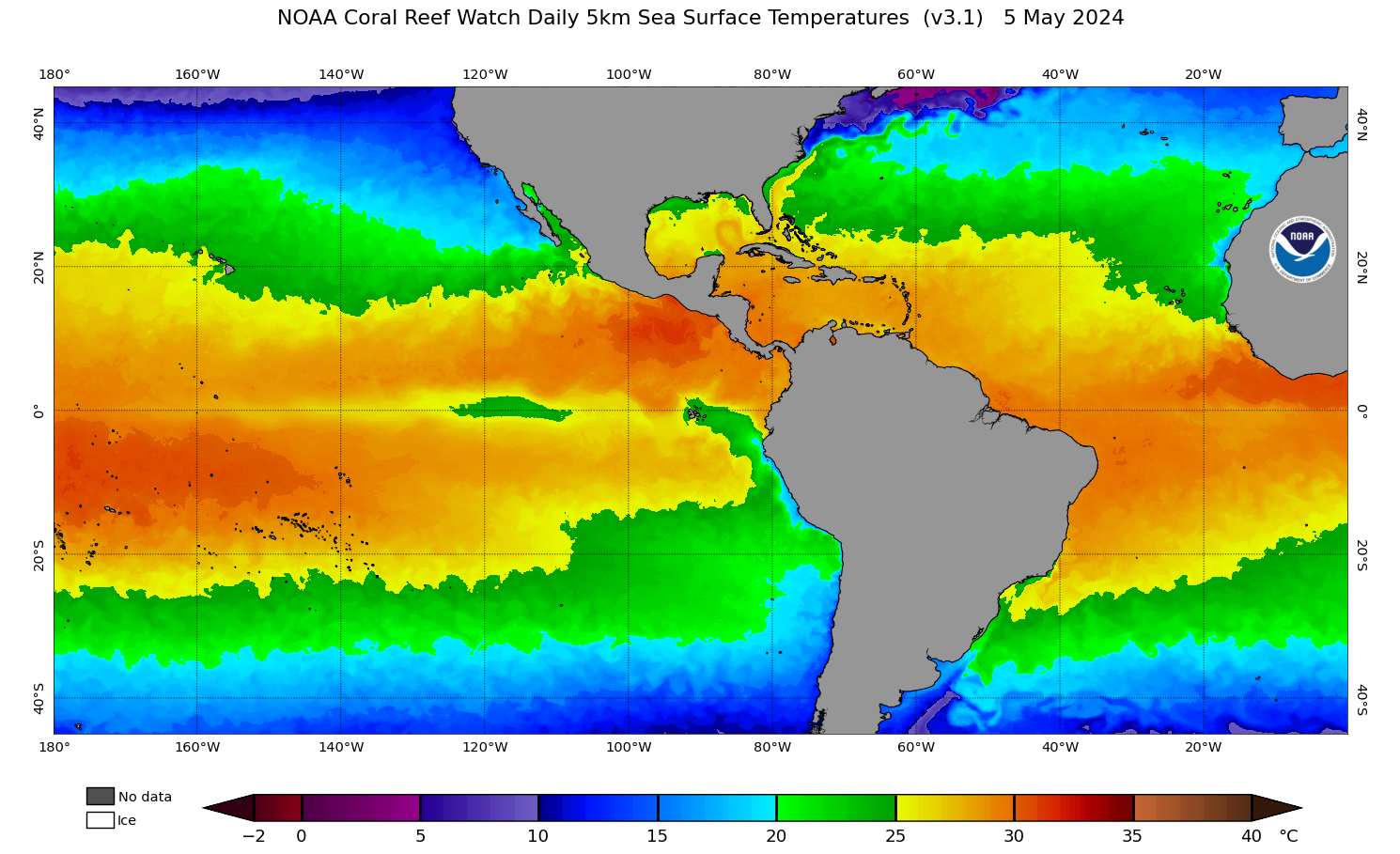
The magic number for surface water temperature to be able to fuel a hurricane is at least 80 degrees Fahrenheit (26.5 degrees Celsius). At that temperature and above, the warm ocean water evaporates into the air, changing from liquid to vapor. As it makes that change, it provides energy to fuel the storm and also adds moisture to the atmosphere that eventually falls as rain.
When a hurricane moves over warm water, especially when the warm water extends many feet below the surface, the storm pulls in even more energy and moisture.
What affects hurricane size and rainfall?
This is one of the many questions about hurricanes that atmospheric scientists are working on.
The average hurricane is about 300 miles (482 kilometers) wide, but hurricanes – or typhoons, as they’re called in the western Pacific of the Northern Hemisphere – can be much bigger or smaller.
Super Typhoon Tip in 1979 grew to half the size of the lower 48 U.S. states. It had a radius of about 690 miles (1,110 kilometers), measured from the center of the storm to its outer edges, meaning it was 1,380 miles (2,222 kilometers) wide. Tropical Storm Marco’s gale-force winds in 2008, in comparison, had a radius of 11.5 miles (18.5 kilometers), meaning it was about 23 miles (37 kilometers) across – not much larger than New York City.

NOAA
In 2025, scientists published a study showing that hurricane size appears to be influenced by how warm the ocean water is compared to its usual temperature that time of year. So, if a hurricane moves over water that is much warmer than normal, it tends to grow in size rapidly as well as growing in strength.
A recent hurricane that was very large in size was the extremely destructive Hurricane Helene in 2024. As Helene moved over water near Florida that was much warmer than normal for late September, it picked up lots of moisture that it carried all the way to the mountains of North Carolina. Several days of rain from the storm caused catastrophic flooding there.

NOAA National Environmental Satellite, Data, and Information Service
But don’t count the small hurricanes out.
Just because a hurricane is small, that does not mean that it won’t have a big impact.
Hurricane Andrew in 1992 was destructive yet small. Its strongest winds extended only about 90 miles (150 km) from its center when it reached Miami and the Everglades. But that Category 5 hurricane is still known as one of the strongest hurricanes to hit the United States. It destroyed more than 25,000 homes.

National Hurricane Center
A strong storm isn’t necessary for a lot of rain to fall. Tropical Storm Allison in 2001 is still one of the wettest tropical weather events in U.S. history. It caused over US$4 billion in damage in Texas alone, and it didn’t even develop into a hurricane!
So, what really leads to the highest rainfall totals?
Hurricanes that move slowly or nearly stop along their path usually cause the biggest rainfall problems because their rain keeps falling over the same location. The rain may be just as intense in a fast-moving hurricane, but it doesn’t stick around as long.
An example is Hurricane Harvey, which hit southeastern Texas in late August 2017. The storm dropped an estimated 27 trillion gallons of water over the state – that’s enough to fill about 40 million Olympic-size swimming pools.
When Harvey stalled over the Houston area, the storm kept drawing moisture from the warm waters of the Gulf. Over four days, it brought precipitation that totals as high as 60.58 inches (1.54 meters) of rain over Nederland, Texas. The extreme rainfall overran the town’s drainage and transformed Nederland into an island.

National Weather Service, Lake Charles, La., office
If a storm moves fast, like Hurricane Michael did in 2018 when it hit the Florida Panhandle, its winds and storm surge can make a big mess, but its rainfall totals will be lower.
Michael was a Category 5 hurricane – more powerful than Harvey and Helene – but its rainfall totals for locations along its path ranged from 6 to 10 inches (15 to 25 centimeters) because it was moving so fast. That’s still a lot of rain, but not compared to Harvey or to Helene, which dumped 30 inches (76 centimeters) of rain on Busick, N.C., over a few days.

NOAA NESDIS
So, a hurricane can be large or small in size and still have a big impact, depending on how slowly it’s moving.
There is still a lot to learn about hurricanes. Some big questions involve what’s known as rapid intensification. That occurs when a tropical storm’s maximum wind speed increases quickly, by 30 knots (about 34.5 miles per hour or 55 kilometers per hour) or more within 24 hours.
When rapid intensification occurs, as happened with hurricanes Harvey, Michael and Helene before they hit land, the storm can surprise coastal residents and become catastrophic.
Hurricanes of all sizes can be dangerous, so accurate forecasting well before they reach land is crucial to help people prepare for their impacts. One very important area of research that today’s scientists – and future scientists – can work on is improving forecasting so coastal residents know what’s coming and have time to prepare.
Hello, curious kids! Do you have a question you’d like an expert to answer? Ask an adult to send your question to CuriousKidsUS@theconversation.com. Please tell us your name, age and the city where you live.
And since curiosity has no age limit – adults, let us know what you’re wondering, too. We won’t be able to answer every question, but we will do our best.