




FOX’s new drama, The Faithful: Women of the Bible, is a star-studded series with powerhouse performances and powerful storytelling.
The series does something unique: it focuses on the stories of women of the Bible, centering them and allowing for the reclamation of voices often pushed to the fringes. None more than the story of Hagar.
We had the privilege of catching up with Natacha Karam to discuss her stepping into this new role, working alongside Minnie Driver, and how these ancient stories still resonate with a modern audience.
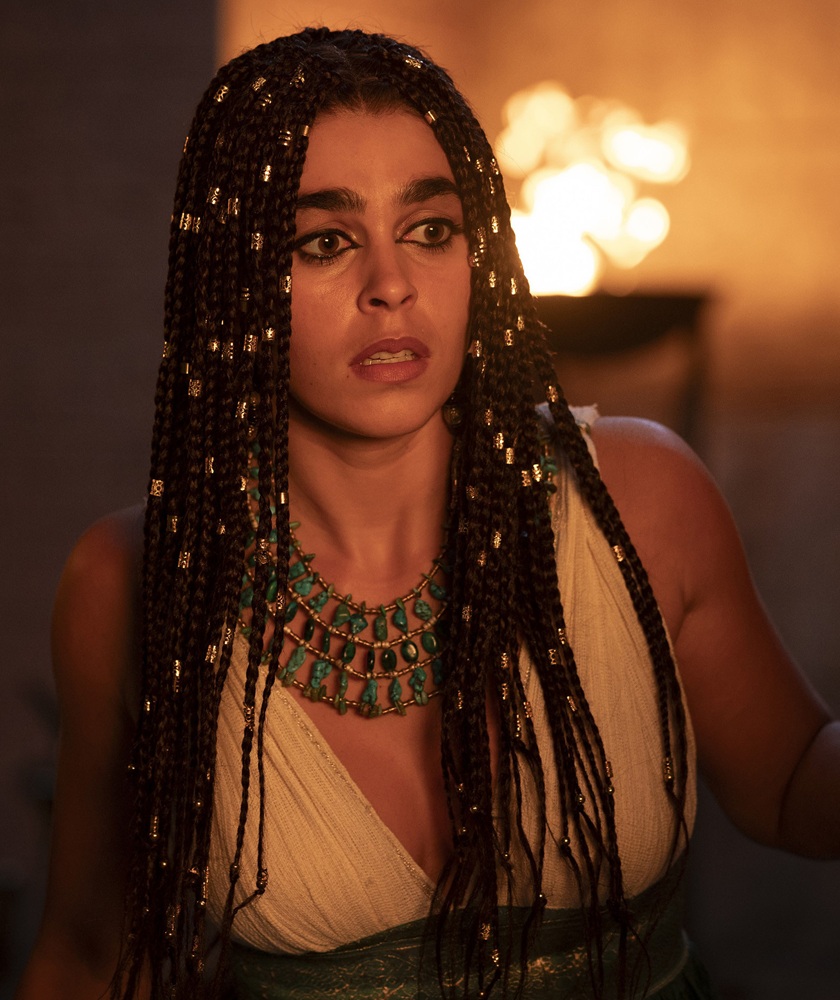
So, The Faithful is such a unique series. I’m curious what attracted you to this project?
I’m always attracted to roles that center women, to roles that center women who are often marginalized or dismissed, or completely erased.
In many different ways over the years, those are the female characters that I’m drawn to, particularly with this show. A lot of people have heard of Abraham and Sarah, but not a lot of people know who Hagar is.
And so for me, that’s the quintessential type of role that I like to play because she was — this woman was a footnote in her own story. Now, to center her and Sarah and show the story through a woman’s lens changes it completely. It puts the spotlight on a character who was erased.
I loved the entire concept of women of the Bible because they probably have some of the most compelling stories, but they’re rarely centered. I loved watching you play Hagar. You did a phenomenal job with that.
Oh, thank you so much.
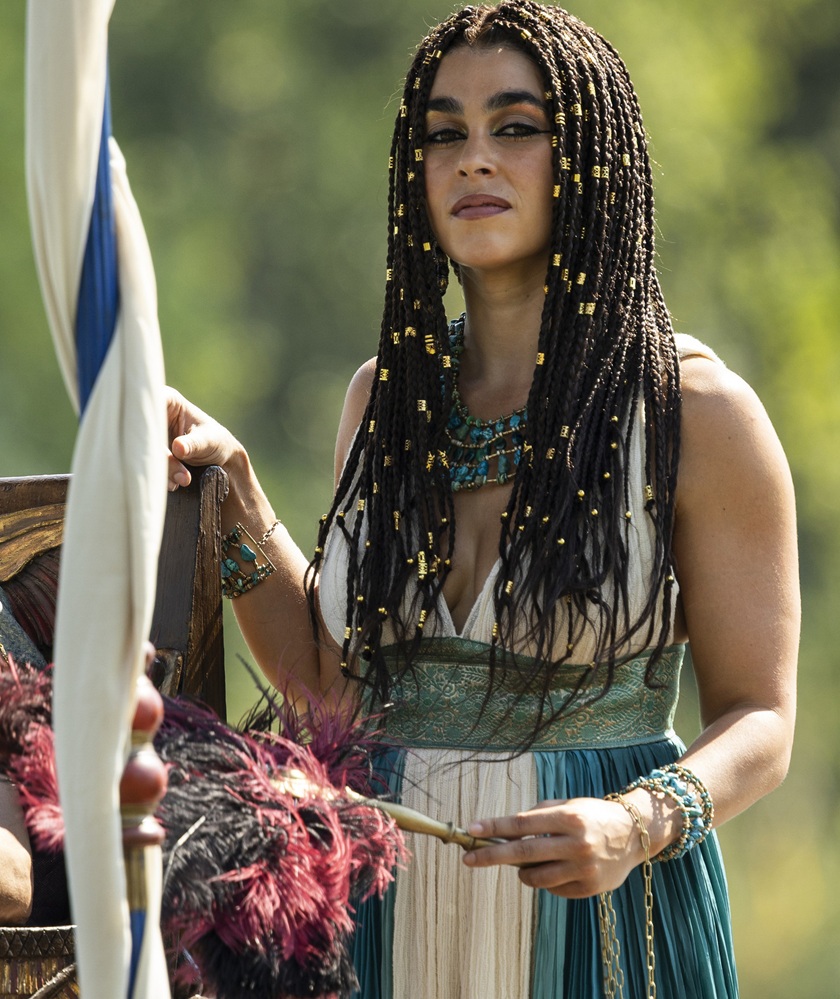
Of course, playing someone like Hagar is a bit different than some of your previous roles. What was the process like getting into character?
I think, rather than focusing on the grand, epic nature of the story, I really have to take it to the human level and stay rooted in her emotional truth.
I focus on what she’s feeling moment to moment, the fear, the hope, the love, the survival, because otherwise it’s too much to take on. I think by grounding the performance in small personal emotions, the sort of epic nature of it takes care of itself.
But yeah, it’s scary when you first look at, like, the whole picture and the journey you have to go through. You just take it bit by bit. I loved playing Hagar. I think when we first met her, she was emotionally guarded and vulnerable at the same time.
But then she learned to survive in that world in Egypt.
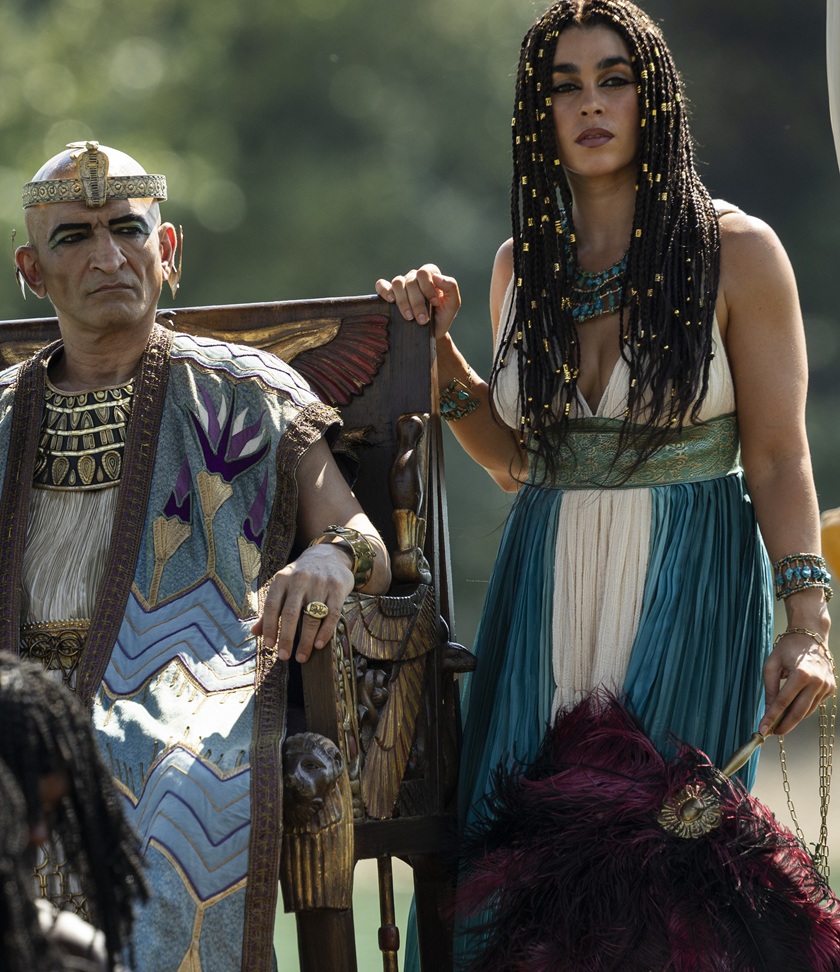
She learned to get by by staying small, observing more than speaking, and not expecting very much from the world around her, and then, as the story unfolds.
She’s thrown into these crazy circumstances that demand so much more of her emotionally, spiritually, and physically, as she evolves.
I evolve playing her, and through motherhood and the hardship that she endures, she begins to discover the magnitude of her strength, and as a result, the emotional journey starts to make more sense.
I loved her journey and evolution. Watching it shifted my perception and even made me go back and reread some things and brush up on scriptures because it was such a great story.
Oh, great! Yeah, that’s the point.
Where did you guys film, and did that help inform your performance?
We shot in Rome in the middle of summer. So it was really, really hot. It’s a beautiful ancient city that holds so much history, and for me, it was my first time in Rome as well. I loved every second of it.
I felt so fortunate to have been there, and the level of craftsmanship that the crew had was unbelievable. What we achieved in such a short space of time, I think, was really extraordinary.
The scenery that was already there and the sets they built feel like an essential thread in the tapestry of this production. The world that they created is so stunning.
It was like a feast for the eyes. And then, for me, it made it really easy to slip right in and feel, you know, because we didn’t do a lot of it on stages. We did a lot of it outside, so you really get to feel like you’re in the thing.
Yeah, yeah, I could imagine just watching it.
Drone shots, you know, the fact that they can do drone shots in the show because they built it out that far.
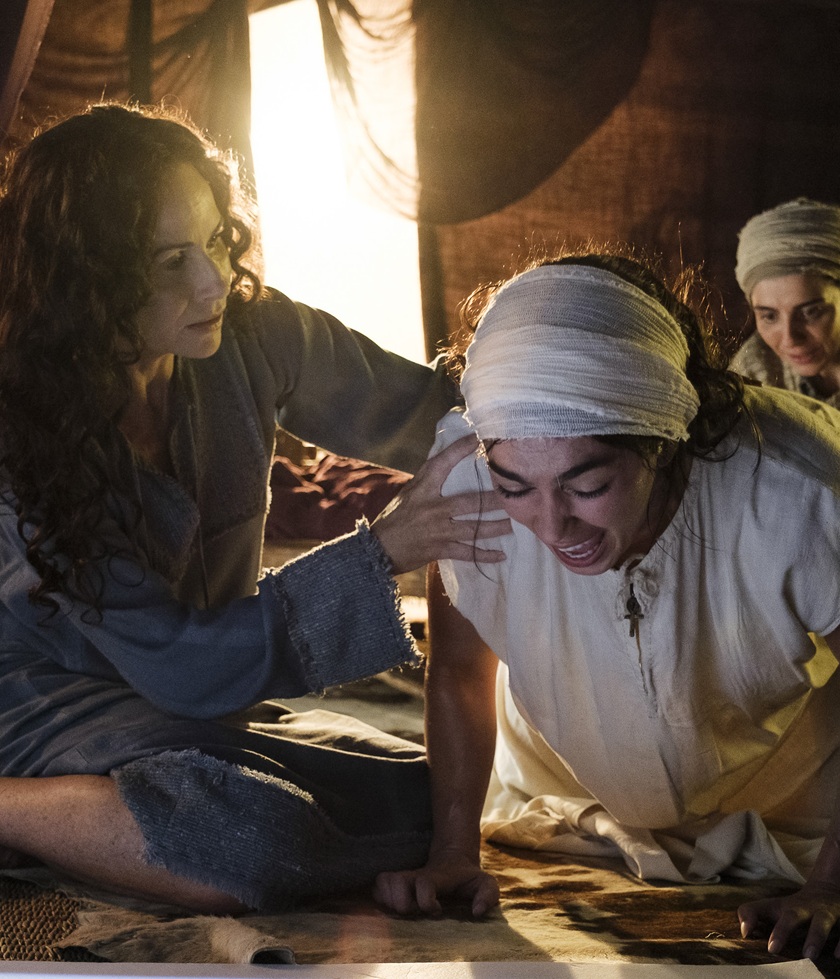
Hagar and Sarah’s relationship is just at the core of this project, and it’s so complex and layered. Can you talk a bit about that dynamic?
The dynamic between the characters—I think that, at the beginning, Hagar and Sarah’s relationship is defined by hierarchy and necessity.
And then this complicated dependence develops that keeps them bound together for life. I’ve been saying that, over time, they become so deeply entangled that they learn most of life’s truest and hardest lessons from each other, which they never expected when they first met.
That was incredible exploring that together, and the ups and downs, and taking that into your own life, and not knowing when you meet someone, and you begin a relationship with them, anyone who comes into your life.
You don’t know why they’re there what lessons they’re going to teach you how things are going to evolve?
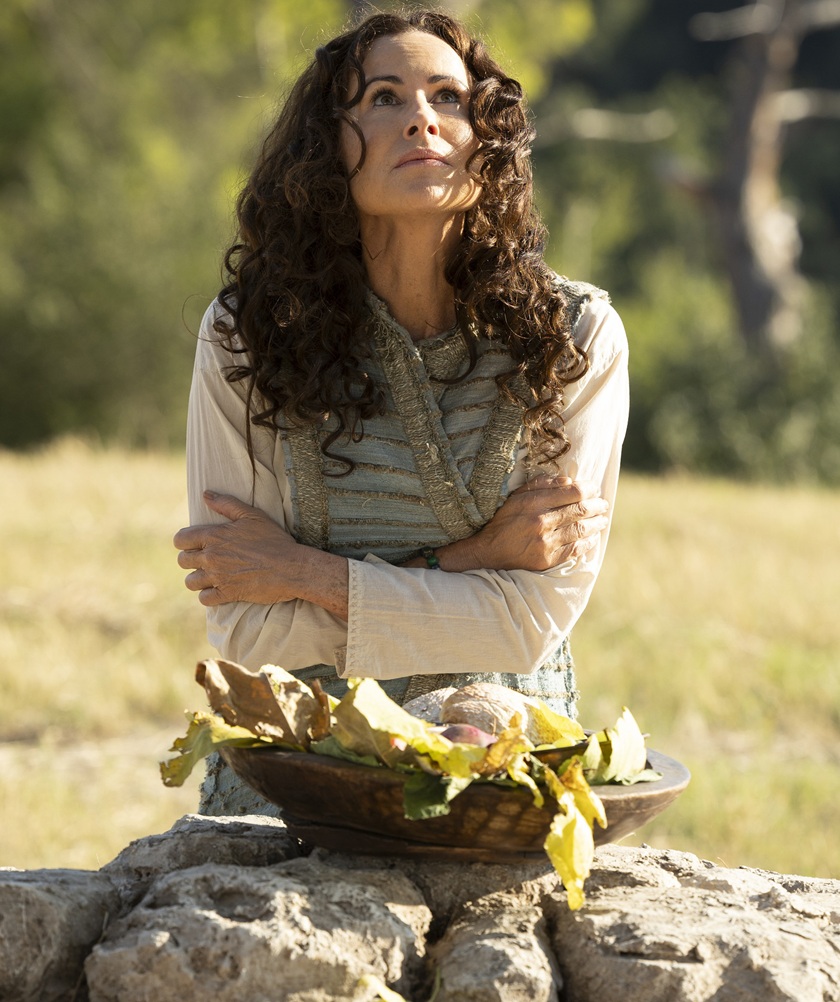
What was it like working with Minnie Driver?
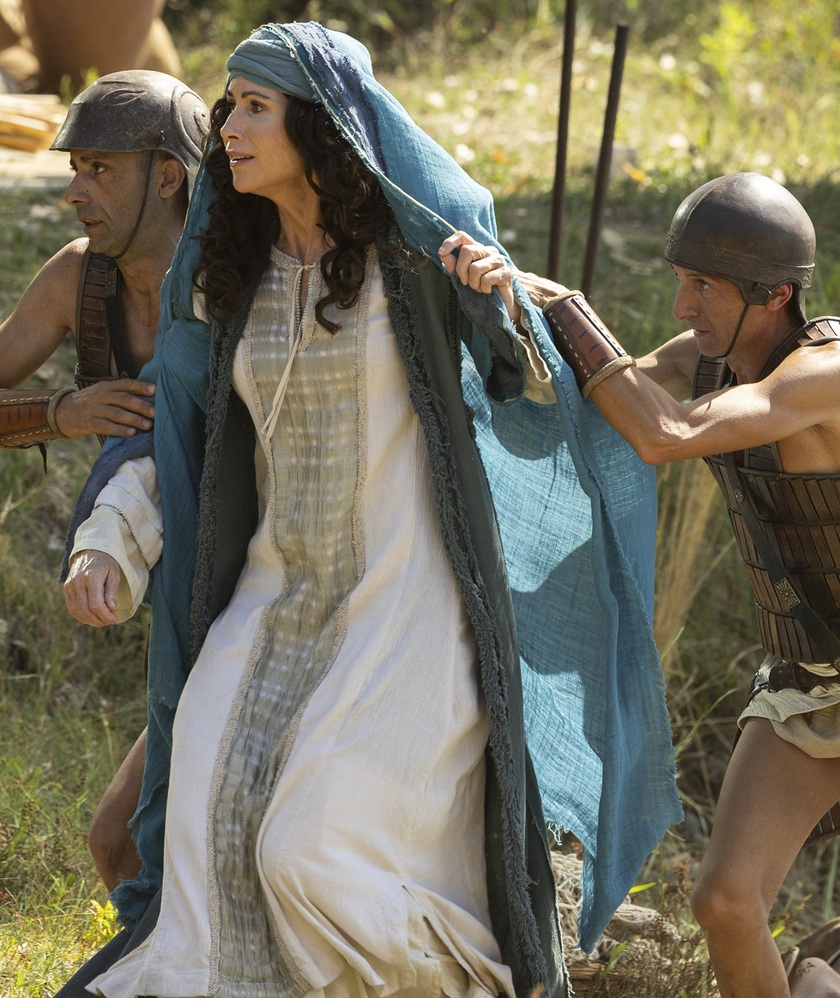
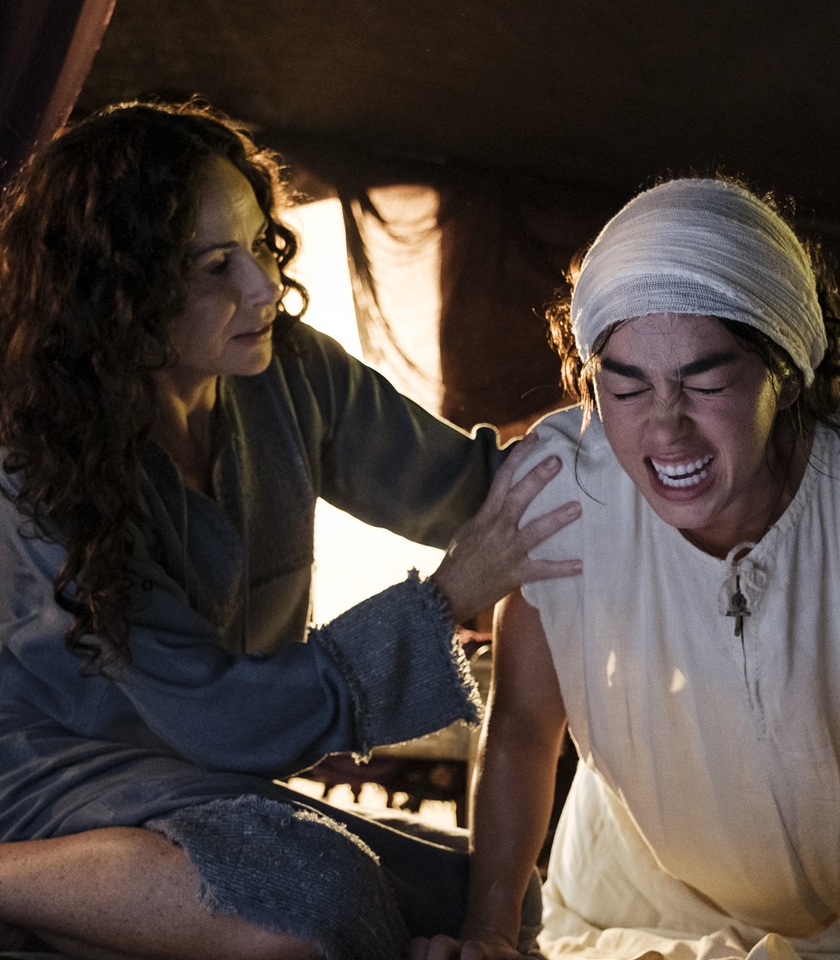
Minnie was incredibly supportive. She was a very generous actor to work with. There was always a lot going on in her eyes. She was always giving back, and I talked particularly about the birthing scene.
I would not have been able to do that.
I don’t know that I would have felt safe enough to go all the way with that performance if Minnie hadn’t been in that tent with me, being as generous as she was, holding space, and creating a safe, intimate environment for me on a very loud, busy stage.
You’re really trying to convince yourself that you’re in one of the hardest moments of your life.
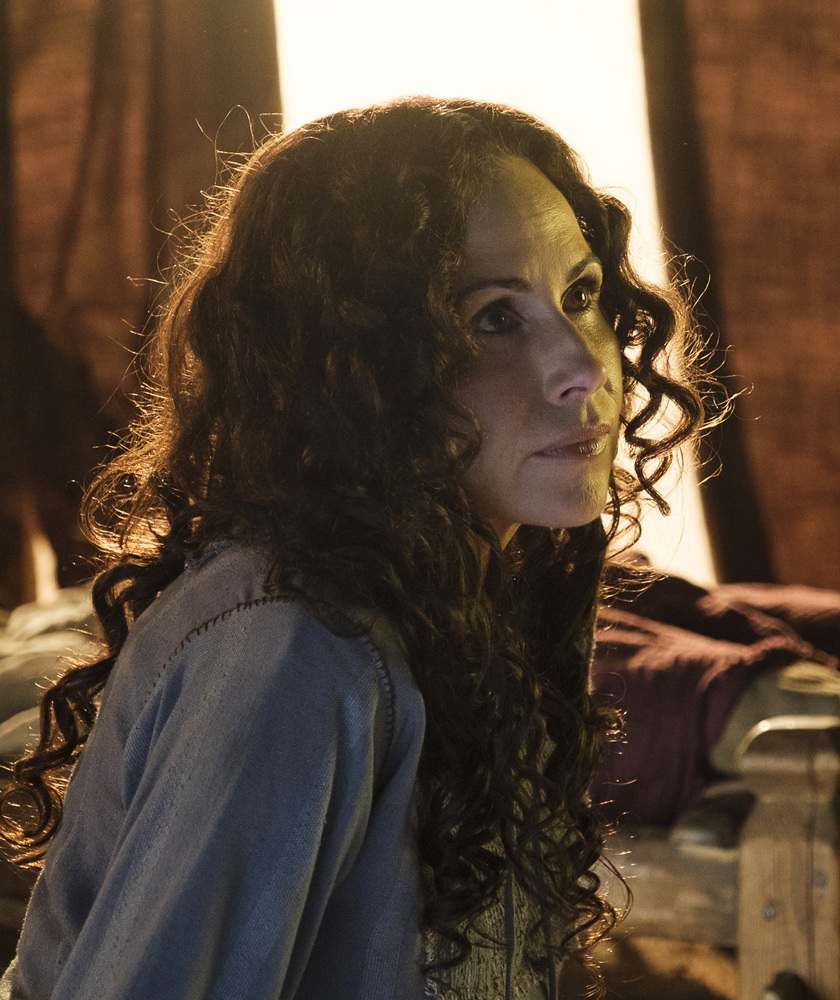
Their entire dynamic was riveting, and it was refreshing to see because you don’t typically see that level of centering women in a story like this. Right from the very beginning, one of the first things that resonated was the line about not bowing to any man.
One of the points of centering women in this is so that women and modern audiences can see things that they recognize and feel less alienated by these texts that have sometimes been wielded in quite a misogynistic or patriarchal way.
I think that modern audiences, especially women, will recognize this experience of moving through life without always having autonomy and yet being expected to carry faith, responsibility, and love.
Hagar’s journey is a reflection of what it means to keep going when you’re in a chapter that feels unjust or torturous. And you can’t see how it’s going to shape you yet.
You can’t see how that chapter will shape the story of your life as a whole. I think motherhood is such a transformative experience for so many women, and finding that reason to endure, to protect, to believe in something beyond your immediate circumstances.
I think people can see themselves in that, and in the struggle to trust that even the most painful chapters of your life can carry abundant meaning for how your life turns out as a whole.
How did this role challenge you as an actor?
I haven’t played a historical figure before.
I think taking a character who already exists in some way, where there’s already a beginning, middle, and end written out, and not worrying about the grand and epic nature of the thing, and really trying to focus myself moment to moment on the emotional inner life of this human being.
I’ve also never played a character who you pretty much see go through their whole life, so that was challenging as an actor, and I loved it.
Also, not getting stuck in the trap of knowing what the ending is every time I was in a scene. Being like, “You don’t know what happens next. You, as Hagar, do not know how this ends. You’re only in this moment for you. This is the only moment that’s real.” That was an important thing that I had to keep reminding myself of.
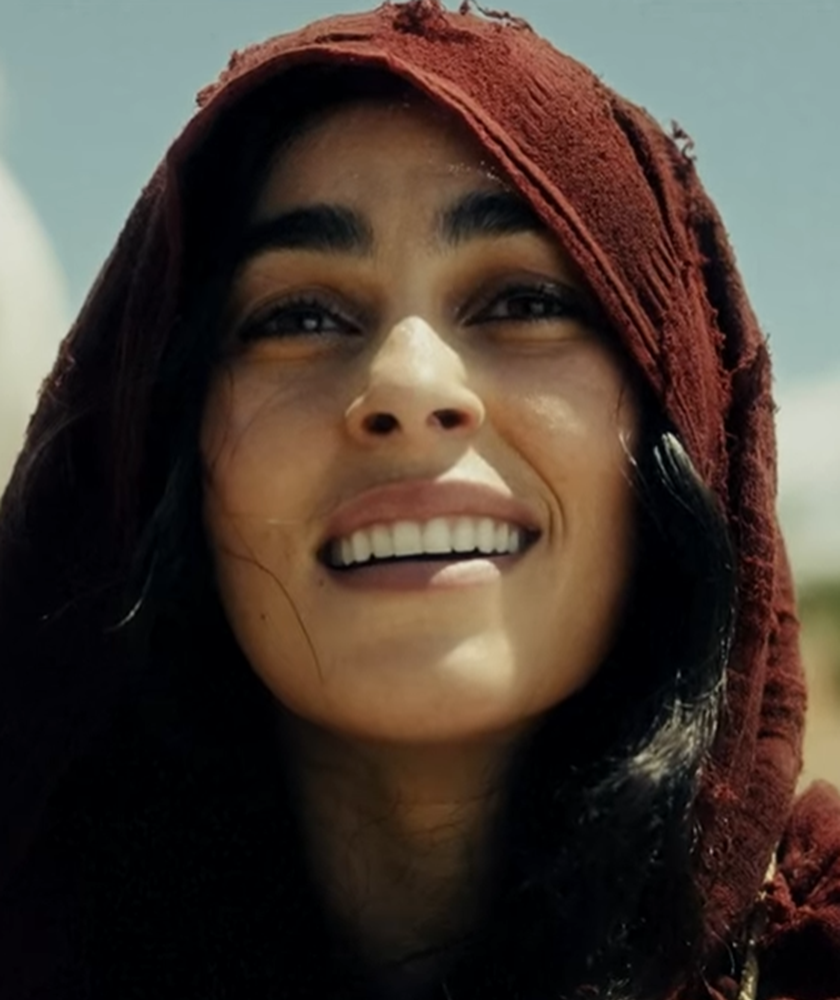
And also, what was challenging was directly interacting with something. You can’t see the angel of God. That was probably the scene I feared the most—how to make that deeply personal spiritual experience translate, knowing she was having it alone. There’s no audience. There’s no one who’s witnessing it.
How does this human have this experience and not worry? And get out of my head and not worry about how it’s then interpreted by the audience who will watch it.
What are you most excited for the audience to see?
I’m excited for people to see old stories told in a new way, centering the people who really were at the heart of them, the women.
I’m excited for women who have felt erased or dismissed, or who feel like they cannot find themselves in these stories, to realize that they are there and they’re a major contender in every story.
You can catch Natacha Karam as Hagar in the first segment of The Faithful: Women of the Bible.
The two-part premiere of The Faithful airs this Sunday at 8/7c on FOX.

Angelo continues his search for the Ferryman, while Dave starts piecing some clues together on Memory of a Killer Season 1 Episode 7. Our review!
We have a full week of characters who put us in all the feels from High Potential and RJ Decker to Virgin River and Doc, dive in now!
We have lots of exciting announcements, including a Family Guy spinoff, a renewal, and a first look at Malcolm in the Middle’s reboot.
What’s renewed? What’s canceled? What’s still in limbo? Get the answers in our 2025-2026 renewal scorecard!
Joan faces her reckoning on Doc Season 2 Episode 17, but if she’s going down, she’s going down big! Let’s discuss!

TV Fanatic is searching for passionate contributors to share their voices across various article types. Think you have what it takes to be a TV Fanatic? Click here for more information and next steps.