




Movies are back! At least that’s what people who love film have been saying in the first half of 2026, largely due to the wild success of Curry Barker’s “Obsession” and Kane Parsons’ “Backrooms.” If we were doing a list of the most essential films of 2026 when it comes to understanding how audiences and the industry are shifting, those two horror indies would be near the top of the list. But we’re not. We’re doing something a little different: highlighting 20 films from 2026 that we feel like you need to see. Be warned that it’s not entirely scientific. We asked our regular film critics to name some movies they loved and this is what emerged. Over 100 movies were mentioned at least once; all of these were cited more than once, giving them a place in this annual feature. It’s that simple. Before the films of Cannes start coming out and the fall festival kicks awards season into high gear, try to watch as many of these 20 flicks as you can. You won’t regret it.
“28 Years Later: The Bone Temple“
Despite being a direct follow-up to Danny Boyle’s return to his venerated zombie franchise, “28 Years Later,” “The Bone Temple” operates on a far different, more psychologically nasty register. Nia DaCosta, taking the helm from Boyle, shifts the series’ tone from a dark, melancholic spin on the King Arthur mythos to a gritty, grimy story of the myths and tales mankind retreats into when it sees the end of the world is nigh. It’s still, essentially, the story of Alfie Williams’ innocent Spike, a boy forced to grow up far before his time in a world set to kill him, but “The Bone Temple” turns its focus on the dueling father figures who seem set to shape his destiny.
For Jack O’Connell’s Jimmy Crystal, Spike is but the latest in his fist of Fingers, a cadre of tracksuited, blonde-wigged psychopaths set on a holy mission from Satan (whom Jimmy claims is his daddy) to cleanse the world. For Ralph Fiennes’ Dr. Ian Kelson, Spike’s innocence must be protected, as his own despair at the end of humanity gets complicated by his budding friendship with the hulking, well-hung Alpha Samson (Chi Lewis-Perry). Intercutting between these two narrative roads, DaCosta (and Alex Garland’s script) shows us two distinct reactions to the apocalypse: One raging against the dying of the light, the other embracing the flame.
And she does so with an invigorating, visceral punch at vital moments, including a climactic play-act featuring Dr. Kelson and Iron Maiden’s “The Number of the Beast,” meeting Jimmy Crystal in his own theatrical arena. Even if the rest of the movie were half as good as it is, that sequence alone would justify this film’s inclusion on this list. –Clint Worthington
“(I am the sea. In my depths, all treasures dwell.
Have they asked the divers about my pearls?)”
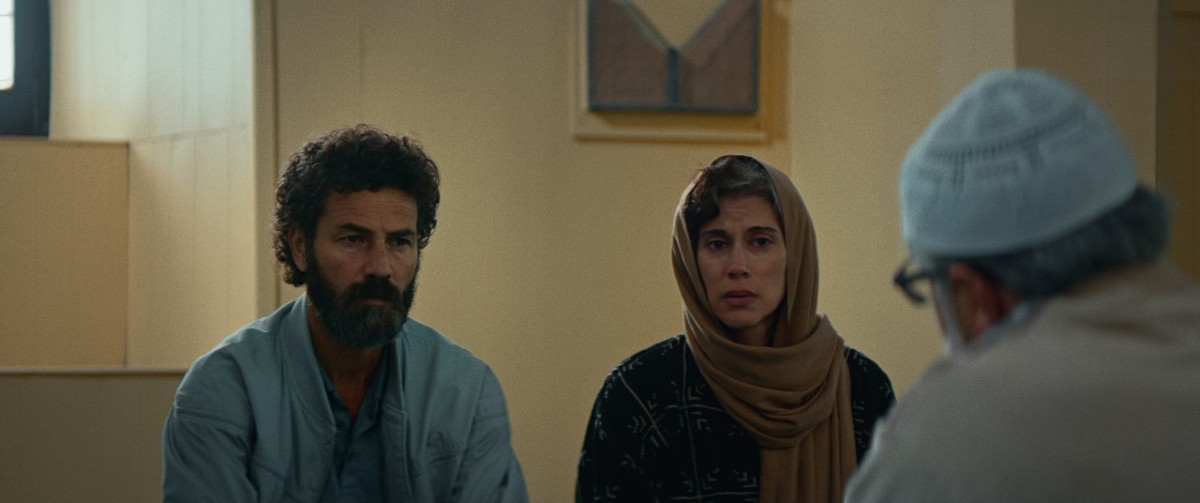
So reads Hafez Ibrahim’s poem that bookends writer-director-star Cherien Dabis’ masterful generation-spanning epic, which centers on one Palestinian family as they grow in love and in pain from the Nakba in 1948, through the early days of the Israeli occupation in the 1970s, the first Intifada in the 1980s, and beyond. A bold act of cinematic defiance, Dabis’ film is a reclamation of history, one that does not dwell solely on trauma but instead finds room for joy, celebration, and unconditional love amongst all the heartbreak and destruction.
Packed with as much emotion and small lived-in moments as it is with historical context, the film follows the story of Sharif (played at different ages by Adam Bakri and his late father Mohammad Bakri) and his family after they are forced to leave their home and orange groves in Jaffa for a refugee camp in 1948. We watch as young Salim (played as a child by Salah El Din and as an adult by Saleh Bakri) grows wary of the weight he carries under occupation, and the burden that has been passed down to his son Noor (Sanad Alkabareti and Muhammad Abed Elrahman), who finds his own path when he decides to join the resistance during the first Intifada.
Dabis’ film reminds us that the key to resistance remains in our steadfast belief in the power of humanity, compassion, and community. –Marya E. Gates
“Billy Preston: That’s the Way God Planned It”
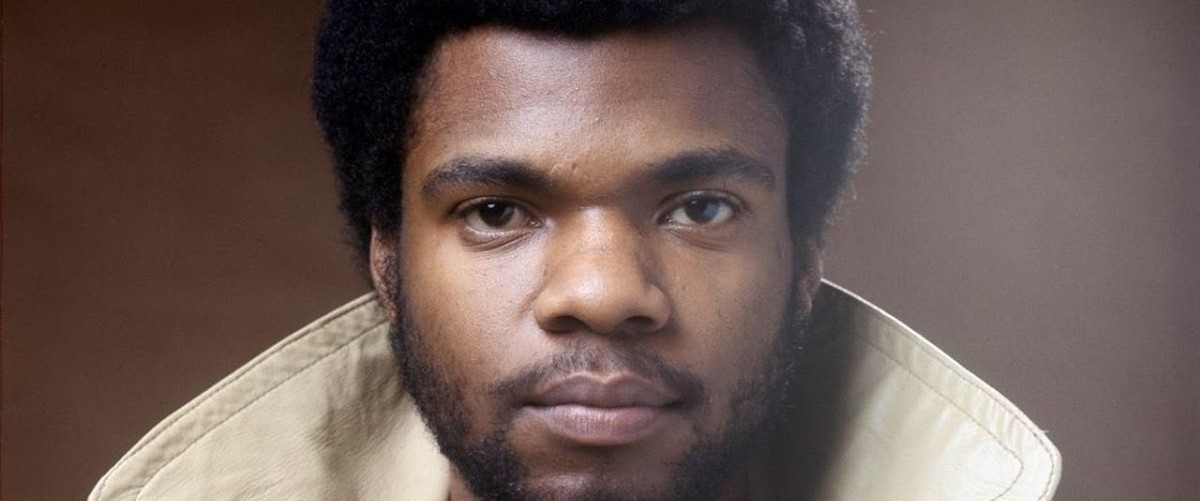
Can a movie lift your heart and break it at practically the same time? This documentary, directed by Paris Barclay, paints a portrait of musician Billy Preston that doesn’t exactly revel in contradiction but appreciates the ways that contradiction can illuminate a life narrative. Billy Preston lived a life full of music and love, and at the same time, one full of shame and hiding. Raised in churches in Texas and California, he could play organ hymns almost as soon as he could reach a keyboard—that is, before he was even ten. Completely self-taught, he had more than perfect pitch. He had an ear that could hear a musical idea and transmit it through the rest of his being…down to his fingers, which would then improve that idea tenfold or more.
His incredible ability and the sunshine of his smile made him fantastic company both musically and socially. This movie shows footage of the Beatles, bored, out of sorts, unable to complete a studio take. In walks Billy, and even the irascible John Lennon is suddenly beaming. Preston and the band had a history: when the Beatles were logging their 10,000 hours in Hamburg, Preston was there, backing Little Richard. The sadder part of his story is his sometimes desperately closeted life as a gay man. Barclay and co-writer Cheo Hodari Coker deftly juggle Preston’s contradictions to put together a moving portrait of a man in full. One whose work still brings a smile and invites you to get up and dance. –Glenn Kenny
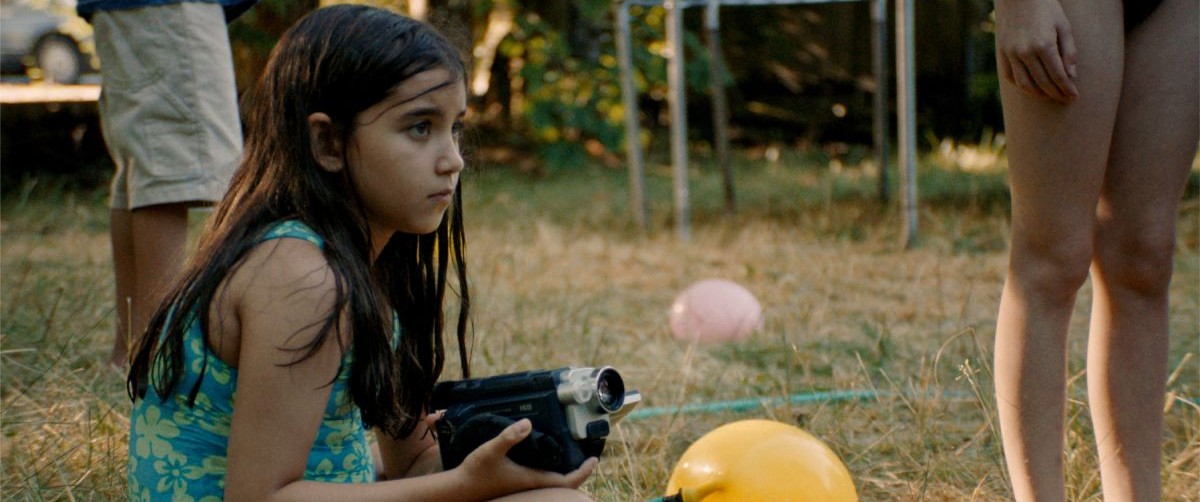
Sophy Romvari’s “Blue Heron,” her emotionally seismic feature debut that premiered at Locarno Film Festival, negotiates the tenuous boundaries between reality and imagination, autobiography and fiction, and past and present with unflinching empathy. Its narrative nimbleness acts on such an unconscious level that one can feel their own hand-crafted compartmentalization fade into an unignorable truth.
A coming-of-age story that re-writes many of the genre’s common moves and tropes, the film follows a young Sasha (Eylul Guven) disturbed by her troubled older brother Jeremy (Edik Beddoes). Despite her Hungarian parents’ best efforts, including adhering to flawed psychological advice, no one can quite reach her brother. She, for that matter, also struggles to understand him. Before long, her fraught childhood dissolves into a measured present whose untangling of the past recalls Romvari’s equally thoughtful short “Still Processing.”
Romvari’s spontaneous rhythms, which jump between revealing perspectives, distant memories, and evocative dreams, are boldly combined with her aching want to lend a hand to a loved one who disappeared long ago but whose presence remains palpable. With “Blue Heron,” Romvari is a master of the uncanny. With each of her surprising aesthetic and emotional decisions, she heightens the haunting quality of a film whose ghostly conversations materialize the regret that looms between siblings whose subliminal opposition cannot override the shared fiber of their familial connection. –Robert Daniels
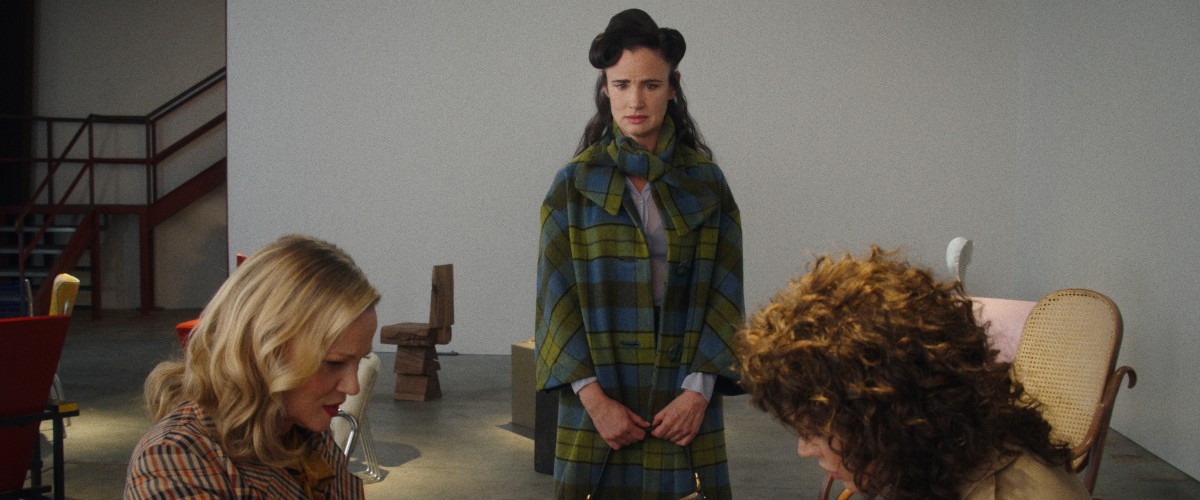
In life, as in the works of Amanda Kramer, human beings exist in a constant state of performance. We shape and reform ourselves to fit the qualities we most want to exude, or to get the kind of response or relationship we want from others. Her latest, “By Design,” literalizes this through the most unconventional of body-swap tales: Juliette Lewis’ disaffected middle-aged woman Camille, overtaken by the beauty of a simple wooden chair, suddenly switches consciousnesses with it. From there, Lewis’ body lies limp as her friends (Robin Tunney, Samantha Mathis) and mother (Betty Buckley) treat her with greater kindness and humanity than she did as a moving being with agency. Meanwhile, Camille-as-chair finds newfound liberation and purpose as the literal love object of a sensitive pianist (Mamoudou Athie), who showers her with devotion in place of the lover who’s just left him.
If that premise sounds bonkers, that’s because it is; but greet it on its level, as Kramer asks you to do with all her presentational parcels (“Give Me Pity!” “Please Baby Please”), and you find a curious, empathetic portrait of the pain and anguish that comes from simply being a person alive in the world. Drawing on 1980s mall catalogs and filled with bursts of theatricality (tap-dancing stalkers, interpretive dance routines around a lifeless Lewis), Kramer builds a kind of surreal stage where we can play with ideas of gender, identity, and purpose through disconnected vignettes that nonetheless touch on tender truths about how we exist for each other—lover, friend, artist, symbol. “By Design” is no different, and maybe one of the most potent distillations of her aesthetic. Existence is rough enough; wouldn’t it be nice to just be furniture for a while? –Clint Worthington

Over the course of his career, Steven Soderbergh has made a number of films revolving around heists. While this latest take on the genre may seem rather low-fi in comparison to the likes of “Out of Sight” or the “Ocean’s Eleven” series, it is as enormously engaging and entertaining as those slicker explorations. It tells the story of a once-promising artist (Michaela Coel) hired by the greedy children of an aging and once-renowned painter (Ian McKellan) to take a job as his assistant so that she can surreptitiously access and complete a series of famously unfinished artworks so that they can be “discovered” and sold after his death. This is a clever plan, to be sure, but the old man figures out that something is up fairly quickly and calls her bluff by demanding that she burn the canvases before his eyes.
What happens from this point (roughly 30 minutes in) I leave for you to discover, but the ensuing twists and turns in Ed Solomon’s screenplay are smart and clever; they are hardly the only element of notice. The script offers some deftly handled commentary on both the creative process and the way that contemporary culture has reduced art to just another commodity. These are wonderfully delivered by the two leads, both of whom excel at charting their characters as they find common ground despite their overt differences in race, class, and age. Soderbergh presents the material in a quietly stylish manner that is all the more impressive when you consider that nearly all of the film takes place within the confines of a pair of adjoining ramshackle townhouses.
Coming on the heels of last year’s equally strong “Black Bag,” Soderbergh continues to make a case for the viability of smartly made mid-budget films aimed primarily at adults. While it may not have set the box office on fire, it is a work destined to be rediscovered and appreciated long after the current box-office champions have faded from memory. –Peter Sobczynski
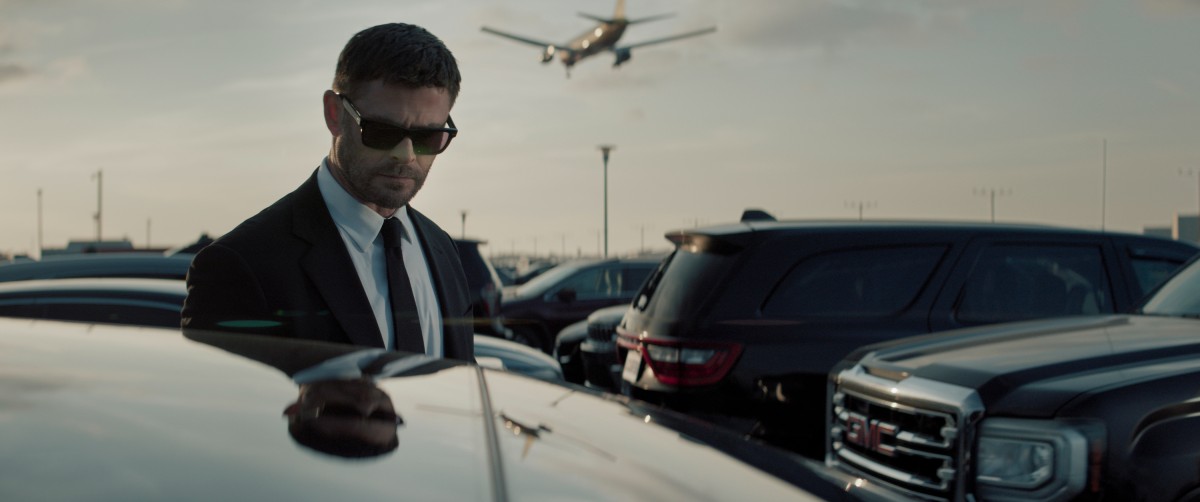
There is something enigmatic about Los Angeles that has always made it the perfect playground and backdrop for a cat-and-mouse thriller. Perhaps it’s all the nighttime driving, or the eerie quiet of its garages, strip-mall lots, and street corners, even in broad daylight. With “Crime 101,” writer-director Bart Layton (“American Animals”) seems to have internalized these qualities of the perennially noir-esque City of Angels, as well as the timeless engine that made the greats of that genre run, from “Chinatown” to Michael Mann.
Here, Chris Hemsworth and Mark Ruffalo are an exceptional pair, going toe-to-toe as a methodical criminal of a few words and an old-school detective who might be a tad out of place in the new world, respectively. But the heart of the narrative is Halle Berry as a go-getting insurance broker trying to stay relevant in a deeply sexist business. It’s refreshing to have such a well-made addition to an increasingly neglected type of high-octane ensemble thriller—Layton goes back to the 101-level basics, showing how it’s done. –Tomris Laffly
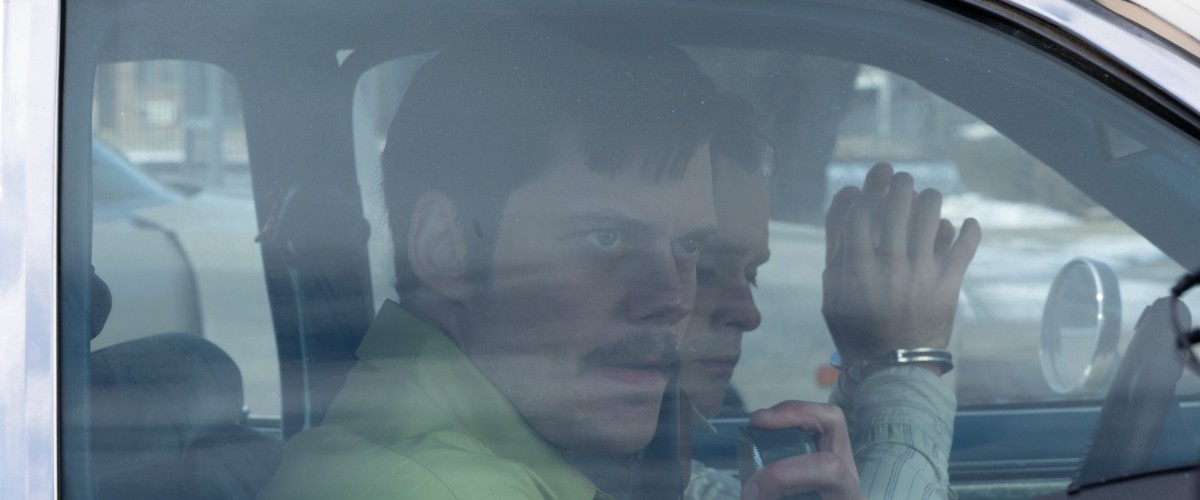
Gus Van Sant’s “Dead Man’s Wire” stands proudly alongside his best work. It’s a true crime tale of an Indianapolis man named Tony Kiritsis (Bill Skarsgård) who felt that a local mortgage broker had cheated him in a shopping center development project. He expressed his grievance by taking the manager (Dacre Montgomery) hostage, demanding a monetary settlement plus a public apology from the brokerage’s cold, smug owner (Al Pacino), who happens to be the manager’s dad but shows zero interest in his son’s survival. “Dead Man’s Wire” owes a lot to the late, great director Sidney Lumet, who did his best work in socially conscious urban dramas with a thriller component. This film plays like sort of a combination of two of his classics, “Dog Day Afternoon” and “Network,” wrapped up inside Van Sant’s distinctively loose, subtle, funky aesthetic. Additional kudos to Colman Domingo, who gives great backup as a DJ steered by Indianapolis cops into an on-air parasocial relationship with Tony, as well as to debut screenwriter Adam Kolodny, who wrote “Dead Man’s Wire” while working a day job at the zoo. –Matt Zoller Seitz
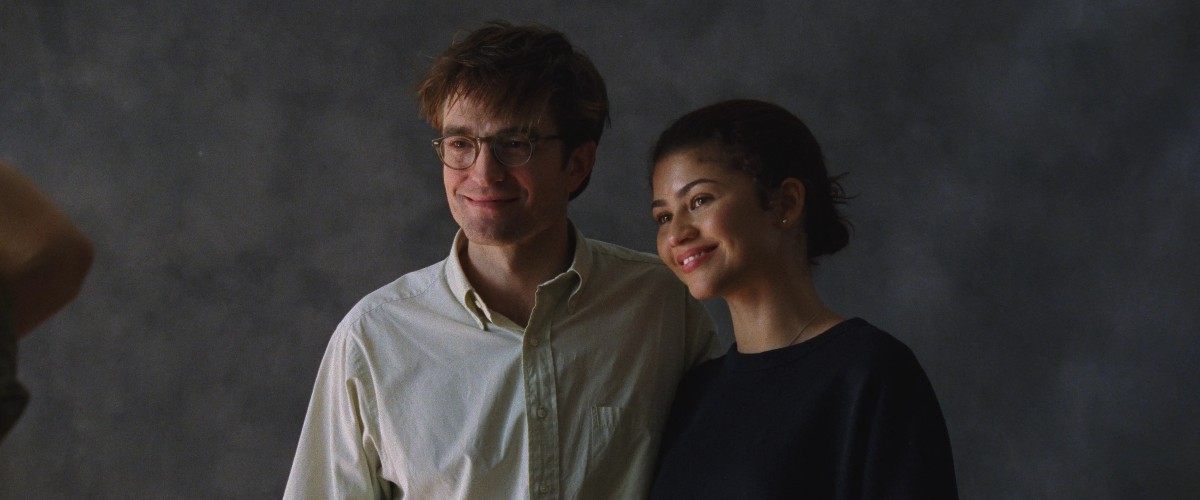
You could make a solid argument that the “worst” character in Kristoffer Borgli’s corrosive and confrontational black comedy isn’t actually the obvious choice. I’m not sure you could win that argument, but the moral ambiguity and the sly subversive undertones in Borgli’s brilliant script at least allow for the possibility.
Act 1 of “The Drama” plays like a slightly edgy but comfortingly formulaic, Boston-set rom-com, with Robert Pattinson’s Charlie and Zendaya’s Emma meeting cute, falling in love, and planning their wedding. (Alana Haim and Mamoudou Athie chime in perfectly as the obligatory wisecracking maid of honor and best man, respectively.) After Emma drops a verbal hand grenade into the mix about an incident from her past, we are plunged into a haunting and disturbing psychological study.
It’s the kind of plot point that would reek of exploitation if not handled correctly. Pattinson and Zendaya are fearless and authentic as a couple, like supercharged electromagnets in the wake of Emma’s confession, while Charlie finds himself terrified yet still committed to the relationship—much to the horror of certain judgmental peers. This is like a prenup version of “Who’s Afraid of Virginia Woolf?” and “Marriage Story.” It’s bruisingly effective. –Richard Roeper
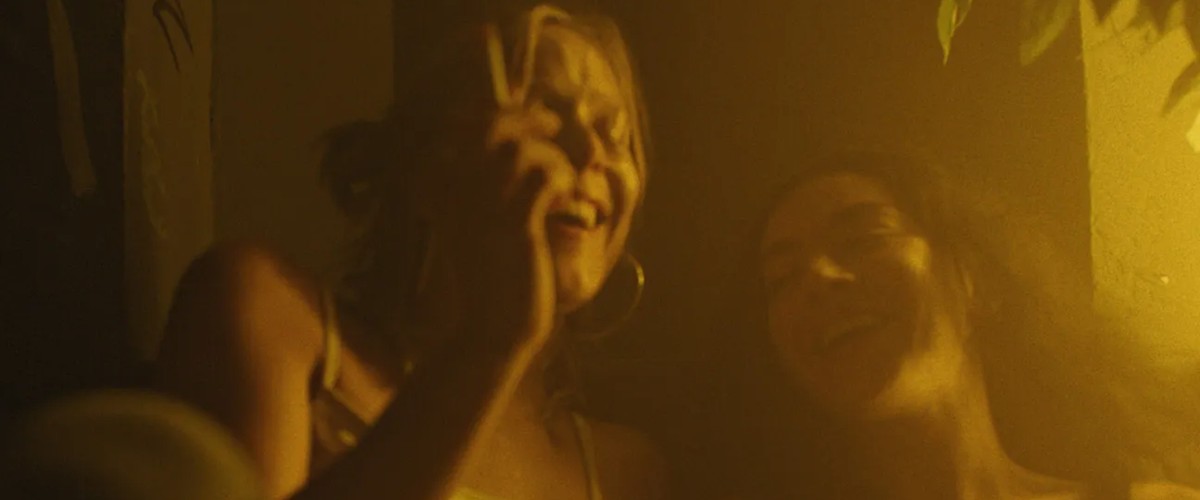
“Erupcja“
Effervescently charming and emotionally propulsive, Pete Ohs’ “Erupcja” locates the intimate, mysterious, and sometimes explosive energies of real human connection within a freewheeling city symphony. Set in Warsaw and shot there in secret during the summer of 2024—amid the cultural phenomenon known as “Brat Summer,” which transformed the lead actress, Charli xcx, from pop music’s best-kept secret into one of its major players—this electrifying melodrama is the product of Ohs’ unusually collaborative method, honed across several independent projects (including the mesmeric, still-undistributed “The True Beauty of Being Bitten by a Tick”). He writes alongside actors throughout production, starting with a half-outline, then scripting the rest on the fly to prioritize continuous exploration and experimentation in the filmmaking process.
The film, which draws its title from the Polish word for “eruption,” picks up as xcx’s 365 party girl Bethany touches down in the Polish capital with her boyfriend Rob (Will Madden). He plans to propose, though Bethany is wary; she has ulterior motives for bringing them to Warsaw, most of which revolve around her friend Nel (Lena Góra), a Polish florist with whom she shares a uniquely combustible, romantically ambiguous chemistry. As Bethany’s eagerness to rekindle this sapphic situationship leaves Nel uneasy, and Rob wanders Warsaw by himself, Ohs’ film illuminates the tectonic emotional shifts at play beneath Bethany’s desire to detonate her own life.
Soaring on sensorial, spontaneous rhythms that are at once the outcome of his creative openness and the result of other artists rallying passionately to his cause, “Erupcja” is about the messy, cathartic process of chasing feelings without heed for where they lead. And, in how restlessly and inventively Ohs and his collaborators pursue their impulses and instincts, it’s also about self-discovery as a profoundly cinematic proposition. –Isaac Feldberg

“Hokum“
The Irish supernatural chiller “Hokum” might as well be called “A Warning to the Incurious,” though writer/director Damian McCarthy tells Rue Morgue’s William J. Wright that he only took “a little bit” of influence from standard-setting ghost story-writer M.R. James.
In “Hokum,” Adam Scott plays Ohm Bauman, a creatively blocked know-it-all skeptic who is ultimately cursed by his false sense of superiority. That’s also the sort of pride that begs for a hard fall in James’s fiction.
Apart from the ghostly presences that may or may not haunt the hotel, Bauman is also repeatedly shown the vital necessity of keeping an open mind, as he’s advised by the alternately suspicious and accommodating staff members of the haunted Bilberry Woods Hotel. That’s not just a good philosophy to cultivate, but a matter of survival for Ohm as he tries to find a missing girl and then an exit from the hotel after its staff leave for the off-season.
To be fair, “Hokum” is as good as it is because McCarthy (“Caveat,” “Oddity”) effectively adapted his previous two features’ foreboding atmosphere and sensuous chills to an even bigger canvas. You might be able to hear James’s influence in Ohm’s agnostic bluster, but the most impressive parts of “Hokum”—especially its rich production design and masterfully layered sound design—are pure McCarthy. –Simon Abrams
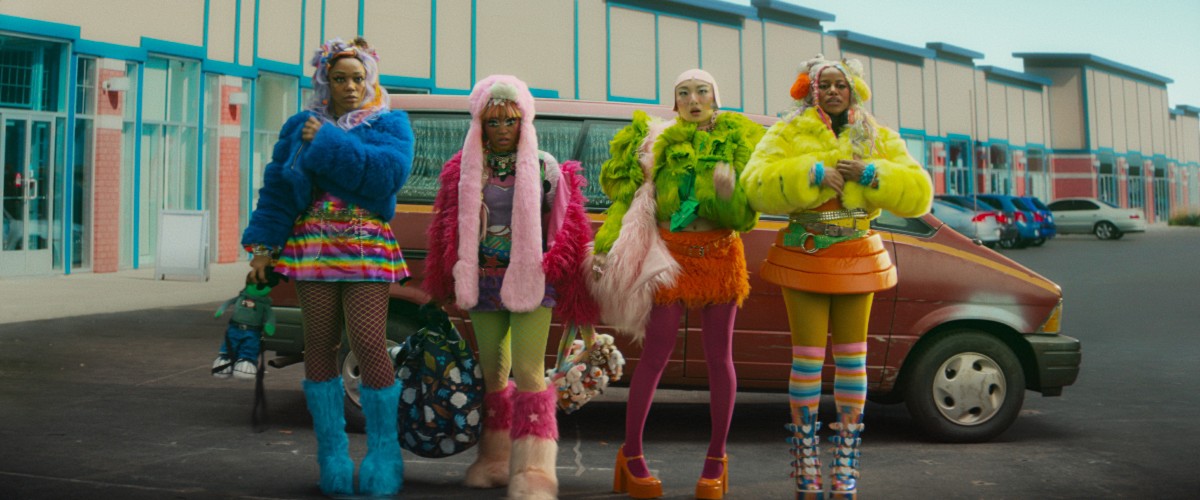
Big swings, bold by nature, are becoming more common, whether a film is studio-backed or independent. Of the 2026 releases so far, the most beautifully audacious big swing thus far is Boots Riley’s “I Love Boosters,” a comedic anti-capitalist adventure flick. Heavily stylized and saturated with bright colors, the film’s costume and set design come together to paint the town red, yellow, blue, green, and polka-dot pink. As with much of our reality, it’s easy to get distracted by funky visuals, but the bones of “I Love Boosters” are thematically complex and reveal the interconnectedness of broader socio-political issues.
This fashion-forward film is perhaps one of the first to comment on the world of fast-fabrication and its ramifications from bottom up, and it notably does so from a global standpoint. Although the plot details get a bit lost in the emphasis on aesthetics, it’s clear Boots is aiming to plant a communist-coded seed for the next generation, one that will bloom into a more equitable, ethical future for all.
Since seeing “I Love Boosters,” the Tune-Yards score has been constantly playing in my mind, turning my capitalistic quotidien into a cartoon. One thing the film makes perfectly clear is that if we have to navigate this mess as a collective, we might as well look good and have fun while doing it. –Cortlyn Kelly

It is not often that you see new mythologies get forged before your eyes. Still, Aleshea Harris’ “Is God Is” has all the pulp and grandeur that make it a story worth telling (and a movie worth rewatching) for generations to come. Myths ground us and enable us to tie our stories to larger narratives, and Harris, who adapts her play of the same name, constructs a journey around one of the oldest stories known to humanity: revenge and its prickly aftermath.
On paper, the film has a deceptively simple premise, but like its protagonists, you’d underestimate it at your own peril. Twin sisters Racine (Kara Young) and Anaia (Mallori Johnson) are tasked by their mother, Ruby (Vivica A. Fox)–whom they call “God”–to kill their father (Sterling K. Brown), who burned and horribly disfigured all three of them before fleeing and starting a new life elsewhere. The twins embark on a cross-country journey to slay their draconian patriarch. Their weapon of choice–a sock weighted down with a rock–is not only thematically resonant but also evokes the various other myths and larger-than-life stories Harris’ film is in conversation with. How often do David and Goliath, Cain and Abel, and Sisyphus (to name a few) all sit at the same cinematic dinner table? Yet that’s what Harris accomplishes as a creative and host here.
Indeed, it is the way Harris and her collaborators fill in the contours of this story, from Moses Sumney’s haunting, electric score, Alexander Dynan’s genteel cinematography–soundtracked by artists like Leikeli47, Guillotine, and Tizzle Tay, that gives the film its haunting staying power. This one sticks in the craw as you chew on it. The fact that Harris blends all these elements is a testament not only to her as a director but also to the singularity of her vision, as she harmonizes these multitudes into a brutal, touching odyssey.
For all of its justifiable rage, Harris and her collaborators make space for tenderness as well, evoking the way gardens can grow from pavement. Racine and Anaia often communicate wordlessly, with their conversations appearing as stylized subtitles. It’s a potent touch, a reminder of the divinity of sisterhood and the larger-than-life bonds that connect siblings, even if no words are spoken. Their bond has had to be cultivated in the shadows of shame, but now they get to see the light.
One of the many themes that Harris explores is the ways Black women have had to diminish themselves when around a particular type of chauvinistic Black man, exemplified by Sterling’s character. There’s a suppression of self, a folding into one’s body to appear smaller, that characters like Racine, Anaia, and Ruby have had to embrace to survive. There’s a righteous reclamation to “Is God Is,” which, above all else, feels like a type of sanguinary course correction. It’s the women who can set the terms of engagement now. This is for those who have had to work around and bend to rage and abuse, but can move freely and unabated. –Zachary Lee

“Magellan“
If cinephilia can be said to have “trenches,” then surely watching the films of Filipino critic-turned-filmmaker Lav Diaz is as close to being “in the trenches” as one comes. The many-hour odysseys of Filipino life he captures are festival staples, yes, but they’re still uninviting in form. Some of his works seem essential in the long view of the 21st century, even if the experience of watching his movies is like being left in a sensory deprivation tank. When you emerge, you feel like you’re in the Philippines. Not even Wang Bing so reliably delivers pure, frustrating immersion of this kind.
So imagine the collective shock when Diaz showed up with a biopic of a major historical figure starring a beloved and bankable international star. If “Magellan” is the soft version of Diaz’s ethnohistoriographies, it’s also a refinement of his basic thesis; that time is a mute witness to what it contains.
It’s the vulgar choice, but “Magellan” is Diaz’s best, as by dressing for a wide release, he’s had to prove why his theory of cinema works in the first place, and so elides the moments of most shocking violence in favor of the confusing aftermath. Just as his cinema lapped up the moments forgotten by a global cinema circa-2000s/2010s. The antiheroic Magellan’s destiny is rendered as tableaux of the knight errant out to conquer the world but unable to turn belief into a new reality, a shock to any conquistador. “Magellan” must hilariously be called mainstream cinema, and Diaz is laughing in the opposite direction from the bank. Pair with Simon West’s miniseries on the subject for the major key counterpart or Lisandro Alonso’s “Jauja” for further cosmic blundering. –Scout Tafoya
“Nirvanna the Band the Show the Movie“
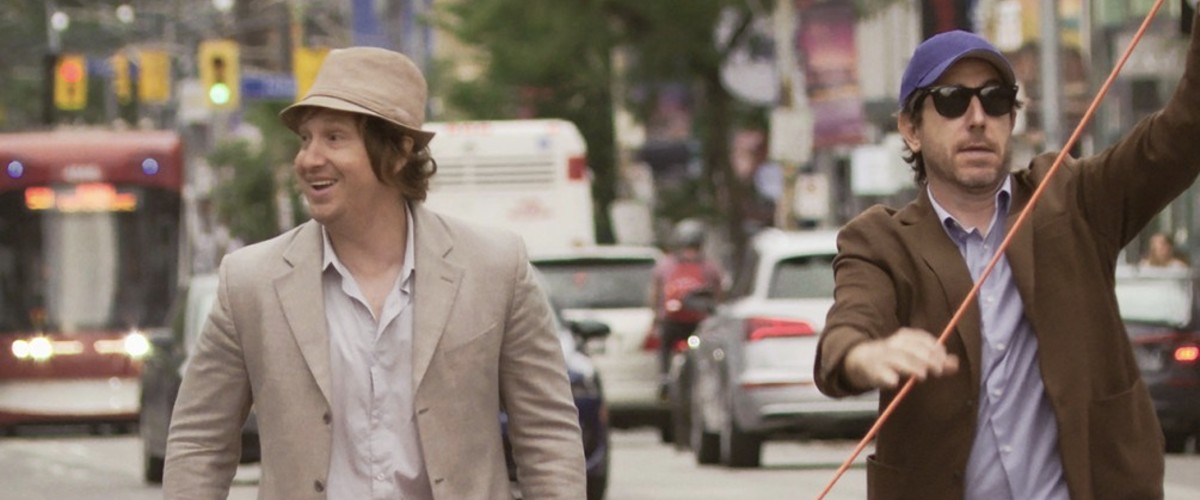
Matt Johnson and Jay McCarrol’s hit movie has so much of what’s missing from modern comedies, but it’s most notable quality may be how easy one can tell that its stars/creators are simply having a blast making it. There’s an infectious quality to comedy that’s unlike any other genre in that the joy of filmmaking comes through in line delivery, character development, and the sheer exuberance of Johnson’s body language. Of course, part of that is the fact that so much of “Nirvanna” was made guerilla style, without people on the street even knowing they were in a movie, and that’s pretty hard to sell with a frown.
“Nirvanna” also says something about a generation that’s been raised online in its very structure. Johnson and McCarrol use footage of their younger selves from the 2007-2009 web series “Nirvana the Band the Show” to craft a “Back to the Future”-inspired adventure/comedy. Forget de-aging, actors in the future will be able to access hundreds of hours of themselves online.
But “Nirvanna” is no mere technical feat or improvised comedy. It’s a deceptively smart and sweet movie about friendship, ambition, and the creative spark that sometimes dies out as we get older. The movie itself is proof that Johnson and McCarrol have lost none of that passion. If anything, it feels like they’re still just getting started. –Brian Tallerico

“Pillion“
It’s appropriate that “Pillion” begins on Christmas. There’s a wide-eyed sense of wonder to this BDSM fairytale’s early scenes: When meek parking attendant Colin (Harry Melling) sees enigmatic biker Ray (Alexander Skarsgård) for the first time, animals practically gather around the tall, chiseled leather daddy like Snow White in an enchanted forest. But slowly, perhaps inevitably, the magic fades, replaced with hard-won wisdom and the maturity to actually try to love someone, not just worship them.
There are upsides to worship, of course: Scenes where dominant and submissive go for rides on Ray’s motorcycle, Colin’s arms wrapped around Ray’s waist and his head resting on his shoulder, are heady and romantic, like a Shangri-Las song come to life. Where Harry Lighton’s adaptation of Adam Mars-Jones’s novel “Box Hill” gets confrontational is in its bold pairing of this starry-eyed adoration with aggressively sexual scenes like the al fresco free-use orgy Ray throws for Colin’s birthday.
Although Ray and Colin’s relationship does end up being unhealthy, the problem isn’t their BDSM power exchange—it’s the lack of balance in their everyday lives. Like Peter Strickland’s “The Duke of Burgundy,” “Pillion” uses extreme sexual dynamics to explore relationships more broadly, forcing us to consider what love means to us in the process. –Katie Rife
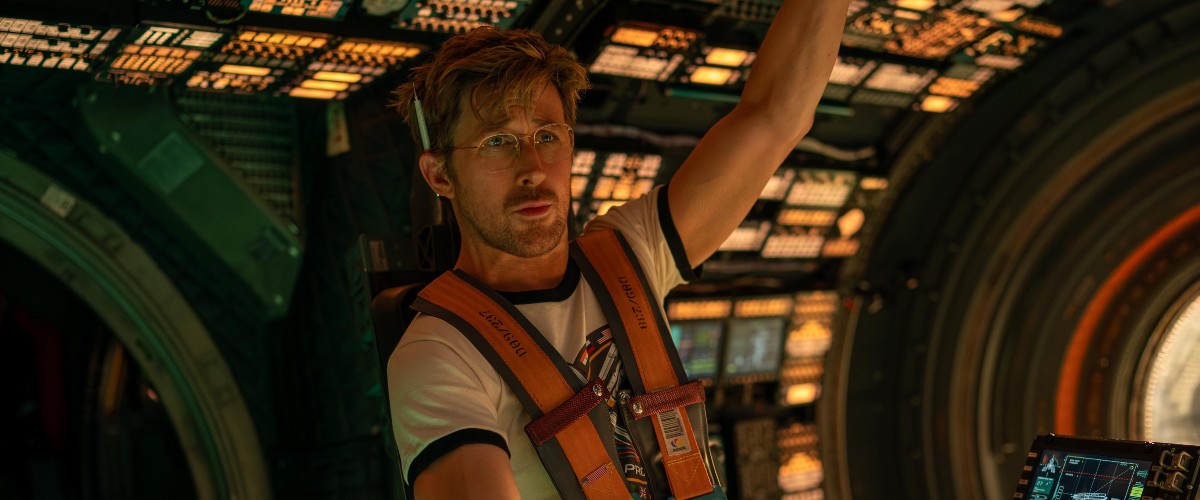
“Project Hail Mary” is everything we hope for in a movie, filled with intelligence, humor, heart, and hope. It also has one of the rarest of qualities in a movie: genuine joy. If we are going to spend much of the run-time with one actor, there couldn’t be a better choice than Ryan Gosling, who is a quintessential American boy-you-wish-lived-next-door hero, with self-deprecating humor, and the superpower of the scientist trifecta: boundless curiosity, problem-solving skill, and extensive knowledge of physics and the organic world. Those three qualities overlap and enhance each other. If curiosity is your foundational mode of thought, there is no room for fear. And knowledge, not panicking, helps a lot with problem-solving.
Then there’s Rocky, the most endearing alien since ET. I do this job because in my heart I believe that movies are the culmination of every art form imagined by humans, the greatest storytelling mechanism ever developed. “Project Hail Mary” makes use of every part of that storytelling capacity, a technical marvel, imaginative and entrancing design, all in service of a film that makes us feel good about the characters, about the people who devoted all of their skill to making it, and about being human. –Nell Minow

One of the greatest cinematic joys in years has been the glorious return of Sam Raimi, proudly strutting back into Hollywood with his first non-IP film since 2009’s “Drag Me to Hell.” Showing absolutely no signs of creative decay, Raimi delivered a piece of pure entertainment, a movie that twists and turns itself around a battle of wills between two characters stranded in the middle of the ocean. Other directors would have taken Damian Shannon and Mark Swift’s wickedly clever script and simply delivered it the form of a predictable streaming thriller, but Raimi made a movie, complete with his undeniable blend of old-fashioned comedy and modern gore. It’s a survival thriller that understands the importance of physicality, which has long been one of Raimi’s strengths.
It helps, of course, to have a pair of performers who completely understood the assignment. Rachel McAdams continues to make the case that she’s the most underrated actress of her generation, as comfortable in horror as she is in drama or comedy. She is absolutely fearless as Linda Liddle, who ends up in the middle of nowhere with her asshole boss, played perfectly by Dylan O’Brien. McAdams and Raimi make so many smart choices here, but one is in how comfortable they are in making us question how much we’re supposed to be rooting for Linda. Is she the hero or the villain? Who cares when a movie is this much fun? –Brian Tallerico

The reason so many critics compared “The Sheep Detectives” to “Babe,” “Knives Out,” and the mysteries of Agatha Christie is that those comparisons were earned. Sure, the elevator pitch sounds absurd and goofy, i.e., a flock of colorful woolen characters investigates the murder of their beloved shepherd, and hey, Hugh Jackman has just the right combination of dashing and crusty to play the shepherd! Yet in the hands of director Kyle Balda and screenwriter Craig Mazin, this becomes a clever, sincere, and at times moving work, with an enormously talented ensemble cast creating a throwback, wholesome adventure that, even with the CGI, feels decidedly and refreshingly old-fashioned. (Saying something is “fun for the whole family” shouldn’t be a turn-off.)
Amid the zany sight gags and the familiar whodunit framework, “The Sheep Detectives” nimbly juggles myriad subplots and backstories about various characters, touching on themes of abandonment, loyalty, and family ties. If anything, the sheep so beautifully voiced by the likes of Julia Louis-Dreyfus and Bryan Cranston have richer and more involving story arcs than the humans. “The Sheep Detectives” ranks with “Babe,” “Charlotte’s Web,” and “Shaun the Sheep Movie” in the top tier of Barnyard Cinema over the last three decades. –Richard Roeper
“Yes!“
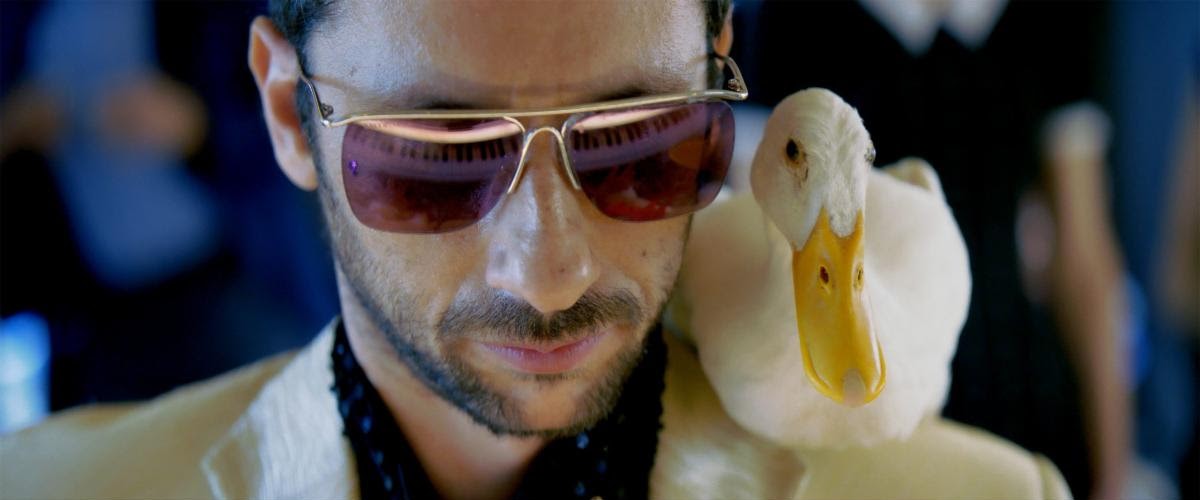
Spiritually grotesque by design—and all the more blistering for it—Nadav Lapid’s indictment of Israeli society’s unquenchable bloodthirst and disingenuous procurement of normalcy is a must-see. The filmmaking is high-energy and absurdist, delivering searing truths through outrageousness. A pathetic musician, Y. (Ariel Bronz), hangs around the elite, eager to exchange his dignity for a chance at upward mobility.
His opportunity comes when he’s asked to work on a propaganda song. As he goes about his day, Y.’s cell phone informs him of the atrocities happening just miles away to the people he’s been taught not to see as equals. At one point, he visits the border, where other Israelis have often gathered for a picnic to watch bombs fall on Palestinians.
It’s not so much that Lapid “criticizes” his fellow Israelis, but that he holds up a mirror, through the lucidity that cinema allows, and reflects onto them the abhorrent ideologies accepted in their bubble of complacency. Even if one allows for the belief that some Israelis may oppose the genocide in Palestine, their continued participation in preserving the status quo speaks louder. And that’s where “Yes!” enters, to dismantle the illusion that individual choices hold little weight within a system of horrors. –Carlos Aguilar