




Key Takeaways
- Junk Teens hit $3 million in revenue in 2025 and is projected to reach $5 million this year.
- The brothers have implemented a series of systems to grow the business and eye future scale.
- Junk Teens also relies on an app vibe coded by one of its teenage employees.
In 2024, when Entrepreneur first connected with brothers Kirk McKinney, 22, and Jacob McKinney, 21, their Greater Boston-based junk-removal business, Junk Teens, was still a side hustle, albeit a $1.2 million one.
The then-teenaged brothers launched Junk Teens back in 2021 with a single pick-up truck. A pair of working speakers found at a dump grew into a collection of resellable items — $1,000 worth — sold on Facebook Marketplace.
Now, the brothers’ largely student-run service, which also serves Cape Cod and Rhode Island, operates eight trucks and has 25 full-time employees. The business has handled an estimated 7.4 million pounds of items, sorting usable goods for donation, resale or repurposing whenever possible.
Junk Teens hit $3 million in revenue in 2025 and is projected to reach $5 million in revenue this year, per the company.
The company also grew its community partnerships. A computer drive with Computers 4 People distributed refurbished laptops and desktops to under-resourced communities, and a partnership with WellStrong on the Cape raised funds for wellness and peer-support programs that aid substance abuse recovery.
Here’s how the McKinney brothers unlocked their blue-collar business’s massive growth — and what’s next for Junk Teens.
Breaking out of the bottleneck
For a long time, Jacob scheduled employee routes and figured out where to dispose of the items they picked up. Managing it all was challenging when the business had a fleet of three to four trucks, just half of what it is now.
“I was working 12 hours a day, nonstop,” Jacob recalls. “So I didn’t really have any more time to try to figure out how to hire someone else or anything like that. Long story short, one of the biggest first things we did was delegate my job position.”
The brothers split Jacob’s role into several different ones, which helped streamline employee bookings and hiring.
“We promoted to manager one of our guys who had been with us for a couple years who was taking a gap year from college,” Kirk adds, “and gave him some of the responsibilities that Jake had, like calling in the employees every day and reviewing the schedule.”
With that in place, Jacob broke out of the bottleneck; he had more time to work with Kirk on building better systems and training, allowing the business to scale.

Taking advantage of technology and AI — including vibe coding
When Junk Teens hit $1.2 million in revenue in 2024, the entirety of the business’s day-to-day operations existed on Apple Notes.
“Then Jake would sort those out and copy and paste those schedules to the guys that were going out every day,” Kirk explains. “That was how we ran our business. It was basically a $1 million side hustle at that point.”
Now, Junk Teens is taking advantage of tech tools. The company uses Jobber for customer relationship management, GoHighLevel for customer data collection and Connecteam for employee management.
The business is also embracing AI in its many forms, from the built-in “slight automation” that makes sense of data across the software programs it uses, to vibe coding its very own app.
A Junk Teens employee who was on the team for several years and had basic tech skills built the app, using Base44 and ChatGPT for a lot of the UI and UX referencing. The app features a leaderboard and other statistics that help track employee performance — for instance, an employee’s revenue per hour or closing rate.
“Our entire app was developed by a teenager,” Kirk says. “That’s another interesting thing — that technology’s at the point where high school kids can create full apps. And our entire company uses that app every single day.”
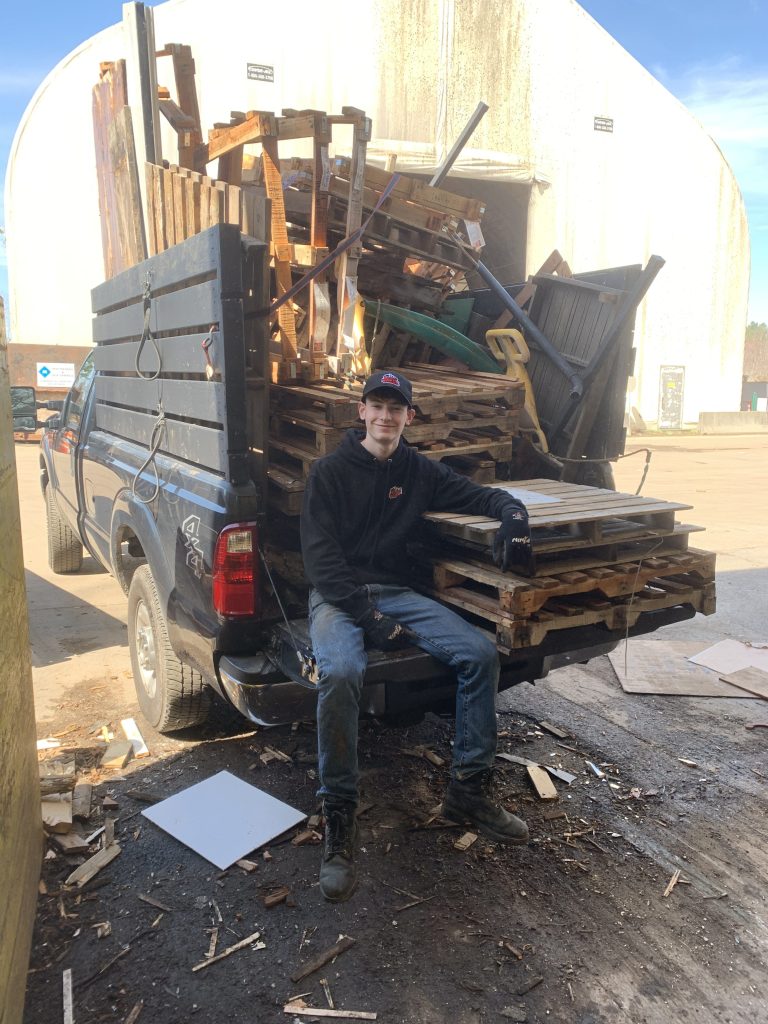
In the early days, Kirk edited content and posted videos on social media when he had the time. But Junk Teens has since systemized its social media strategy too. Now, Kirk collects footage when he’s out on the job, then outsources the editing to help realize his vision.
About eight months ago, Kirk brought other Junk Teens team members on board too.
“ I started training other guys on our team to go out there with Meta Glasses and GoPros and film some of their day-to-day operations and what they’re doing out in the field every day,” Kirk explains. “So now I have all this great content to work with, and then I can kind of be the translator between that footage and the team.”
Currently, Junk Teens has surpassed 213,000 followers on TikTok, 269,000 followers on Instagram and 69,000 subscribers on YouTube.
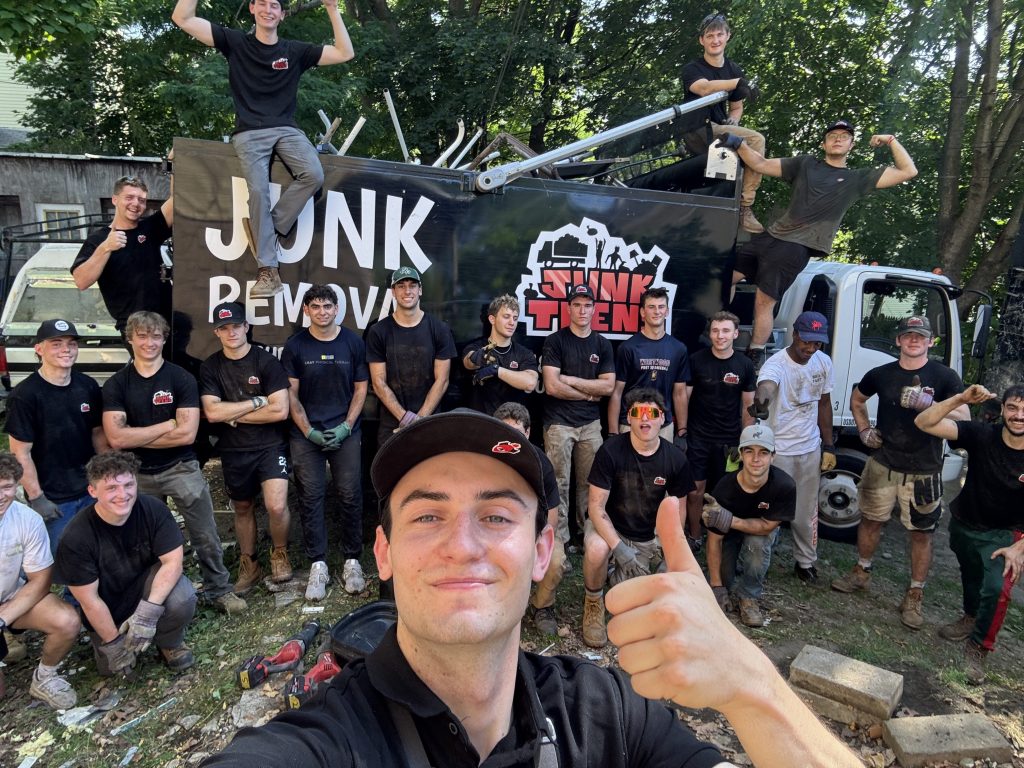
Not only has systemizing Junk Teens’ social media approach helped market the business, but it’s also served as a major team-building tool.
“A company is just a group of people at the end of the day, and when you see yourself in these videos and the social media’s capturing it, you’re a part of that, and it really elevates the culture,” Kirk says. “Then new people see what we have going on here, and it actually attracts more people who want to work with us.”
Cultivating a vibrant culture around a young team
Most of Junk Teens’ employees are high school or college students, and the company aims to pay them more than its competitors to attract top talent.
On average, that pay works out to about $25 to $30 an hour, including hourly rates, commissions and tips.
“A lot of the employees feel like they’re building the company with us because they’re also building their opportunity as the company grows,” Kirk says. “Because of that, we have a lot of forward-thinking people, and I think that us all being young is a part of why that happens.”
Although Junk Teens loses some employees when the school year starts back up, the seasonality of junk removal aligns well with the ebb and flow, and the brothers always plan for it.
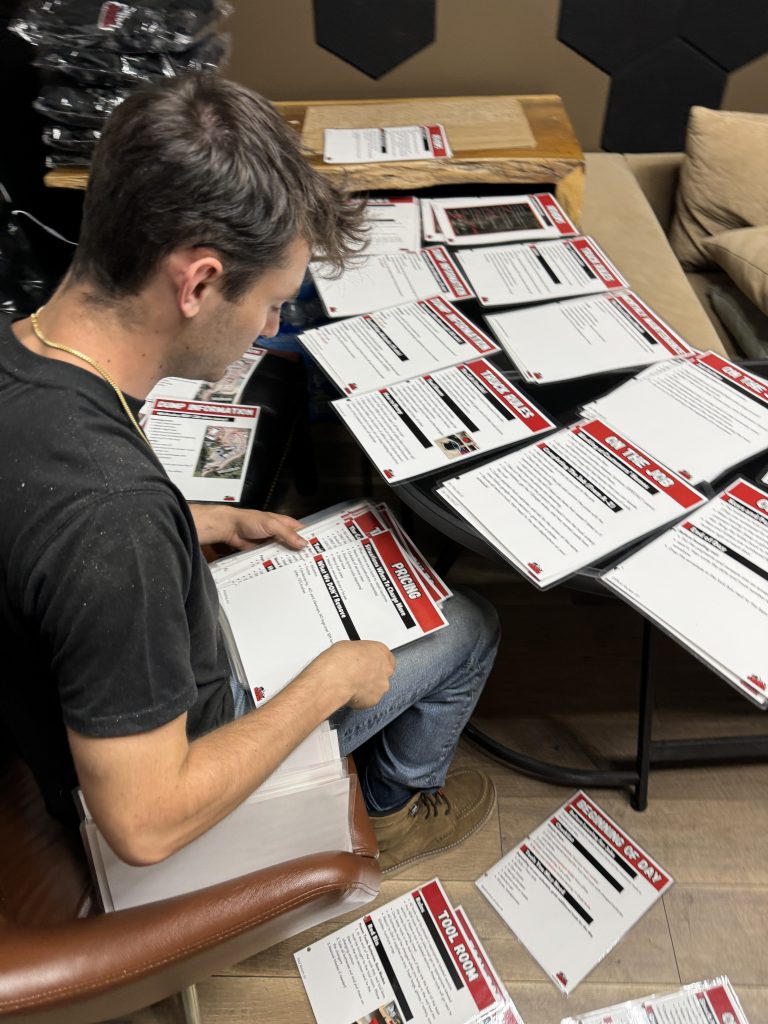
The business’s volume nearly doubles in the summer months; the new Cape Cod location alone booked $350,000 in services during peak season last year.
What’s more, Junk Teens’ young team members bring an open-mindedness and high energy that make for a vibrant company culture, the co-founders note.
“In that scenario where someone had something happen in their life where they might be a little down coming in the next day, they get picked right back up because there’s 10 or 15 other guys that all have high energy around them,” Jacob adds. “It’s impossible to still act sad or down when you’re in that type of environment.”
Perfecting systems for a nationwide scale
Now, the McKinney brothers are focused on perfecting their business’s systems as they eye a national expansion, ideally within the next couple of years.
“ For me, the most exciting thing is empowering the youth,” Kirk says. “With technology, there are so many opportunities to make money. But everyone’s always going to need junk removed. There’s always going to be high schoolers looking for after-school and summer jobs. And young people are looking for different career paths other than the traditional college route.”
The co-founders receive daily DMs from young people asking for advice on starting a business. They would encourage anyone who’s considering it to stop procrastinating and go for it.
“I don’t think there’s ever a perfect roadmap unless you already have $1 million and are a business expert, which we were not, and most people starting businesses are not,” Jacob says. “So start, even if it’s not going to be the business that you retire with. We just started with something that we thought was adventurous and entertaining, not even something that we thought would make us the most money.”
This article is part of our ongoing Young Entrepreneur® series highlighting the stories, challenges and triumphs of being a young business owner.
Key Takeaways
- Junk Teens hit $3 million in revenue in 2025 and is projected to reach $5 million this year.
- The brothers have implemented a series of systems to grow the business and eye future scale.
- Junk Teens also relies on an app vibe coded by one of its teenage employees.
In 2024, when Entrepreneur first connected with brothers Kirk McKinney, 22, and Jacob McKinney, 21, their Greater Boston-based junk-removal business, Junk Teens, was still a side hustle, albeit a $1.2 million one.
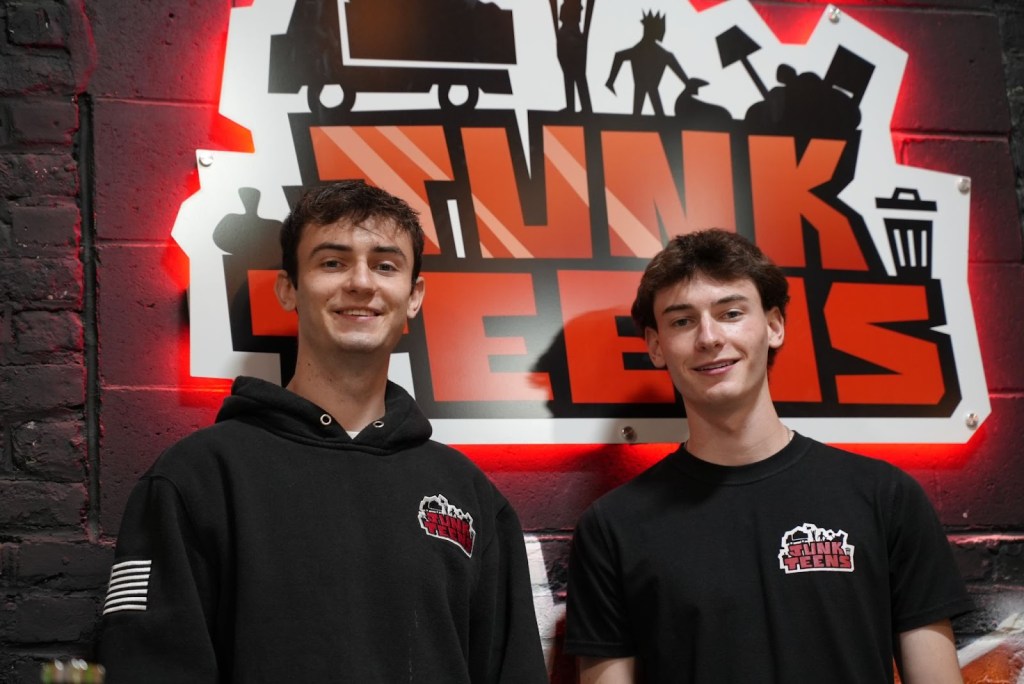
The then-teenaged brothers launched Junk Teens back in 2021 with a single pick-up truck. A pair of working speakers found at a dump grew into a collection of resellable items — $1,000 worth — sold on Facebook Marketplace.
Now, the brothers’ largely student-run service, which also serves Cape Cod and Rhode Island, operates eight trucks and has 25 full-time employees. The business has handled an estimated 7.4 million pounds of items, sorting usable goods for donation, resale or repurposing whenever possible.