




How do you navigate the highs and lows of high school when you also have a terminally ill parent? This is the question at the center of Julia Hart‘s latest musical drama, “Don’t Say Good Luck,” which stars Sunny Sandler (star of the delightful 2023 comedy “You Are So Not Invited to My Bat Mitzvah“) as a young woman navigating this difficult situation.
Writer-director Julia Hart was born with Hollywood in her blood: her father James V. Hart wrote the screenplays for Steven Spielberg’s “Hook” (1991) and Francis Ford Coppola’s “Bram Stoker’s Dracula” (1992). But she still took a long and winding road back to Tinseltown.
After college, Hart worked as a high school teacher for eight years before shifting to screenwriting. She mined her experiences as a teacher for her acclaimed feature film debut “Miss Stevens” (2016), starring Lily Rabe, pre-fame Timothée Chalamet, and pre-“Riverdale” Lili Reinhart, which debuted at SXSW.
Hart returned to the Austin-based festival two years later with the superhero drama “Fast Color” starring Gugu Mbatha-Raw, Lorraine Toussaint, Saniyya Sidney, and David Strathairn. Her neo-noir drama “I’m Your Woman” (2020) starring Rachel Brosnahan made its world premiere at AFI Fest in 2020. Hart has also helmed two romantic teen films for Disney+: “Stargirl” (2020) and “Hollywood Stargirl” (2022), both starring Grace VanderWaal as the titular teen.
Her latest feature, “Don’t Say Good Luck,” reteams her with her producing partner (and husband), Jordan Horowitz, whose credits include the Oscar-winning musical “La La Land” (2016), and brings her into the fold of Adam Sandler’s Happy Madison Productions and its long-standing relationship with Netflix.
Sunny Sandler plays Sophie Birenbaum, a teen looking forward to her high school’s upcoming production of “Waitress: The Musical,” only for her plans to be dimmed by the return of her mother’s medical issues. Hart deftly weaves Sophie’s big teen emotions with those of her family’s drama with ease, never sinking to maudlin melodrama or tacky exploitation. Melanie Lynskey, Max Greenfield, Stephanie Beatriz, Bebe Neuwirth, and Steve Buscemi round out the film’s excellent supporting cast.
For this month’s Female Filmmakers in Focus column, RogerEbert.com spoke to Hart over Zoom about infusing teen movies with real-life emotions, working with her enormously talented ensemble cast, and why there is no one in Hollywood quite like Adam Sandler.
This interview has been edited for length and clarity.
This film is really sweet. How did you balance the big emotions of teenagedom with the big emotions entangled with what’s happening in Sophie’s home life?
The script first came into Jordan’s and my life about three or four years ago now. We ended up all working on the script, but the first draft of the screenplay was by Laura Hankin. It was based on her real-life experience of getting the lead in her high school musical at the same time that her mom’s cancer came back. Also, we actually first received the script when Jordan’s mom had been diagnosed with stage four ovarian cancer, and she ended up passing three years ago, while we were working on the project.
Having Laura’s real-life experience and ours was obviously incredibly informative in terms of the big feelings. Truly, the only way to move through something like that and to survive something like that is with a lot of humor and a lot of perspective. Our north star was wanting the movie to be merciful, full of joy, and not maudlin or heavy-handed. So the key to the movie was that idea of balance.
Sophie’s push-and-pull and her mom’s support of her dream in this movie resonated with me in a way that is really honest to how parents, regardless of what’s going on with them, want their kids to achieve their dreams, even in the midst of something as horrible as facing the end of their life.
And that art is the thing that helps us continue and allows us to find meaning and joy when life feels like it’s too hard or that something too terrible is happening. This idea is that, as sad and as difficult as what Sophie is going through, you know that she’s going to be okay because she has her community and she has the ability to create with that community. That has certainly been the thing that’s gotten me through a lot of the hard times in my life, too.
You have in this film some of the beats you expect from a John Hughes film, but you see those Gen Z and Gen Alpha morals come through. Sonny won’t put up with the guy’s bad behavior. I think even our generation, elder millennials, we would have just been heartbroken and locked ourselves in a closet and cried. I love that we’re seeing teenage girls stand up for themselves in movies now. Can you talk about bringing teen film tropes into modern times?
I was a high school teacher for five years, and I absolutely loved it. I loved the relationships that I developed with my students. I was pretty young at the time. I was 25 when I was teaching 17- and 18-year-olds, and of course they were looking to me for the answers, yet I was still figuring it out. It was an incredibly important and special time in my development and my growing up. I felt like they were teaching me as much as I was teaching them. I also choreographed the high school musical when I was teaching English.
So while working on this film, I actually went back to the school where I taught before we started shooting, and I sat in on the after-school rehearsals for their musical. It was really special to be back there.
For me, creating stories and telling stories that contain characters who, as you said, exist in the common tropes and plots that we expect from movies about teenagers, but showing them that there are different ways to handle things or different outcomes. Part of it is inspired by the relationships I had with teenagers in my first career, but also by wanting to show aspirational ways to show up for themselves and each other.
Speaking of the musical, was “Waitress: The Musical” always the musical in the script?
Laura Hankin had put “Waitress: The Musical” in her screenplay as a placeholder. She wanted to write an original musical to go along with the script, but she was using “Waitress: The Musical” to show how the musical would exist within the film.
Then, when Jordan first read the script, he said to Laura that it should be “Waitress: The Musical” because it’s so perfect. She then said she secretly really wanted to use it the whole time, but didn’t know what the rights situation would be. So that was hers from the beginning, and I think it’s so brilliant. She did such a good job of weaving the story of the musical and the music into Sophie’s life, her world, and what she’s going through.
In the “Stargirl” films, music was also such a big part as well, and then obviously “Miss Stevens” was inspired by your time as a teacher. Why do you think you continue to be drawn to these films about creative kids going through a lot? So many of your films focus on that aspect of coming of age.
I think we’re all still that creative kid going through stuff and trying to figure it out. I feel really seen by those movies, and I love it when young people tell me that they do, too, and that other adults can relate to it, too. There’s something so elemental and so magnetic about a coming-of-age story. Even though Sunny’s character, Sophie, is a teenage girl, I think if you’re doing a good job, everyone can feel seen by her journey and her discovery as she is learning, screwing up, and figuring it out. As I said, as a former high school teacher and now a mom, I love what young people have to say and to teach us.
And honestly, the thing that I feel most proud of is when a young person tells me that a movie of mine made them feel seen, or that they learned something from it, or that they got something from it. Because I do think that so many adults telling those stories get it wrong, as you said, and fall into the cliché, or they make it completely dark and edgy and maudlin. I really try to create these worlds that feel authentic and these characters that feel authentic for young people, but again, I think anyone can connect with them, too.
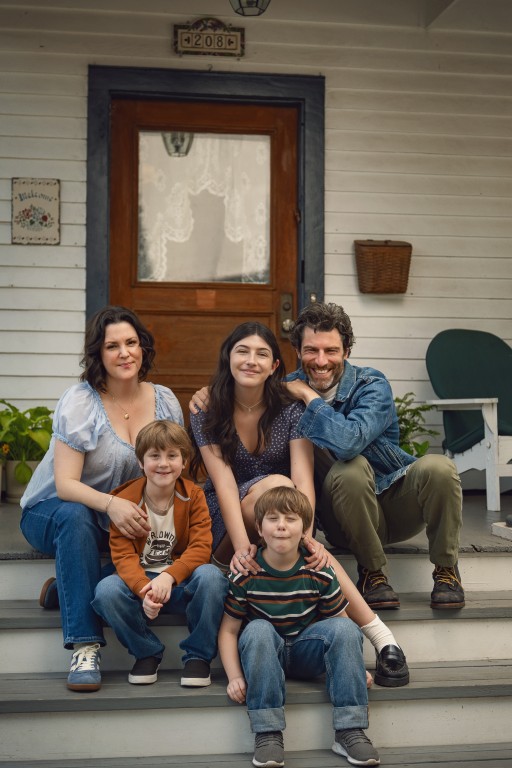
With this film, you also have interesting adult dynamics, like with Sophie’s mom, played by Melanie Lynskey, and her own mother, played by Bebe Neuwirth. They clearly have very different ideas of how to parent. So you end up with sort of three layers of how people process things, and specifically how women process things. Can you talk about crafting a family unit with Bebe, Melanie, and then Sunny?
Melanie Lynskey was my first and only choice for Elizabeth. She was the one for me, and thank God she said yes because I really couldn’t imagine anyone else in the role. She’s just so extraordinary. And then Bebe Neuwirth was literally my hero when I was growing up. I actually dressed as her in “Chicago” for Halloween one year when I was in high school.
Then Sunny is literally hands down one of my most favorite actors I’ve ever worked with. She is so talented and so special and so hardworking. So juggling these three generations and these three stories and these three different perspectives was great because I had such incredible star power from mother to daughter to granddaughter. It was amazing.
And then you have Steve Buscemi playing a grandfather!
This was his first time playing a grandfather.
I loved the way the relationship between him and Sophie slowly revealed itself as well. Was that something that was always in the script?
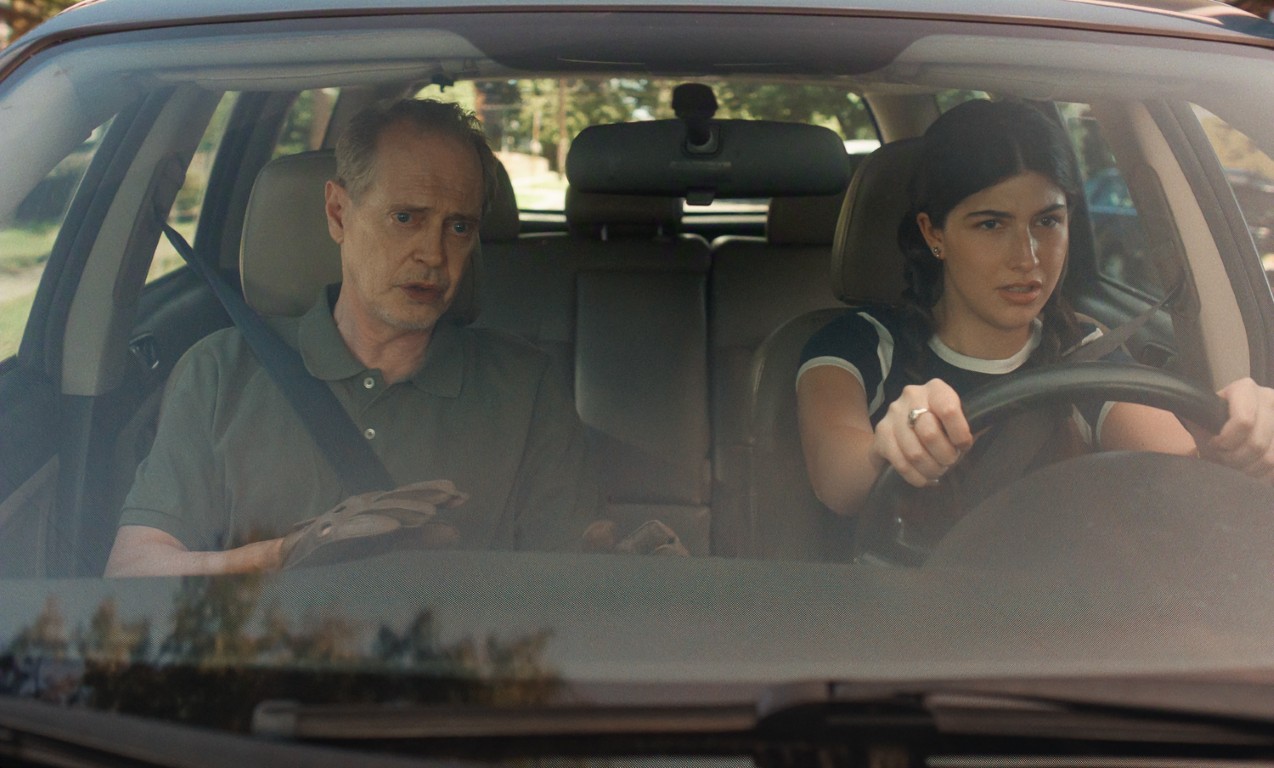
It was always in the script, but the grandfather in the original script was a smaller character. When Steve Buscemi signed on to do it, who has known Adam [Sandler] and Sunny forever and worked with them a bunch, we knew we needed to do more with the character. So there were some newer scenes once he was cast because we really wanted to deserve and earn the fact that he was playing this character. A lot of those scenes were written explicitly for Steve, which is so cool.
He’s one of those actors that it doesn’t matter how big the role is, it doesn’t matter what the film is, he brings so much of himself to every role.
He’s so wonderful, and it was such an honor to work with him. He’s so lovely, and as you can imagine, such an incredible presence on set. He brings so much pathos even to those little moments.
Adam Sandler’s been a producer now for at least a decade with his company Happy Madison and these films that he’s been making with Netflix. How did this film end up with Happy Madison?
Olivia Blaustein, who was our agent at the time, although she’s now a manager, brought Laura’s script to Jordan and me, and then it was her idea to go to Sunny. She’s really the magic fairy dust behind all of this. We thought it was a brilliant idea, because we had seen Sunny in “You Are So Not Invited to My Bat Mitzvah.” So we went to her first, and we had this wonderful meeting. I’ve spent a lot of time with a lot of teenagers, and she’s an amazing teenager, truly. After she was attached to the movie, Adam said he wanted to come on and produce with us and take it to Netflix.
Working with him, he was like my entire bucket list. He and Laura Dern. There’s a reason he is one of the most beloved and prolific storytellers and characters in our entire industry. He is so special, and there’s no one else like him. He was involved from start to finish in every aspect of the filmmaking. I feel so privileged that I got to learn so much from him. He worked with us on the script. He’s super involved in casting. He’s on set every day. He’s in the edit room every day. He helped choose our first look image and worked on the poster and the trailer. He cares so much and is so detail-oriented. And, of course, he wrote some of the funniest jokes in the movie. But he also wrote one of the most heartbreaking lines in the movie.
He starts from a place of family and works with his family. Jordan and I also start from a place of family. So bringing our two families together was incredible. His wife Jackie [Titone] was also a producer on the movie. She’s incredible. Working with Happy Madison was a really unique and special experience. It was this one big happy family.
This is your sixth film as a director, and you are about to make your seventh film in just about a decade. It’s unfortunately very rare for women to get so many films made and off the ground so quickly. What has it been like in this tough industry, getting to make seven films, and really keeping your voice throughout them all?
It is crazy, and it’s also crazy because there was a four-year break there during COVID and the strike and all of the shifting of our industry. I made my second Disney movie [“Hollywood Stargirl”] in 2021, and then didn’t make another movie until “Don’t Say Good Luck” here in 2026. I feel like I should have made even more by now.
This industry is hard, especially for women; it’s even more of a challenge. It’s hard getting a movie made. Period. As the industry is changing, it’s only become more and more rare. There was a minute where so many streaming movies were being made by all of these different companies, and that’s obviously changed.
I think for me, though, being a writer and always writing to make something has been helpful. There are spaces in our industry where people are writing to write, and I think I’m always writing to make. I think that has a lot to do with it. I think about what people are looking for, and I keep budget, realism, and production in mind when I’m writing. I try to stay really focused on getting things made.
Also, building relationships is important. We have a really special relationship with Disney. We made several movies with them. We’re developing something else with them now. I am really grateful that we had this experience with Adam where he brought us to Netflix, and now we’re making another movie with Netflix.
Also, not for nothing, I happen to be married to who I think is one of the best young producers. He’s just so driven and works so hard to bring these movies into fruition. So I’m incredibly lucky. I tell any filmmaker who’s going to work with him that they’re lucky to have him in their corner because he fights for all the right things, pushes things through, and gets the movies made.
Are there any films directed by women that have inspired you as a filmmaker, or just that you think are really cool and maybe not enough people have seen?
Elaine May was very formative for me, and also Nora Ephron. I’m about to go make my first rom-com, so I am revisiting all of her work. Also Nancy Meyers, as a writer as much as a director, is such an inspiration to me. “Baby Boom” is one of my favorite movies. For Nora Ephron, “Heartburn,” and then Elaine May, like literally everything: “A New Leaf,” “Mikey and Nicky,” “Ishtar,” “The Heartbreak Kid.” I just think she’s incredible.
Her movies get funnier every time you watch them because she’s so smart that there’s just something else you notice every time you rewatch her films. Solely as a screenwriter, too. “The Birdcage” is one of the funniest movies ever written.
Those are all women who are also writers, and that is part of what inspires me so much about them: they were creating their own stories at the time when that wasn’t very easy. It’s still not easy now; I can’t even imagine how they did what they did back then.
What do you hope people will take from this film into their own lives?
I hope that it can show them, remind them, or teach them, if they don’t already know it, that art and having a personal outlet for whatever you are going through is so important. In Sophie’s case, obviously it’s singing and performing. A creative outlet can help you get through anything. I hate when people say, “It will get better” or “You will get through this,” although you can get through this, and it can get better, especially if you look to your community and you look outside of yourself and find that outlet that can quite literally save you.
On my sets I talk a lot about how important safety is to me, and I used to say “We’re just making a movie. It’s not a war zone. It’s not an emergency room. Everybody can move slowly enough that everybody stays safe.” But then I think about that episode of “The Studio” where Seth Rogen’s character says, “We are saving lives, you know.” Obviously, safety is still incredibly important to me on my film sets, but it really changed my perspective. I’ve had people reach out to me over the years about my film.
A few people told me that certain films of mine quite literally saved their lives or made them hesitate in whatever demons they were dealing with. I think that’s a really important thing to remember: Yes, we are not doctors in an emergency room and we are not soldiers on a battlefield, but there is a place in the world where art can truly make a difference. So, I hope that is something that people feel when they watch this film.