




When it comes to television, NCIS: Origins is quietly taking the crown for some of the best character work across broadcast and streaming because it doesn’t spend time telling you who matters; it proves to you everyone does.
The series has been a breath of fresh air for broadcast television, somehow putting its own unique spin on the offbeat, procedural approach and proving that formulaic television can still be compelling.
But most importantly, procedural television can still tell some of the most human, poignant, layered, and compelling stories centered on rich characters.
It sounds silly, I’m a writer and all, but when it comes to NCIS: Origins, I can rarely find the right words to describe why it resonates so much or how profoundly striking this series is.
In a sea of television that aims for safe redundancy across broadcast, empty edginess across cable, and temporary buzziness across streaming, Origins is unique, a rare feat these days. It’s also one of the most underrated shows currently airing.
And much of that is because of the thoughtful, careful, introspective writing and its ability to treat characters like the main event and draw.
The stories flow around the characters rather than the characters themselves falling victim to whatever plots the writers come up with next.
When you stop and reflect on that, you realize how something so simple is actually complex, and that a tactic that seems like it should be a universal approach to script-writing, actually is far from it now.
I’ve said it before, but the fascinating thing about NCIS: Origins is that there is no such thing as small, minor, or insignificant characters.


The series treats characters like we treat people in our lives — with that niggling thought in the back of your mind that the person across from you is so much more than just a fleeting face in your story, that everyone is a main character in their own.
It’s how the series can devote an entire episode to a canine and produce some of the most emotionally satisfying writing of a series.
Or how a seemingly random confidential informant can instead unfurl a beautiful story about the connection that we can all relate to.
Maybe when you first tune into the series, you’re left wondering if Gibbs or Mike Franks is the “true star” of the show, but once you stick around long enough, you realize that the complexity of the human experience is at the center of this series.
And thus, that’s how characters who, on any other series, would be nothing more than a footnote, a placeholder, or some fixture merely there to regurgitate lines and push forward plots, instead, on Origins, serve as the most underrated or unsung heroes.
Truthfully, the series has a handful of them. In time, we quickly realized that Mary Jo was the heart of the show. Kowalski very much feels like the series spine.

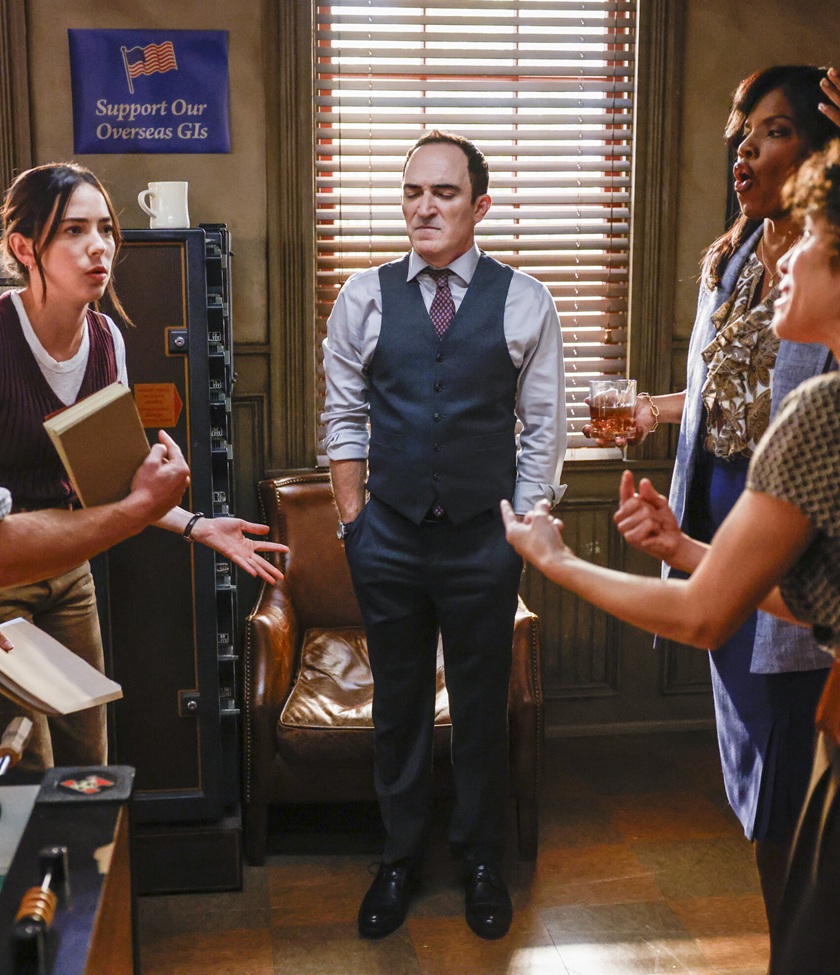
And then you have Cliff Wheeler. He’s nestled into the series in such an unassuming way that you don’t typically pay him much mind.
Then, one day, you realize, he’s NIS’ secret weapon.
And a show filled to the brim with complex characters, Wheeler is the most profoundly layered of them all. Every peek inside his world gives us more insight into one of the series’ most powerful players.
Somewhere along the way, he became one of my favorites of the bunch, just because he’s so fascinating. He’s a collection of contradictions, quirks, and intricacies cobbled together and buried beneath a suit.
One of the most interesting elements about Cliff is how he’s constantly standing between two worlds.
It’s Wheeler who stands in the space between the higher-ups and the rest of the team, often shielding the latter and allowing them to work as they do.

Franks’ team is such an unusual bunch, with each member being an “acquired taste” and unorthodox in their own right for a fledgling agency trying to get recognition and respect.
If NIS is the circus, with its merry band of misfits, Wheeler is the ringleader, often burying his own eccentricities and masking well enough to make their case in front of formal circles.
And masking is something that Wheeler does incredibly well. The slow revelation that he’s a queer man in the 90s, hiding in the closet lest he lose his job and standing, is just one of many fascinating elements of this character.
Wheeler possesses a chameleon-like quality that makes even his quieter scenes stand out, but it aligns perfectly with a man who cannot always fully be his true self in all aspects of his life, so he adapts and adjusts accordingly.
The irony of Wheeler having to hide this crucial aspect of himself is how it simultaneously functions as one of his great strengths.


He joked that he’s always been “scrappy,” and presumably, much of that has to do with people testing the waters to see how far they can push him because he’s smaller. But some level of hypervigilance and an intuitive quality stems from those challenges.
Wheeler reads people incredibly well.
As annoyed as he often acts about Mike and his team, he’s also the man who looked at Mike, a lost veteran in a leather jacket getting emotional over a dog, and knew that he had what it takes to be a great cop and investigator, and he was right.
For the most part, Wheeler’s inclinations about people and how they tick are spot on.
It potentially alludes to this unspoken acknowledgment of his own experience in life, having to be extra vigilant and cognizant of the people around them, how they function, and what threat they pose.
Wheeler is such an authoritative figure, and NCIS: Origins Season 2 Episode 17 showcased that well. He can command a scene, take charge, and have the authoritative confidence and skills of three men.

He knows how to demand the respect of those around him when necessary, which suggests the moments where he plays it small, unassuming, and as if he’s not much of a threat to others are intentional and calculated.
Wheeler likes being underestimated because he can thrive there, manipulate situations in his favor best that way, and work his magic for the greater good within that space.
Navigating the “Boys Club” and these toxically masculine spaces that are the military and police forms alike during the 90s is no easy feat.
For Wheeler, he knows his strength is in those same men, most of them with great power, is in not posing an obvious threat.
So he finds his clever workarounds. Wheeler learning how to navigate a toxic, patriarchal, sexist, and homophobic system has been his quiet way of actually fighting against it. We see that in little moments throughout the series.
His efforts to help and protect a gay soldier caught up in an investigation, while still keeping his own secrets and not putting his neck out too far, in NCIS: Origins Season 2 Episode 7, is a perfect summation of how Wheeler functions within the system.

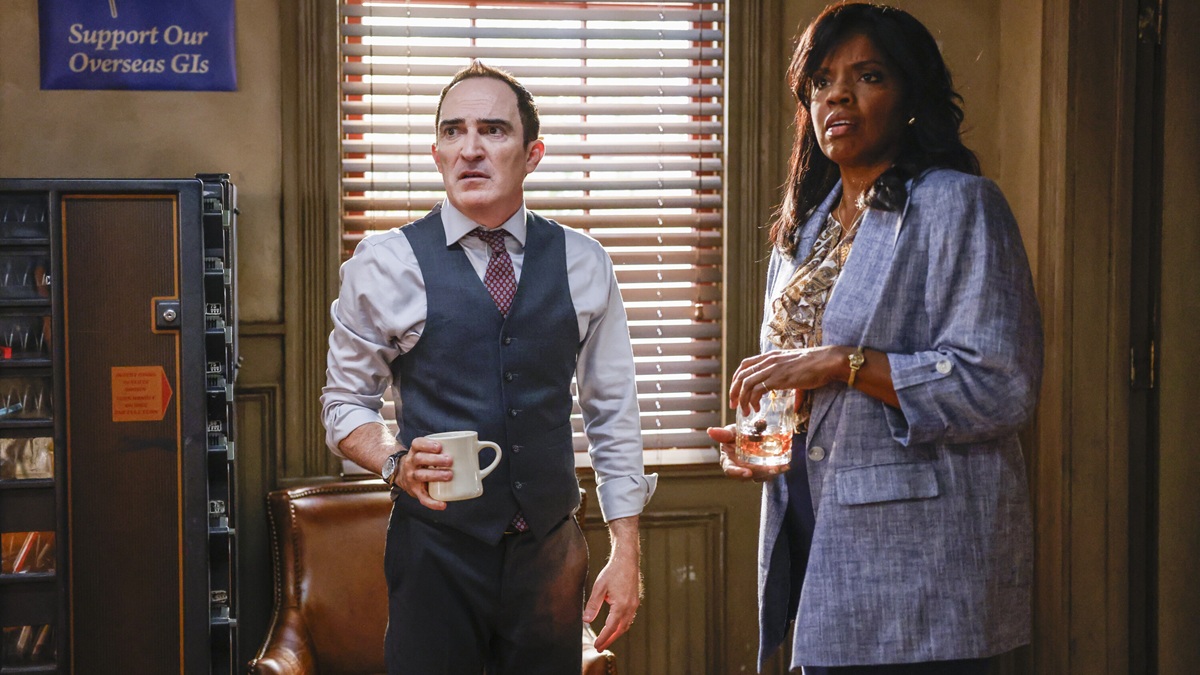
And part of him finding a way to save Mary Jo was reading between the lines with the secretary, pinpointing the sexual harassment situation, and using that to take down a man he already loathed to save not only his friend but also protect other women, too.
Even the layers of what he juggles as a family man whose marriage fell apart because he couldn’t keep pretending, invite curiosity and intrigue rather than full-on judgment.
There’s nothing in life he loves more than his son, and a desire to lead him down the right path drives him as much as anything else. It’s also something that he went from holding close to the vest to confiding in others about.
What’s always fascinating about Wheeler is that what he shares and doesn’t with those around him is all carefully curated. He’s a man who understands the importance of image and what you need to project for any situation.


But he’s also a man who doesn’t often get to be vulnerable, which is why the slow softening of him as he finds moments with characters like Mary Jo, Mike, and even Gibbs only adds to the general intrigue of this character.
What makes Wheeler so compelling isn’t just who he is but how he exists within every space he occupies.
He is constantly observing and deciding when to step forward and when to disappear.
It’s standard to reward the loudest voices or the flashier characters, but Wheeler is such a powerful character because he knows he doesn’t have to be any of that.
Wheeler may not be the most ostentatious character on NCIS: Origins, nor the most immediately magnetic. He’s not at the center of the story, and he rarely demands attention.

But that’s exactly the point.
Because when you step back and look at how this world functions, how the team operates, how the series clicks into place and works: Wheeler is the glue holding it all together.
The series is built entirely on the idea that there are no small characters, and Cliff Wheeler stands as the ultimate proof. He’s not just one of Origins’ most underrated figures, but he’s one of its most essential and riveting.
Am I alone in my love for Cliff Wheeler? Are you as obsessed with NCIS: Origins’ character writing as I am? Let me know below! Where are my Wheeler Fanatics at?

NCIS: Origins is delivering some of the best character work on television, and its primarily because every character matters, including its most underrated but riveting key player.
CBS is cutting back NCIS: Origins and NCIS: Sydney in the name of “more” content, but shorter seasons just mean less of what we love.
From Chicago PD and NCIS: Origins to Will Trent and more, these Characters of the Week we can’t stop thinking about.
Wheeler commands a crisis on NCIS: Origins Season 2 Episode 17, while Lala and Gibbs face another roadblock!
Papa Gibbs comes into town, forcing Gibbs to face difficult realities on NCIS: Origins Season 2 Episode 16, things shift with Diane and Lala.


TV Fanatic is searching for passionate contributors to share their voices across various article types. Think you have what it takes to be a TV Fanatic? Click here for more information and next steps.