




“NCIS” was a backbone of the CBS programming lineup throughout much of the mid-2000s. However, longtime fans might be surprised to learn that the Navy procedural was not an instant hit from the start. A single cable network played a major role in how “NCIS” reached its enviable position in the CBS lineup. The Hollywood Reporter‘s oral history of the show chronicles how far “NCIS” has come since 2003. The creative minds behind the series give credit to USA Network for putting wind in the show’s sails early on.
Former CBS Entertainment president Glenn Geller spoke with THR about “NCIS'” rise through the TV ranks. The executive admits that “NCIS” wasn’t fully formed when Donald P. Bellisario and Don McGill’s series made it to air. The network allowed the “JAG” team to try their luck in a slightly different arena. There was still an acclimation process for “NCIS” early on. Geller explained, “I wasn’t surprised when the series ended up on the air, but I don’t think it was really ‘NCIS’ in its first season. It took a couple of seasons to really become something.” Once that threshold was reached, however, it was full steam ahead.
USA Network helped boost NCIS into the upper ratings tier

A lot of TV shows go through a process of finding their footing before audiences realize what the network is putting in front of them. That process is very similar to what happened with “NCIS.” The first few seasons of the procedural saw the larger group dynamics start to gel into place and get people used to Mark Harmon as Leroy Jethro Gibbs. As is often the case in television, more exposure is usually a good thing. USA Network’s decision to begin airing “NCIS” reruns around Season 3 altered the show’s trajectory for good. Series executive producer Mark Horowitz told THR that having another channel distribute the show significantly raised the ceiling for what “NCIS” could achieve.
“At the end of their third seasons, both ‘JAG’ and ‘NCIS’ were sold to USA Network, where they started running them 24 hours a day,” Horowitz recalled. “That’s when the network ratings went up, and we moved up to this No. 1 position.” It could be argued that cable audiences became hooked on existing episodes and wanted to continue following these “NCIS” characters. A lot of the time, cable networks use existing series’ audiences to help bring new viewers into the fold. In this case, “NCIS” benefited from the reverse effect.
USA Network reruns strengthened NCIS
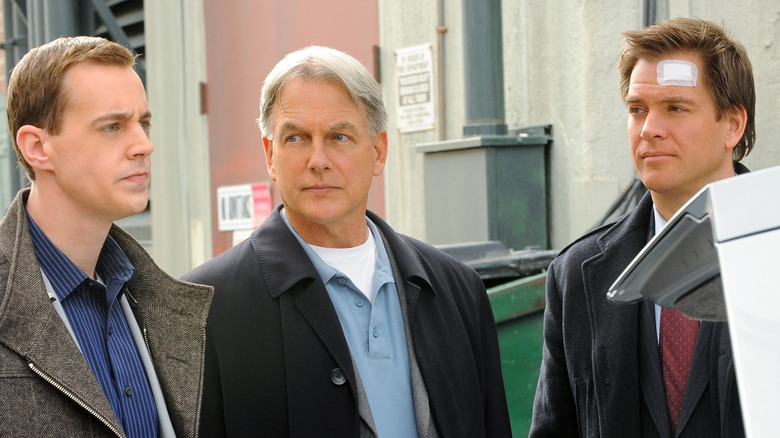
It’s easy to point to the success of “NCIS” after moving to USA Network as a case of just flooding the airwaves with a show. To the show’s credit, it has maintained its popularity over time. In fact, “NCIS” and some of the spinoffs are still running on Paramount+. Simply put, that doesn’t happen very often for shows without an absolutely rabid fan base. For Bellisario and the rest of the team, that ratings success quieted some of the skepticism they faced after “JAG.” Launching a new series after a behemoth hit can be a nerve-wracking experience for a creator. But the producers had faith in what they were putting out, as long as the audience could find it.
“I didn’t realize [that it was a hit] for a while, but when I did, it was a great feeling,” Bellisario revealed to The Hollywood Reporter. “I shouldn’t say it was surprising because it was a good show, so I knew it would do well, but I was a little bit surprised by it.” Some of that may well be the truth. Bellisario and the “NCIS” brain trust had enough faith to submit the show to CBS in the first place. That is different from being embraced by an audience that extended well beyond the initial broadcast viewers.