




Between September 1916 and April 1918, the “Red Baron” shot down 80 enemy planes, making him the top flying ace of World War I.
Public DomainManfred von Richthofen, better known as the Red Baron, circa 1917.
In 1912, a young German man named Manfred von Richthofen enlisted in the Prussian Army. Five years later, he became one of the most legendary pilots of World War I, earning the nickname the “Red Baron.”
Within just 19 months, von Richthofen shot down 80 enemy aircraft, making him the top flying ace of the war. His bright red Fokker triplane became an icon in the skies above Europe — but it also made him a target.
He was wounded in combat in July 1917, suffering a severe head injury that left him struggling with headaches and nausea. But he was determined to return to the skies, so after a short convalescent leave, he returned to action.
Then, on April 21, 1918, von Richthofen was shot down over France. By the time witnesses arrived at the scene of the crash, the Red Baron was dead.
Manfred Von Richthofen’s Life On The Ground
The man who would become the Red Baron was born into an affluent Prussian family of nobles in Breslau — a city in the German Empire that’s now part of Poland — in 1892. His father was in the Prussian Army, so both Manfred and his younger brother, Lothar, followed him into military service.
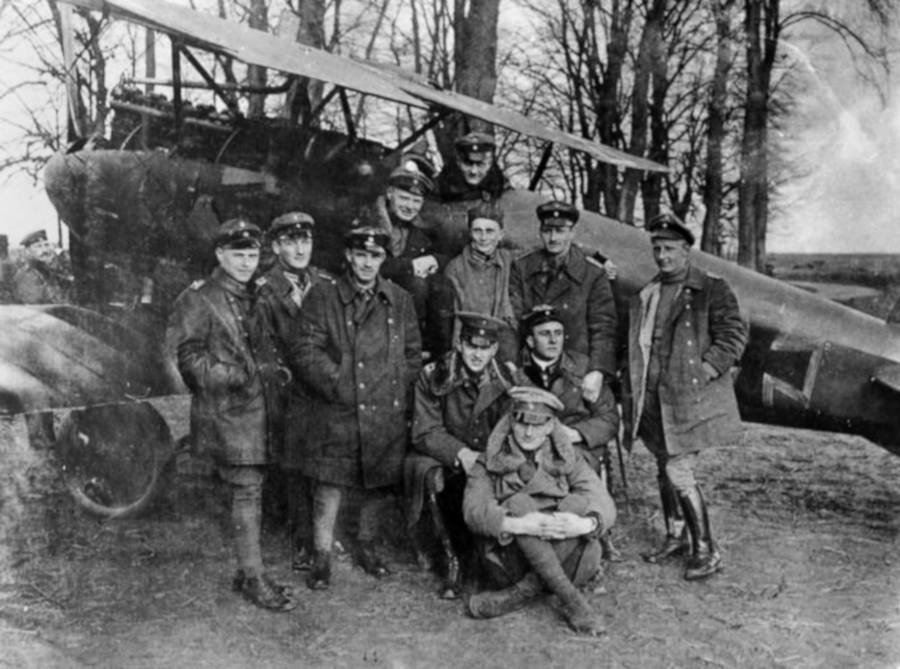
German Federal ArchivesManfred von Richthofen with members of his Jasta 11 unit. The Red Baron is in the plane’s cockpit, and his brother Lothar is sitting in front of the group.
Von Richthofen began attending military school when he was 11, and by 1912, he was a member of the Prussian Army himself. He was initially part of the cavalry, and when World War I broke out in 1914, he served in several reconnaissance missions in Russia, France, and Belgium. But trench warfare soon made the cavalry obsolete.
Bored with his new assignments — operating field telephones and working with the supply branch — Manfred von Richthofen applied for a transfer to the Imperial German Army Air Service. He reportedly wrote that he didn’t join the military “to collect cheese and eggs.”
His request was granted. By June 1915, he was riding along on reconnaissance missions, and by October, the future Red Baron had started training as a pilot himself.
Becoming The Red Baron
Manfred von Richthofen shot down his first confirmed enemy plane on Sept. 17, 1916. He placed a stone on the Englishman’s grave — and then ordered a silver cup engraved with the date of the kill and the type of plane he’d destroyed.
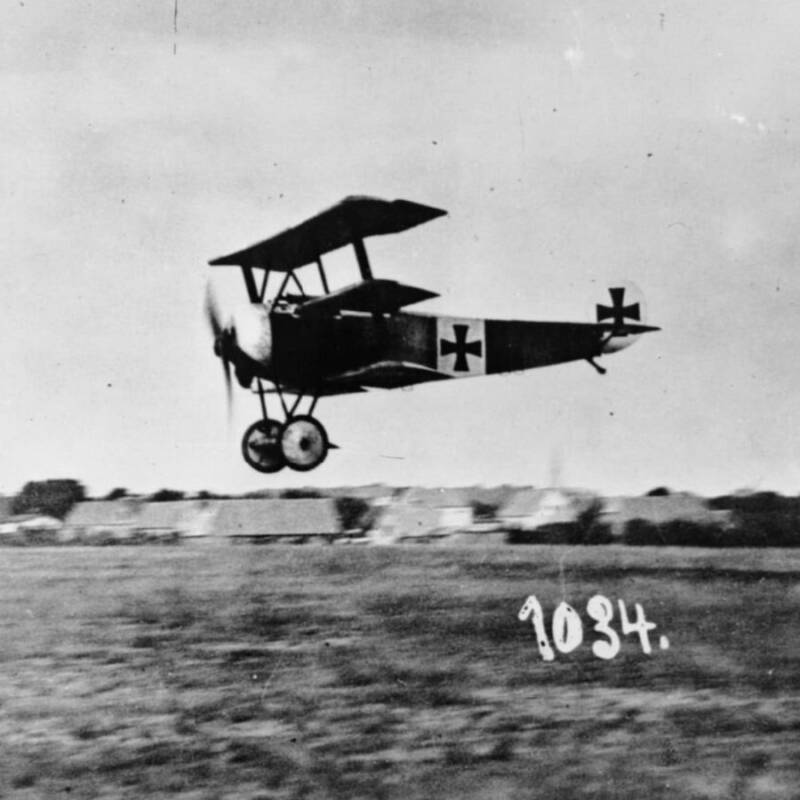
Imperial War MuseumsManfred von Richthofen landing his triplane.
He spent the rest of the year perfecting his technique. Von Richthofen tried to use the Sun to his advantage, keeping it behind him whenever possible to conceal his plane from the aircraft he was pursuing. By New Year’s Eve, he’d shot down 15 more enemies.
In January 1917, he was awarded the Pour le Mérite, or the Blue Max, Germany’s highest military honor at the time. He was also assigned to command the fighter squadron Jasta 11. It was at this point that von Richthofen first painted his plane bright red — and became known as the Red Baron.
According to Peter Kilduff’s biography Red Baron: The Life and Death of an Ace, von Richthofen’s mother once asked him why he risked his life as a fighter pilot. He reportedly responded, “For the man in the trenches. I want to ease his hard lot in life by keeping the enemy flyers away from him.”
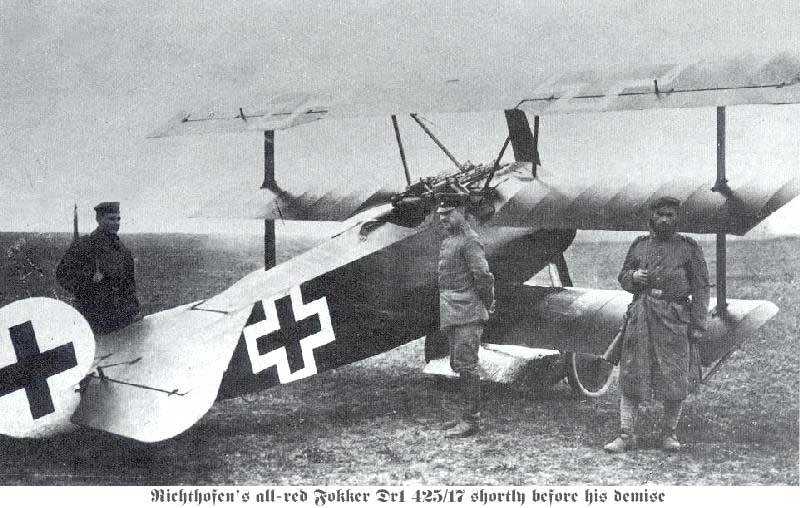
Public DomainThe Red Baron’s distinctive Fokker triplane.
The following months were among the deadliest in the Red Baron’s career. In April 1917 alone, he shot down 22 planes, including four in a single day. He was promoted once more, this time to lead a larger fighter wing called Jagdgeschwader 1. Many of von Richthofen’s men started painting their planes in bright colors, too, and the unit became known as the “Flying Circus.”
As von Richthofen wrote in his 1917 autobiography:
“I would say that all the machines of the squadron had been painted red because our English friends had by-and-by perceived I was sitting in a blood-red band-box. Suddenly there were quite a lot of red machines and the English opened their eyes wide when one fine day they saw a dozen red barges steaming along instead of a single one. Our new trick did not prevent them from making an attempt at attacking us. I preferred their new tactics. It is better that one’s customers come to one’s shop than to have to look for them abroad.”
On July 2, 1917, von Richthofen secured his 57th confirmed victory. Four days later, the Red Baron’s reign nearly came to a violent end.
The Head Injury That Changed The Flying Ace’s Life
While flying above Belgium on July 6, the Red Baron was wounded in the head during combat. He was temporarily blinded, but he managed to land his plane in a nearby field. He needed several operations, but he returned to the skies against his doctor’s orders less than three weeks later.
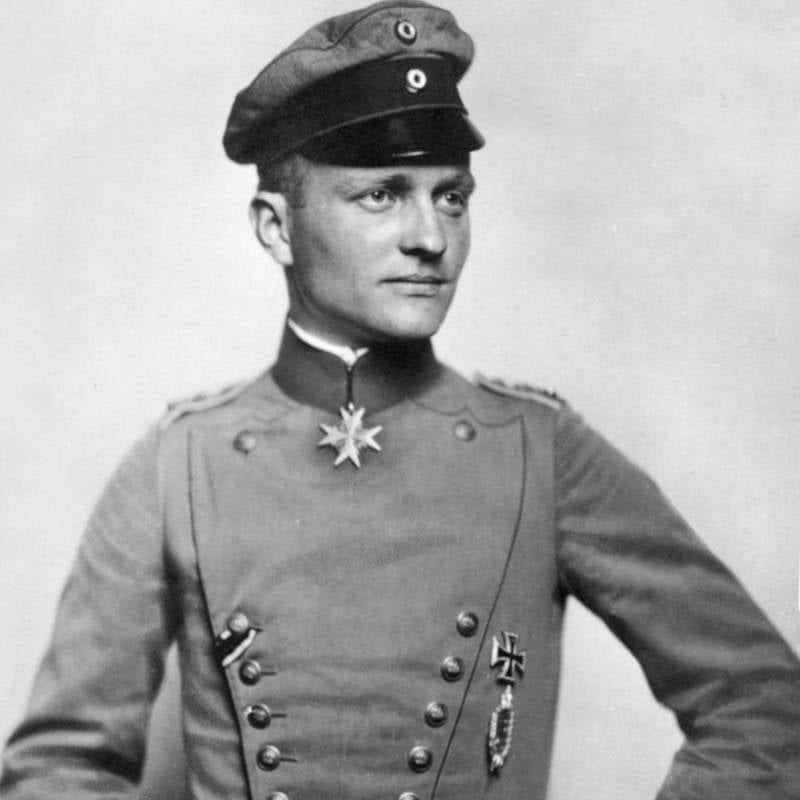
Public DomainManfred von Richthofen on a German picture postcard, circa 1917.
He started experiencing nausea and headaches while flying, and his behavior seemingly changed, too. He eventually took convalescent leave from September to October 1917. He was as deadly as ever upon his return, though, shooting down 19 more enemies between November 1917 and April 1918.
Then, on April 21, 1918, the Red Baron took off on what would be his final mission. While flying near the Somme River in France, he witnessed a Canadian plane piloted by Wilfrid May fire at his cousin, Wolfram von Richthofen. The Red Baron intervened, chasing May away from Wolfram and pursuing him through the skies.
Later scholars argued that this target fixation may have been a sign of brain damage from his head injury. During the pursuit, the Red Baron took risks that were unusual for him, such as flying low in enemy territory. This apparent lack of judgment turned out to be fatal.
The Death Of The Red Baron
While pursuing May, Manfred von Richthofen was shot in the chest. The Royal Air Force initially credited Captain Roy Brown, but historians now believe that an Australian anti-aircraft gun on the ground below fired the bullet.
The Red Baron’s iconic red Fokker triplane went down near the French village of Vaux-sur-Somme. By the time witnesses arrived at the site of the crash, the Red Baron was dead. He was 25 years old.
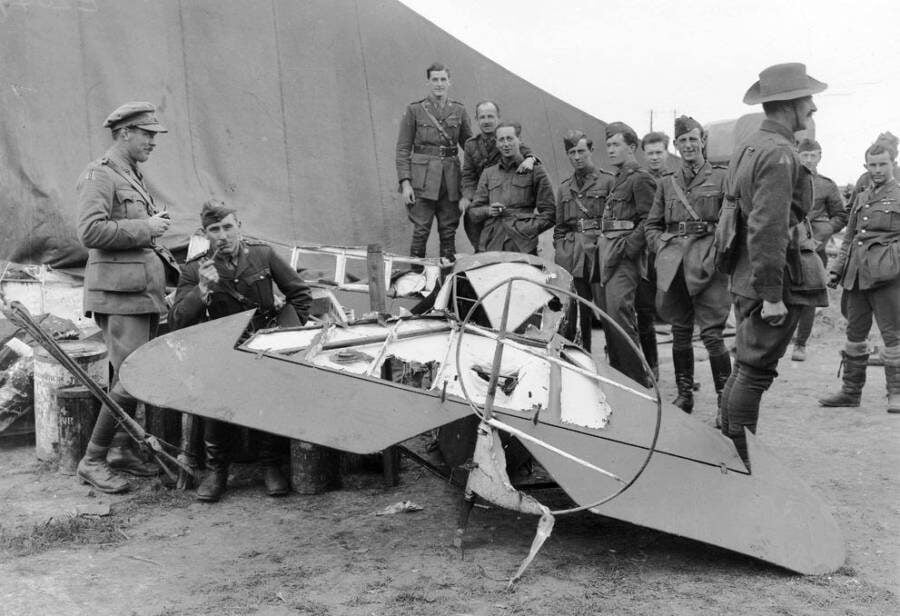
Public DomainThe remains of the Red Baron’s Fokker triplane after it was shot down in April 1918.
His famous plane was picked apart by people who wanted souvenirs, and the Australian squadron that found his body ordered a full military funeral. He was buried in the village of Bertangles, France, the following day, though his body was ultimately moved to a family plot in Germany.
In the end, the Red Baron shot down 80 enemies between September 1916 and April 1918, making him the greatest flying ace of World War I — and one of the greatest of all time. His record stood until World War II, when fellow German fighter pilot Erich Hartmann surpassed his tally, securing more than 350 aerial victories.
Still, the Red Baron was a legend. His career inspired books, movies, songs, and even comic strips. And his bright red Fokker triplane remains an icon of World War I.
After reading about the life and death of the Red Baron, learn about Eddie Rickenbacker, America’s greatest flying ace during World War I. Then, go inside the incredible story of World War II ace Richard Bong.