




It can often be a blessing and a curse when a series gets a two-season order. Yes, it’s nice to give creators a vote of confidence to extend their storytelling across multiple seasons. On the other hand, it sometimes leads to seasons like the third of Apple TV +’s once-excellent “Silo,” an outing that feels far too much like table-setting for the fourth and final chapter. Don’t get it wrong: This is still intelligent, ambitious science fiction. But there’s a sense of urgency that surged through the first two seasons that’s just lacking here. Splitting the storytelling between two time periods, tied together through a theme of corruption and false narratives, hints at the impressive reach of the writing this season, but it’s one of the choices that also leads to a sense that this season is a bridge instead of a destination. “Silo” has been one of the best shows on TV during its first two season; it’s just barely good enough in is third to keep viewers excited to see how it all ends.
The last season of “Silo” ended with two serious cliffhangers regarding the mortality of two characters so come back after you’ve watched the third season premiere if you don’t want to know how at least one of them ended. Whether or not Bernard Holland (Tim Robbins) survived the fireball in the season-two climax is held for long enough that it won’t be spoiled here, but we learn quickly that Juliette Nichols (Rebecca Ferguson) made it back from Silo 17 to her people, who she now serves as the silo’s Mayor. The small problem is that Juliette doesn’t remember what happened to her with Jimmy (Steve Zahn) and the other silo. And her amnesia is more than just a product of the explosion, as we learn that she is being drugged to keep her memories repressed. How people in power rewrite history to serve their needs is one of the strongest themes of season three as Juliette, a former leader of the rebellion, has become a pawn in a game to keep the people of the Silo in check.
Who’s playing this game? Believe it or not, Camille (Alexandria Riley) moves to a central role this season as the Wizard of this Underground Oz chooses her to be its liaison, replacing Bernard as a reticent villain for much of the season, to the surprise of her husband Robert (Common, doing his best work of the series to date this year). Part of the problem with season three is how much it sidelines previously fascinating characters like Juliette, Jimmy, and Bernard in favor of people like Camille, Knox (Shane McRae), and Shirley (Remmie Milner). It’s not that these performers are necessarily bad, but they have big shoes to fill when it comes to carrying “Silo” and there’s a bit of stumbling, especially in the first half of the season.
A similar problem invades the other half of the third season of “Silo,” which takes place much closer today than the show’s vision of a post-apocalyptic future. There was actually another sort of cliffhanger at the end of last year when the writers jumped back generations to introduce us to a congressman named Daniel (Ashley Zukerman) and a journalist named Helen (Jessica Henwick), hinting that we might learn a bit more about the origins of the silos. Actually, it’s a lot more than you might have imagined as about half of the third season of “Silo” takes place in this timeline, introducing us to Daniel’s sister (Jessica Brown Findlay), along with characters played by Laura Innes, Reed Birney, Matt Craven, and Colin Hanks, doing a nice riff on the timely issue of the icy inhumanity of the uber-wealthy.
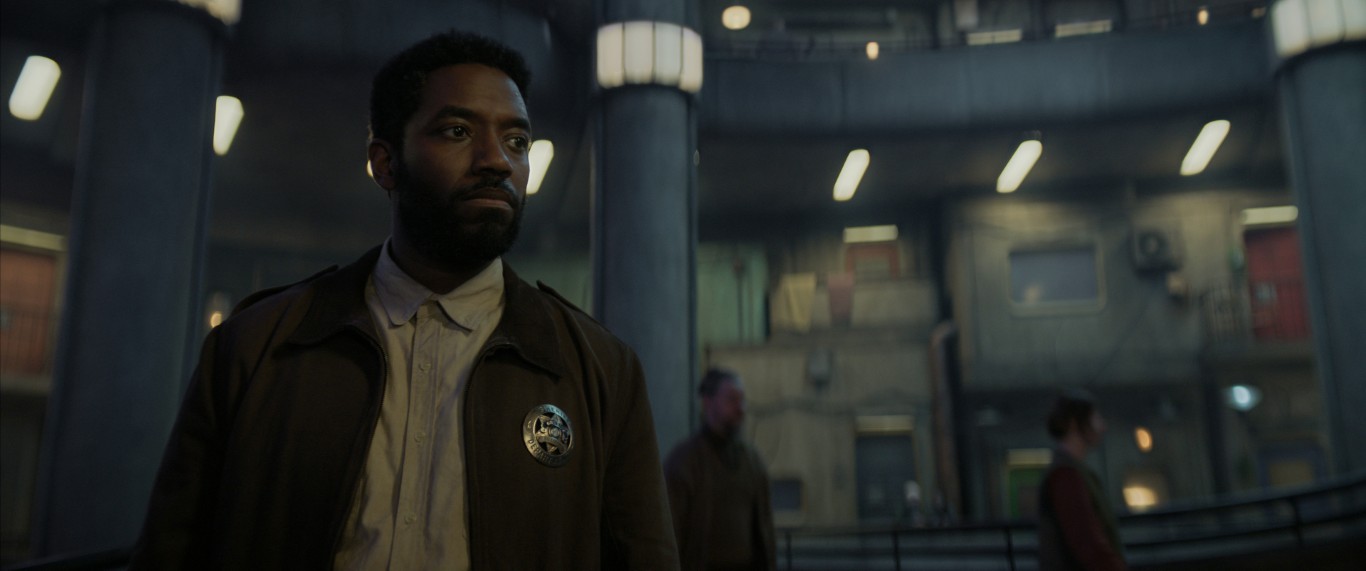
It’s a good cast, but the writing in the “origin” half of “Silo” just doesn’t hum with the same urgency as the rest of the show. It’s a nearly impossible task to pivot from the survivor story that people have been watching since the season premiere—one that’s had unexpected deaths and a simmering rising tension of a rebellion—to a “how we got here” narrative that simply lacks that tension. The truth is that how the silos were constructed and why isn’t as immediate as how Juliette might lead a revolution against them. Imagine “Snowpiercer” if half the movie was about the people who built the train and laid down the tracks.
The less-interesting characters taking the spotlight and the drag of the early timeline make for the first season of “Silo” that often drags. Having said that, the ensemble is still strong enough and the concept sturdy enough that the show never completely collapses. It’s also a season that can be interesting to unpack thematically. The American people in the Silo Construction arc are being lied to about their safety in a way that makes the headlines about tech sector doomsday prepping even more disconcerting, and the people of Silo 18 have been lied to for most of their lives about just about everything. At its core, it’s a show about how societies are manipulated by the Powers That Be, and that maintains.
Season three of “Silo” ultimately feels like an extensive bit of table setting. Without spoiling, multiple arcs and characters intersect in a finale that sets up season four for a climactic battle that could be one of the best shows of whatever year it airs. If that happens, this transitional season might arguably have all been worth it. Only then will we know if “Silo” will rise again.
Whole season screened for review. Returns on Apple TV+ on July 3rd.