




Bitcoin miners are emerging as an important part of the AI infrastructure supply chain because they control large amounts of power capacity and data center real estate that are increasingly difficult to secure, according to a new research note from Bernstein.
Analysts Gautam Chhugani, Mahika Sapra, Sanskar Chindalia and Harsh Misra estimate that publicly traded Bitcoin miners control more than 27 gigawatts of planned power capacity and have announced more than $90 billion in AI-related agreements covering 3.7 gigawatts with hyperscalers, neocloud providers and chipmakers.
An April 29 research brief from RAND said that it expects the US will add approximately 82 GW of additional net available capacity by 2030.
The planned power portfolio of 11 public Bitcoin mining companies. Source: Bernstein
According to Bernstein, access to electricity, rather than chips, has become the primary bottleneck for scaling AI data centers. Utility providers can take more than four years to approve new grid connections, even in data center-friendly states such as Texas.
“The median waiting time to secure a GW of power is nothing less than ~50 months across states, and even in politically friendly states such as Texas, the utility is following a batch review process to navigate the interconnect queue and resource load,” the analysts wrote.
Growing regulatory scrutiny and local opposition to large-scale data centers are adding to those delays, giving Bitcoin miners an advantage because they already operate grid-connected sites and have experience managing high-density computing facilities.
Related: The real ‘supercycle’ isn’t crypto, it’s AI infrastructure: Analyst
A shift in miner economics
Bernstein said Bitcoin miners are increasingly diversifying into AI infrastructure as they look for new revenue streams following the 2024 halving, which reduced mining rewards and put pressure on profit margins.
The report said several miners have moved beyond their traditional focus on Bitcoin production to develop AI data centers and high-performance computing facilities.
One recent example is Soluna Holdings, which reported a 58% increase in first-quarter revenue, driven primarily by its data center hosting business, while crypto mining contributed a smaller share of total sales.
Bernstein has also highlighted IREN as a leading example of the shift. The firm said IREN is well-positioned to transition much of its business toward AI infrastructure following its multibillion-dollar agreements with Microsoft.
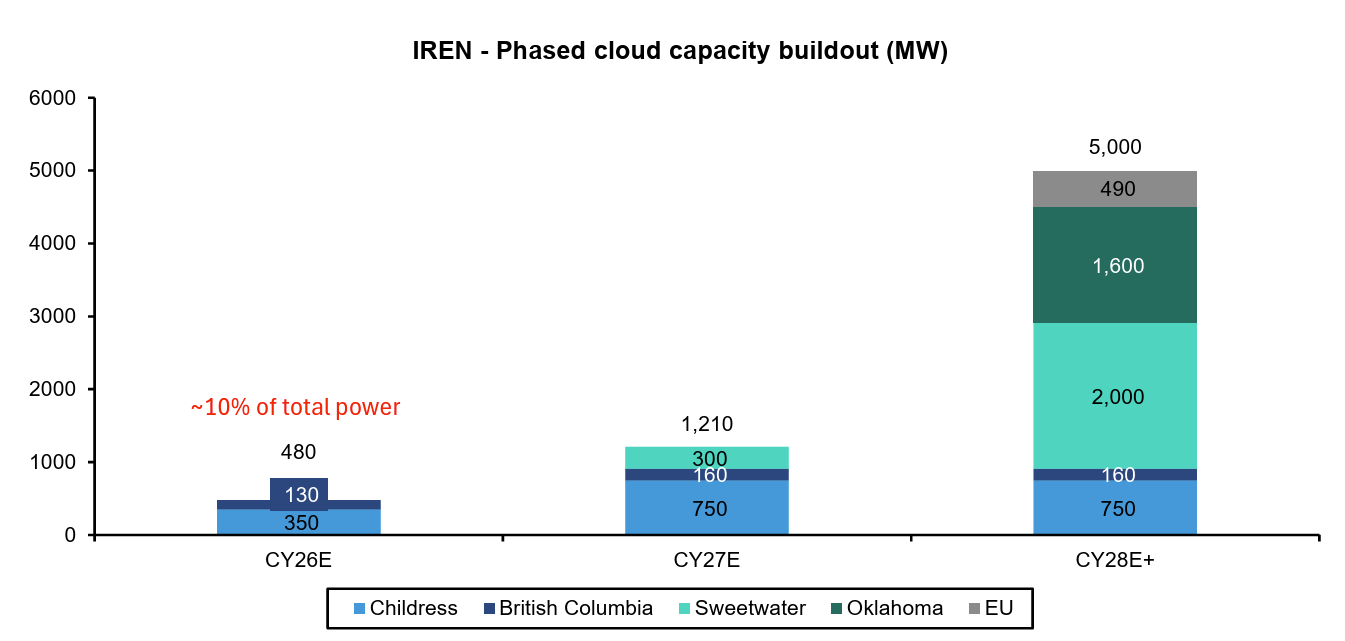
IREN’s partnership with Microsoft could fundamentally change its business model, according to Bernstein. Source: Bernstein
Related: CoreWeave’s $8.5B loan shows how AI is replacing crypto mining finance